
Using your fitness wearable’s HRV data alongside sleep tracking helps you understand your body’s recovery needs. Monitor your HRV daily to see how stress and rest impact your sleep quality. When HRV is low, consider adjusting your sleep routine or stress levels to improve recovery. High HRV indicates you’re ready for activity and quality sleep. By paying attention to these insights, you can optimize your habits for better rest and performance—learn more to fine-tune your approach.

Turn quiet afternoons into listening time
- Thousands of audiobooks, podcasts and originals
- Listen on your phone, tablet or Echo — also offline
- Cancel anytime
Key Takeaways
- Monitor HRV trends daily to assess your body’s recovery status and adjust sleep routines accordingly.
- Use HRV data to identify stress levels that may impact sleep quality and implement relaxation techniques.
- Correlate low HRV with poor sleep patterns to recognize potential fatigue or overtraining signs.
- Incorporate HRV insights to optimize sleep timing and establish consistent bedtime habits.
- Combine HRV and sleep data to develop personalized strategies for improving overall sleep quality and recovery.
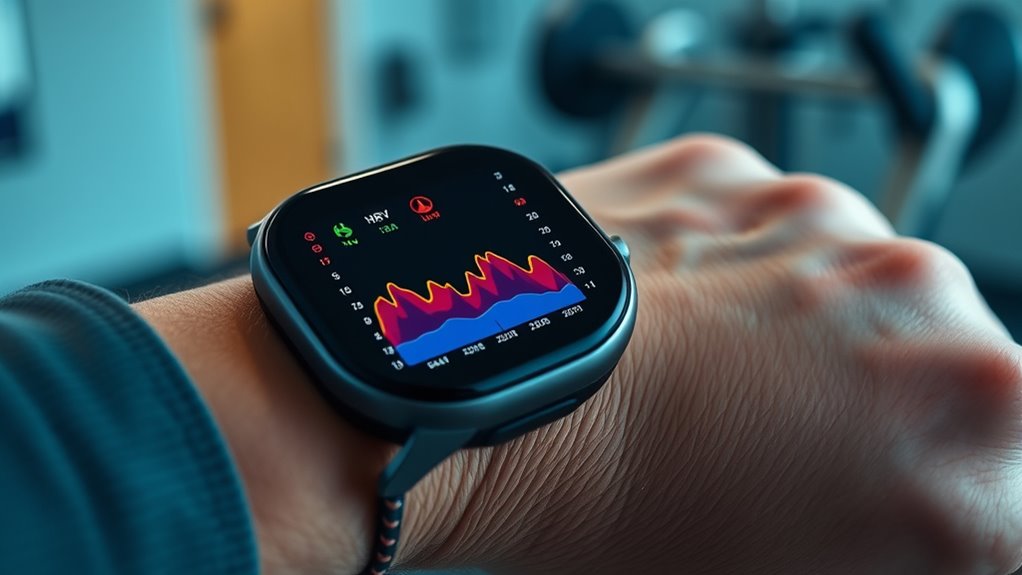
Have you ever wondered how fitness wearables can transform your workout routine? These devices aren’t just about counting steps or calories anymore. They now offer advanced features like sleep tracking and heart rate variability (HRV) monitoring, giving you deeper insights into your health. By understanding your HRV and sleep patterns, you can optimize your recovery, improve your performance, and even prevent overtraining.
Sleep tracking in fitness wearables works by analyzing your movement and heart rate data throughout the night. It detects when you’re in different sleep stages—light, deep, REM—and provides a detailed overview of your sleep quality. When you glance at your sleep report, you get a clear picture of how well you’re resting. If you notice frequent awakenings or a decline in REM sleep, it might be time to adjust your bedtime routine or manage stress better. This data helps you identify patterns and make small adjustments that can profoundly enhance your sleep quality over time.
Heart rate variability, on the other hand, measures the variation in time between each heartbeat. It’s a powerful indicator of your autonomic nervous system’s balance, reflecting how well your body handles stress and recovery. Higher HRV generally signals that your body is well-rested and ready for training, while lower HRV can indicate fatigue or stress. By monitoring your HRV daily, you can better plan your workouts—pushing harder when HRV is high or taking rest days when it’s low. This helps prevent burnout and reduces the risk of injury.
Combining sleep tracking with HRV data creates an all-encompassing picture of your overall health. For instance, if your sleep tracking shows poor sleep quality and your HRV is low, it’s a sign you need to prioritize recovery. Maybe you’re under too much stress, or your body isn’t getting enough restorative sleep. Recognizing these signals allows you to adjust your lifestyle—perhaps by relaxing before bed, reducing caffeine intake, or incorporating more rest days into your training schedule.
Using your fitness wearable’s data isn’t about obsessing over numbers; it’s about understanding your body better. When you pay attention to sleep patterns and HRV, you empower yourself to make smarter decisions about training and recovery. Over time, this knowledge can lead to improved sleep, better performance, and a healthier, more balanced life. The key is consistency—check your data regularly, interpret it thoughtfully, and apply those insights to your daily routine. Your wearable becomes not just a gadget, but a personal health coach guiding you toward your fitness goals.
Additionally, awareness of your AI vulnerabilities and ongoing safety measures can help you better interpret your health data securely and responsibly.
fitness wearable with HRV and sleep tracking
As an affiliate, we earn on qualifying purchases.
As an affiliate, we earn on qualifying purchases.
Frequently Asked Questions
How Accurate Is HRV Data From Fitness Wearables?
The accuracy of HRV data from fitness wearables varies, but it’s generally reliable if you maintain measurement consistency and guarantee proper device calibration. Factors like movement, positioning, and even skin contact can affect readings. To get the best results, wear your device consistently at the same time each day, follow calibration instructions, and avoid sudden movements during measurements. This helps you track HRV trends more accurately over time.
Can HRV Predict Future Health Issues?
Ever wondered if HRV can predict future health issues? It’s possible, thanks to predictive analytics and health monitoring. HRV data can reveal early signs of stress, fatigue, or illness, helping you take action before problems worsen. While it’s not a crystal ball, consistent tracking offers valuable insights, enabling you to adjust lifestyle habits proactively and stay ahead of potential health concerns.
How Often Should I Measure HRV for Best Results?
You should measure your HRV daily to guarantee consistent data, which helps you spot patterns and track progress accurately. For the best results, choose a specific time each morning, ideally after waking up, to maintain measurement frequency and data consistency. Regular checks allow you to monitor your body’s response to stress, sleep, and training, making it easier to adjust your lifestyle for ideal health and recovery.
What Is a Healthy HRV Range for My Age?
A healthy HRV range varies by age, but generally, higher HRV indicates better heart rate variability and stress management. For your age, aim for an HRV between 50 and 100 milliseconds. Consistently monitoring your HRV helps you understand your body’s stress response and recovery status. By tracking this, you can adjust your workouts and rest periods, ultimately optimizing your heart health and improving your ability to manage stress effectively.
How Do I Improve My HRV Through Lifestyle Changes?
To boost your HRV, focus on fostering relaxation and restful routines. Practice stress management techniques like meditation or deep breathing daily. Prioritize sleep optimization by establishing a consistent sleep schedule and creating a calming bedtime environment. Incorporate regular exercise, stay hydrated, and eat nutrient-rich foods. These lifestyle changes help reduce stress, improve sleep quality, and ultimately elevate your HRV, supporting better overall health and resilience.
best HRV monitor for sleep recovery
As an affiliate, we earn on qualifying purchases.
As an affiliate, we earn on qualifying purchases.
Conclusion
By paying attention to your HRV data, you can unlock deeper insights into your sleep quality and overall recovery. Are you ready to harness this information to optimize your rest and performance? Remember, your wearable isn’t just tracking numbers—it’s guiding you toward healthier habits. Embrace the data, make informed adjustments, and watch how your nights—and days—improve. After all, isn’t your well-being worth the effort?
As an affiliate, we earn on qualifying purchases.
As an affiliate, we earn on qualifying purchases.
Fall Picks
fall essentials
As an affiliate, we earn on qualifying purchases.