
To optimize your sleep as an athlete, establish a consistent bedtime routine with relaxing activities like gentle stretching or deep breathing, and avoid screens at least an hour before bed. Create a cool, dark, quiet environment using blackout curtains and supportive bedding. Minimize disruptions by turning off electronics and dedicating your bedroom for sleep alone. Maintaining a regular schedule and prioritizing quality sleep will boost your recovery, energy, and performance—discover more strategies to enhance your rest and results.
Key Takeaways
- Establish a consistent sleep schedule to enhance circadian rhythm and promote deep, restorative sleep.
- Create a cool, dark, and quiet sleep environment using blackout curtains and noise reduction techniques.
- Develop calming bedtime routines like reading or deep breathing to signal the body to wind down.
- Limit screen exposure and electronic device use at least one hour before bed to prevent blue light interference.
- Prioritize sleep quality through supportive bedding and maintaining a room temperature between 60-67°F for optimal rest.
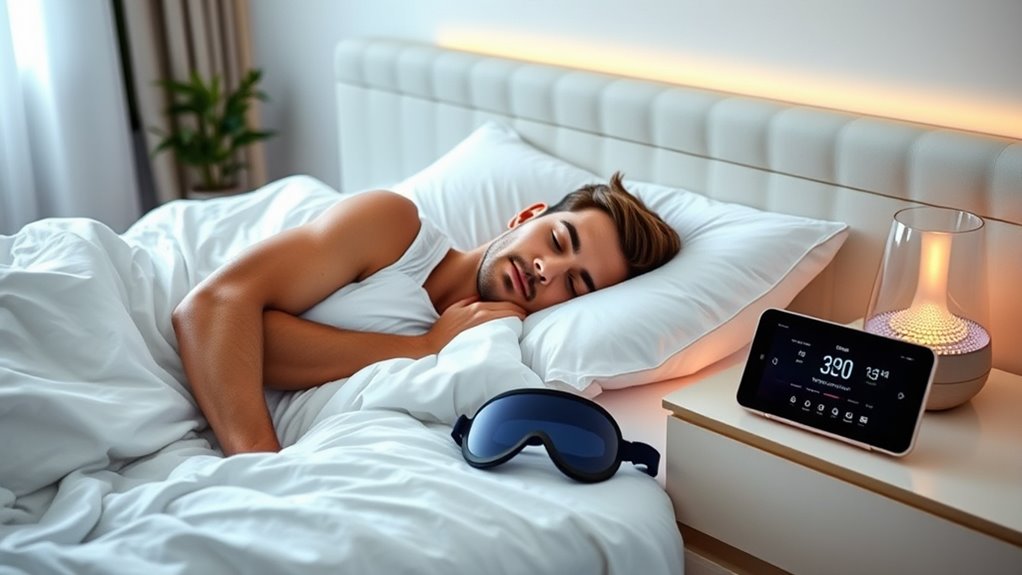
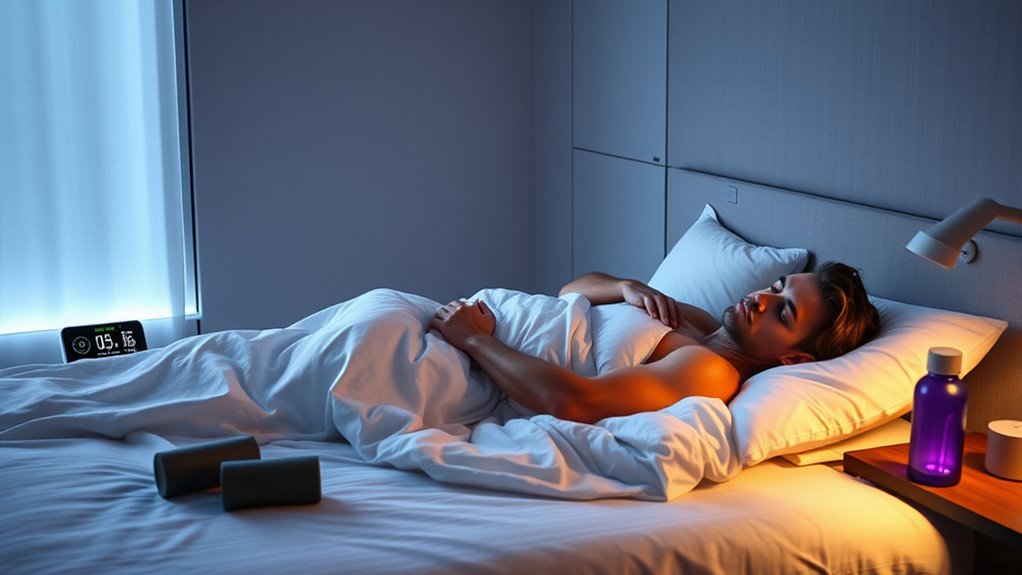
Getting enough quality sleep is one of the most important factors for athletic performance. When you prioritize your sleep, you give your body the chance to recover, repair tissues, and consolidate memories of training. To make the most of your sleep, focusing on your bedtime routines and sleep environment can make a significant difference. Establishing consistent bedtime routines helps signal to your body that it’s time to wind down, making it easier to fall asleep quickly and stay asleep longer. This might include activities like reading, gentle stretching, or practicing relaxation techniques such as deep breathing. Avoid screens at least an hour before bed, as the blue light emitted can interfere with melatonin production, which is essential for sleep regulation. Instead, opt for calming activities that relax your mind and body, setting the stage for restful sleep.
Your sleep environment plays a vital role in how well you rest. Aim to create a space that is cool, dark, and quiet, as these conditions support ideal sleep. Use blackout curtains or an eye mask to block out light, and consider earplugs if noise is an issue. The temperature of your room should be comfortably cool, around 60 to 67 degrees Fahrenheit, to promote deep sleep. Your bed and pillows should be supportive and comfortable, accommodating your preferred sleeping position. Keep your bedroom dedicated to sleep and relaxation, avoiding work or stressful activities in that space, which can create mental associations that hinder sleep. Removing electronic devices from your nightstand or turning them off at least an hour before bed minimizes disruptions and reduces the temptation to scroll or check notifications. Additionally, creating an optimal sleep environment by investing in a quality mattress and blackout curtains can further enhance sleep quality.
Consistency is key when it comes to bedtime routines and your sleep environment. Going to bed and waking up at the same time every day conditions your body to a natural rhythm, making it easier to fall asleep and wake up refreshed. Even on weekends, maintaining this schedule prevents sleep deprivation and helps maximize your recovery process. Remember, quality sleep isn’t just about quantity; it’s about creating a supportive environment that encourages deep, restorative sleep. By establishing a calming bedtime routine and enhancing your sleep environment, you give yourself the best chance to recover fully and perform at your peak. Prioritizing these factors can lead to better energy levels, improved focus, and enhanced athletic results, making sleep an essential part of your training strategy.
Top picks for "sleep optimization athlet"
Open Amazon search results for this keyword.
As an affiliate, we earn on qualifying purchases.
Frequently Asked Questions
How Does Sleep Quality Directly Impact Athletic Performance?
Your sleep quality directly impacts athletic performance by enhancing sleep efficiency and optimizing dream cycles. When you get restorative sleep, your body repairs muscles and consolidates memory, boosting your strength and focus. Better sleep efficiency means less time awake in bed, leading to more restful cycles. As a result, you wake up refreshed, with improved reaction times, coordination, and stamina—giving you a competitive edge and helping you reach your peak performance.
Can Nap Duration Improve Recovery Without Disrupting Nighttime Sleep?
Did you know a 20-minute power nap can boost recovery without disrupting your nighttime sleep? Short naps during the day, aligned with your sleep timing, help improve alertness and muscle repair. Keep naps brief and early enough to avoid interfering with your sleep cycle. By doing so, you maximize recovery benefits while maintaining a healthy sleep pattern, ensuring your athletic performance stays at its peak.
What Are the Best Sleep Supplements for Athletes?
You should consider melatonin supplements to help regulate your sleep cycle, especially if you travel frequently or have irregular schedules. Magnesium intake also promotes relaxation and improves sleep quality by calming your nervous system. Combining these supplements can enhance restorative sleep, leading to better recovery and performance. Always consult with a healthcare professional before starting any new supplement regimen to guarantee it’s appropriate for your individual needs.
How Does Sleep Deprivation Affect Injury Risk in Athletes?
When you skimp on sleep, you increase your risk of injury through subtle sleep deprivation consequences like impaired coordination, slower reaction times, and reduced focus. These factors make you more prone to accidents during training or competition. To enhance injury prevention strategies, prioritize quality rest, and make certain you get enough restorative sleep. Staying well-rested keeps your body alert and resilient, helping you avoid setbacks and perform at your best.
Are There Specific Sleep Schedules for Different Sports Disciplines?
Yes, different sports disciplines benefit from tailored sleep schedules. You should align your training routines with your sleep environment to optimize recovery. For example, endurance athletes might need longer sleep periods, while power athletes may require more consistent sleep timings. Adjust your schedule to match your sport’s demands, ensuring your sleep environment is dark, quiet, and cool. This personalized approach helps you recover faster and perform at your best.
Conclusion
By prioritizing sleep, you open the secret weapon for peak performance. Think of restorative sleep as your body’s personal pit stop—refreshing, recharging, and readying you for the race ahead. When you optimize your sleep habits, you’re not just resting; you’re fueling your success. So, treat sleep like your most trusted teammate—because with proper rest, you’ll run farther, faster, and stronger. Sleep isn’t a pause; it’s your springboard to greatness.