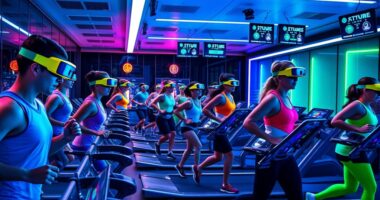
Virtual reality workouts make exercise more engaging by turning routines into immersive, interactive experiences. You can dodge virtual obstacles, catch floating objects, or compete in dynamic environments that boost motivation and make workouts feel less like chores. These programs adapt challenges to your fitness level and allow you to exercise anytime, anywhere. As technology advances, you’ll discover even more exciting features that keep you motivated and making progress—learn more about how VR fitness is shaping your future workouts.
Key Takeaways
- VR workouts offer immersive, engaging environments that make exercise feel like interactive gaming experiences.
- Augmented reality overlays enhance real-world surroundings, creating dynamic and motivating workout scenarios.
- Social features in VR enable multiplayer sessions and group classes, increasing accountability and fun.
- Adaptive difficulty adjusts challenges based on user performance, suitable for all fitness levels.
- VR fitness programs provide convenient, accessible exercise options anytime and anywhere, reducing barriers to regular activity.
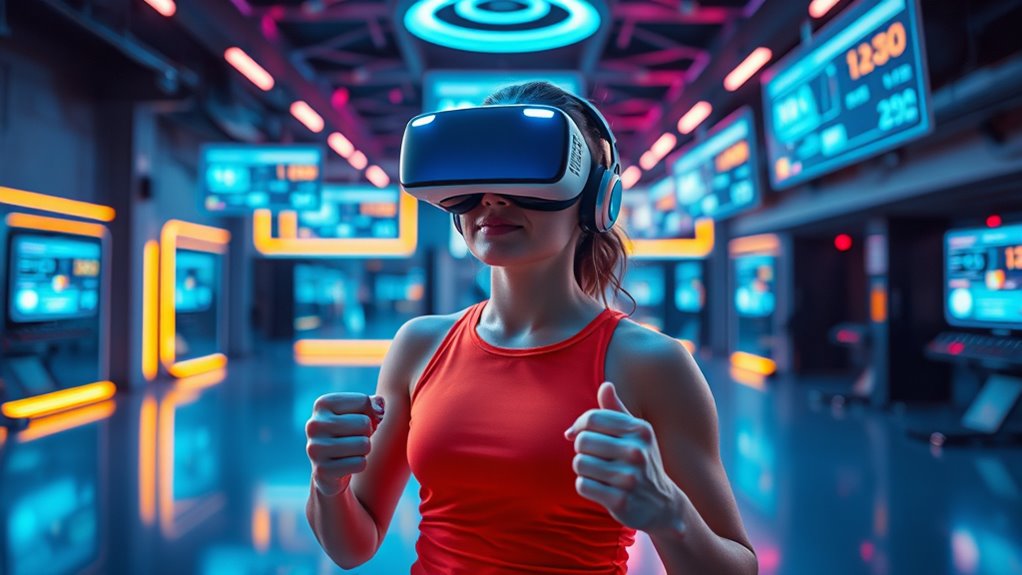
Virtual reality workouts are transforming the way you exercise by making fitness more engaging and immersive. Instead of slogging through repetitive routines, you’re transported into dynamic environments where movement feels natural and exciting. One of the key innovations driving this change is augmented reality, which overlays digital elements onto your real-world surroundings. With augmented reality, your workout becomes a blend of physical activity and interactive gaming, turning exercise into a form of fitness gaming that keeps you motivated. As you don a VR headset or AR glasses, you might find yourself dodging virtual obstacles, catching floating objects, or competing against friends—all from your living room. This integration makes workouts feel less like chores and more like adventures.
Virtual reality workouts make fitness engaging by blending physical activity with immersive, interactive environments and augmented reality features.
In fitness gaming, you’re not just moving aimlessly; you’re actively engaging with a game that challenges your skills and pushes your limits. These platforms often include built-in scoring and rewards systems, encouraging you to beat your previous performance and stay committed. The immersive nature of VR means you’re less likely to notice fatigue or boredom because your focus is on the game or environment rather than the effort it takes to exercise. Whether it’s a boxing match, a dance-off, or a mountain hike, every activity becomes a compelling story where your physical input directly influences the outcome. This level of engagement boosts adherence, so you’re more likely to stick with your fitness routine over the long term.
Moreover, augmented reality enhances the social aspect of fitness gaming. You can join multiplayer sessions, compete with friends, or participate in virtual group classes. This social interaction adds a layer of accountability and fun, making workouts feel less isolating. Plus, augmented reality can adapt to your fitness level, providing personalized challenges that grow with you. As you improve, the system adjusts difficulty, ensuring you stay challenged without feeling overwhelmed. This adaptability makes VR workouts suitable for beginners and seasoned athletes alike. Additionally, the development of increased variety in workout programs is making these immersive experiences even more appealing and effective.
The convenience of these immersive workouts means you can exercise anytime, regardless of weather or gym hours. You don’t need a lot of space—just enough to move around—and many platforms are compatible with existing VR devices or smartphones. As fitness gaming continues to evolve, expect even more interactive features, smarter AI trainers, and richer environments that make every session fresh and exciting. Virtual reality workouts, with their augmented reality components and focus on engaging gaming elements, are shaping the future of fitness—one where exercise feels less like a chore and more like an adventure you look forward to every day.
Top picks for "virtual reality workout"
Open Amazon search results for this keyword.
As an affiliate, we earn on qualifying purchases.
Frequently Asked Questions
How Safe Are Virtual Reality Workouts for Beginners?
Virtual reality workouts can be safe for beginners if you take proper safety precautions. While health risks like dizziness or eye strain are possible, staying aware of your surroundings and starting slowly reduces those risks. Make sure to use the headset correctly, take regular breaks, and listen to your body. By following safety precautions, you can enjoy immersive exercise experiences without compromising your safety.
Can VR Workouts Replace Outdoor Exercise Completely?
VR workouts can’t completely replace outdoor exercises, but they can be a bridge to traditional exercise. Think of virtual reality as a window to outdoor alternatives when weather or circumstances limit you. While VR makes workouts engaging and immersive, outdoor activities offer fresh air and natural scenery that VR can’t replicate. To stay balanced, combine immersive VR workouts with traditional exercise, creating a well-rounded fitness routine that keeps you motivated and healthy.
What Equipment Is Needed for a VR Workout Setup?
For a VR workout setup, you’ll need a VR headset like Oculus Quest, HTC Vive, or PlayStation VR. You should also have a motion sensors setup to track your movements accurately. Make sure you have enough space to move safely. Depending on your system, you might need additional controllers or sensors. This setup helps you stay active and engaged while enjoying immersive virtual exercise experiences.
How Can I Prevent VR Motion Sickness During Workouts?
Did you know that up to 60% of VR users experience motion sickness? To prevent this during workouts, focus on comfort strategies like taking breaks, adjusting the fit of your headset, and gradually increasing session duration. Keep your environment well-lit and stay hydrated. Also, start with shorter sessions to help your body adapt. These steps can considerably reduce motion sickness and make your VR workouts more enjoyable.
Are VR Workouts Suitable for People With Health Conditions?
VR workouts can be suitable for people with health conditions if you consider medical contraindications and adapt the fitness routines accordingly. Always consult your healthcare provider before starting, especially if you have cardiovascular issues, joint problems, or vision concerns. Look for adaptive fitness options within the VR programs, and start slowly to ensure safety and comfort. With proper precautions, VR exercises can be a beneficial addition to your fitness routine.
Conclusion
As you step into the world of virtual reality workouts, you’ll discover endless possibilities for transforming your fitness routine. But what if this immersive experience holds secrets you haven’t yet uncovered? With every session, you’ll push further, challenge yourself more, and reveal surprises that could change the way you see exercise forever. Are you ready to take the leap and see where this revolutionary technology can truly take you? The next move is yours—don’t miss out.