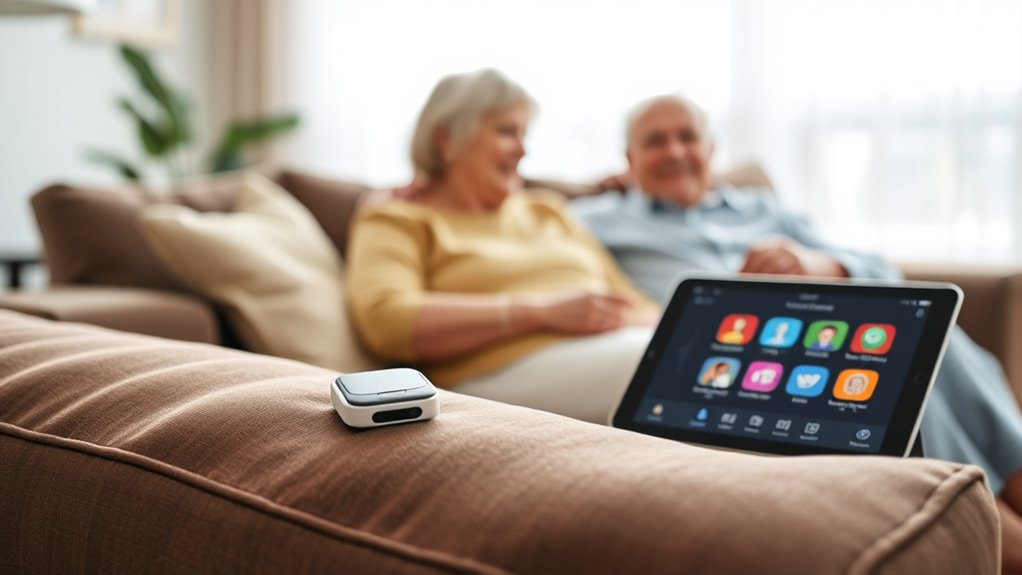
Medical alert systems for dementia patients range from simple bed and chair alarms to wearable pendants with GPS, and the right choice depends on whether the main concern is getting out of bed, wandering, or calling for help. My best overall pick is the Lunderg Wireless Early Alert Bed & Chair Alarm Set for households that need alerts at more than one location; SecuLife’s GPS pendant stands out for outdoor wandering, while the Smart Caregiver Floor Mat Alarm can alert a caregiver when someone steps onto a monitored area. The main tradeoffs are coverage versus complexity, and local caregiver alerts versus connected monitoring away from home. No alarm replaces supervision or guarantees prevention of a fall or wandering event. Read on for the full breakdown of all 15 options and how to match a system to a person’s routines and care setting.

Turn quiet afternoons into listening time
- Thousands of audiobooks, podcasts and originals
- Listen on your phone, tablet or Echo — also offline
- Cancel anytime
Complete the kit


Key Takeaways
- Bed and chair coverage is a distinct advantage: Lunderg’s Bed & Chair Alarm Set addresses two common exit points, while single-sensor systems focus on one.
- GPS changes the use case: SecuLife is the standout for tracking outside the home; a home pager or floor sensor does not provide that capability.
- Local alerts and emergency response are not interchangeable: Most pager and sensor options notify a nearby caregiver, while a pendant’s features and service plan determine whether help can be reached away from home.
- Early alerts can matter more than loud alarms: Bed-exit products such as Lunderg’s Early Alert system aim to notify a caregiver as movement begins, giving more time to respond than an alarm triggered after a full exit.
- More sensors add setup and upkeep: Multi-button or multi-zone systems can cover more situations, but batteries, placement, receiver range, and alert fatigue need attention.
| CallToU Bed Alarm for Elderly and Dementia Patients – Portable Sensor with Vibration and Silent Alert |  | Best for Quiet Bedside Monitoring | Power source: 3 AAA batteries (included) | Alert volume: Up to 110 dB | Maximum range: 10 feet | VIEW ON AMAZON | See Our Full Breakdown |
| Wireless Caregiver Pager, 1 Call Button + 1 Receiver for Elderly at Home |  | Best for Long-Range Caregiver Calls | Kit contents: 1 receiver and 1 call button | Power source: Battery powered; lithium battery | Maximum range: 1500 feet | VIEW ON AMAZON | See Our Full Breakdown |
| Wireless Motion Sensor Alarm System with Pager for Fall and Wandering Prevention |  | Best for Silent Motion Alerts | Power source: Battery powered | Batteries required: 4 AA batteries (not included) | Maximum range: Up to 300 feet (8 meters listed) | VIEW ON AMAZON | See Our Full Breakdown |
| Smart Caregiver Floor Mat Alarm and Pager System – Wireless Alert for Fall and Wandering Prevention | 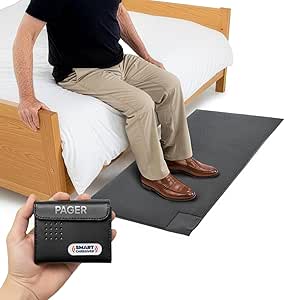 | Best for Doorway or Bedside Thresholds | Mat dimensions: 48 x 24 inches | Power source: 2 AA batteries (not included) | Maximum range: Up to 300 feet | VIEW ON AMAZON | See Our Full Breakdown |
| Life Alert Systems for Seniors No Monthly Fee App-Controlled with Waterproof Wristband and 2-Call Buttons |  | Best for App-Connected Call Alerts | Waterproof wristband: Yes | Call buttons: 2 | Display: 6 LED numbers | VIEW ON AMAZON | See Our Full Breakdown |
| SecuLife Medical Alert Pendant for Seniors with Fall Detection and GPS Tracking |  | Best for Wandering Alerts | Brand: Seculife | Connectivity: 4G LTE cellular | Battery life: Up to 6 days | VIEW ON AMAZON | See Our Full Breakdown |
| CallToU Wireless Caregiver Pager Call Button Call Bell Medical Alert System |  | Best for Simple In-Home Calling | Call buttons: 2 | Receivers: 3 | Maximum range: 150 meters | VIEW ON AMAZON | See Our Full Breakdown |
| Lunderg Wireless Early Alert Bed Alarm System for Elderly & Fall Prevention |  | Best for Bed-Exit Prevention | Sensor: Pressure sensor pad with Lunderg Pre-Alert Smart Sensor Technology | Maximum range: 400 feet | Power source: Battery powered | VIEW ON AMAZON | See Our Full Breakdown |
| Lunderg Wireless Early Alert Bed & Chair Alarm Set for Elderly |  | Best for Bed-and-Chair Coverage | Included sensors: Bed sensor pad and chair sensor pad | Maximum range: 400 feet | Power source: Battery powered | VIEW ON AMAZON | See Our Full Breakdown |
| PILSAMAS WiFi Smart Caregiver Pager, 1 Receiver, 2 Call Buttons & Wristband |  | Best for App-Connected Family Alerts | Included equipment: 1 receiver, 2 call buttons, and 1 wristband | Range: 328 feet | Connectivity: 2.4GHz Wi-Fi and 433MHz | VIEW ON AMAZON | See Our Full Breakdown |
| Smart Caregiver Bed Exit Alarm with Wireless Pager – Fall Prevention for Seniors and Elderly |  | Best for Full-Width Bed Coverage | Sensor type: Pressure sensor | Pad dimensions: 10 x 30 x 0.5 inches | Maximum range: 300 feet | VIEW ON AMAZON | See Our Full Breakdown |
| Smart Caregiver Fall Prevention Monitor and Weight Sensing Chair Pad |  | Best for Chair-Exit Monitoring | Sensor use: Weight-sensing chair-exit pad | Pad dimensions: 10 x 15 inches | Material: Vinyl | VIEW ON AMAZON | See Our Full Breakdown |
| Professional Bed Sensor Alarm and Fall Prevention System for Elderly and Dementia Patients, Caregiver Pager with 5 Volume Levels |  | Best for Long-Range Room Monitoring | Sensor technology: Passive infrared motion sensor | Maximum range: 918 feet | Mounting: Wall mount | VIEW ON AMAZON | See Our Full Breakdown |
| Smart Caregiver Bed Alarm for Elderly Adults, Alerts When They Get Up |  | Best for Simple In-Room Bed Alerts | Sensor technology: Contact sensor | Bed pad dimensions: 10 x 30 inches | Power: One 9V alkaline battery included | VIEW ON AMAZON | See Our Full Breakdown |
| Lunderg Large Wireless Bed Alarm System for Elderly & Fall Prevention |  | Best for Larger Beds and App-Free Setup | Sensor pad size: 20 x 30 inches | Wireless range: Up to 400 feet | Pager alerts: Adjustable volume and vibration | VIEW ON AMAZON | See Our Full Breakdown |
| medical alert systems for dementia patient | Maximum range |
|---|---|
| CallToU Bed Alarm for Elderly | 10 feet |
| Wireless Caregiver Pager | 1500 feet |
| Wireless Motion Sensor Alarm S | Up to 300 feet (8 meters listed) |
| Smart Caregiver Floor Mat Alar | Up to 300 feet |
| Life Alert Systems for Seniors | Up to 300 feet |
| SecuLife Medical Alert Pendant | — |
| CallToU Wireless Caregiver Pag | 150 meters |
| Lunderg Wireless Early Alert B | 400 feet |
| Lunderg Wireless Early Alert B | 400 feet |
| PILSAMAS WiFi Smart Caregiver | — |
| Smart Caregiver Bed Exit Alarm | 300 feet |
| Smart Caregiver Fall Preventio | — |
| Professional Bed Sensor Alarm | 918 feet |
| Smart Caregiver Bed Alarm for | — |
| Lunderg Large Wireless Bed Ala | — |
More Details on Our Top Picks
CallToU Bed Alarm for Elderly and Dementia Patients – Portable Sensor with Vibration and Silent Alert
For a person who tends to rise from bed without calling for help, this portable motion sensor can alert a caregiver when movement begins. Its silent and vibration modes are useful when an audible alarm might disturb the person or others nearby, while adjustable volume gives caregivers another way to tailor alerts. Compared with the Smart Caregiver Floor Mat Alarm and Pager System, this option detects motion rather than requiring a step onto a mat, which may suit bedside placement but can make positioning more important. The tradeoff is its 10-foot range: the caregiver needs to stay close, so it is less suited to monitoring from another floor or a distant room. Battery operation avoids wiring, though the batteries will need replacement.
Pros:- Silent and vibration alert modes can reduce disturbance.
- Adjustable volume allows caregivers to tailor audible alerts.
- Battery-powered sensor needs no wired installation.
- Portable design can be placed where bedside monitoring is needed.
Cons:- The 10-foot maximum range limits monitoring to nearby caregivers.
- Batteries require replacement over time.
- Motion-based detection depends on sensor placement and may not suit every room layout.
Best for: Caregivers who stay near the bedroom and want a portable, quiet alert for movement at the bedside.
Not ideal for: Households where caregivers need alerts from far away, since the listed range is only 10 feet.
- Power source:3 AAA batteries (included)
- Alert volume:Up to 110 dB
- Maximum range:10 feet
- Sensor technology:Motion
- Control method:Remote, voice
- Alert modes:Adjustable volume, silent, and vibration
- Dimensions:2.75 x 2.3 x 0.59 inches
- Color:White
Our verdict“Choose this for close-range, low-disturbance bedside alerts, but pick a longer-range pager system if the caregiver will be farther away.”
Wireless Caregiver Pager, 1 Call Button + 1 Receiver for Elderly at Home
This pager is a better fit for a person who can press a button to ask for help than for someone who needs automatic wandering detection. Its 1500-foot stated range reaches much farther than the CallToU Bed Alarm, making it more practical when a caregiver is elsewhere in the home or on the property. The kit starts with one call button and one receiver, and can expand to support additional buttons and receivers as care needs change. Adjustable volume and 58 ringtones let households choose an alert that is noticeable without being needlessly disruptive. The main limitation for dementia care is that the system depends on the person remembering and being able to press the button; it will not independently detect a bed exit or door approach. Its tabletop-only mounting may also restrict placement.
Pros:- Long stated range of up to 1500 feet.
- Expandable to support up to 30 call buttons and multiple receivers.
- Adjustable volume and 58 ringtone choices.
- IP55-rated design is described as water- and dust-proof.
Cons:- Requires the person to press the button, so it does not provide automatic movement monitoring.
- Battery life is not specified.
- Tabletop mounting offers fewer placement options than a wall-mounted system.
Best for: Households where the person can reliably press a call button and caregivers need to receive alerts across a large home or property.
Not ideal for: People who may forget to call, cannot operate a button, or need automatic bed-exit or wandering alerts.
- Kit contents:1 receiver and 1 call button
- Power source:Battery powered; lithium battery
- Maximum range:1500 feet
- Alert volume:Up to 120 dB
- Expansion:Supports up to 30 call buttons and multiple receivers
- Water and dust protection:IP55 rated
- Mounting type:Tabletop
- Warranty:2 years
Our verdict“Pick this for a button-using person and a caregiver who needs broad coverage, not for unattended wandering or bed-exit detection.”
Wireless Motion Sensor Alarm System with Pager for Fall and Wandering Prevention
When a person may wander or rise without asking for help, this system’s motion sensor and caregiver pager offer an automatic alert rather than relying on a call button. Its silent pager alert can notify a caregiver without making the resident’s room louder, a useful contrast with the audible options on the Wireless Caregiver Pager. The stated signal range is up to 300 feet, which gives caregivers more room to move than the 10-foot CallToU bed alarm, though it is still a household-scale system rather than a GPS tracker. The sensor can be mounted, but the extendable mounting bracket is sold separately, and the system is described as standalone rather than compatible with other products. Batteries are also not included, adding a setup step before monitoring can begin.
Pros:- Motion sensing can alert caregivers without requiring the person to press a button.
- Silent pager alerts can avoid disturbing the resident.
- Includes both a motion sensor and caregiver pager.
- Stated wireless range reaches up to 300 feet.
Cons:- Four AA batteries are required and not included.
- Extendable mounting bracket is sold separately.
- Standalone design is incompatible with other products.
Best for: Caregivers who want automatic motion alerts on a portable pager and do not need to integrate the system with other devices.
Not ideal for: Families seeking a modular monitoring setup, or buyers who need a ready-to-use kit with batteries and mounting hardware included.
- Power source:Battery powered
- Batteries required:4 AA batteries (not included)
- Maximum range:Up to 300 feet (8 meters listed)
- System components:Motion sensor and caregiver pager
- Mounting type:Pocket pager; sensor is mountable
- Item weight:11.2 ounces
- Warranty:90 days
- Color:May vary
Our verdict“Choose this for standalone, silent motion monitoring across a home, but look elsewhere if you need easy expansion or a complete mounting kit.”
Smart Caregiver Floor Mat Alarm and Pager System – Wireless Alert for Fall and Wandering Prevention
This floor-mat system suits caregivers who want an alert when a person steps onto a specific area, such as beside a bed or near a doorway. Its 24-by-48-inch contact mat creates a clearly defined monitoring spot, unlike the Wireless Motion Sensor Alarm System, which responds to movement rather than contact with a surface. A pager with sound and vibration alerts lets the caregiver receive the signal away from the mat, with a stated range of up to 300 feet. The tradeoff is coverage: one mat only monitors the space it occupies, so it cannot track movement elsewhere in the home. It also needs two AA batteries that are not included. Compatibility with other Smart Caregiver devices offers a path to add coverage, but expansion requires manual pairing.
Pros:- Large 24-by-48-inch mat marks a specific area for monitoring.
- Includes a pager with sound and vibration alert options.
- Stated wireless range reaches up to 300 feet.
- Compatible with other Smart Caregiver safety devices.
Cons:- Monitors only the area covered by the mat.
- Requires two AA batteries, which are not included.
- Additional devices require manual pairing for expanded coverage.
Best for: Caregivers monitoring a defined bedside or doorway area who want a clear alert when someone steps onto the mat.
Not ideal for: Families who need whole-room or whole-home movement monitoring from a single sensor, or who want a kit ready without buying batteries.
- Mat dimensions:48 x 24 inches
- Power source:2 AA batteries (not included)
- Maximum range:Up to 300 feet
- Sensor technology:Contact sensor
- System components:Floor mat and caregiver pager
- Alert modes:Sound and vibration
- Color:Grey
- Warranty:1 year
Our verdict“Choose this when a particular bed or doorway is the concern; choose a motion sensor instead when movement beyond one marked spot needs monitoring.”
Life Alert Systems for Seniors No Monthly Fee App-Controlled with Waterproof Wristband and 2-Call Buttons
This system is aimed at households that want both wearable and button-based ways to request help, with two call buttons, a waterproof wristband, and app notifications over Wi-Fi. App sharing can let several caregivers receive alerts, a different approach from the pager-only Smart Caregiver Floor Mat Alarm and Pager System. The wristband’s water resistance is useful around the shower, where a call button may otherwise be left off, while the stated 300-foot wireless range provides local coverage if the app connection is not the only alert path. But this is still a manual call system: it does not detect wandering or a fall on its own. Remote app use also depends on a 2.4GHz Wi-Fi network, and SMS notifications may require a subscription despite the no-monthly-fee positioning.
Pros:- Waterproof wristband can be worn in wet areas.
- Two call buttons provide more than one way to request help.
- App sharing supports notifications to multiple caregivers.
- Provides up to 300 feet of stated wireless range.
Cons:- Requires a 2.4GHz Wi-Fi network for app connectivity.
- SMS notifications may require a subscription.
- Call buttons and wristband require the person to initiate an alert; automatic fall or wandering detection is not listed.
Best for: Families who want a wearable call option, shared app alerts, and local receiver coverage in a home with 2.4GHz Wi-Fi.
Not ideal for: People who need automatic fall or wandering detection, or households without compatible 2.4GHz Wi-Fi.
- Waterproof wristband:Yes
- Call buttons:2
- Display:6 LED numbers
- Wi-Fi support:2.4GHz only
- Maximum range:Up to 300 feet
- Connectivity:Wi-Fi and wireless signal
- Compatible apps:Tuya Smart and Smart Life
- App sharing:Supports multiple users
Our verdict“Choose this for app-connected caregiver alerts and wearable calling, but not as a substitute for automatic fall or wandering detection.”
SecuLife Medical Alert Pendant for Seniors with Fall Detection and GPS Tracking
For a person with dementia who may leave home or need help while away from a caregiver, the SecuLife pendant offers more relevant protection than the home-bound CallToU Wireless Caregiver Pager. Its GPS tracking and geo-fence zones can help family members check location, while automatic fall detection and two-way calling add ways to summon or communicate about help. Because alerts go directly to family rather than a call center, this setup suits households prepared to monitor notifications themselves. The IP67 water resistance supports wearing it through daily routines, and the listed battery life is up to six days. The tradeoff is a monthly subscription, plus limited information about the interface and alert workflow. I would skip it if the wearer cannot keep a pendant on or the family needs staffed emergency monitoring.
Pros:- GPS tracking and geo-fence zones can help families respond to wandering.
- Automatic fall detection adds an alert option when the wearer cannot press a button.
- Two-way calling allows direct communication through the pendant.
- IP67 water resistance supports everyday wear, including around water.
Cons:- Requires a monthly subscription.
- Alerts go to family rather than a call center, placing response responsibility on them.
- Detailed information about the user interface and alert handling is limited.
Best for: Families of a person with dementia who may wander beyond the home and can regularly monitor smartphone alerts.
Not ideal for: Households seeking a staffed response center, or a wearer who is unlikely to keep a pendant on and charged.
- Brand:Seculife
- Connectivity:4G LTE cellular
- Battery life:Up to 6 days
- Battery capacity:1000 mAh
- Water resistance:IP67 waterproof
- Key features:Automatic fall detection, GPS tracking, geo-fence zones, two-way calling
- Supported devices:Android and iOS smartphones
- Dimensions:3 inches
Our verdict“Choose SecuLife for GPS-based family oversight beyond the home, but skip it if you need staffed monitoring or a non-wearable alert.”
CallToU Wireless Caregiver Pager Call Button Call Bell Medical Alert System
The CallToU system is a straightforward way for someone at home to call a nearby caregiver, using two call buttons and three plug-in receivers. That makes it more useful for room-to-room support than the SecuLife pendant, which is built around mobile GPS and cellular connection. A stated range of 150 meters (also described as 500+ feet) may help cover a house, and the waterproof, dustproof buttons suit everyday handling. Adjustable ringtones and volume give caregivers some choice about how alerts sound, though the listed maximum of 110 dB could be distressing for someone sensitive to loud noise. This pager relies on the wearer to press a button; unlike the Lunderg early-alert bed system, it does not signal a caregiver before someone gets up. Receivers also need outlets, limiting placement.
Pros:- Two call buttons and three receivers provide coverage for multiple household areas.
- Listed 150-meter range supports use across a home.
- Waterproof and dustproof design suits regular handling.
- Adjustable ringtones and volume allow some control over alert sound.
Cons:- The wearer must press a button; it does not provide automatic fall or bed-exit detection.
- Receivers must be plugged into outlets, limiting where alerts can be heard.
- Battery life for the call buttons is not specified.
Best for: Caregivers supporting a person with dementia at home who can press a call button and need alerts across several rooms.
Not ideal for: People who may wander outside, cannot reliably activate a button, or need alerts before getting out of bed.
- Call buttons:2
- Receivers:3
- Maximum range:150 meters
- Power source:2 included 12V alkaline batteries
- Mounting type:Tabletop
- Maximum audible noise:110 dB
- Controls:Touch; adjustable ringtones and volume
- Design:Waterproof and dustproof
Our verdict“Pick CallToU for simple, multi-room home calling when the wearer can activate a button and a caregiver is nearby.”
Lunderg Wireless Early Alert Bed Alarm System for Elderly & Fall Prevention
For a person with dementia who needs supervision when getting out of bed, Lunderg’s pre-rise alert is the defining advantage: a pressure sensor pad notifies the caregiver before the person is fully up, rather than relying on them to ask for help. The system avoids a loud alarm in the room, which may reduce the chance of startling the wearer compared with a basic call bell such as CallToU. Setup does not require Wi-Fi or an app, and the pager’s 400-foot range gives caregivers flexibility around the home. This is a focused bed-safety tool, not a substitute for SecuLife’s GPS support when someone leaves the house. It also depends on the person using the monitored bed and on the sensor being positioned correctly. The listing specifies two AA batteries but gives limited detail about pad compatibility and resistance to incontinence.
Pros:- Pre-rise sensing can alert caregivers before the person gets out of bed.
- No loud in-room alarm, which may be less startling for some people with dementia.
- Works without Wi-Fi or a smartphone app.
- Listed 400-foot range supports flexible pager placement.
Cons:- Monitors bed activity rather than movement throughout the home or outside it.
- Requires two AA batteries, and replacement timing can depend on use.
- Compatibility is described around Lunderg devices, and the listing does not clearly state incontinence resistance.
Best for: Caregivers who need an early warning when a person with dementia starts getting out of bed and prefer a system without Wi-Fi or an app.
Not ideal for: Families seeking wandering alerts outside the bedroom, coverage for both bed and chair, or clearly specified incontinence-resistant equipment.
- Sensor:Pressure sensor pad with Lunderg Pre-Alert Smart Sensor Technology
- Maximum range:400 feet
- Power source:Battery powered
- Batteries:2 AA alkaline batteries required
- Compatible devices:Lunderg bed alarm, chair alarm, and call button
- Alert options:Portable pager with adjustable volume and pulse options
- Setup:No Wi-Fi or app required
- Weight:0.74 kg
Our verdict“Choose this Lunderg model for discreet, early bed-exit alerts, but choose the Lunderg bed-and-chair set if both locations need monitoring.”
Lunderg Wireless Early Alert Bed & Chair Alarm Set for Elderly
Unlike the single-location Lunderg Wireless Early Alert Bed Alarm, this set monitors both a bed and a chair, making it a better fit when a person with dementia spends substantial time in either place. Its wireless pager has a stated 400-foot range, so a caregiver can move around the home while remaining within range. The alerts are intended to notify caregivers as the person rises, without a loud alarm in the room; that can support a calmer response than a system that sounds beside the wearer. The pads are described as incontinence-resistant and as lasting up to 15 months, useful details for daily care. Still, this is a home monitoring set, not a GPS device like SecuLife, and its compatibility is limited to Lunderg’s system. Families should also be ready to manage setup and battery replacement.
Pros:- Includes bed and chair sensor pads for coverage across two common resting places.
- Wireless pager has a stated range of up to 400 feet.
- Alerts are designed to reach caregivers without a loud in-room alarm.
- Pads are described as incontinence-resistant, with battery life stated as up to 15 months.
Cons:- Designed for Lunderg-compatible equipment rather than universal integration.
- Battery replacement and setup add ongoing caregiver tasks.
- Provides home-based rise alerts, not GPS tracking or outdoor wandering support.
Best for: Caregivers of a person with dementia who needs rise alerts from both a bed and a frequently used chair.
Not ideal for: Families needing location tracking outside the home, a universal system, or monitoring for more than the included bed and chair locations.
- Included sensors:Bed sensor pad and chair sensor pad
- Maximum range:400 feet
- Power source:Battery powered
- Batteries:2 AA alkaline batteries required
- Sensor technology:Contact sensor
- Pad dimensions:30 x 0.1 x 10 inches
- Compatibility:Lunderg bed alarm, chair alarm, and call button
- Pad characteristics:Incontinence-resistant; stated battery life up to 15 months
Our verdict“Choose this set over Lunderg’s bed-only system when both bed and chair exits need monitoring within the home.”
PILSAMAS WiFi Smart Caregiver Pager, 1 Receiver, 2 Call Buttons & Wristband
PILSAMAS suits families who want more than a local receiver: its mobile app and alert sharing can help multiple caregivers stay informed, while the included two call buttons and wristband offer several ways to summon help. Compared with CallToU, which relies on plug-in receivers and adjustable tones, this model adds Wi-Fi-based remote management and location details. Its 328-foot range and 433MHz connection are intended to support alerts around the home, and the waterproof design is useful near wet areas. The tradeoff is setup: caregivers need compatible 2.4GHz Wi-Fi and must manage another app, which can be a burden if the household prefers an uncomplicated pager. Like other press-button systems, it does not automatically detect a fall or track wandering with GPS, so it is less suited to someone who cannot reliably use a button.
Pros:- App-based alerts and sharing can keep multiple caregivers informed.
- Includes two call buttons and a wristband for different ways to request help.
- 433MHz connectivity and a stated 328-foot range support in-home use.
- Waterproof design suits use around wet areas.
Cons:- Requires Wi-Fi setup and ongoing access to a compatible 2.4GHz network.
- Depends on the wearer activating a button or wristband rather than detecting falls automatically.
- Does not provide the GPS tracking for wandering offered by SecuLife.
Best for: Families with reliable 2.4GHz Wi-Fi who want app-based alert sharing and several wearable or fixed call options at home.
Not ideal for: Households without compatible Wi-Fi, caregivers who want a no-app setup, or people who need automatic fall detection or GPS wandering support.
- Included equipment:1 receiver, 2 call buttons, and 1 wristband
- Range:328 feet
- Connectivity:2.4GHz Wi-Fi and 433MHz
- Battery:1 included 12V battery
- App features:Remote management, customizable alerts, and alert sharing
- Design:Waterproof
- Item weight:9.3 ounces
- Model number:CF106 1R2B1W
Our verdict“Choose PILSAMAS for app-connected, shared household alerts if Wi-Fi is dependable and the wearer can activate a call button.”
Smart Caregiver Bed Exit Alarm with Wireless Pager – Fall Prevention for Seniors and Elderly
For dementia care where getting out of bed unnoticed is the main concern, I’d choose this model for its 10 x 30-inch pressure pad and wireless pager. The pad detects when pressure lifts, giving a caregiver a prompt to check in before an unsupervised walk turns into a fall. Compared with the Smart Caregiver Bed Alarm for Elderly Adults, this version puts more emphasis on a portable wireless alert rather than a corded in-room monitor. Its pager offers vibration and sound, which can help caregivers respond without keeping an audible alarm on at all times. The tradeoff is that the system signals a bed exit; it does not track location or prevent wandering after the person leaves. Its 300-foot range also makes placement and distance worth checking, and the pad may still trigger false alerts.
Pros:- Large 10 x 30-inch pressure pad monitors a substantial area of the bed.
- Wireless pager supports monitoring without requiring the caregiver to stay beside the bed.
- Pager offers both vibration and sound alerts.
- Includes two AA batteries and a one-year warranty.
Cons:- The stated wireless range is limited to 300 feet and may depend on the home layout.
- Two AA batteries will need replacement over time.
- Pressure-based detection can still produce false alarms.
Best for: Caregivers who need a bed-exit alert on a portable pager and can stay within the system’s stated range.
Not ideal for: Households needing GPS, wandering location tracking, or coverage well beyond 300 feet; this is an alert system, not a tracking device.
- Sensor type:Pressure sensor
- Pad dimensions:10 x 30 x 0.5 inches
- Maximum range:300 feet
- Pager alerts:Sound and vibration
- Audible noise:70 dB
- Power:Two included AA batteries
- Warranty:One year
Our verdict“Choose this if a large bed pad and a vibrating wireless pager matter more than tracking a person after they leave the bed.”
Smart Caregiver Fall Prevention Monitor and Weight Sensing Chair Pad
When a person with dementia spends long stretches in a favorite chair, a bed alarm can miss a major fall risk. I’d give this chair-exit monitor a distinct role: its 10 x 15-inch weight-sensing pad alerts a caregiver when the person rises. The cleanable vinyl surface suits everyday use, while adjustable volume lets caregivers tune the alert to the room and household. Unlike the Smart Caregiver Bed Exit Alarm with Wireless Pager, this is aimed at a seated routine rather than monitoring a bed with a portable pager. The available details do not specify wireless range or a portable receiver, so buyers should not assume alerts will reach another floor or a distant caregiver. It also needs a 9V battery that is not included; an optional power adapter is sold separately.
Pros:- Weight-sensing pad is designed to alert when a person leaves a chair.
- Vinyl pad surface is easy to clean.
- Adjustable volume and alert features support household-specific use.
- Includes a one-year warranty.
Cons:- Requires a 9V battery that is not included.
- A separate power adapter is sold separately.
- The provided specifications do not state an alert range or confirm a portable pager.
Best for: Families whose primary concern is a dementia patient standing up from a regular chair while a caregiver is nearby.
Not ideal for: Caregivers who need portable, long-range alerts or bed-exit coverage; the listed product details do not specify wireless range or a pager.
- Sensor use:Weight-sensing chair-exit pad
- Pad dimensions:10 x 15 inches
- Material:Vinyl
- Battery:One 9V battery, not included
- Volume:Adjustable
- Additional power:Power adapter sold separately
- Warranty:One year
Our verdict“Pick this for chair-exit alerts in a caregiving setup where the monitor can be heard nearby, not for remote monitoring.”
Professional Bed Sensor Alarm and Fall Prevention System for Elderly and Dementia Patients, Caregiver Pager with 5 Volume Levels
This system stands apart from the pressure-pad options by using a passive infrared motion sensor rather than detecting weight leaving a bed. Its stated 918-foot transmission range gives it the longest reach in this group, which may help when a caregiver needs to receive an alert farther from the room. Multiple alert modes and five volume levels offer more ways to set up a notification than the simpler chair-focused Smart Caregiver Fall Prevention Monitor. But motion sensing changes what the alert means: it detects movement in the sensor’s field, not pressure lifting from a specific bed pad. That can make placement and testing especially important in a room with routine movement. It has battery or Micro USB power, though the included AAA batteries still require upkeep, and the listed 113 dB sound may be too loud for some homes.
Pros:- Stated wireless transmission range reaches up to 918 feet.
- Motion sensing can cover movement around a room without a bed pad.
- Multiple alert modes include sound and light.
- Offers battery or Micro USB power.
Cons:- Sensor placement may need adjustment and testing for the room.
- Motion detection does not specifically confirm that someone has left the bed.
- The listed audible alarm level is 113 dB, which may be disruptive.
Best for: Caregivers who need a motion-triggered alert with a longer stated transmission range and can position and test a wall-mounted sensor.
Not ideal for: Households needing a bed-contact pad that specifically detects when pressure leaves the mattress, or users sensitive to loud alarms.
- Sensor technology:Passive infrared motion sensor
- Maximum range:918 feet
- Mounting:Wall mount
- Power options:Batteries or Micro USB
- Batteries:Three AAA batteries included
- Audible noise:113 dB
- Alert options:Multiple modes, including sound and light
Our verdict“Choose this for long-range motion alerts when a caregiver can carefully position the sensor; choose a pressure-pad model for direct bed-exit detection.”
Smart Caregiver Bed Alarm for Elderly Adults, Alerts When They Get Up
For a caregiver who stays close to the bedroom, this model offers a straightforward pressure-sensitive bed pad and a corded monitor, with adjustable volume and silent options. Its 10 x 30-inch pad is similar in size to the Smart Caregiver Bed Exit Alarm with Wireless Pager, but the key distinction is the listed corded monitor: it suits in-room use better than a caregiver who needs an alert carried around the home. The discreet under-mattress placement may keep the sensor less conspicuous during daily care. The tradeoff is clear for dementia households where caregivers move between rooms: wireless alerts require a separate kit, and the system is described as limited to in-room use. It also relies on a 9V battery, so caregivers need to keep battery replacement on the routine checklist.
Pros:- Pressure-sensitive pad alerts when contact with the bed is removed.
- 10 x 30-inch pad can be placed discreetly under the mattress.
- Adjustable volume and silent options support different household needs.
- Includes a 9V battery and a one-year warranty.
Cons:- Wireless alert kit is sold separately.
- The listed setup is limited to in-room use without the optional kit.
- Requires periodic replacement of its 9V battery.
Best for: Caregivers who remain near the bedroom and want a basic bed-exit alert with adjustable or silent notification options.
Not ideal for: Caregivers who need a portable pager or alerts across the home without buying an additional wireless kit.
- Sensor technology:Contact sensor
- Bed pad dimensions:10 x 30 inches
- Power:One 9V alkaline battery included
- Audible noise:80 dB
- Alert controls:App and touch
- Monitor type:Corded monitor
- Warranty:One year
Our verdict“Choose this for simple bedroom-only bed-exit alerts; select the wireless Smart Caregiver pager model if you need to carry notifications with you.”
Lunderg Large Wireless Bed Alarm System for Elderly & Fall Prevention
I’d put the Lunderg ahead of smaller-pad options for caregivers who want broad bed coverage without relying on Wi-Fi or an app. Its 20 x 30-inch sensor pad covers more area than the 10 x 30-inch pads on the two Smart Caregiver bed alarms in this group, while the portable pager adds adjustable volume and vibration. That combination can make it easier to receive a quiet alert while doing other tasks. The incontinence-resistant surface is another practical fit for daily dementia care. Its role is still limited: like the other bed-exit systems, it alerts rather than tracks, so it cannot show where someone goes after leaving bed. The stated range is up to 400 feet, but walls and other obstacles can affect performance, and correct pad placement matters to limit false alarms.
Pros:- Large 20 x 30-inch sensor pad covers more bed area than the 10 x 30-inch Smart Caregiver pads.
- Portable pager provides adjustable volume and vibration mode.
- Incontinence-resistant surface suits routine caregiving use.
- Sets up without Wi-Fi or apps, and a battery is included.
Cons:- Correct pad placement is needed to reduce false alarms.
- The stated range is up to 400 feet and obstacles may reduce it.
- Alerts caregivers to a bed exit but does not track the person afterward.
Best for: Caregivers seeking a large bed pad, a portable vibrating pager, and a setup that does not depend on Wi-Fi or an app.
Not ideal for: Families who need GPS or wandering-location tracking, or whose caregiver will routinely be beyond the stated wireless range.
- Sensor pad size:20 x 30 inches
- Wireless range:Up to 400 feet
- Pager alerts:Adjustable volume and vibration
- Battery:Included
- Pad surface:Incontinence-resistant
- Connectivity:Does not require Wi-Fi or an app
Our verdict“Choose the Lunderg for broad bed coverage and app-free pager alerts, but not as a substitute for wandering tracking.”

How We Picked
I ranked these 15 products by how well their design matches common dementia-related safety needs: bed or chair exits, movement through monitored areas, caregiver call access, and wandering beyond the home. I gave more weight to clear alert pathways, practical placement, wearable comfort, and useful coverage than to feature counts alone. A system that reliably alerts a caregiver nearby serves a different purpose from a GPS pendant, so I judged each against its intended use rather than treating every product as a full medical alert service.
The order reflects the breadth of useful coverage, ease of fitting into a home routine, and the tradeoffs in setup and supervision. Multi-location kits rank ahead of single-point alarms for households that need wider coverage, while specialized sensors remain strong choices for a specific risk. I also distinguished caregiver pagers and alarms from monitored emergency-response services: readers should confirm connectivity, range, subscriptions, fall-detection behavior, and what happens during power or network loss before choosing.
Factors to Consider When Choosing Medical Alert Systems For Dementia Patients
Before choosing a device, I would map the situation it needs to address and who will respond to an alert. A low-complexity alarm can work well when a caregiver is nearby; it may be inadequate if the person is often alone or leaves the property. These broader checks help prevent buying a device whose alert type, coverage, or routine does not fit the care plan.
Match the alert to the risk, not the product label
Start by identifying the event you need to know about: getting out of bed, leaving a chair, entering a doorway, or needing help while away from home. Bed and chair sensors alert caregivers to specific movement, while a call button depends on the person remembering and being able to press it. A GPS pendant addresses location outside the house, but it does not automatically replace indoor sensors or hands-on supervision. Avoid buying a general “medical alert” device based on its name alone; check exactly what event triggers an alert. If several risks are present, decide which one has the greatest consequence and cover that first. A clinician or care team can help align the setup with mobility, sleep, and supervision needs.
Decide who receives alerts and how quickly they can respond
A pager that rings inside the home is useful only if a caregiver can hear it and reach the person in time. If the household has several caregivers, clarify who carries the receiver, who handles overnight alerts, and what happens when nobody is home. Some devices send notifications through an app or cellular connection; others depend on a local receiver and wireless range. Do not assume a call button contacts emergency services or that a GPS unit includes live monitoring. Check what the system does during a Wi-Fi outage, low battery, or missed notification. Build a backup plan for times when the primary responder cannot answer.
Fit the device to the person’s habits and comfort
For someone who removes jewelry, a wearable pendant may not be dependable even if its features look suitable. A bed sensor or floor mat can require less cooperation, but placement and movement patterns affect whether it triggers at the right moment. Consider whether the person walks with an aid, shifts frequently during sleep, or may move a mat or sensor. A loud alarm can startle or confuse someone with dementia; a quiet caregiver alert may be more appropriate when a responder is nearby. Choose controls that a caregiver can manage without asking the person to learn a new routine. Trial the setup during ordinary daily activity and adjust it if alerts are missed or frequent.
Check false alarms, missed alerts, and alert fatigue
An alarm that sounds too often can lead caregivers to ignore it or switch it off, while a missed event can create a false sense of safety. Ask what movement triggers the sensor and whether the alert can be routed to a caregiver without sounding in the person’s room. Placement, mattress type, furniture, and how someone transfers can all affect sensor behavior. Review the system after changes in mobility or room layout rather than assuming the original setup remains suitable. Keep a short log of alerts during the first days to spot patterns and refine placement. No sensor can prevent every fall or wandering event, so alerts should support a wider safety plan.
Compare total upkeep and ongoing connectivity
Before purchase, check whether the device uses replaceable or rechargeable batteries, how often sensors need testing, and whether replacement pads or accessories are required. A “no monthly fee” label does not mean every feature works without an app, home internet, or a compatible phone. GPS and app-connected products may rely on cellular service or a subscription for location and emergency functions. Confirm coverage where the person lives and travels, and ask whether alerts still work locally if internet access drops. Assign a caregiver to test buttons and sensors on a regular schedule. A system that is easy to maintain is more useful than a feature-rich one that is left uncharged or disconnected.
Choose coverage that fits the home and care arrangement
One sensor may be enough for a person who uses one bedroom and has constant caregiver presence, but it will not cover every exit point. Multi-button kits can make it easier to call from different rooms, while bed-and-chair sets monitor separate locations; extra devices also mean more batteries, placement decisions, and possible alerts. Check the receiver’s stated range and test it through the walls and floors of the actual home. In shared or larger homes, identify where the caregiver will be during the night and whether a second receiver is needed. For assisted living or a staffed setting, coordinate with staff before adding a private alarm so it complements established procedures. Buy for the care routine, not simply for the number of included accessories.
Frequently Asked Questions
Will a bed alarm stop a person with dementia from falling?
No; a bed alarm alerts a caregiver to movement, but it does not physically prevent someone from standing or falling. Its value depends on whether the alert arrives early enough and a caregiver can respond. A sensor’s placement and the person’s movement affect how quickly it triggers, so it should be tested as part of the usual bedtime routine. Pair it with appropriate supervision, a clear path to the bathroom, and advice from the person’s care team. Do not treat the alarm as a substitute for fall-prevention planning.
Should I choose a GPS pendant or a home caregiver pager?
Choose based on where the risk occurs and who needs to receive the alert. A GPS pendant can help locate someone away from home if its location service, connectivity, and plan support that function. A home pager is generally intended to notify a nearby caregiver when a button is pressed or a sensor is triggered; it may not track location or summon a response team. Some households need both kinds of coverage, especially when indoor exits and unsupervised outings are separate concerns. Confirm that the person will wear or carry a pendant and that someone can act on its alerts.
Can a person with dementia reliably use a call button?
That depends on the person’s memory, understanding, dexterity, and willingness to keep the button nearby. A call button can be useful when someone recognizes distress and can press it, but it may not help during confusion, a fall that limits movement, or an unplanned exit. A caregiver-initiated sensor can reduce reliance on the person remembering a step, though it can create false alarms and requires careful placement. If possible, practice using the button during calm moments and observe whether it becomes part of the person’s routine. Choose a backup alert method when button use is uncertain.
Do these alarms work if the caregiver is in another room or away from home?
It depends on the system’s receiver, wireless range, and connection type. A local pager may reach a caregiver elsewhere in the house, but walls and floors can reduce range, so test it in the actual rooms where alerts must be heard. App-based notifications may reach a caregiver away from home, but they can depend on Wi-Fi, cellular coverage, phone settings, and an active service. A sensor that only sounds in the room will not notify a caregiver who cannot hear it. Check the alert path from trigger to responder, including what happens when a phone is muted or the network is unavailable.
What should I test before relying on a new system overnight?
Test every button and sensor from the locations where the person will use them, then confirm the intended caregiver receives and recognizes each alert. Check receiver range with doors closed and from the caregiver’s usual sleeping area. Review battery status, volume, alert style, app permissions, and any required internet or cellular connection. Watch for false triggers during normal movement and confirm the sensor responds to the event it is meant to detect. Keep another supervision plan in place until the system has been checked through ordinary routines and any setup issues are resolved.
Conclusion
For broad indoor coverage, I would start with the Lunderg Wireless Early Alert Bed & Chair Alarm Set, my best overall choice for households monitoring both bed and chair exits. The CallToU bed alarm is a best-value-style pick for a more focused, local alert need, while the SecuLife GPS pendant is the premium-style choice for families prioritizing location tracking beyond the home—after confirming its service and connectivity details. For beginners, a simple caregiver pager such as the Wireless Caregiver Pager with one button and receiver offers a more direct setup when the person can press a button and a caregiver is nearby. For specific needs, choose the Smart Caregiver Floor Mat Alarm for a monitored walking area, or a bed sensor for nighttime exits. My final choice would depend on who can respond, where the risk occurs, and whether the person will reliably use a wearable; none of these devices replaces a tailored care and supervision plan.
Halloween Picks
halloween
As an affiliate, we earn on qualifying purchases.