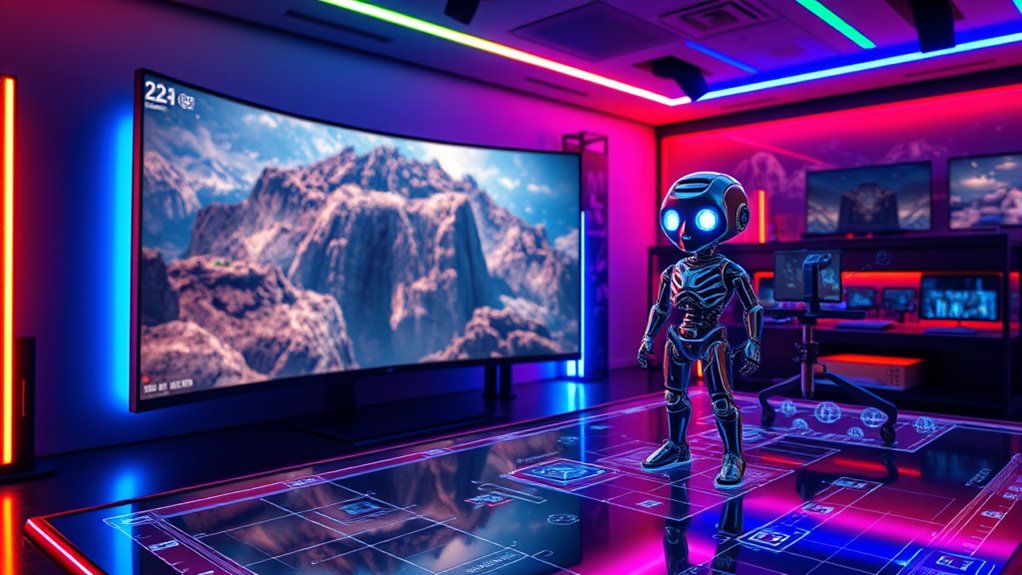

AI in game design revolutionizes your experience by creating vast, varied worlds through procedural content generation, saving developers time and keeping gameplay fresh. Smarter NPCs respond more naturally, engage in realistic conversations, and adapt strategies based on your actions, making interactions more believable. These advancements lead to immersive environments and personalized stories that evolve with you. To discover how these innovations shape the future of gaming, keep exploring this exciting topic.

Turn quiet afternoons into listening time
- Thousands of audiobooks, podcasts and originals
- Listen on your phone, tablet or Echo — also offline
- Cancel anytime
Key Takeaways
- AI enables procedural content generation, creating vast, varied worlds, quests, and characters automatically.
- Smarter NPCs respond naturally, engage in realistic conversations, and adapt strategies to player actions.
- AI-driven systems personalize gameplay, offering unique experiences and multiple narrative branches.
- Procedural content reduces development time and keeps gameplay unpredictable and fresh.
- AI enhances immersion by fostering responsive environments and believable character interactions.
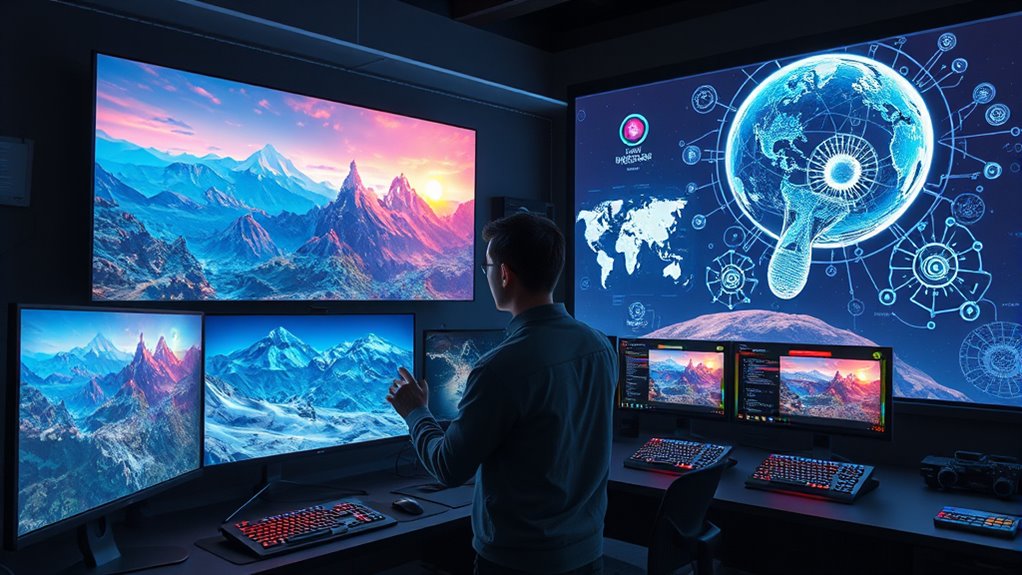
Artificial intelligence is transforming game design by enabling more dynamic and responsive worlds. When you play modern games, you might notice how your choices seem to matter more than ever, thanks to AI-driven systems that support player agency and narrative branching. Instead of linear stories that follow a fixed path, AI allows for a richer, more personalized experience where your decisions influence the game’s direction. This means your actions have real consequences, shaping the story in ways that feel authentic and engaging. AI-powered systems analyze your behavior and adapt the game environment accordingly, making each playthrough unique and tailored to your playstyle. Additionally, these adaptive systems help create more emotional support by responding to players’ needs and fostering a sense of connection with the game world.
AI enables dynamic worlds and meaningful choices, making every playthrough unique and deeply personalized.
Procedural content generation is one way AI enhances game design by creating vast, varied worlds without requiring developers to craft every detail manually. Instead of pre-designed levels, AI algorithms generate landscapes, quests, characters, and items on the fly. This not only saves time but also keeps the game fresh and unpredictable. You can explore new environments or encounter different story elements each time you play, which keeps the experience exciting and prevents repetition. With procedural content, developers can craft expansive worlds that feel alive, with countless surprises lurking around every corner.
Smarter non-player characters (NPCs) are another key aspect of AI’s impact on game design. Instead of simple scripted behaviors, NPCs powered by AI can respond more naturally to your actions and the evolving game situation. They can hold realistic conversations, make strategic decisions, and adapt their tactics to challenge you in more meaningful ways. This creates a more immersive experience, where NPCs seem genuinely aware of their surroundings and capable of complex interactions. As a result, you’re less likely to encounter predictable encounters, and the game world feels more believable and alive.
All of these AI-driven advancements work together to deepen your engagement with the game. Your agency becomes more meaningful, with your choices genuinely influencing the story and world around you. Narrative branching becomes more sophisticated, allowing for multiple endings and varied storylines based on your decisions. The more you play, the more you realize how AI elevates the overall experience, making each journey feel personal and uniquely yours. With AI shaping content and character behavior, game worlds become more vibrant, responsive, and immersive than ever before, inviting you to explore and shape your adventure in ways that were once impossible.
Frequently Asked Questions
How Does AI Influence Player Emotional Engagement in Games?
AI enhances your emotional engagement in games by creating emotional storytelling that resonates deeply. It adapts narratives and interactions, making environments more immersive and personal. As a player, you’ll feel more connected when AI-driven characters respond realistically, triggering genuine emotions. This dynamic storytelling keeps you invested, ensuring each moment feels authentic and impactful, ultimately drawing you further into the game’s world and heightening your overall emotional experience.
What Are the Ethical Considerations of Ai-Driven Game Content?
You should consider AI bias and data privacy when developing AI-driven game content. AI bias can lead to unfair or stereotypical representations, harming player experience and inclusivity. Data privacy concerns arise if personal player data is misused or insufficiently protected. Ensuring transparency, fairness, and protecting player information are vital ethical steps, so you can create engaging, responsible AI content that respects players’ rights and promotes positive gaming environments.
Can AI Fully Replace Human Game Designers?
AI can’t fully replace human game designers because AI creativity still relies on human input and oversight. While AI can generate content quickly and efficiently, it lacks the nuanced understanding of storytelling, emotional impact, and player experience that humans bring. Your role involves guiding AI, ensuring the designs align with vision and ethics. Human oversight remains essential to craft meaningful, engaging games that resonate with players on a deeper level.
How Is AI Used to Personalize Gaming Experiences?
AI personalizes your gaming experience by enabling dynamic storytelling that adapts to your choices and playstyle. It adjusts difficulty levels in real-time, keeping challenges engaging without becoming frustrating. As you play, AI analyzes your actions and preferences, creating a more immersive, tailored adventure. This guarantees every gaming session feels unique, making your experience more exciting and responsive to your skill and interests.
What Challenges Exist in Integrating AI Into Existing Game Development Workflows?
You’ll face challenges integrating AI into your development pipeline, such as adapting tools and workflows to accommodate new tech. Additionally, a talent gap exists, meaning you might struggle to find team members skilled in AI development and implementation. Balancing AI integration with existing processes requires careful planning, training, and resource allocation, but doing so can ultimately enhance your game’s innovation and player engagement.
Conclusion
You might think AI would make game design easier, smarter NPCs, and endless content. Yet, here you are, still debugging, tweaking, and chasing that perfect balance. Ironically, as AI handles more of the work, you end up questioning if it’s making your job simpler or just more unpredictable. So, while AI promises innovation, it also keeps you on your toes—proof that even smarter NPCs can’t replace the human touch, or the chaos that comes with it.
Fall Picks
fall essentials
As an affiliate, we earn on qualifying purchases.