
TL;DR

Turn quiet afternoons into listening time
- Thousands of audiobooks, podcasts and originals
- Listen on your phone, tablet or Echo — also offline
- Cancel anytime
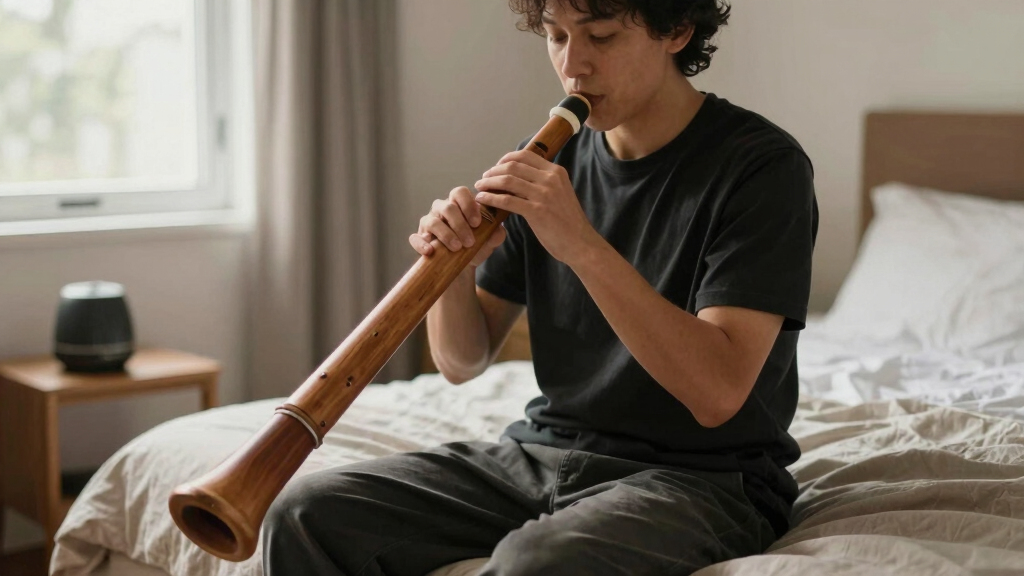
A 2006 randomized trial showed that practicing the didgeridoo can significantly reduce daytime sleepiness and improve airway function in patients with moderate obstructive sleep apnoea. The findings suggest a non-invasive treatment option, but further research is needed.
A 2006 clinical trial found that regular didgeridoo playing significantly reduces daytime sleepiness and airway collapsibility in patients with moderate obstructive sleep apnoea, suggesting a potential alternative therapy.
The study involved 25 adults with an apnoea-hypopnoea index between 15 and 30, who practiced didgeridoo for an average of nearly six days a week over four months. Results showed notable reductions in daytime sleepiness, with the Epworth scale decreasing by an average of 3 points, and a significant decrease in the apnoea-hypopnoea index by about 6.2 episodes per hour. Partners also reported less sleep disturbance. The intervention did not significantly improve overall sleep quality or health-related quality of life.
The study was conducted at a sleep medicine center and a private practice in Zurich, with participants learning specific didgeridoo techniques, including circular breathing, to strengthen upper airway muscles. Participants practiced at home regularly, and outcomes were measured through standard sleep and quality-of-life assessments.
Why It Matters
This study suggests that didgeridoo playing could serve as a non-invasive, acceptable treatment alternative for patients with moderate obstructive sleep apnoea, especially those who find continuous positive airway pressure (CPAP) therapy unsuitable. If validated in larger trials, this could expand options for managing sleep-disordered breathing and potentially reduce associated cardiovascular risks.
As an affiliate, we earn on qualifying purchases.
Background
Obstructive sleep apnoea affects a significant portion of the population, with current primary treatments like CPAP being effective but often poorly tolerated. Prior anecdotal reports linked didgeridoo playing with reduced snoring and sleepiness, prompting scientific investigation. This study is among the first to systematically evaluate its effects, focusing on muscle training of the upper airway as a mechanism to prevent collapse during sleep.
“Regular didgeridoo playing appears to strengthen the muscles of the upper airway, reducing collapsibility and improving sleep symptoms.”
— Lead researcher
“Practicing the didgeridoo was enjoyable and less invasive than other treatments. I noticed I was less sleepy during the day.”
— Study participant
As an affiliate, we earn on qualifying purchases.
What Remains Unclear
While results are promising, the study involved a small sample size and lacked long-term follow-up. It is unclear whether the benefits persist beyond four months or apply to more severe cases. Larger, multicenter trials are needed to confirm efficacy and safety.
Upper airway muscle strengthening didgeridoo
As an affiliate, we earn on qualifying purchases.
As an affiliate, we earn on qualifying purchases.
What’s Next
Further research should include larger randomized controlled trials with longer follow-up periods to verify these findings. Investigations into the optimal duration and frequency of practice, as well as the mechanism of muscle strengthening, are also planned.
As an affiliate, we earn on qualifying purchases.
Key Questions
Can anyone with sleep apnoea try didgeridoo playing?
While the study focused on moderate cases, individuals should consult a sleep specialist before starting new treatments, especially if they have severe sleep apnoea or other health conditions.
How long does it take to see benefits from didgeridoo practice?
In the study, significant improvements were observed after four months of regular practice, averaging nearly six days per week.
Is didgeridoo playing a substitute for other treatments?
Currently, it is considered a potential adjunct or alternative for those who cannot tolerate CPAP, but it should not replace evidence-based treatments without further validation.
Are there any risks associated with didgeridoo playing?
Generally, it is safe when practiced properly; however, individuals should ensure proper technique to avoid strain or injury, especially if they have pre-existing respiratory conditions.
Source: Hacker News
Fall Picks
fall essentials
As an affiliate, we earn on qualifying purchases.