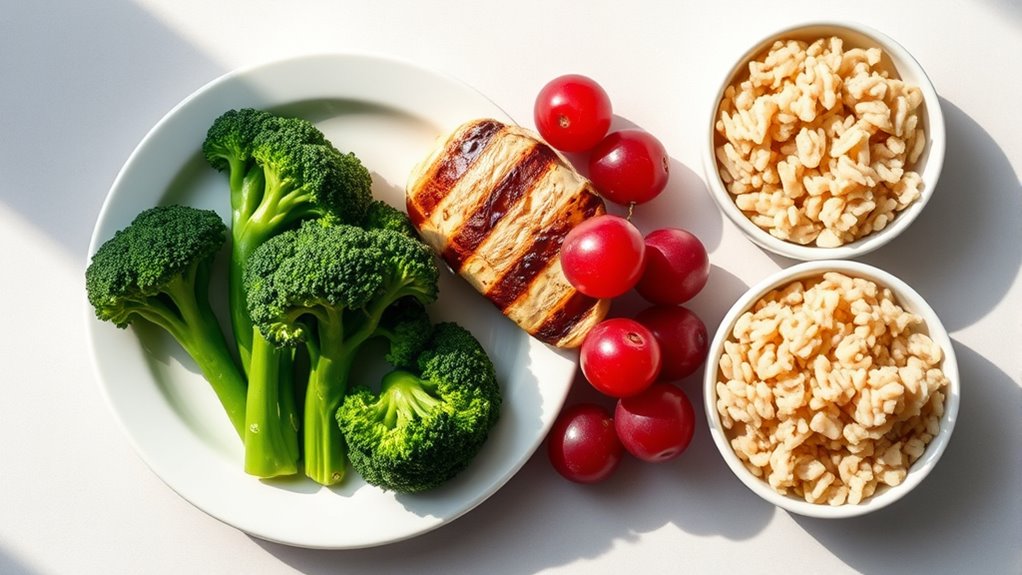

To make portion control easy, use familiar objects as visual cues to judge serving sizes. For example, a small handful of nuts is like a golf ball, and a deck of cards is perfect for meat. These simple comparisons help you avoid measuring tools and stay mindful of your intake. By practicing this method, you’ll feel more in control of your eating habits. Keep going to discover more helpful tips for mastering portions effortlessly.
Key Takeaways
- Use familiar objects like a golf ball or deck of cards to estimate snack and meal portions easily.
- Visual cues help promote mindful eating and prevent overeating without measuring tools.
- Pre-portion snacks and meals into containers based on visual size references for convenience.
- Incorporate vegetables and healthy drinks, like vegetable juice, to enhance hydration and nutrient intake.
- Regularly practicing visual portion estimation builds healthier habits and simplifies meal planning.

Have you ever struggled to manage your portion sizes without feeling deprived? If so, you’re not alone. Many people find it challenging to control servings, especially when it comes to snacking habits and meal planning. The good news is that understanding visual cues for serving sizes can make a big difference. Instead of relying solely on measuring cups or scales, you can use everyday objects to estimate appropriate portions and make smarter choices effortlessly.
When it comes to snacking habits, portion control can help prevent overeating and keep your calorie intake in check. Instead of mindlessly munching straight from a bag or box, try pre-portioning snacks into smaller containers or bags. For example, a typical serving of nuts is about a small handful, roughly the size of a golf ball, which you can easily visualize. A single ounce of cheese is about the size of a standard domino, and a cup of yogurt is roughly the size of a baseball. By familiarizing yourself with these visual cues, you can enjoy snacks without going overboard, helping you stay on track with your health goals.
Meal planning becomes simpler when you incorporate these visual serving sizes into your routine. Instead of guessing or eyeballing portions, you can prepare meals with confidence, ensuring each plate contains the right amount of food. For instance, a serving of cooked pasta is about the size of a tennis ball, and a serving of cooked vegetables is roughly equivalent to a baseball. Meat portions should be about the size of a deck of cards or the palm of your hand. These simple comparisons can help you assemble well-balanced meals without the need for constant measuring, saving you time and reducing the temptation to overeat.
Using visual guides also encourages mindful eating, making you more aware of what you’re consuming. When you see familiar objects representing serving sizes, it becomes easier to recognize when you’re eating too much or too little. This awareness can help you adjust your snacking habits and meal portions on the fly, especially during busy days when measuring everything isn’t practical. Additionally, incorporating vegetable juices into your diet can enhance hydration and nutrient intake without the need for large portions. Over time, these visual cues become second nature, empowering you to make healthier choices without feeling restricted.

Efficient Nutrition Portion Control Containers DELUXE Kit (14-Piece) with COMPLETE GUIDE + 21 DAY PLANNER + RECIPE eBOOK BPA FREE Color Coded Meal Prep System for Diet and Weight Loss
✔️Downloadable resources!
As an affiliate, we earn on qualifying purchases.
As an affiliate, we earn on qualifying purchases.
Frequently Asked Questions
How Can I Measure Portion Sizes Without a Scale?
You can measure portion sizes without a scale by using common measuring utensils like cups and spoons. Refer to portion charts for visual references, which show how much food fits in standard containers. For example, a deck of cards can represent a serving of meat, and your fist can estimate a cup of cooked veggies. These simple tools and guides make controlling portions easy and effective without needing a scale.
Are Visual Serving Sizes Accurate for All Foods?
Ever wonder if visual serving sizes are as reliable as food labeling? They offer a quick, practical way to estimate portions, but aren’t foolproof for all foods. While visual guides align with dietary guidelines for common items, some complex dishes or processed foods may need actual measurements. Always cross-check with food labeling when possible, and remember, visual cues are helpful but not a substitute for precise measurements for accurate nutrition tracking.
How Do I Adjust Portions When Dining Out?
When dining out, you can modify portions by practicing mindful eating and focusing on your meal planning. Start by asking for smaller portions or sharing dishes. Use visual cues to compare servings to familiar objects, helping you avoid overeating. Pay attention to your hunger cues, and don’t feel pressured to finish everything. This approach supports healthy habits, ensures you enjoy your meal, and keeps portion sizes in check.
What Are the Best Tools for Portion Control?
When it comes to portion control, the best tools include meal prep containers, which help you manage serving sizes and prevent overeating. Using a food scale can guarantee precise portions, while measuring cups and spoons aid in accuracy. These tools support appetite control by making it easier to stick to healthy portions, especially when you’re planning meals ahead. Incorporate them into your routine for better habits and consistent portion sizes.
How Can I Teach Children About Proper Serving Sizes?
Teaching children about proper serving sizes starts with simple, consistent mealtime routines. Use visual tools to debunk portion size myths, making mealtime memorable and manageable. Show them that a serving isn’t a super-sized scoop but a small, satisfying amount. Engage their curiosity with fun facts and visuals. Reinforce these routines daily, helping kids recognize and respect realistic portions, fostering healthy habits that last a lifetime.

Amazon Basics Portion Snack Bags, Double Zipper Seals in Freshness, 3.5 x 5.9 Inches, 100 Count
IN THE BOX: 100 portion-sized snack bags measuring 3 1/2 IN X 5 7/8 IN
As an affiliate, we earn on qualifying purchases.
As an affiliate, we earn on qualifying purchases.
Conclusion
Now that you know how to master portion control with simple visual cues, you’re unstoppable in making healthier choices. Think of it as wielding a superpower—your secret weapon against overeating! Remember, tiny adjustments can lead to huge health wins. So, keep practicing these easy tricks, and soon, you’ll be a portion control pro, transforming your eating habits faster than you can say “balanced diet.” You’ve got this—your journey to better health starts now!

Chef Craft Easy to Ready Plastic Measuring Cup Set, 10 piece set, Green
Includes 1/8 tsp, 1/4 tsp, 1/2 tsp, 1 tsp, 1/2 tbsp, 1 tbsp, 1/4 cup, 1/3 cup, 1/2…
As an affiliate, we earn on qualifying purchases.
As an affiliate, we earn on qualifying purchases.

Protein Food Chart Poster High Protein Foods List Canvas Print Portions & Calories Guide for Kitchen Gym Clinic Home Wall Decor 8x12inch Unframed
Complete Guide to High Protein Foods: Showcasing a variety of protein-rich foods with portion sizes and calorie counts,…
As an affiliate, we earn on qualifying purchases.
As an affiliate, we earn on qualifying purchases.