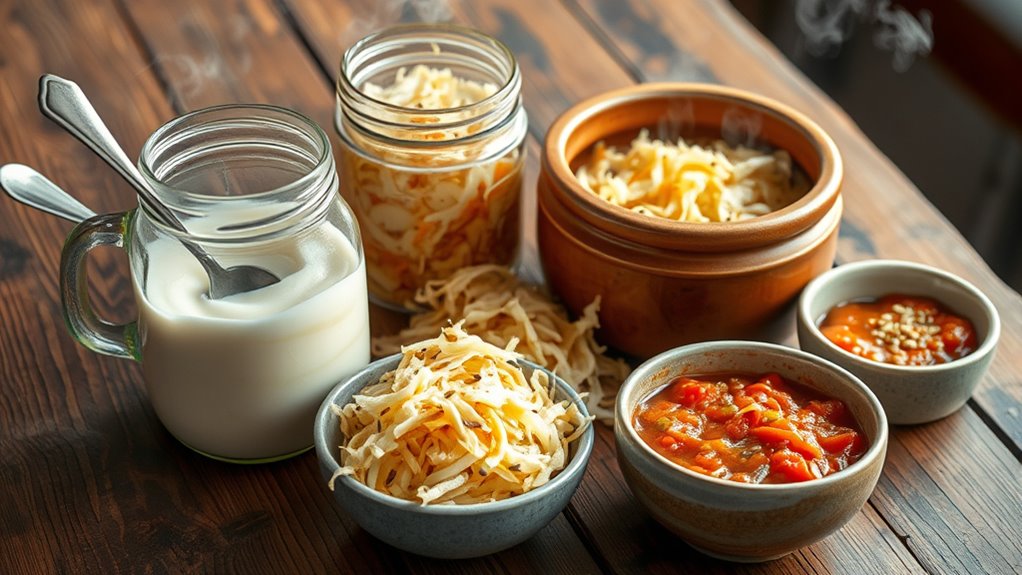

You can easily make fermented foods at home like yogurt and sauerkraut with simple ingredients and basic techniques. Start by heating and cooling milk for yogurt, then ferment with a starter, or shred cabbage and add salt for sauerkraut, ensuring beneficial bacteria thrive. These homemade recipes preserve nutrients, enhance flavor, and support gut health. Keep exploring for more tips on mastering your own delicious, probiotic-rich fermented foods and revealing their health benefits.
Key Takeaways
- Fermented foods like yogurt and sauerkraut are easy to make at home using simple ingredients and basic fermentation techniques.
- Use milk and starter cultures to homemade yogurt; ferment shredded cabbage with salt for sauerkraut.
- Maintain appropriate temperatures and environments to promote beneficial microbial activity and prevent spoilage.
- Fermentation preserves nutrients, enhances flavor, and provides probiotics that support gut health.
- Proper techniques involve controlling microbial activity to ensure safety, flavor, and maximum health benefits of homemade fermented foods.
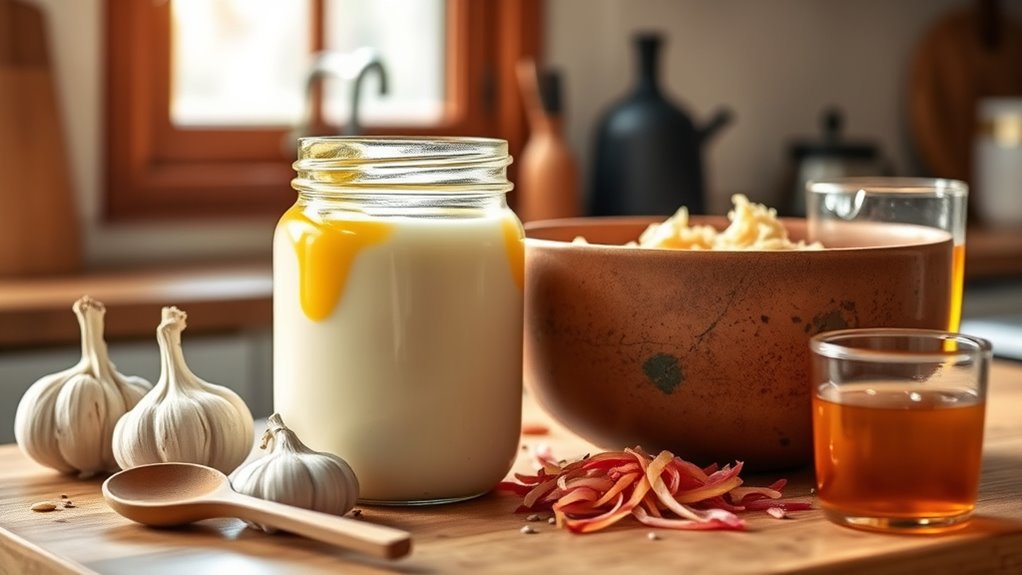
Fermented foods have gained popularity not only for their unique flavors but also for their health benefits, and you can easily make them at home with just a few simple ingredients. One of the main reasons to try fermenting your own foods is to tap into their probiotic benefits. Probiotics are live microorganisms that, when consumed in adequate amounts, can improve your gut health by balancing your microbiome. When you understand basic fermentation techniques, you can transform simple ingredients into nutritious, flavorful foods that support your digestion and overall well-being.
The first step is learning about fermentation techniques, which involve controlled microbial activity that converts sugars into acids, gases, or alcohol. For example, when making yogurt, you rely on beneficial bacteria like Lactobacillus bulgaricus and Streptococcus thermophilus. These bacteria ferment the milk, producing lactic acid that thickens the yogurt and imparts its tangy flavor. To make yogurt at home, you need just milk and a small amount of plain, active-culture yogurt as a starter. Heat the milk gently, then cool it to the right temperature before adding the starter. Keep the mixture warm for several hours, allowing the bacteria to multiply and ferment the milk. The result is fresh yogurt loaded with probiotic benefits that boost your gut health.
Similarly, making sauerkraut involves fermenting shredded cabbage with salt, which creates an environment for beneficial bacteria like Leuconostoc and Lactobacillus to thrive. The fermentation techniques here include submerging the cabbage in its own juices or a brine solution to prevent spoilage and encourage microbial activity. Over a few days to weeks, the natural bacteria ferment the cabbage, producing lactic acid that preserves the vegetables and adds a tangy flavor. Not only does homemade sauerkraut contain probiotics, but it also preserves the nutrients in cabbage, making it a healthy addition to your meals.
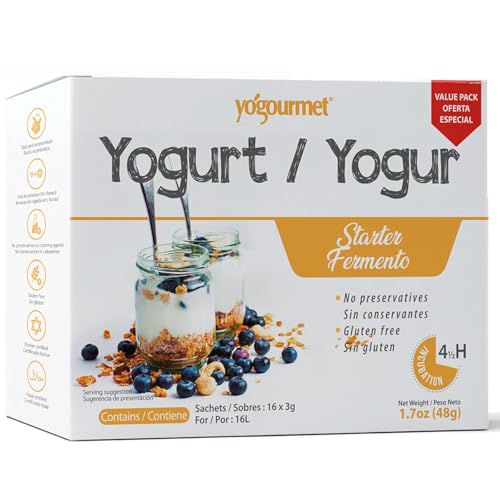
Yogourmet Yogurt Starter (16 Pack) – Make Yogurt at Home – Starter Culture – All Natural, Gluten Free, Kosher, Halal – 3 g Sachets
- Includes: 16 sachets, each makes 1 liter of yogurt
- Easy to Make: Simple process for smooth, creamy homemade yogurt
- Gut Health Support: Contains probiotics for digestive wellness
As an affiliate, we earn on qualifying purchases.
As an affiliate, we earn on qualifying purchases.
Frequently Asked Questions
How Long Does Homemade Fermented Food Last?
You might wonder how long homemade fermented foods last. Typically, their shelf life varies: yogurt lasts about 1-3 weeks in the fridge, while sauerkraut can last several months. Proper storage tips include keeping them in airtight containers and maintaining consistent refrigeration. Always check for signs of spoilage, like off smells or mold, before consuming. With good storage, you can enjoy your fermented creations safely for weeks or even months.
Can I Use Organic Produce for Fermentation?
Using organic ingredients for fermentation is like planting seeds in rich soil—you get better results. Organic produce is free from pesticides and chemicals, making it ideal for fermentation. It enhances the benefits of fermentation, such as improved gut health and richer flavors. Plus, organic ingredients often have more natural microbes, which can help your fermented foods develop deeper, more authentic tastes. So yes, go ahead and use organic produce for better, healthier fermentation.
What Are Common Fermentation Mistakes to Avoid?
When fermenting at home, you should watch out for common mistakes like poor fermentation hygiene and contamination. Always clean your equipment thoroughly to prevent unwanted bacteria, and guarantee your ingredients are fresh and properly prepared. Avoid opening your ferment too often, as it can introduce contaminants. Keep everything submerged and at the right temperature. These steps help prevent spoilage and ensure safe, delicious fermented foods.
Is Fermentation Safe for Pregnant Women?
Think of fermentation like a delicate dance—while it can be safe, missteps pose risks. During pregnancy, safety is essential, and fermentation risks include harmful bacteria. You might recall a friend who avoided homemade kimchi during pregnancy, fearing contamination. Pregnancy safety experts advise consulting healthcare providers because some fermented foods could harbor bacteria or alcohol. So, when in doubt, it’s best to prioritize caution over risking fermentation mishaps.
How Do I Store Homemade Fermented Foods Properly?
To store your homemade fermented foods properly, transfer them into clean, airtight storage containers after fermentation is complete. Use a suitable fermentation vessel during the process to prevent contamination, and once finished, move the food into containers that keep out air and light. Keep them refrigerated to slow fermentation and maintain quality. Always check for signs of spoilage before consuming, ensuring safety and freshness.

Fermentation Crock 1 Gallon – Sauerkraut Crock with Lid, Weights & Pounder
- Large 1-Gallon Capacity: Holds 5-6 lbs of vegetables for small batches
- Premium Ceramic Construction: Made from natural stoneware with food-safe coating
- Effective Water Seal Lid: Prevents air entry while releasing fermentation gases
As an affiliate, we earn on qualifying purchases.
As an affiliate, we earn on qualifying purchases.
Conclusion
As you start making fermented foods at home, you’ll realize it’s more than just a craft—it’s a reminder that some of life’s best flavors come from patience and a touch of nature’s coincidence. Each batch you create connects you to traditions and surprises that can’t be planned. So, keep experimenting, because sometimes, the most unexpected results turn out to be the most rewarding—proof that even in fermentation, life’s little surprises can truly enrich your day.

NatureBell Probiotics 200 Billion CFU Per Serving, 40 Strains, 240 Capsules
- Full Spectrum 5-in-1 Complex: Digestive enzymes, prebiotics, probiotics, postbiotics, fiber
- High Potency CFU: 200 billion CFU per serving
- Multiple Strains: 40 probiotic strains per serving
As an affiliate, we earn on qualifying purchases.
As an affiliate, we earn on qualifying purchases.

6 Pieces Horizontal Stick On Thermometer Strip Horizontal Thermometer Stickers Digital Temperature Display for Fermenting, Brewing, Wine, Beer, Kombucha Aquariums, 64-93°F (18-34°C) Adhesive Sticker
- Package Includes: Six horizontal thermometer strips
- Temperature Range: 64-93°F (18-34°C)
- Versatile Placement: Suitable for tanks and flat containers
As an affiliate, we earn on qualifying purchases.
As an affiliate, we earn on qualifying purchases.