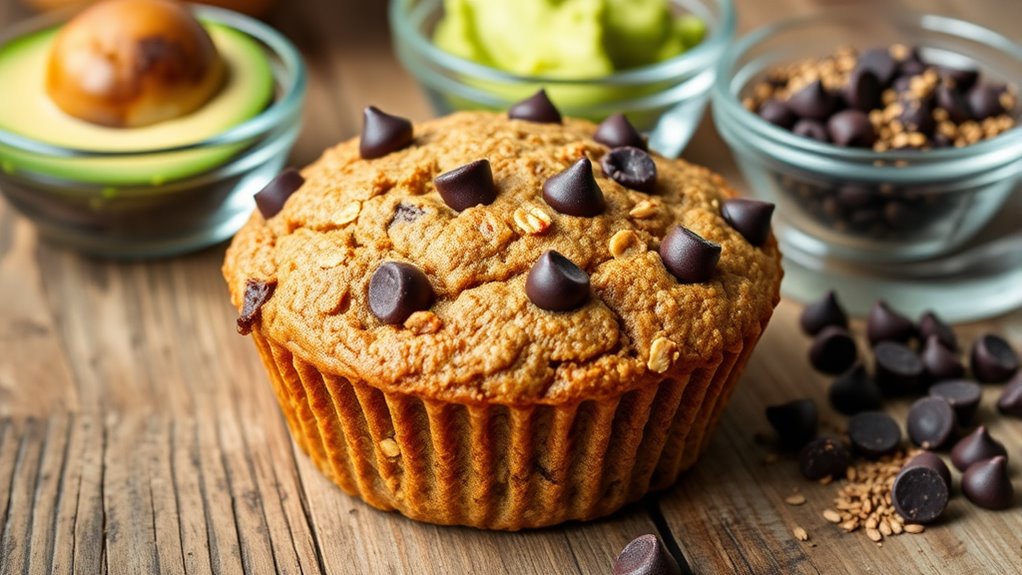

To cut calories while keeping your baked treats tasty, try swapping sugar for natural alternatives like stevia, erythritol, or monk fruit, which provide sweetness with fewer calories. Use whole grain flours such as whole wheat or oats to boost fiber and nutrition. Adjust recipes gradually, for example replacing half the sugar or mixing flours, to maintain flavor and texture. Continue exploring these simple swaps to create healthier, satisfying baked goodies every time.

Turn quiet afternoons into listening time
- Thousands of audiobooks, podcasts and originals
- Listen on your phone, tablet or Echo — also offline
- Cancel anytime
Key Takeaways
- Substitute sugar with natural sweeteners like stevia, erythritol, or monk fruit to reduce calories without sacrificing sweetness.
- Use whole grain flours such as whole wheat, oats, or spelt to boost fiber and nutritional content while maintaining flavor.
- Gradually replace half of the sugar and blend white and whole grain flours to adapt taste and texture smoothly.
- Adjust liquids or leavening agents when using whole grain flours for optimal baking results.
- Focus on small, consistent swaps to enjoy healthier treats that satisfy taste and support overall health goals.

Baking delicious treats doesn’t have to mean sacrificing your health. You can enjoy your favorite baked goods while making smarter choices that cut calories and boost nutrition. One of the easiest ways to do this is by swapping out traditional ingredients with healthier alternatives. For example, sugar alternatives like stevia, erythritol, or monk fruit sweetener allow you to reduce sugar content without losing the sweet flavor you crave. These options contain fewer calories and have a minimal impact on blood sugar levels, making them ideal for those managing weight or blood sugar concerns. When you use sugar alternatives, you can still achieve the sweetness you want, but with fewer empty calories, which helps maintain your overall health goals.
Another effective swap involves choosing whole grain options over refined flours. Whole wheat flour, oats, or spelt flour are rich in fiber, vitamins, and minerals, unlike their refined counterparts. Incorporating whole grains into your baking not only adds nutritional value but also enhances the texture and flavor of your treats. Whole grain options tend to be more filling, which can help curb overeating and unnecessary snacking. Plus, they provide a steadier release of energy, keeping you satisfied longer. When baking cookies, muffins, or bread, replacing refined flour with whole grain alternatives is a simple change that can make a significant difference in your diet without compromising taste or consistency.
You might think that these swaps could alter the flavor or texture of your baked goods, but with some experimentation, you’ll find the right balance. Many sugar alternatives are quite versatile and can be used in a 1:1 ratio with sugar, making the transition seamless. Whole grain flours may require slight adjustments in liquids or leavening agents, but the results are often worth it. The key is to start small—try replacing half of the sugar with a sugar alternative or mixing whole grain flour with white flour to ease into the new flavor profiles. Over time, you’ll discover the perfect combination that satisfies your sweet tooth and nourishes your body.
natural sweetener stevia for baking
As an affiliate, we earn on qualifying purchases.
As an affiliate, we earn on qualifying purchases.
Frequently Asked Questions
Can I Substitute Gluten-Free Ingredients Without Affecting Taste?
You can substitute gluten-free ingredients without affecting taste, especially if you choose the right options. Using gluten-free flour, like rice or tapioca, works well, but baking with almond flour offers a richer flavor and better texture in many recipes. Keep in mind, you might need to adjust liquids or binders, but with some experimentation, your baked goods will still taste delicious while being gluten-free.
Are There Vegan Alternatives for Traditional Baking Ingredients?
Imagine a warm, freshly baked cake, now made vegan. You can swap traditional eggs with vegan egg replacements like flaxseed or applesauce, and choose dairy-free butter options such as coconut oil or margarine. These alternatives maintain flavor and texture while aligning with your vegan lifestyle. You’ll enjoy delicious baked goods that are both compassionate and satisfying, proving that plant-based ingredients can seamlessly replace traditional ones without sacrificing taste.
How Do Sugar Substitutes Impact Baking Texture?
Sugar substitute types, such as erythritol, stevia, and monk fruit, can affect baking texture through their unique properties. These substitutes often provide less moisture and structure than sugar, leading to potential texture modification like crumblier cookies or denser cakes. To achieve the best results, experiment with different sugar substitute types, adjusting other ingredients to compensate for texture changes and maintain your baked goods’ desired consistency.
Can I Reduce Fat Without Losing Flavor?
Think of your baking as a delicate dance, where lowering fat doesn’t mean missing the beat. By choosing ingredient substitutions like applesauce or Greek yogurt, you add moisture and richness without sacrificing flavor. These swaps boost nutritional benefits, making your treats healthier. You can reduce fat while keeping that full-bodied taste, turning a simple recipe into a nourishing delight that sings with every bite.
What Are the Best Low-Calorie Toppings for Baked Goods?
You want low-calorie toppings for baked goods that don’t compromise flavor. Try adding fresh fruit toppings like berries or sliced apples—they’re naturally sweet and colorful. Spice enhancements like cinnamon, nutmeg, or vanilla can also boost flavor without adding calories. These options keep your treats tasty and satisfying, helping you enjoy your baked goods while keeping them lighter. Just a sprinkle of fruit or spice can make a big difference!
erythritol baking sugar substitute
As an affiliate, we earn on qualifying purchases.
As an affiliate, we earn on qualifying purchases.
Conclusion
By choosing these healthy baking swaps, you’re planting seeds of change in your kitchen. Every mindful choice is a drop of water nurturing your well-being, transforming ordinary treats into symbols of self-care. As you embrace these swaps, you cultivate a garden of flavor and health, where balance blooms. Remember, each small step is a seed that grows into a healthier, happier you—your baking journey is a beautiful tree rooted in mindful decisions.
As an affiliate, we earn on qualifying purchases.
As an affiliate, we earn on qualifying purchases.
Fall Picks
fall essentials
As an affiliate, we earn on qualifying purchases.