TL;DR
Easy-to-use senior-friendly cookware should feel comfortable to grip, stable on the stovetop, manageable to lift, and simple to clean. Compare each empty pan and handle, then consider its weight when filled, cooktop compatibility, and the meals you actually make. Age alone does not determine what cookware works best.
A saucepan that feels light in the cupboard can turn into a heavy, awkward load once it holds a liter of water. That everyday difference is why easy-to-use senior-friendly cookware deserves a closer look than a product label or a shiny set on a store shelf.

Turn quiet afternoons into listening time
- Thousands of audiobooks, podcasts and originals
- Listen on your phone, tablet or Echo — also offline
- Cancel anytime
The right choice depends on the person, the meal, and the kitchen. Reduced grip strength, arthritis, limited mobility, or vision changes may affect which handles and controls feel comfortable, but age alone does not decide. You’ll learn how to compare weight, grips, stability, materials, and useful sizes so you can choose cookware that fits real routines.
Think about someone making oatmeal before breakfast: a small pot, a handle they can hold without pinching, and a lid they can lift comfortably may matter more than having twelve matching pieces. The goal is simple: make everyday cooking easier while keeping each task within the cook’s comfort and ability.
Test handle comfort and balance; empty weight alone does not show how a full pan will feel.
Consider smaller pots or two-handled designs when a full pot would be difficult to lift.
Choose nonstick, stainless steel, enamel, cast iron, or aluminum based on cooking habits, care needs, and product weight.
Confirm induction compatibility and follow the maker’s instructions for heat, utensils, cleaning, and oven use.
A few well-chosen pieces may be easier to store and use than a large cookware set.
Start with weight, balance, and a handle you can trust
Easy-to-use senior-friendly cookware is cookware that the person using it can grip, steady, and move comfortably during ordinary cooking. Check the empty pan first, then consider how much heavier it will feel with food or water inside. A lighter pan can help, but it should still sit flat and feel stable on the burner. Weight and stability work together: a very light pan that slides or tips can require more attention and correction, which may be tiring or unsafe.
Try holding a pan the way you would while pouring. Does the handle fit your hand without forcing your fingers into a tight pinch? Does the pan tip forward when you lift it? A handle that feels fine for a moment may become uncomfortable when held through stirring or pouring, so consider the whole task. Someone with sore wrists might prefer a short helper handle on a skillet because it shares the load; another cook may find a single, familiar long handle easier to control. There is no universally best shape—the useful one is the one the cook can hold and guide without strain.
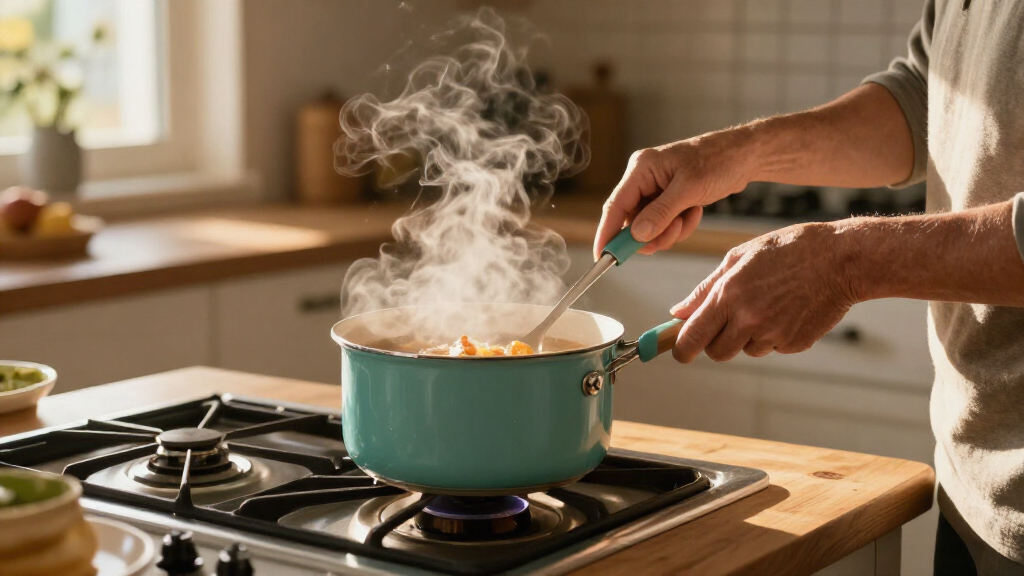
For a full pot, two short side handles can spread the load across both hands. Picture lifting a pot of pasta water: a large stockpot may feel manageable when empty but unwieldy once filled. A smaller pot, ladle, or draining insert can spare you from carrying a heavy, hot load across the kitchen. Smaller capacity may mean cooking in batches, but that tradeoff can be worthwhile if it avoids lifting a pot that is difficult to control.
Before buying, test the cookware if you can. Grip the handle, lift the empty piece, and check whether it wobbles in your hand or on a flat surface. Then consider whether you can reach the burner, stir, and set it down steadily. Handles should feel secure and stay cool during normal use according to the maker’s directions; stop using a piece with a loose handle. A comfortable empty-pan test is helpful, but it cannot fully predict how the pan will feel hot and loaded.
Products Worth Considering

Withings Sleep Under-Mattress Sleep Tracking Pad

Garmin Venu 3 Fitness Smartwatch, 45 mm, Black

Oura Ring 5 Smart Ring, Silver, Size 10
As an affiliate, we earn on qualifying purchases.
Choose a surface that matches your cleanup routine
The best cookware surface depends on what you cook and how much scrubbing you can comfortably do. Nonstick pans can make eggs, fish, and quick breakfasts easier to release and clean, while stainless steel offers a durable option that may need more attention to prevent sticking. Enameled cookware has a smooth surface, though many pieces are heavy. These differences matter because cleanup is part of the cooking task: a pan that is easy to wash may encourage someone to keep cooking, while a difficult one can make even a simple meal feel like extra work.
Imagine cleaning a pan after a quick lunch. If a fried egg slides out and a warm rinse removes most residue, nonstick may suit that routine. Its convenience comes with care limits: follow the manufacturer’s guidance for heat and utensils, and replace a pan if its coating is badly damaged. With stainless steel, preheating and using enough fat for the recipe can help reduce sticking, but technique may take practice. That learning curve can be a reasonable tradeoff for someone who values a durable pan, but less appealing if dependable, low-effort cleanup is the priority.
Cast iron holds heat well, yet its weight and care requirements can make it a poor fit for someone who struggles to lift or wash cookware. Aluminum is often lightweight and heats quickly, but construction, coating, and cooktop compatibility differ by product. A material’s general reputation does not tell you how heavy a specific pan is or how its handle balances that weight. No material works best for everyone.
Choose around the meals you actually prepare. If you mostly cook soup, a manageable saucepan may matter more than a full set of skillets. If cleanup is tiring, look for a surface and shape that wash easily in your sink, and check whether the specific piece is dishwasher-safe rather than assuming every item in a material category is. Also consider whether the pan fits comfortably in the sink: a wide skillet may be easy to cook with but awkward to turn and rinse.
Compare the trade-offs before choosing a material
To compare cookware materials fairly, look at empty weight, handle comfort, cleaning needs, and cooktop fit together. Material alone cannot tell you whether a particular pan will feel steady or suit your daily cooking. The table below shows typical trade-offs; individual products can differ, so check their specifications.
| Material | What may help | What to check | Everyday example |
|---|---|---|---|
| Nonstick | Often simplifies release and cleanup | Care instructions, coating condition, heat limits | Eggs for breakfast with less scrubbing |
| Stainless steel | Durable and versatile | Weight and cooking technique | Vegetables or sauce in a pot used often |
| Enameled | Smooth surface that can be easy to clean | Weight and chipped enamel | A casserole dish moved from counter to table |
| Cast iron | Retains heat well | Heavy lifting and care needs | A skillet that stays on the stove rather than being carried |
| Aluminum | Often lightweight and quick to heat | Coating and cooktop compatibility | A small pan for a fast lunch |
For example, a stainless-steel saucepan might suit someone who values durability and already knows how to cook with it. A lightweight nonstick skillet may be more useful for someone who cooks eggs and wants a quick rinse afterward. The choice reflects a balance: durability can come with more technique and cleanup, while easier release may come with stricter care limits. The material is just one piece of the decision.
Marketing terms such as “senior-friendly,” “ergonomic,” and “nontoxic” are not standardized measures of accessibility or performance. They do not establish that a handle will fit a particular hand or that a pan will be easy to lift when full. Look for concrete product details, such as dimensions, listed weight, handle design, and care limits, and where useful, independent reviews. If a seller says a pan is induction-ready, check the specifications for that exact model.
Use these five checks before you buy
Use five quick checks to decide whether cookware fits the person and the kitchen: test the grip, judge the balance, picture it full, confirm the cooktop match, and review the care instructions. A product page may sound reassuring, but the details that matter show up in actual handling. If possible, try the piece in person before committing. Each check addresses a different part of the routine: a comfortable grip cannot compensate for a pot that is too heavy when full, and easy cleanup does not help if the base is unstable on the cooktop.
- Hold the handle. Check that your fingers fit comfortably without pinching or twisting. A large knob on a lid may be easier to grasp than a small one. The handle should also give you enough control to move the pan, not just hold it still.
- Lift and balance the empty pan. Notice whether your wrist can steady it and whether the pan tips when held as you would cook. A pan that feels front-heavy may be harder to pour accurately, even if its listed weight is low.
- Think about a typical serving. Imagine the pan holding soup, potatoes, or pasta water. Choose a size that avoids unnecessary weight when full. A smaller pan may require an extra batch, but can make carrying and pouring more controlled.
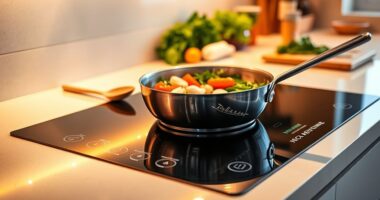
- Check your cooktop. Induction requires a compatible magnetic base; confirm the manufacturer’s guidance for all cooktop types. A pan that does not heat properly can disrupt familiar cooking routines.
- Read care and temperature limits. Check instructions for utensils, cleaning, dishwasher use, and oven use. If the care routine is too demanding, the pan may not be practical even when it performs well on the stove.
Say you’re choosing a pan for a relative who makes one serving of vegetables most evenings. A small, comfortable skillet may be more useful than a large set with pieces that crowd the cupboard. If the cook can test it safely, a modest load of food can also reveal how it handles beyond the empty-pan test. Consider the path from stove to plate as well: lifting, turning, and setting down all affect whether the pan feels manageable.
For an induction stove, a magnet sticking to the base can be a useful initial check, but the product maker’s specifications remain the reference. These small checks turn a vague label into a practical decision based on the kitchen, the cook, and the meal. Together they help identify compromises early, before a pan that looks convenient becomes an awkward item to store or use.
Make hot pans and busy kitchens easier to manage
Safer, easier cooking starts with reducing awkward lifting and reaching. Keep frequently used pans within easy reach instead of on a high shelf, and use a steady counter space when moving a hot dish. A pan that is comfortable to lift empty may feel different when it is hot and full, so keep loads modest. This also reduces the number of times a cook must move a hot, heavy object, which can make a familiar meal easier to manage from start to finish.
For example, if draining a large pot feels difficult, cook a smaller amount or use a draining insert that lets water escape without carrying the entire pot to the sink. A ladle can move soup into bowls a portion at a time. An electric kettle may help with hot water for tea or some cooking tasks, though it still needs to feel manageable to lift and pour. These adjustments trade a little convenience, such as cooking in batches, for more control over each movement.
Good lids and clear markings can help with common kitchen tasks. A glass lid lets you check simmering soup without lifting it, but glass can be heavier and breakable. Compare its weight and knob with a lighter lid, especially if lifting overhead or holding a hot lid is uncomfortable. Being able to see food can reduce unnecessary lifting, but only if the lid itself is comfortable to handle when it does need to come off.
Other kitchen changes may help, too: an induction cooktop with automatic shutoff, prepared ingredients, or a stable work surface can reduce effort. These tools do not replace cookware that feels secure in the hand. If a task feels unstable, ask a qualified occupational therapist or other appropriate professional about kitchen adaptations suited to the person. The right adjustment depends on which part of the task is difficult—reaching, gripping, carrying, or seeing—so naming that challenge helps make the advice practical.
Buy a few useful pieces instead of a bulky set
A small collection of cookware in manageable sizes can serve everyday meals better than a large set. Start with the foods the cook makes most often and choose only the pieces that meet those needs. A matching set may look tidy in a box, but several unused pots still take up space and can be hard to lift from a low cupboard. Buying fewer pieces also makes it easier to spend attention on how each one feels and works, rather than assuming a whole set is equally useful.
Imagine a person who usually makes soup, oatmeal, and a pan of vegetables. A small saucepan, a comfortable skillet, and perhaps a pot sized for the household may cover most meals. Each piece should fit the cooktop, clean up in the available sink, and feel secure when held. A clear storage spot helps the cook reach for the right pan without moving a heavy stack. The best size depends on serving needs: going too small can mean repeated batches, while choosing a pot that is larger than necessary adds weight every time it is filled.
Recent product trends include lighter constructions, improved nonstick coatings, induction-ready bases, and more ergonomic handle designs. Those descriptions can help you narrow a search, but they do not guarantee that a specific piece is comfortable for the person who will use it. Read current product details and warranty terms, and check independent reviews when available. Features may solve one problem and create another: a heavier base might improve stability, for example, while making the pan harder to lift.
The best shopping list may be short: one pan for the meal you cook most, one pot that stays manageable when filled, and lids you can handle easily. Buy for the actual routine. Useful cookware earns its cupboard space by making a familiar meal easier to prepare.
Frequently Asked Questions
What cookware is easiest to lift?
Compare the weight of individual pieces, then think about the food or water they will hold. Smaller capacities can be easier to manage when full, and two side handles may help distribute a pot’s load between both hands.
Is nonstick cookware a good choice for older adults?
It can be convenient when you want food to release easily and cleanup to take less effort. The fit depends on cooking habits and care needs, so follow the maker’s heat and utensil guidance and replace a pan if its coating is badly damaged.
Are glass lids a good idea?
A glass lid lets you see food without lifting it, which can be handy when simmering soup. It can also be heavier and breakable, so compare its weight and knob with a lighter lid before choosing.
Can senior-friendly cookware work on an induction cooktop?
Only cookware with a compatible magnetic base will work on induction. Check the product specifications for the exact piece; a magnet sticking to the base is a useful preliminary check.
Should I buy a complete cookware set?
Not necessarily. If you cook a few familiar meals, a small saucepan and a manageable skillet may be easier to lift, store, and clean than a large set with pieces you rarely use.
Conclusion
Choose cookware by how it feels in the person’s hand and how it handles a real meal, not by its label or the size of the set. Test the grip, consider the weight when full, and pick pieces that fit the cooktop and cleanup routine.
A comfortable little saucepan can make breakfast feel simple again. Let the next meal—not the marketing—show you what belongs in the kitchen.