
TL;DR

Turn quiet afternoons into listening time
- Thousands of audiobooks, podcasts and originals
- Listen on your phone, tablet or Echo — also offline
- Cancel anytime
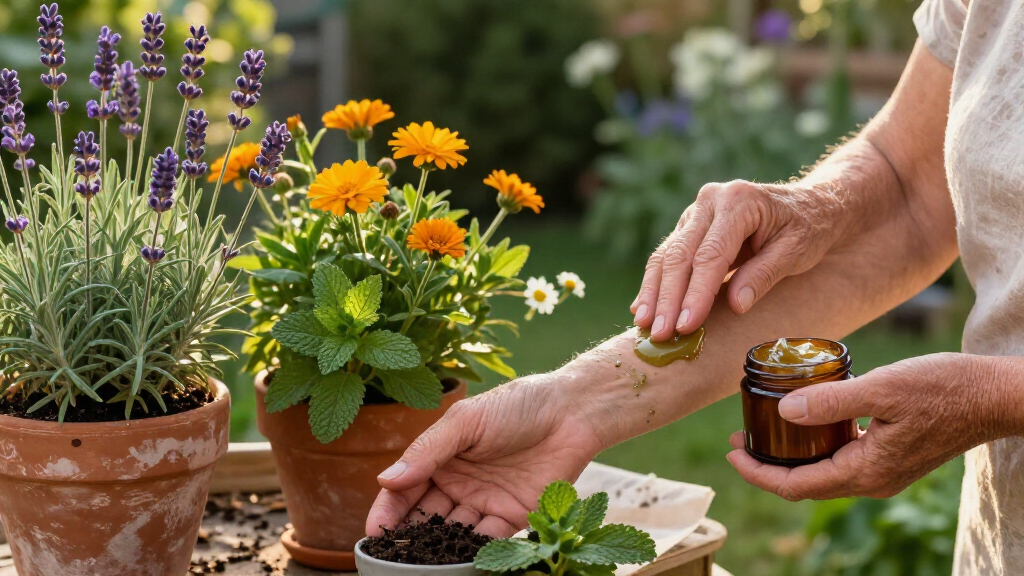
A Sixty and Me report by an herb farmer and cosmetic formulator describes five plants used in skincare: calendula, green tea, fennel, hops and lavender. The author summarizes research on possible skin effects and argues that growing some ingredients locally can shorten supply chains; the reported benefits do not establish that every product containing these herbs will produce them.
A Sixty and Me report by an herb farmer and cosmetic formulator describes five plants used in skincare—calendula, green tea, fennel, hops and lavender—and summarizes research into their possible skin effects. The piece also makes a case for growing some botanical ingredients locally, while noting that green tea is not grown on the author’s Colorado farm.
The report says research on calendula extracts has examined wound healing and skin repair, antioxidant and anti-inflammatory activity, hydration and elasticity. Laboratory research has also suggested possible effects on UVB-related oxidative damage and collagen. Those findings describe research on extracts and biological effects; they do not establish that a particular retail product will prevent sun damage or repair skin.
Green tea is included despite not being farm-grown in Colorado, where the author says the climate is too cool for the plant. Its catechins, including EGCG, have been studied for antioxidant and anti-inflammatory properties. The report says topical preparations have been investigated for effects associated with photoaging, including redness, hydration and collagen-related measures.
The other three plants have different research profiles. Studies of fennel preparations have reported changes in hydration, water loss through the skin, texture and redness. Research on hops has examined hydration, pigmentation, redness and wrinkles, as well as possible effects on collagen and elastin. The author describes lavender as a farm-grown plant distilled into hydrosol, and says its aroma has been studied in relation to relaxation, anxiety and sleep. Evidence can vary by preparation and circumstances, the report cautions.
Local Growing and Skin Claims
The report connects skincare research with the origin and processing of ingredients. Its author says growing and processing some botanicals on the farm reduces reliance on ingredients purchased from elsewhere, which may have been grown, processed, packaged, stored and transported before reaching a formulation site. The author also describes using regenerative agriculture and seeking to protect the land used for cultivation.
For readers, the distinction between research on plant compounds and the performance of a finished product matters. Findings cited in the report concern different preparations and outcomes; the supplied material does not provide study designs, sample sizes or enough detail to compare the strength of evidence. A plant’s presence on a label alone does not show how much is in a product or whether it has the same properties as a preparation used in research.
As an affiliate, we earn on qualifying purchases.
Five Plants, Different Evidence
The report frames “farm to skin” as more than the use of plant-based ingredients. The author defines it as growing useful plants, understanding their chemistry, reviewing evidence and deciding whether they belong in a formulated skincare product. The source is a first-person account from someone who works as both an herb farmer and cosmetic formulator, rather than a systematic review of skincare studies.
The five plants are not all grown at the same site. Calendula, fennel, hops and lavender are presented as useful herbs, with several grown on the author’s Colorado farm. Green tea is the exception, because the author says tea plants need warmer conditions. The report also notes that hops have traditional uses beyond skincare and that lavender’s aromatherapy research relates to aroma, not necessarily the effects of applying a skincare product.
As an affiliate, we earn on qualifying purchases.
Limits of the Reported Findings
The supplied report does not name individual studies or provide publication dates, methods, sample sizes or effect sizes for the research it summarizes. It is therefore not possible from this material alone to judge how strong or consistent the evidence is for each claimed outcome, or to compare one herb with another.
It is also unclear which specific skincare products, concentrations or extraction methods were tested in the studies mentioned. The report does not establish that the effects observed in laboratory research or particular topical preparations apply to all products containing these plants. Its sustainability discussion describes the author’s approach, but gives no quantified emissions, packaging or transport comparisons.
As an affiliate, we earn on qualifying purchases.
Product Formulation and Evidence
The report presents no new trial, product launch or regulatory decision, and it does not announce a follow-up milestone. Its practical next step is the author’s stated approach: review a plant’s chemistry and the available evidence, then decide whether and how it should be used in a well-formulated skincare product. Readers interested in a specific claim would need details of the underlying study and the product’s formulation to judge how closely they match.
As an affiliate, we earn on qualifying purchases.
Key Questions
Which five plants does the report discuss?
It covers calendula, green tea, fennel, hops and lavender. The author says green tea is not grown on the Colorado farm because the climate is too cool for it.
Does the report prove that these herbs improve skin?
No. It summarizes studies reporting possible effects from particular extracts or topical preparations. The supplied material does not provide enough study detail to assess the evidence or conclude that all products containing these plants have the same effects.
Why does the author grow herbs for skincare?
The author says local growing and processing can shorten the supply chain and reduce reliance on separately purchased, packaged and transported ingredients. The report does not quantify the environmental impact of that approach.
What does “farm to skin” mean in this report?
The author uses the phrase for a process that includes growing plants, understanding their chemistry, studying evidence and deciding whether they are suitable for a skincare formulation—not simply choosing plant-based ingredients.
Source: rss
Cold & flu season Picks
humidifiers
As an affiliate, we earn on qualifying purchases.