
TL;DR

Turn quiet afternoons into listening time
- Thousands of audiobooks, podcasts and originals
- Listen on your phone, tablet or Echo — also offline
- Cancel anytime
A Sixty and Me report explains how cold outdoor air, wind and heated indoor spaces can contribute to dry, tight or irritated skin by increasing moisture loss and challenging the skin barrier. The report recommends adjusting moisturizer and cleansing habits as needed, covering exposed skin and continuing broad-spectrum sunscreen; it does not present new clinical research.
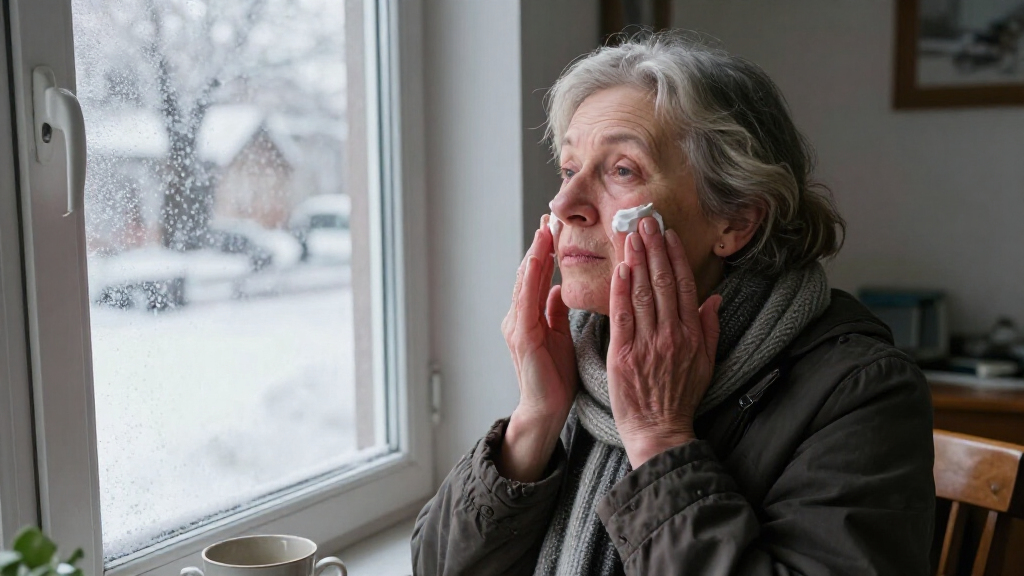
Cold weather, wind and dry indoor air can leave skin feeling tight, rough or irritated, according to a winter skincare report from Sixty and Me. The report explains that these conditions can increase moisture loss from the skin’s outer barrier and offers practical steps, including using moisturizer and sunscreen, while noting that people do not necessarily need to replace a routine that is already working.
The skin’s outermost layer, the stratum corneum, helps retain water and protect against irritants. It is made of skin cells held together by lipids, cholesterol and fatty acids. When this barrier is disrupted, water escapes more readily, which can contribute to dryness, tightness or irritation. The report identifies cold, low-humidity air and wind as common winter stressors.
Indoor heating can also affect comfort: cold outdoor air contains less water vapor than warm air, and heating incoming air can reduce its relative humidity. Wind increases evaporation from the skin’s surface and adds to exposure to cold. The report also warns that hot showers and harsh cleansers can remove some of the lipids that help maintain the barrier.
Age-related changes may make dryness more noticeable for some people. The report says declining estrogen after menopause contributes to changes in hydration, elasticity and skin thickness, while the skin may produce fewer lipids. It distinguishes dry skin, which lacks oil, from dehydrated skin, which lacks water in its outer layers; either can be associated with tightness and a dull appearance.
Keeping the Skin Barrier Comfortable
The advice matters because winter dryness can affect everyday comfort, especially on exposed areas such as the face and hands. The report’s central point is that care can be adjusted in response to symptoms rather than automatically replacing every product. If skin feels tight after cleansing, a gentler cleanser may help; if a usual moisturizer is not enough, a richer cream or balm can be applied to particularly dry areas.
Moisturizers use different types of ingredients. Humectants, including glycerin and hyaluronic acid, attract and bind water in the outer skin layers. Emollients, such as plant oils, soften and smooth; occlusives form a layer that helps reduce moisture loss. These descriptions explain ingredient roles, but the report does not establish that a particular product or botanical ingredient will work for every person.
Outdoor protection remains relevant in winter. The report recommends moisturizer before going outside, covering vulnerable skin with gloves or a scarf, and using broad-spectrum SPF 30 or higher on exposed areas. UV exposure continues even on cloudy days, it says, and contributes over time to pigmentation changes, wrinkles and loss of elasticity.
Products Worth Considering

LEVOIT Vital 200S-P Smart Air Purifier for Large Rooms up to 1875 ft², Quiet 27 dB Operation, AHAM VERIFIDE Certified, Air Quality Monitor,

Levoit Vital 100S-P Smart Air Purifier with Washable Pre-Filter

Blueair Blue Pure 211i Max Air Purifier for Large Rooms
As an affiliate, we earn on qualifying purchases.
Winter Conditions and Skin Changes
The report is seasonal guidance, not a new clinical study or a formal medical guideline. Its explanation centers on the skin barrier: environmental conditions and some cleansing habits can increase moisture loss or remove protective surface lipids. It advises keeping a routine that feels comfortable and making limited changes when dryness or tightness appears.
It also mentions calendula, fennel, green tea and vitamins C and E as ingredients used in skincare. The report describes research on calendula and fennel extracts as suggesting possible antioxidant, conditioning or hydration-related benefits. Those potential effects should not be read as proof that botanical ingredients prevent or treat a skin condition; the supplied material does not provide study details or product comparisons.
Other suggestions include avoiding repeated scrubbing or exfoliation of rough patches, cleansing gently after outdoor exposure, and considering a humidifier if indoor air feels dry. The report’s recommendations are general and do not distinguish among specific skin diseases or individual sensitivities.
Limits of the Seasonal Guidance
The supplied report does not include a publication date, named medical expert, clinical trial data or citations for the ingredient research it summarizes. It is therefore not possible from this material to assess the strength of evidence for particular botanical extracts or compare the effectiveness of specific moisturizers.
People’s skin can respond differently to weather and products, and the report does not provide individualized advice. It also does not specify how long symptoms should last before someone seeks professional care. Persistent, severe or worsening irritation may have causes beyond seasonal dryness; the article does not diagnose those causes.
Practical Steps Through Winter
The report recommends responding to how skin feels: retain products that are comfortable, consider a gentler cleanser if washing leaves skin tight, and use a richer moisturizer or balm where a standard lotion is insufficient. Before outdoor activity, apply moisturizer, cover exposed areas and use sunscreen on skin that remains uncovered. After returning indoors, cleanse gently and moisturize if needed.
For readers with ongoing or significant symptoms, a qualified health professional can help determine whether another condition or a product reaction is involved. The source gives no formal follow-up date or new research milestone; its guidance is intended for use during cold-weather conditions.
Key Questions
Why can skin feel drier in winter?
Cold air, wind and heated indoor air can contribute to moisture loss, while the skin barrier helps hold water in. Wind can increase evaporation, and indoor heating can lower relative humidity.
Do I need a completely new winter skincare routine?
Not necessarily. The report says to keep using a routine that feels comfortable and consider targeted changes, such as a gentler cleanser or a richer moisturizer, if skin becomes tight or flaky.
Should I use sunscreen in winter?
The report recommends broad-spectrum SPF 30 or higher on exposed skin, including on cloudy days, because UV exposure continues throughout the year.
Can hot showers make winter dryness worse?
According to the report, hot water and harsh cleansers can remove some of the lipids that help support the skin’s protective barrier. It recommends gentle cleansing rather than scrubbing irritated or rough areas.
Do calendula and fennel treat dry skin?
The report describes potential skin-conditioning and hydration-related benefits studied for extracts of these plants, but the supplied material does not establish that they treat a skin condition or work for everyone.
Source: sixtyandme.com