

When bringing a new pet home, start by preparing a safe, quiet space with food, water, and toys. Introduce family members carefully and keep initial interactions calm and supervised. Gradually allow your pet to explore their environment while monitoring for signs of stress or discomfort. Make sure hazards are removed and set clear boundaries. Consistency and patience help your pet feel secure; if you want tips on seamless introductions, you’ll find helpful advice if you continue exploring this guide.
Key Takeaways
- Introduce the new pet gradually to household members and other animals with supervision and calm interactions.
- Create a quiet, comfortable space where the pet can retreat and feel secure during initial adjustments.
- Keep initial interactions calm and controlled to prevent stress or aggression.
- Establish clear house rules and boundaries early for all family members and pets.
- Monitor the pet’s behavior and environment regularly, adjusting introductions as needed for a smooth transition.
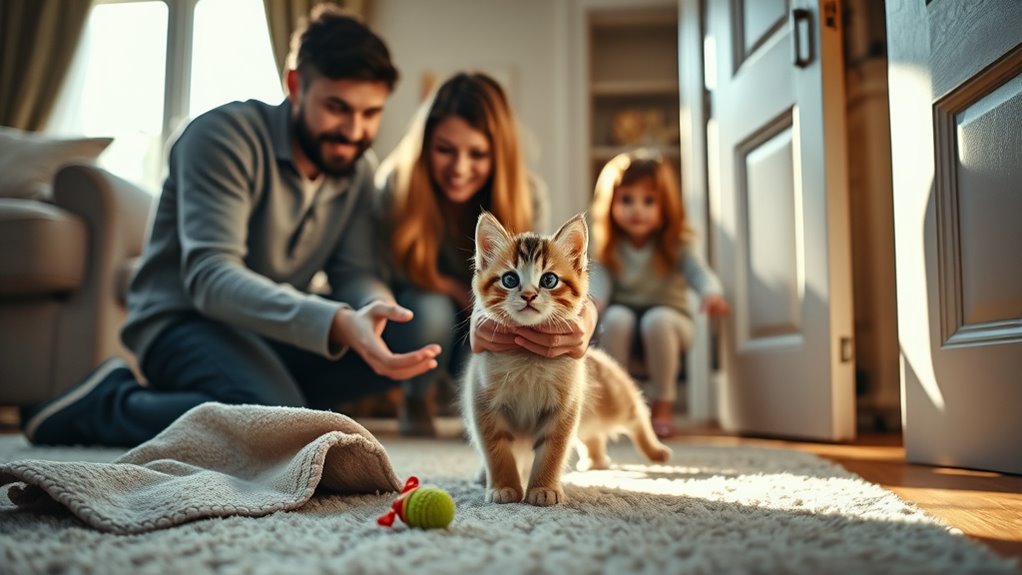
Bringing home a new pet is an exciting milestone, but it also requires careful preparation to guarantee a smooth passage. Before your new furry friend arrives, you need to focus on pet safety and household preparations. This means creating a safe environment where your pet can settle in comfortably and securely. Start by removing any hazards, such as loose wires, small objects that could be swallowed, or toxic plants and chemicals. Secure trash cans and cleaning supplies so your pet can’t access them. This proactive approach not only keeps your pet safe but also helps prevent emergencies.
Preparing a safe environment is key to a smooth transition for your new pet.
Household preparations involve setting up a dedicated space for your pet, like a cozy corner with their bed, toys, and water and food bowls. Having everything in place before arrival minimizes chaos and ensures your pet feels secure from the moment they walk through the door. It’s helpful to establish boundaries early—deciding which areas are off-limits and which are open for exploration. This prevents accidental accidents and helps your pet understand their new environment.
When planning to introduce your new pet to existing household members, whether human or other animals, take it slow. Keep the initial interactions calm and controlled, and supervise closely. Your pet might be nervous or overwhelmed at first, so providing a quiet, comfortable space where they can retreat helps reduce stress. Make sure house rules are clear and consistent, so everyone knows how to behave around the new pet. If you have other pets, consider gradual introductions, perhaps through scent swapping or short supervised visits, to foster positive associations.
Pet safety extends beyond the initial setup. Keep an eye on your pet during the first few days to catch any signs of distress or discomfort. Make sure they’re eating, drinking, and using the bathroom normally. Regularly check that their environment remains secure, especially if they’re still exploring or teething. Also, schedule a vet appointment early on to confirm your pet’s health and discuss vaccinations or preventive care. Additionally, be cautious with foods like grapes, which are toxic to dogs, and ensure your pet’s diet is safe and appropriate.
Frequently Asked Questions
How Long Should I Quarantine My New Pet Before Introducing It to Others?
When you bring home a new pet, it’s best to quarantine them for at least 10 to 14 days. This quarantine duration allows you to monitor their health closely, watch for signs of illness, and prevent any potential diseases from spreading to your other pets. During this time, keep an eye on their behavior and consult a vet if you notice anything unusual. This step guarantees a smoother, safer introduction later on.
What Are Signs of Stress or Illness in a New Pet?
Did you know that nearly 20% of pet owners miss early signs of stress or illness? You should watch for behavior cues like hiding, excessive grooming, or aggression, which indicate discomfort. Also, keep an eye on health symptoms such as lethargy, loss of appetite, or vomiting. Spotting these signs early helps make certain your new pet gets the care they need, making their adjustment smoother and healthier.
How Can I Help My Existing Pets Adjust to the New Arrival?
You can help your existing pets adjust by observing their pet behavior and giving them time to adapt. Provide environmental enrichment like toys and cozy spaces to reduce stress. Gradually introduce the new pet, allowing supervised interactions. Be patient and maintain routines to help your pets feel secure. Remember, positive reinforcement encourages good behavior, making the shift smoother and helping everyone settle comfortably into their new environment.
What Supplies Are Essential for a Smooth Transition?
Imagine it’s the dawn of a new era—you’ll want to gather essential supplies for a smooth changeover. Stock up on pet food suited to your new pet’s needs, and don’t forget grooming supplies like brushes and shampoo to keep them comfortable. Having familiar toys and bedding nearby helps ease anxiety. With these essentials, you create a welcoming environment that encourages trust and makes your pet feel right at home.
Should I Introduce My New Pet Gradually or All at Once?
You should opt for a gradual introduction rather than sudden integration. Introducing your new pet slowly allows them to adjust comfortably and reduces stress for everyone involved. Start with scent exchanges and supervised meetings, then progress to brief visits. This approach helps build trust and minimizes conflicts, making the transition smoother. Jumping straight into a sudden integration might overwhelm your pets and lead to behavioral issues. Be patient for the best results.
Conclusion
So, you’ve successfully introduced your new pet—congratulations! Now, enjoy the chaos of tiny paws, unpredictable naps, and surprise messes, all while pretending you’re hosting a royal welcome party. Remember, patience is key—think of it as training a tiny, furry dictator. Soon enough, your home will be filled with endless love, laughter, and the delightful chaos you signed up for. Welcome to the wonderful world of pet parenthood—where patience is a virtue and patience is often tested.