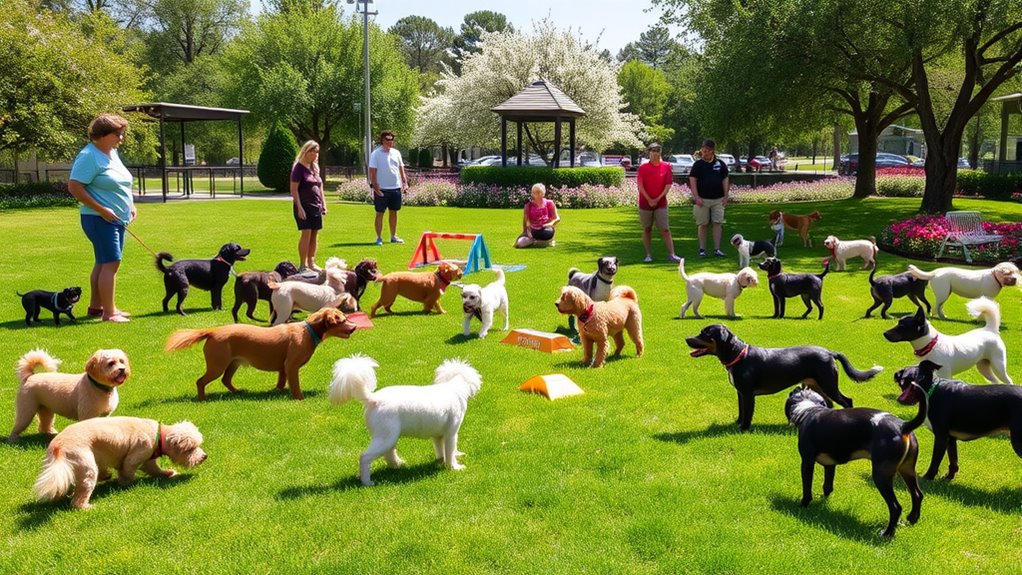

Participating in group classes and playdates is a great way to socialize your pet. These settings help your pet build confidence, learn good manners, and interact safely with other animals and people. Consistent, positive experiences in controlled environments encourage well-rounded development and reduce behavioral issues like fear or aggression. By fostering positive social skills early on, you set the foundation for a happy, adaptable companion. Keep exploring to discover more tips for effective pet socialization.

Turn quiet afternoons into listening time
- Thousands of audiobooks, podcasts and originals
- Listen on your phone, tablet or Echo — also offline
- Cancel anytime
Key Takeaways
- Group classes and playdates promote positive social interactions, improving pets’ confidence and behavior around other animals and people.
- They help pets learn to read social cues, reducing aggression and fearfulness in various situations.
- Consistent, supervised sessions reinforce gentle play, respect boundaries, and build trust between pets and owners.
- Early socialization experiences during group activities support better adaptability and reduce behavioral issues later in life.
- Tailored, positive exposure in controlled settings ensures safe, effective social development for pets.

Socialization is a pivotal part of raising a well-behaved and confident pet. When you expose your dog or cat to different people, animals, and environments, you’re helping them build trust and learn appropriate behaviors. For puppies, socialization often involves teaching puppy manners, such as gentle play, not jumping on people, and respecting boundaries. Group classes and playdates are excellent opportunities to reinforce these lessons. In these settings, your puppy learns how to interact politely with other pups and humans, which reduces the chances of aggression or fearfulness later on. During playdates, you can observe how your puppy responds to different social cues, helping you identify areas where they might need more guidance. Consistent exposure in a controlled environment makes your puppy more adaptable and confident in various situations.
When it comes to cats, socialization takes a slightly different approach, but the goal remains the same: fostering positive interactions. Cat interactions during group activities or supervised playdates help your feline friend become comfortable around other animals and new people. Cats are often more sensitive to changes, so introducing them gradually is key. Start with short, supervised sessions where your cat can observe other pets from a safe distance. Over time, increase the duration and closeness of interactions, always watching for signs of stress or discomfort. The goal is to create a positive association with social settings, which can help prevent shy or aggressive behaviors. Group classes designed for cats can also help your pet become accustomed to handling and grooming, reducing stress during vet visits or when meeting new people.
Participating in group classes and playdates not only benefits your pets but also strengthens your bond with them. You’ll learn how to read their body language, recognize signs of overstimulation, and respond appropriately. This guidance is indispensable, especially during early socialization stages, when your pet is most impressionable. Whether you’re working on puppy manners or encouraging friendly cat interactions, these experiences teach your pet to navigate the world confidently and calmly. Remember, the key is consistency and patience—socialization is a process that takes time, but with regular positive experiences, your pet will develop into a well-mannered and adaptable companion. So, make the most of group classes and playdates to set a solid foundation for your pet’s social skills, ensuring they grow into a happy, confident member of your family.
As an affiliate, we earn on qualifying purchases.
Frequently Asked Questions
How Do I Choose the Right Group Class for My Pet?
To choose the right group class, start by considering your pet’s behavior assessment; guarantee the class matches their social skills and temperament. Observe the class environment—look for a positive, calm setting with attentive trainers. Ask about the curriculum and whether it’s designed for your pet’s age and needs. A good fit will help your pet socialize confidently while feeling safe and comfortable.
What Age Is Best to Start Socialization Classes?
Think your puppy’s too young to learn social skills? Think again! The ideal age to start puppy social skills classes is around 8 to 16 weeks, when they’re most receptive. Early socialization helps avoid adult pet interactions that involve fear or aggression. Waiting too long means missed opportunities for positive experiences. So, don’t wait—start early and set your pet up for confident, happy social lives!
How Can I Tell if My Pet Is Stressed During Playdates?
You can tell your pet is stressed during playdates by watching their body language cues, like tucked tail, raised hackles, or lip licking. Excessive barking or growling also indicates discomfort. If your pet seems tense, avoids interaction, or shows signs of agitation, it’s time to give them a break. Keeping a close eye on these cues helps make certain playdates stay positive and safe for your furry friend.
Are There Specific Breeds That Benefit More From Socialization?
Certain breeds, like retrievers and shepherds, benefit more from socialization because of their breed-specific social needs and temperament considerations. These breeds are typically energetic and enjoy interacting with others, which helps prevent behavioral issues. However, smaller or more reserved breeds might need gentle, gradual socialization to avoid stress. Recognizing your pet’s breed traits helps tailor socialization efforts, ensuring they enjoy positive experiences that match their temperament.
How Often Should Pets Attend Socialization Activities for Optimal Benefits?
You should aim for socialization activities at least 2-3 times a week for maximum benefits. Following the frequency guidelines, regular exposure helps your pet build confidence and good manners. Consistency is key, so integrate playdates and group classes into your pet’s routine. Keep sessions positive and gradually increase duration and variety to guarantee your pet remains comfortable and social skills improve effectively over time.
As an affiliate, we earn on qualifying purchases.
Conclusion
Socializing your pet through group classes and playdates can substantially boost their confidence and happiness. Did you know that dogs that socialize regularly are 50% less likely to develop behavioral problems? By exposing your furry friend to new experiences and friends, you’re helping them become well-adjusted and happy companions. So, don’t wait—organize those playdates and sign up for classes. Your pet will thank you with wagging tails and joyful barks!
puppy training and socialization kit
As an affiliate, we earn on qualifying purchases.
As an affiliate, we earn on qualifying purchases.
As an affiliate, we earn on qualifying purchases.
Fall Picks
fall essentials
As an affiliate, we earn on qualifying purchases.