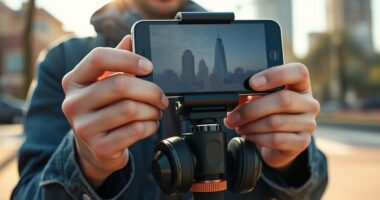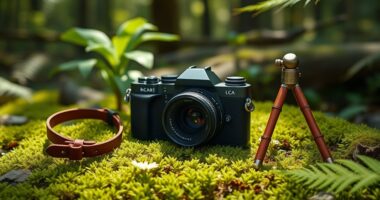
Choosing the right camera depends on your needs and how much control you want. If you value excellent image quality and manual adjustments, a DSLR or mirrorless camera is best, with mirrorless offering similar quality in a more compact body. If you prefer convenience and easy sharing, a smartphone is perfect, especially with its smart photography features. To find the best fit for your style and skills, keep exploring how each option suits your preferences.
Key Takeaways
- Consider sensor size and quality: larger sensors in DSLRs and mirrorless cameras offer better low-light performance and detail.
- Evaluate user interface preferences: DSLRs have physical controls, mirrorless offer modern screens, smartphones provide simple touch interfaces.
- Assess portability needs: smartphones are compact and always accessible, mirrorless cameras are lightweight, DSLRs are bulkier.
- Match camera type to your skill level: manual controls suit enthusiasts, smartphones are ideal for casual users.
- Balance image quality with ease of use: choose a camera that offers the desired image performance with an interface that feels intuitive to you.

Are you overwhelmed by the wide variety of cameras available and unsure which one suits your needs? It’s a common feeling, especially with options like mirrorless, DSLR, and smartphones all promising great photos. To start, consider how sensor technology plays a vital role in image quality. DSLRs typically feature larger sensors, which excel in low-light conditions and produce images with rich detail and dynamic range. Mirrorless cameras have advanced sensor technology too, often comparable to DSLRs, but they’re more compact and lightweight. Smartphones, on the other hand, have smaller sensors, but recent models compensate with sophisticated image processing and computational photography. Your choice depends on what matters most—whether it’s ultimate image quality or convenience.
Next, think about the user interface, which impacts how intuitive and enjoyable your photography experience will be. DSLRs usually have physical dials, buttons, and a dedicated optical viewfinder, giving you direct control and a traditional shooting feel. They can be more intimidating at first but offer precise adjustments once you get familiar. Mirrorless cameras feature electronic viewfinders or LCD screens, providing real-time previews of your settings and exposure changes. Their menus tend to be more modern and user-friendly, making them accessible for beginners yet powerful enough for pros. Smartphones, meanwhile, rely on touchscreens with simple, streamlined interfaces designed for quick access and easy shooting. They often include one-tap modes for different scenes and filters, making photography straightforward without any technical knowledge. Additionally, the contrast ratio of a camera’s sensor can influence how well images retain detail in shadows and highlights, especially in challenging lighting conditions.
When choosing among these options, consider how you prefer to interact with your camera. If you enjoy manual controls and want to learn the nuances of photography, a DSLR’s user interface might suit you well. If you prefer a lighter, more portable device that still offers excellent image quality, a mirrorless camera’s user interface will likely feel more modern and intuitive. For casual shooting and instant sharing, a smartphone’s user interface is unmatched in simplicity and convenience. Remember, sensor technology influences how well your camera performs in different lighting conditions, but your comfort with the user interface determines how often and how creatively you’ll use it. Ultimately, the best camera for you combines the right sensor tech with an interface that feels natural, allowing you to capture moments with confidence and ease.

Canon EOS R100 Mirrorless Camera RF-S18-45mm F4.5-6.3 is STM Lens Kit, 24.1 Megapixel CMOS (APS-C) Sensor, 4K Video, RF Mount, Black
Stellar Image Quality: Canon EOS R100 4K digital camera with 24.1 megapixel CMOS (APS-C) sensor for superb image…
As an affiliate, we earn on qualifying purchases.
As an affiliate, we earn on qualifying purchases.
Frequently Asked Questions
How Does Battery Life Compare Across Mirrorless, DSLR, and Smartphones?
You’ll find that DSLR cameras generally have the best battery longevity because of lower power consumption, allowing you to shoot longer without recharging. Mirrorless cameras tend to use more power due to their electronic viewfinders and displays, so their battery life is shorter. Smartphones vary widely; some have excellent battery longevity with efficient power consumption, but heavy use of features like live view and video can drain batteries quickly.
What Are the Best Lenses for Beginner DSLR and Mirrorless Cameras?
You’ll love the versatility of kit lenses like 18-55mm for beginner DSLRs and mirrorless cameras, offering an incredible aperture range for stunning shots in various conditions. These lenses are perfect for capturing everything from wide landscapes to detailed close-ups. Their flexibility makes them the best choice for beginners, giving you the power to experiment without breaking the bank. Jump in and explore the endless creative possibilities!
Can Smartphones Replace Dedicated Cameras for Professional Photography?
Smartphones can’t fully replace dedicated cameras for professional photography because of their limitations, like smaller sensors and less control over settings. If your professional needs demand high image quality, better low-light performance, or creative flexibility, a DSLR or mirrorless camera is still essential. However, for casual or quick shots, smartphones are convenient and constantly improving, but they don’t yet match the capabilities of dedicated cameras for professional work.
How Does Autofocus Performance Differ Among the Three Camera Types?
Ever wonder how quickly a camera can lock focus? You’ll find mirrorless cameras usually offer the fastest autofocus speed and highest accuracy, thanks to advanced on-sensor technology. DSLRs are reliable, with excellent autofocus in good light, but can lag in speed in tricky conditions. Smartphones have improved autofocus markedly but often struggle in low light or fast-moving scenes. So, which camera suits your quick-shooting needs?
Are There Significant Differences in Image Quality Under Low-Light Conditions?
Yes, there are notable differences in low-light image quality among the camera types. DSLRs typically have larger sensors with higher sensor sensitivity, capturing more light and producing clearer images with less noise. Mirrorless cameras also perform well with advanced noise reduction features, while smartphones usually struggle in low light due to smaller sensors. Upgrading your camera can markedly improve low-light shots, especially in challenging conditions.

Canon EOS Rebel T7 DSLR Camera with 18-55mm Lens | Built-in Wi-Fi | 24.1 MP CMOS Sensor | DIGIC 4+ Image Processor and Full HD Videos
24.1 Megapixel CMOS (APS-C) sensor with is 100–6400 (H: 12800)
As an affiliate, we earn on qualifying purchases.
As an affiliate, we earn on qualifying purchases.
Conclusion
Ultimately, selecting the perfect camera depends on your unique needs and style. Whether you lean towards the sleek convenience of a smartphone, the versatile charm of a mirrorless, or the trusted reliability of a DSLR, each has its own quiet allure. Trust your instincts and embrace the journey of capturing life’s moments. After all, the best camera is the one that feels just right in your hands and helps you tell your story with confidence.

Google Pixel 10 – Unlocked Android Smartphone – Gemini AI Assistant – Advanced Triple Rear Camera, Fast-Charging 24+ Hour Battery, and 6.3" Actua Display – Obsidian – 128 GB (2025 Model)
Google Pixel 10 is the everyday phone unlike anything else; it has Google Tensor G5, Pixel’s most powerful…
As an affiliate, we earn on qualifying purchases.
As an affiliate, we earn on qualifying purchases.

Nikon Z50 II with Two Lenses | Compact mirrorless Stills/Video Camera with Easy Color presets and Wireless Photo Sharing | USA Model
Go Beyond Your Phone: Capture lifelike colors and incredible details from dawn to dusk thanks to a superior…
As an affiliate, we earn on qualifying purchases.
As an affiliate, we earn on qualifying purchases.