Switching to sustainable photography gear helps you lower your environmental impact while capturing stunning images. Look for eco-friendly cameras made from recycled materials and accessories like biodegradable bags and recycled lens filters. Brands now focus on designing durable, repairable gear that supports a circular economy. By choosing these options, you’re promoting responsible practices and reducing waste. Keep exploring to discover how you can make your photography more eco-conscious and positively impact the planet.
Key Takeaways
- Eco-friendly cameras utilize recycled plastics, sustainable metals, and eco-coatings for a reduced environmental footprint.
- Biodegradable camera bags made from natural fibers offer durable protection while minimizing landfill waste.
- Recycling camera parts extends gear lifespan and supports a circular economy, reducing manufacturing waste.
- Brands are increasingly designing repairable, durable equipment to promote sustainability and long-term use.
- Adopting sustainable photography practices encourages responsible resource use and industry-wide eco-conscious habits.
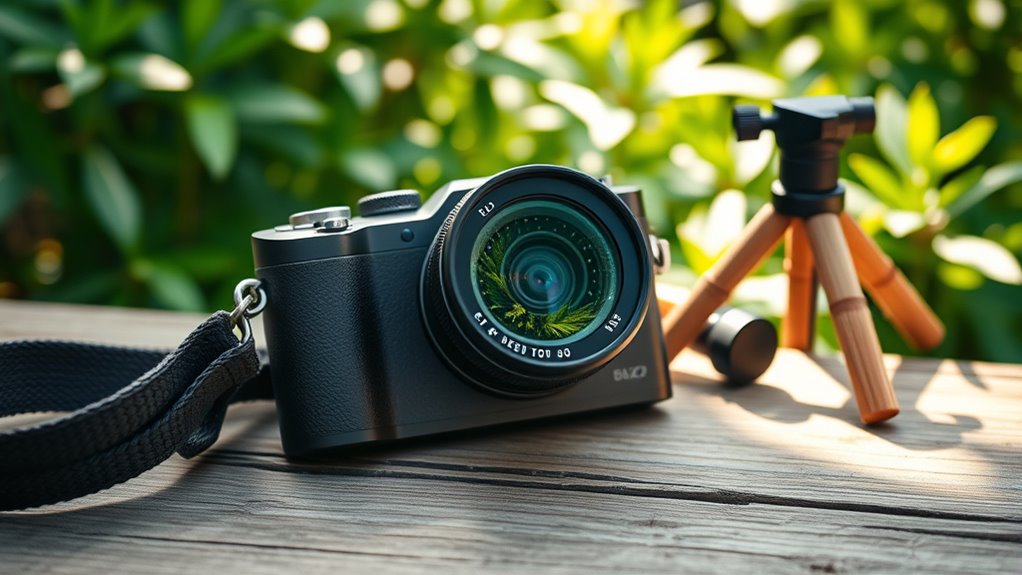
In today’s photography world, choosing sustainable gear isn’t just a trend—it’s a responsible decision that helps protect the environment. You can make a real difference by selecting equipment that minimizes waste and reduces your carbon footprint. For instance, some companies now focus on recycling camera parts, giving old or broken components a second life instead of ending up in landfills. By supporting brands that prioritize recycling camera parts, you’re encouraging a circular economy where materials are reused and repurposed, cutting down on manufacturing waste and resource extraction. It’s a clever way to extend the lifespan of camera gear, reduce environmental impact, and promote sustainability within the photography community.
Another essential aspect of eco-friendly photography is choosing biodegradable camera bags. Traditional camera bags often contain synthetic materials that take hundreds of years to decompose, contributing to pollution. Biodegradable camera bags, on the other hand, are made from natural fibers or eco-friendly materials that break down more quickly once disposed of, markedly reducing landfill waste. When you opt for these bags, you’re not only protecting your gear in style but also making a conscious choice to lessen your ecological footprint. These bags are durable enough to withstand everyday use, yet they decompose safely when it’s time to replace them, ensuring you’re contributing to a healthier planet.
Beyond camera parts and bags, sustainable photography gear extends to the actual cameras themselves. More brands are developing models with eco-conscious manufacturing processes—using recycled plastics, sustainable metals, and eco-friendly coatings. Some companies also design cameras with longer-lasting components to reduce the need for frequent replacements. When you invest in such gear, you’re supporting innovation that aligns with environmental goals, encouraging more manufacturers to prioritize sustainability. This shift not only benefits the planet but also benefits you by providing reliable, efficient equipment that’s built to last.
Incorporating these conscious choices into your photography routine isn’t complicated. You can start by researching brands committed to recycling camera parts and offering biodegradable accessories. Opt for gear that’s designed to be durable and repairable, reducing the need for constant replacements. Additionally, choosing high-quality, eco-friendly materials for your equipment can further lessen your environmental impact. By doing so, you’re actively participating in a movement toward more sustainable photography practices, ensuring your passion for capturing moments doesn’t come at the expense of the environment. Every small step counts, and your choices can inspire others to follow suit, creating a ripple effect that promotes eco-friendly habits across the industry.
Frequently Asked Questions
How Do Eco-Friendly Cameras Compare in Image Quality to Traditional Models?
Eco-friendly cameras generally match traditional models in image quality, thanks to improved sensor performance and advanced technology. You’ll find they deliver excellent color accuracy, capturing vibrant, true-to-life images. While some eco-friendly options may have slight differences in sensor sensitivity or processing, most modern models guarantee your photos remain sharp and detailed. So, you don’t have to compromise quality when choosing sustainable gear; they’re designed to perform at a high standard.
Are Sustainable Camera Accessories as Durable as Conventional Options?
Sustainable camera accessories are generally as durable as conventional options, but durability concerns do exist depending on the materials used. You should consider material longevity when choosing eco-friendly accessories, as some plant-based or recycled materials may wear faster. However, many brands now focus on high-quality, sustainable materials that withstand regular use. By researching product reviews and brand reputations, you can find eco-friendly accessories that meet your durability needs.
What Certifications Should I Look for in Eco-Friendly Photography Gear?
You should look for eco label certifications like FSC, Green Seal, or EPEAT when choosing eco-friendly photography gear. About 65% of consumers trust products with credible eco certifications, so they’re a smart choice. Make certain your gear meets recycling standards and carries recognized eco labels to guarantee sustainability. These certifications confirm the manufacturer’s commitment to environmental responsibility, helping you reduce your ecological footprint while capturing stunning images.
Can Eco-Conscious Gear Be More Cost-Effective Long-Term?
Yes, eco-conscious gear can be more cost-effective long-term. While the initial investment might be higher, you’ll benefit from cost savings through durability, energy efficiency, and fewer replacements. Sustainable cameras and accessories often have better build quality, reducing maintenance costs. Think of it as a long-term investment—by choosing eco-friendly gear, you save money over time and reduce your environmental impact, making your photography more sustainable and economical.
How Do Maintenance Routines Differ for Sustainable Photography Equipment?
Think of your sustainable photography equipment as a garden needing regular care. You’ll focus on recycling practices for batteries and accessories, reducing waste and extending lifespan. Additionally, you’ll monitor energy consumption by turning off devices when not in use and using eco-friendly charging methods. These routines help keep your gear eco-conscious, ensuring it’s efficient and long-lasting. Proper maintenance becomes a mindful act, nurturing your gear and the planet simultaneously.
Conclusion
Choosing eco-friendly photography gear helps protect our planet without sacrificing quality. You might worry it won’t be durable or perform as well, but many sustainable options are built to last and deliver stunning results. By opting for eco-conscious equipment, you not only capture beautiful moments but also contribute to a healthier Earth. So go ahead—embrace sustainable gear and make your photography a force for good, knowing you’re helping preserve the environment for future generations.