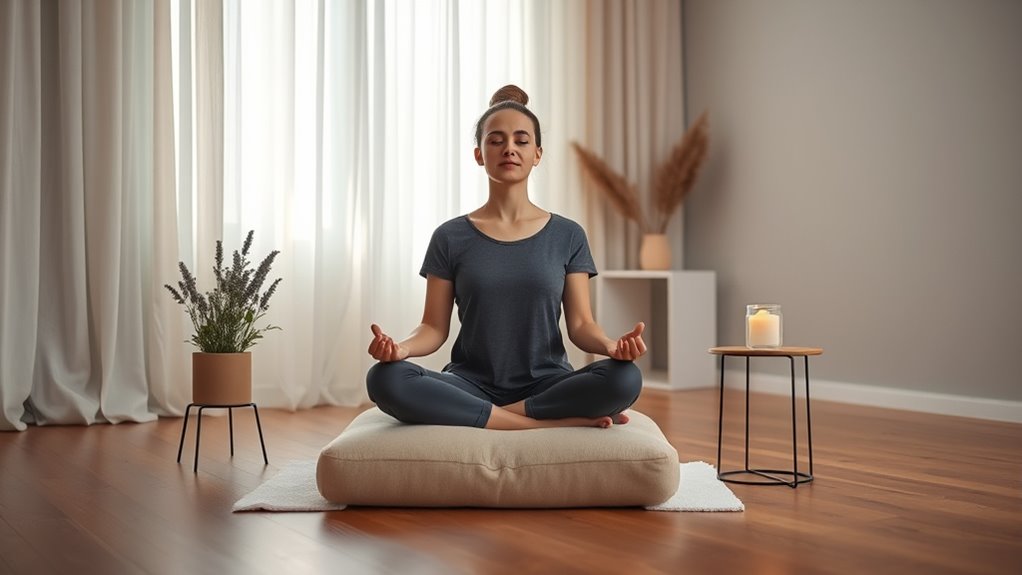

To start mindfulness meditation, focus on simple exercises like breathing techniques and body scans. Sit comfortably, take slow deep breaths, and notice the sensation of the air moving in and out or scan through your body, observing sensations without judgment. Practice regularly, even for a few minutes, to build awareness and reduce stress. As you practice, you’ll discover how easy it is to incorporate mindfulness into your daily routine—there’s always more to explore.
Key Takeaways
- Start with simple breathing exercises, focusing on slow, deep inhales and exhales to anchor awareness in the present.
- Practice body scan exercises by progressively observing sensations from toes to head without judgment.
- Incorporate short mindfulness pauses during daily activities to breathe, relax, and reconnect with the moment.
- Use counting techniques during breathing to enhance focus and maintain attention on each inhale and exhale.
- Commit to consistent practice, even for a few minutes daily, to build awareness, reduce stress, and improve emotional stability.
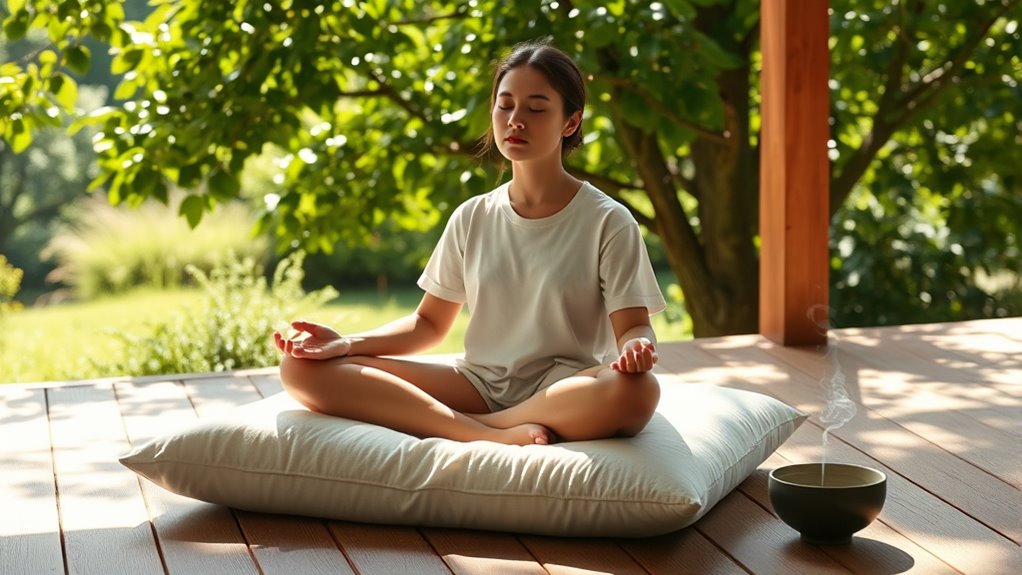
Have you ever wondered how to find calm amid a busy mind? It’s a common struggle, especially when your thoughts seem to race in every direction. One of the simplest and most effective ways to ground yourself is through mindfulness meditation, which helps you cultivate awareness and presence. Starting with practical exercises can make the process less intimidating and more accessible. Two foundational techniques you can try right away are breathing techniques and body scan exercises.
Breathing techniques are a great entry point because they focus your attention on your breath, anchoring your awareness in the present moment. Begin by sitting comfortably, closing your eyes if you like, and taking a slow, deep breath in through your nose. Focus on the sensation of the air filling your lungs. Then exhale slowly through your mouth or nose, noticing the release of tension. If your mind wanders, gently bring your focus back to your breath without judgment. You can enhance this practice by counting breaths — inhale for a count of four, hold for a count of four, then exhale for a count of four. This rhythmic pattern helps slow down your racing thoughts and calms your nervous system. Breathing exercises are quick to learn and can be practiced anywhere, making them practical tools for managing stress throughout your day.
Focus on your breath, breathe deeply, and count each inhale and exhale to stay grounded in the present moment.
Body scan exercises take your mindfulness a step further by helping you connect more deeply with physical sensations. To do this, find a comfortable position and close your eyes if you wish. Start by bringing your attention to your toes, noticing any sensations, tension, or relaxation. Slowly move your awareness upward through your body: feet, legs, hips, stomach, chest, arms, shoulders, neck, and finally your face. Spend a few moments on each area, observing what you feel without trying to change anything. If you notice tension, breathe into that spot and imagine releasing it with each exhale. This practice encourages a gentle, non-judgmental awareness of your body, helping you become more attuned to physical cues of stress or comfort. Over time, body scan exercises can increase your overall sense of relaxation and help you recognize early signs of tension before they escalate. Incorporating mindfulness practices into your routine can further deepen your awareness and resilience.
Both breathing techniques and body scan exercises are foundational practices that anyone can integrate into daily life. They don’t require special equipment or a lot of time, yet they provide powerful benefits for mental clarity and emotional stability. As you become more familiar with these exercises, you’ll likely find it easier to pause, breathe, and reconnect with the present moment whenever your mind feels overwhelmed. Consistency is key — even a few minutes a day can make a noticeable difference in your ability to find calm amid life’s busyness.

Meditation Starter Kit: Unlock Calm and Clarity
As an affiliate, we earn on qualifying purchases.
As an affiliate, we earn on qualifying purchases.
Frequently Asked Questions
How Long Should Beginners Meditate Daily?
You should start with a meditation duration of about 5 to 10 minutes daily. As you become more comfortable, gradually increase your daily practice to 15 or 20 minutes. Consistency is key, so aim to meditate every day, even if only for a short period. This steady daily practice helps you build mindfulness skills and makes meditation a natural part of your routine.
Can Mindfulness Meditation Replace Therapy?
You can’t rely solely on mindfulness meditation to replace therapy, as they serve different purposes. Meditation offers mental health benefits like stress reduction and increased focus, but it isn’t a one-size-fits-all solution. Think of it as a supplement rather than a substitute. If you’re struggling with serious issues, therapy provides professional guidance and tailored support that meditation alone can’t match. Combining both can give you a well-rounded approach to mental wellness.
What if My Mind Keeps Drifting During Practice?
If your mind keeps drifting during practice, don’t worry—distraction management is key. Gently acknowledge the distraction without judgment and redirect your focus using focus techniques like deep breathing or counting breaths. Regularly bringing your attention back improves concentration over time. Remember, drifting is natural; patience helps you develop stronger mindfulness skills. Keep practicing consistently, and you’ll notice your ability to stay present gradually enhances.
Is There a Best Time of Day to Meditate?
The ideal timing for meditation depends on your schedule, but many find morning routines most effective. Meditating early helps set a calm tone for the day and minimizes distractions. You might try meditating right after waking up, before starting your daily tasks. Consistency is key, so choose a time that feels natural and sustainable for you. Over time, this habit can become a valuable part of your daily routine.
Do I Need Special Equipment or Space?
You don’t need fancy equipment or a perfect space to start meditating. A simple, comfortable meditation mat and a quiet environment are enough to create a calm corner. Find a peaceful place where you won’t be disturbed, sit comfortably, and focus on your breath. Keep it simple and consistent. With just a little space and a soft mat, you’ll set the stage for a serene, satisfying meditation session.

Mindsight 'Original Breathing Buddha' Guided Visual Meditation | 3 Modes to Slow Your Breathing & Calm Your Mind | Stress & Anxiety Relief | Wellness Gift | Adults, Kids, Classrooms | USB Rechargeable
🧠 WHAT IT'S FOR: Daily guided breathing to help calm & focus your mind during the day or…
As an affiliate, we earn on qualifying purchases.
As an affiliate, we earn on qualifying purchases.
Conclusion
As you practice mindfulness meditation, imagine your thoughts as leaves floating downstream, gently drifting away. This mental imagery helps you realize that thoughts come and go, much like the current carries leaves without judgment. Embracing this perspective, you can find calm amid life’s chaos, trusting that each moment offers a chance to reset. With consistent practice, you’ll uncover a peaceful center within, proving that a simple shift in perception can transform your inner experience.

Retrospec Sedona Zafu Meditation Cushion with Buckwheat Hull Fill – Adjustable Yoga & Pilates Equipment Support – 17in Crescent Cotton Cover
NATURAL COMFORT & SUPPORT: Filled with sustainable buckwheat hulls, this meditation cushion elevates your practice by aligning your…
As an affiliate, we earn on qualifying purchases.
As an affiliate, we earn on qualifying purchases.

Mindsight 'Breathing Buddha' Slow-It-Down Sloth Guided Visual Meditation Tool for Mindfulness | Slow Your Breathing & Calm Your Mind for Stress & Anxiety Relief | Perfect for Adults & Kids
🧠 SLOW-IT-DOWN SLOTH: Daily guided breathing to help calm & focus your mind during the day or promote…
As an affiliate, we earn on qualifying purchases.
As an affiliate, we earn on qualifying purchases.