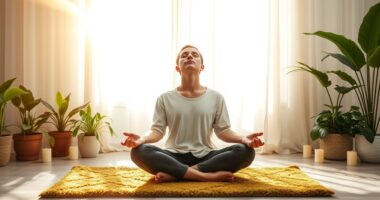
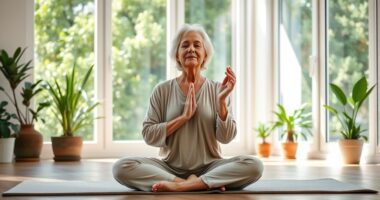
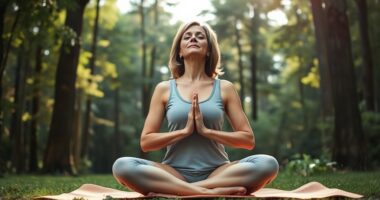
To activate your relaxation response and calm your nervous system, try simple techniques like mindfulness meditation and deep breathing exercises. Focus on the present moment, observing your thoughts without judgment, and practice slow, deep breaths—inhale for a few counts, then exhale slowly. Just a few minutes daily can lower stress, improve focus, and boost emotional resilience. Keep going, and you’ll discover more effective ways to cultivate peace and mental clarity.

Turn quiet afternoons into listening time
- Thousands of audiobooks, podcasts and originals
- Listen on your phone, tablet or Echo — also offline
- Cancel anytime
Key Takeaways
- Practice mindfulness meditation to focus on the present and observe thoughts without judgment.
- Use breathing exercises like deep diaphragmatic or box breathing to slow the heart rate.
- Engage in daily relaxation techniques to rewire your nervous system for calmness over time.
- Activate the relaxation response within minutes through simple body and breath awareness practices.
- Consistently incorporating these methods reduces stress, enhances emotional resilience, and improves mental well-being.

Have you ever wondered how some people seem to stay calm and centered even during stressful times? The secret often lies in their ability to activate what’s called the relaxation response. This is your body’s natural way of calming your nervous system, counteracting stress and anxiety. You can tap into this response through simple yet powerful techniques like mindfulness meditation and breathing exercises. These practices help you shift from the chaos of stress to a state of peace and clarity, often in just a few minutes.
Mindfulness meditation is a practice where you focus your attention on the present moment, observing your thoughts, feelings, and bodily sensations without judgment. It’s like training your mind to stay anchored in the now, which helps prevent worries about the past or future from spiraling out of control. When you sit quietly and concentrate on your breath or a particular sensation, your brain begins to relax. Over time, this consistent practice can rewire your response to stress, making it easier to remain calm in difficult situations.
Practicing mindfulness helps your mind stay anchored in the present, reducing stress and promoting calm over time.
Breathing exercises are another effective way to activate the relaxation response. Simple techniques like deep diaphragmatic breathing or box breathing slow down your heart rate and lower your blood pressure. When you consciously take slow, deep breaths, you signal to your body that it’s safe and that it can relax. For example, inhaling deeply through your nose for a count of four, holding that breath for four counts, then exhaling slowly through your mouth for four counts, can immediately help reduce tension. Regularly practicing these exercises not only provides quick relief during stressful moments but also trains your nervous system to respond more adaptively over time.
Incorporating mindfulness meditation and breathing exercises into your daily routine doesn’t require hours of your day. Even a few minutes in the morning or during breaks can make a significant difference. As you develop these habits, you’ll notice your baseline stress levels decreasing and your ability to remain calm during challenging situations improving. The more consistent you are, the stronger your relaxation response becomes, helping you manage anxiety, improve focus, and foster emotional resilience.
Ultimately, activating your relaxation response is about giving yourself the tools to regain control when stress threatens to overwhelm you. By practicing mindfulness meditation and breathing exercises regularly, you’re not just managing stress — you’re rewiring your nervous system to respond with calm and clarity instead of chaos. Developing these techniques can also help you create a mind-body connection, which enhances overall mental well-being. With time, these techniques become second nature, allowing you to face life’s pressures with greater ease and stability.
As an affiliate, we earn on qualifying purchases.
Frequently Asked Questions
Can Relaxation Techniques Help With Chronic Pain Management?
Yes, relaxation techniques like mindfulness meditation and guided imagery can help manage chronic pain. You can reduce pain perception by practicing mindfulness, which helps you stay present and decrease stress. Guided imagery allows you to visualize calming scenes, easing tension in your body. Incorporating these techniques into your daily routine can improve your pain levels, promote relaxation, and enhance your overall well-being.
How Long Does It Take to Notice Benefits From Relaxation Practices?
Like planting a seed and watching it sprout, you’ll start noticing relaxation benefits within a few weeks of consistent practice. Most people see improvements in stress levels and overall well-being after practicing mindfulness for about 10-20 minutes daily over 4-6 weeks. The key is regularity, as the longer you maintain your mindfulness duration, the more profound the calming effects on your nervous system become.
Are There Any Risks Associated With Deep Relaxation Methods?
Deep relaxation methods like meditation are generally safe, but you should be aware of relaxation contraindications, especially if you have certain mental health issues or cardiovascular conditions. While meditation safety is usually high, some people might experience increased anxiety or emotional discomfort. If you feel overwhelmed or uncertain, consult a healthcare professional. Always listen to your body and avoid pushing yourself too hard during relaxation practices.
Can Relaxation Techniques Be Combined With Medication?
Yes, you can combine relaxation techniques with medication, and doing so may create a beneficial medication synergy. Incorporating relaxation supplements or practices like deep breathing and meditation can enhance your overall calming effect. However, always consult your healthcare provider before mixing relaxation methods with medication to guarantee safety and effectiveness. This way, you maximize the benefits without risking adverse interactions or side effects.
What Is the Best Time of Day to Practice Relaxation?
Ever wonder when the stars align for your calmest moments? The best time of day to practice relaxation is during your morning routines, as it sets a peaceful tone for the day. Ideal timing helps your nervous system stay balanced and ready to face challenges. Incorporate deep breathing or meditation early in the morning, so you start your day centered and resilient, like a calm sea before the storm.
As an affiliate, we earn on qualifying purchases.
Conclusion
Think of your nervous system as a delicate garden. When you practice relaxation techniques, you’re gently tending to it, watering calmness and pruning stress. Over time, this garden flourishes with peace and resilience, ready to bloom even amidst life’s storms. Remember, nurturing your relaxation response is your personal gardener’s touch—cultivating serenity amidst chaos, so you can thrive in the calm that blooms from within.
relaxation response meditation app
As an affiliate, we earn on qualifying purchases.
As an affiliate, we earn on qualifying purchases.
stress relief aromatherapy diffuser
As an affiliate, we earn on qualifying purchases.
As an affiliate, we earn on qualifying purchases.
Fall Picks
fall essentials
As an affiliate, we earn on qualifying purchases.