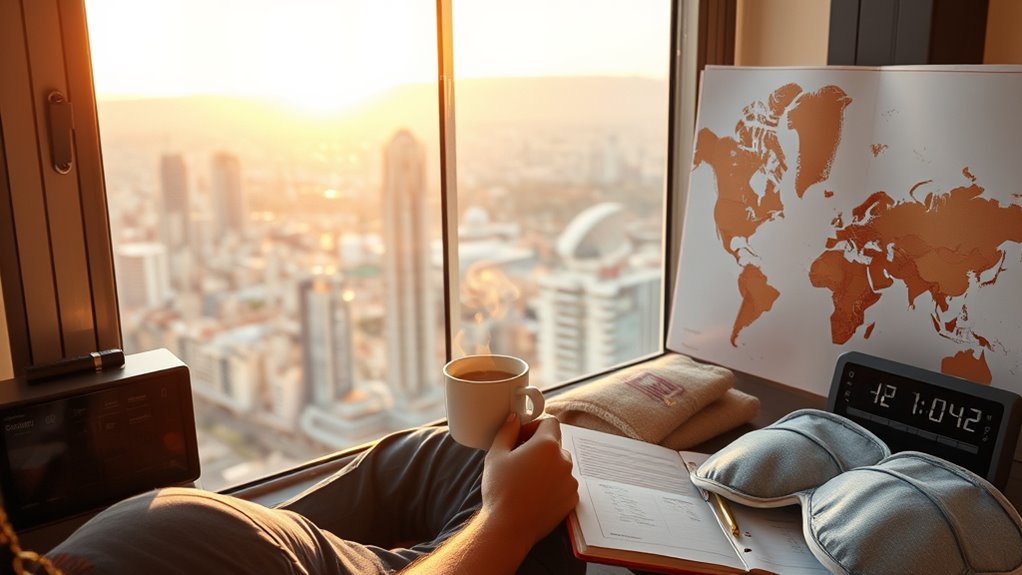

To beat jet lag quickly, stick to a consistent sleep schedule before your trip and adjust gradually to your destination’s time zone. Stay well-hydrated, avoiding excessive alcohol and caffeine, and spend time outside during daylight hours to reset your internal clock. Limit screen time with blue light in the evening and use relaxation techniques to promote sleep. Following these tips will help you adjust faster and enjoy your trip sooner—explore more ways to ease jet lag effectively.
Key Takeaways
- Gradually adjust your sleep schedule before departure to align with the destination’s time zone.
- Maximize natural light exposure during the day to reset your internal clock effectively.
- Stay well-hydrated and avoid alcohol and caffeine during travel to reduce fatigue.
- Use relaxation techniques and limit screen time in the evening to promote better sleep.
- Incorporate light physical activity and create a sleep-friendly environment upon arrival.
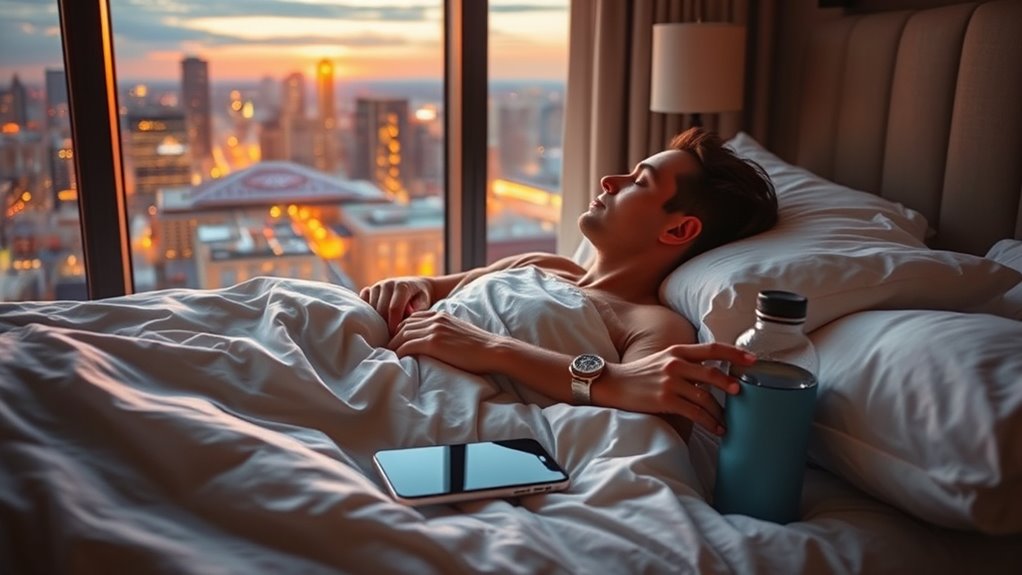
Traveling across time zones can disrupt your body’s internal clock, leaving you tired, disoriented, and struggling to enjoy your trip. To beat jet lag, you need to help your body adjust quickly, starting with good sleep hygiene. Prioritize your sleep by maintaining a consistent schedule, even before you depart. If possible, try to shift your sleep times gradually to match the destination’s time zone. Once you arrive, avoid sleeping during local daytime hours if you’re not tired, as this can throw off your internal clock further. Instead, expose yourself to natural light, which helps regulate your circadian rhythm, signaling your body to wake up or wind down accordingly. Creating a dark, quiet, and cool sleep environment can also improve the quality of your rest, helping you recover from travel fatigue faster.
Hydration is another *essential* factor in adjusting to new time zones. During your flight, drink plenty of water to stay hydrated, as air travel tends to dehydrate you. Dehydration can intensify feelings of fatigue and disorientation, making jet lag worse. Avoid excessive alcohol and caffeine, as they can interfere with your sleep hygiene and dehydrate you further. Once you arrive, continue to hydrate throughout the day, but do so in moderation to prevent disrupting your sleep at night. Proper hydration supports your body’s natural recovery processes and keeps your energy levels stable, which is *critical* for adapting to the new schedule.
Stay well-hydrated during your trip to combat fatigue and support your body’s adjustment to new time zones.
Timing your exposure to sunlight is also *imperative*. Light helps reset your internal clock, so spend time outside during daylight hours to help your body sync with the local time. Conversely, when it’s evening, limit light exposure—especially blue light from screens—so your body naturally produces melatonin, the hormone that promotes sleep. If you’re struggling to stay awake during the day, engaging in light physical activity can boost your alertness and help you stay on schedule. Additionally, recent advances in AI-powered virtual assistants can help you manage your sleep routines and remind you to stay on track with hydration and light exposure, making the adjustment process more seamless.
Finally, listen to your body. If you feel sleepy, don’t fight it—rest when you can, but avoid long naps that might interfere with your nighttime sleep. Use relaxation techniques such as deep breathing or meditation to help *facilitate* into sleep if you’re feeling anxious or jet-lagged. By combining good sleep hygiene, hydration strategies, and mindful exposure to light, you can reset your internal clock more efficiently, minimizing jet lag’s impact and making your trip more enjoyable from the start.

Vynix Sleep Mask for Men Women – 100% Blackout Eye Masks for Sleep – 3D Soft Sleeping Mask for Side Sleepers – Zero Pressure Lash Extensions Eye Cover Shade for Airplane Travel Essentials, Black
100% Light Blackout – Sleep in True Darknes: Vynix sleep mask features a flexible one-piece nose bridge and…
As an affiliate, we earn on qualifying purchases.
As an affiliate, we earn on qualifying purchases.
Frequently Asked Questions
Can Certain Foods Help Reduce Jet Lag Symptoms?
Certain foods can help reduce jet lag symptoms by influencing your sleep and energy levels. You should focus on food timing, eating light meals at appropriate times to support your body’s clock. Incorporate sleep-inducing foods like cherries, almonds, or warm milk to promote relaxation. These choices may help you adjust faster, easing fatigue and jet lag discomfort as your body syncs with the new time zone.
Are There Effective Medications for Quick Adjustment?
You might wonder about medication options for quick adjustment. Some drugs, like melatonin supplements or hypnotics, can help reset your internal clock. The effectiveness of drugs varies; melatonin is often effective in promoting sleep, while others may cause side effects. Always consult a healthcare professional before using medications, as they can recommend the best options and dosages tailored to your needs, ensuring safe and effective use.
How Does Hydration Influence Jet Lag Recovery?
Did you know that staying well-hydrated can reduce jet lag symptoms by up to 25%? Proper hydration influences your recovery by maintaining hydration levels and electrolyte balance, which are vital for regulating your body’s internal clock. When you drink enough water, you help your body adjust faster to new time zones, minimize fatigue, and improve alertness. So, prioritize hydration before, during, and after your flight for a smoother shift.
Can Exercise Before or After Travel Minimize Jet Lag?
You might find that exercise timing can help minimize jet lag. Working out before your trip can boost your energy levels, while exercising after arrival helps reset your internal clock. Incorporate light to moderate workout routines during travel or once you arrive, but avoid intense exercise close to bedtime. Staying active at strategic times supports better sleep and quicker adaptation to your new time zone, easing the jet lag recovery process.
What Are Some Natural Remedies for Jet Lag Relief?
You can find relief from jet lag naturally by trying herbal teas like chamomile or peppermint, which help relax your mind and body. Aromatherapy oils such as lavender or eucalyptus can also soothe your senses and promote better sleep. These remedies are simple, non-invasive, and help ease your progression into a new time zone. Incorporate them into your routine to feel more refreshed and adjust more quickly.

Gaoye Blue Light Blocking Glasses – Fashion Square Eyeglasses, Anti UV Ray Computer Gaming Glasses Blue Blockers for Women/Men
BLUE LIGHT BLOCKING GLASSES: Our blue light glasses for women boast UV400 protection, blocking harmful blue rays from…
As an affiliate, we earn on qualifying purchases.
As an affiliate, we earn on qualifying purchases.
Conclusion
By following these tips, you can beat jet lag and enjoy your trip without feeling exhausted. Remember, your body can adjust faster than you think—studies show that travelers who adapt quickly experience 50% fewer fatigue symptoms. So, stay active, get plenty of sunlight, and stay hydrated. With a little effort, you’ll be back to feeling your best and making the most of your adventure in no time. Safe travels!

Sahara Sailor Water Bottle 32oz, Durable and Leakproof Water Bottles Motivational with Time Marker, Tritan, BPA Free, Wide Mouth with Easy Clean Brush for Gym, Travel, Home, School, Office (1 Bottle)
Stay Hydrated Throughout the Day: staying hydrated is often easier said than done. With the Sahara Sailor clear…
As an affiliate, we earn on qualifying purchases.
As an affiliate, we earn on qualifying purchases.

Circadian Optics Lumine Light Therapy Desk Lamp | As Seen On Shark Tank | 10,000 LUX UV-Free Full-Spectrum LEDs | Powerful & Large Light Panel | Sunlight Lamp for Seasonal Blues, Focus, Energy & Sleep
Seen In The Tank | 10,000 LUX Brightness: Experience the sun lamp that impressed the Sharks! The lamp…
As an affiliate, we earn on qualifying purchases.
As an affiliate, we earn on qualifying purchases.