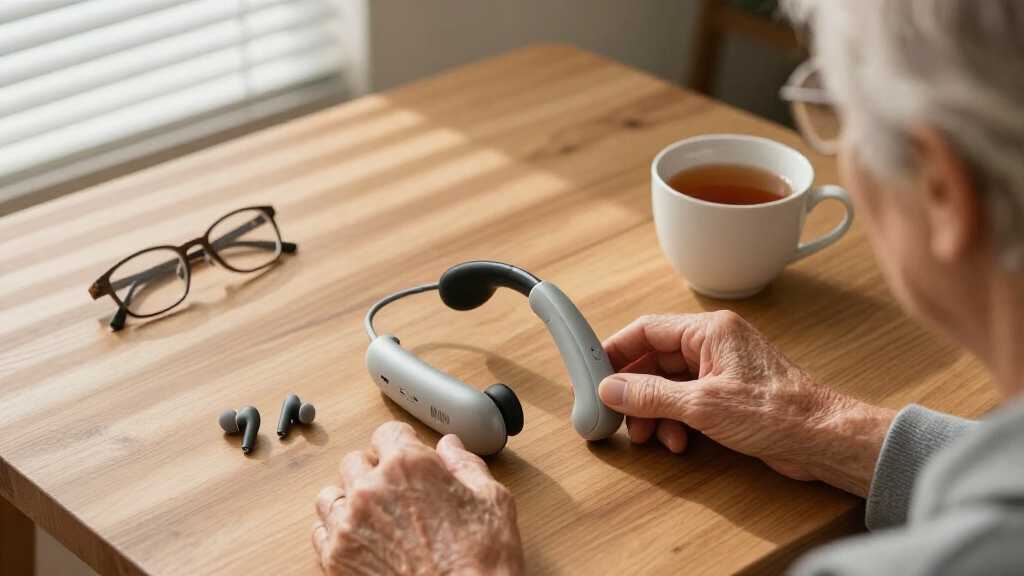

Hearing amplifiers for seniors range from simple handheld pocket talkers to rechargeable behind-the-ear devices with noise reduction and app control, and the right choice depends on hearing needs, dexterity, and budget. The Williams Sound Pocketalker Ultra stands out as the best overall pick for its proven sound clarity, simple one-dial volume control, and complete accessory kit. Seniors wanting a modern, discreet option should look at the Ceretone OTC earbud-style aids, while the Reizen Loud Ear offers serious amplification for severe hearing loss at a low price. The main tradeoff in this category is between simplicity and features: analog pocket amplifiers are easier to manage but look medical, while modern OTC devices look like earbuds but involve charging routines and button menus. Battery style, comfort for all-day wear, and background noise handling also separate the winners from the rest. Read on for the full breakdown of all 14 models.
Complete the kit


Key Takeaways
- Pocket talkers like the Williams Sound Pocketalker Ultra and PockeTalker Ultra DUO dominated the top spots because their single-dial volume control is far easier for seniors with limited dexterity than multi-button OTC devices.
- Earbud-styled models such as the Ceretone OTC and the app-controlled rechargeable pair remove the stigma of visible hearing devices, but every one of them demands a daily charging habit that some seniors will forget.
- High-gain amplifiers like the Reizen Loud Ear (110dB) deliver raw volume for severe hearing loss, but they amplify background noise just as aggressively, making them better for one-on-one conversation in quiet rooms than restaurants or family gatherings.
- Accessories make a real difference in this price range — kits bundled with headphones, earbuds, and batteries (PockeTalker DUO, SuperEar SE5000) delivered more practical value per dollar than bare devices at similar cost.
- One-button operation emerged as the strongest predictor of whether a senior will actually use the device daily; models requiring app pairing or program switching consistently carried higher abandonment risk.
| Williams Sound PockeTalker Ultra DUO Sound Amplifier with Headphone & Earbud |  | Best for TV and One-on-One Conversations | Acoustic Gain: 20-40 dB | Battery Life: Up to 100 hours (2x AAA) | Microphone: Removable with extension cord | VIEW LATEST PRICE | See Our Full Breakdown |
| Rechargeable Hearing Aids for Seniors with Noise Cancelling, Behind-The-Ear Severe Hearing Loss Amplifier |  | Best for Severe Hearing Loss | Design: Behind-the-ear | Weight: 5.5g | Battery Life: Up to 25 hours | VIEW LATEST PRICE | See Our Full Breakdown |
| Portable Behind Ear Hearing Aid Headphones, Hearing Amplifier for Seniors |  | Best Lightweight All-Day Wear | Weight: 0.01 lb | Battery Life: 50 hours | Charging Time: 2 hours | VIEW LATEST PRICE | See Our Full Breakdown |
| Ceretone OTC Hearing Aids Seniors Rechargeable Looks Like Regular Earbuds |  | Best Discreet Design | Type: In-the-ear (ITE), earbud-style | Battery Life: 100 hours total (25H per charge + 75H from case) | Charging Time: 2 hours | VIEW LATEST PRICE | See Our Full Breakdown |
| Bluetooth Hearing Amplifiers for Seniors and People with Hearing Impairments |  | Best for Streaming and Calls | Bluetooth: iOS, Android, and Bluetooth-enabled devices | Modes: General, Noise Canceling, Indoor, Outdoor | Peak Gain: 53 dB | VIEW LATEST PRICE | See Our Full Breakdown |
| Personal Sound Amplifier for Seniors with Microphones, Headphones & Earbud, 50dB Gain | 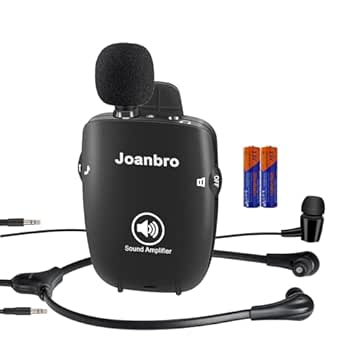 | Best for Situational Listening | Gain: 50dB | Total Gain: 108dB | Microphone Types: 3 (standard, extension cable, long-distance) | VIEW LATEST PRICE | See Our Full Breakdown |
| Hearing Aids for Seniors, Rechargeable Bluetooth with APP Control |  | Best Premium Feature Pick | Bluetooth: Yes | Rechargeable: Yes | Control: App and manual | VIEW LATEST PRICE | See Our Full Breakdown |
| Williams Sound Pocketalker Ultra Hearing Amplifier with Batteries and Accessories |  | Best Trusted Classic | Amplification: Up to 40dB | Included Accessories: 20 AAA batteries, headphones, mini earbud, microphone extension cord, lanyard, microfiber cloth, user manual | Adjustable Controls: Volume and tone | VIEW LATEST PRICE | See Our Full Breakdown |
| Flaygo Hearing Aids for Seniors, Sound Quality Restoration, Noise Reduction, 80h Standby, One-Button Operation | 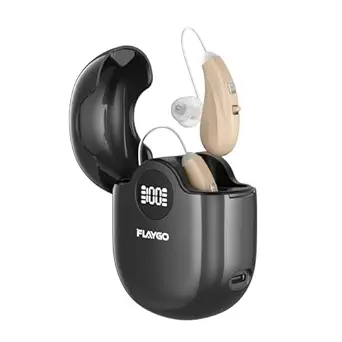 | Best Value for Daily Wear | Digital Chip: 16-channel | Sound Quality: High-definition sound restoration | Noise Reduction: Intelligent noise filtering and whistling suppression | VIEW LATEST PRICE | See Our Full Breakdown |
| Rechargeable Hearing Amplifier with Microphone and Volume Control for Seniors |  | Best Battery Life | Maximum Sound Gain: 65dB | Battery Life: Up to 120 hours | Charging Time: 1 hour | VIEW LATEST PRICE | See Our Full Breakdown |
| Reizen Loud Ear 110dB Gain Personal Amplifier |  | Best for Serious Amplification Power | Gain: 110dB | Sensitivity: 120dB | Microphone: Built-in | VIEW LATEST PRICE | See Our Full Breakdown |
| Oricle Standard 2.0 Hearing Aids for Seniors |  | Best All-Day Wear | Noise Cancellation: Advanced | Battery Life: Up to 60 hours | Charging Case: Portable with auto on/off | VIEW LATEST PRICE | See Our Full Breakdown |
| SuperEar SE5000 Personal Hearing Amplifier with Headphones and Accessories |  | Best Starter Kit | Amplification: Up to 50 decibels | Total Decibel Gain: 107 dB | Battery Life: Up to 30 hours | VIEW LATEST PRICE | See Our Full Breakdown |
| SuperEar SE7500 Hearing Amplifiers, Personal Sound, Audio Accessories |  | Best Battery Life | Sound Gain: 50 dB | Battery Life: 80 hours | Batteries: 2 AAA | VIEW LATEST PRICE | See Our Full Breakdown |
| hearing amplifiers for senior | Battery Life |
|---|---|
| Williams Sound PockeTalker Ult | Up to 100 hours (2x AAA) |
| Rechargeable Hearing Aids for | Up to 25 hours |
| Portable Behind Ear Hearing Ai | 50 hours |
| Ceretone OTC Hearing Aids Seni | 100 hours total (25H per charge + 75H from case) |
| Bluetooth Hearing Amplifiers f | 45 hours |
| Personal Sound Amplifier for S | — |
| Hearing Aids for Seniors | — |
| Williams Sound Pocketalker Ult | — |
| Flaygo Hearing Aids for Senior | 80 hours on a 2-hour charge |
| Rechargeable Hearing Amplifier | Up to 120 hours |
| Reizen Loud Ear 110dB Gain Per | — |
| Oricle Standard 2.0 Hearing Ai | Up to 60 hours |
| SuperEar SE5000 Personal Heari | Up to 30 hours |
| SuperEar SE7500 Hearing Amplif | 80 hours |
More Details on Our Top Picks
Williams Sound PockeTalker Ultra DUO Sound Amplifier with Headphone & Earbud
This option stands out for simplicity that never needs recharging mid-week. With up to 100 hours on two AAA batteries, the PockeTalker Ultra DUO outlasts the Ceretone OTC earbuds and the Bluetooth amplifier on pure runtime simplicity — swap batteries instead of hunting for a cable. The removable microphone with extension cord is the real differentiator: place it near a TV speaker or a dinner companion and the sound comes directly to you, something ear-worn models like the Behind-The-Ear severe loss amplifier simply cannot do. Volume and tone dials mean no menus to learn. The tradeoff is that it is a listening device, not a hearing aid — no noise cancelling, no Bluetooth, and you wear a headset rather than a discreet bud.
Pros:- Up to 100 hours of battery life from standard AAA batteries
- Removable microphone with extension cord directs sound from the source
- Simple volume and tone dials with no learning curve
- Backed by an unusually long 5-year warranty
Cons:- Runs on disposable AAA batteries rather than rechargeable power
- No wireless connectivity or noise reduction features
- Not discreet — requires wearing a headset or earbud with a wired body unit
Best for: Seniors who mainly struggle with TV dialogue and one-on-one conversations and prefer physical dials over buttons
Not ideal for: Anyone wanting an invisible, all-day wearable — the headset and earbud setup is conspicuous compared to in-ear models like the Ceretone
- Acoustic Gain:20-40 dB
- Battery Life:Up to 100 hours (2x AAA)
- Microphone:Removable with extension cord
- Controls:Adjustable volume and tone dials
- Included:Headset, earbud, belt clip, user guide
- Warranty:5 years
Our verdict“Buy this if conversations around the TV table are the main pain point and you value dead-simple controls over discreet wear.”
Rechargeable Hearing Aids for Seniors with Noise Cancelling, Behind-The-Ear Severe Hearing Loss Amplifier
Most picks in this roundup, including the Ceretone OTC earbuds, are explicitly capped at mild to moderate loss. This behind-the-ear model is the option for seniors who need serious amplification with noise cancelling, and it pairs that power with physical adjustment buttons — no app, no finicky touch controls. At 5.5 grams, it is light enough for all-day wear, though it is heavier than the 0.01 lb portable behind-ear amplifier elsewhere on this list. Dual charging via cable or case gives some flexibility the PockeTalker’s AAAs cannot match. The honest tradeoffs: roughly 25 hours per charge is the shortest runtime here, there can be slight operating noise, and new users should expect an adaptation period before the amplification feels natural.
Pros:- Built for severe hearing loss rather than mild-to-moderate ranges
- Noise cancelling technology for clearer speech in busy rooms
- Physical buttons are easier for arthritic hands than touch controls
- Dual charging options with cable or case
Cons:- Battery life caps around 25 hours — the lowest in this lineup
- May produce slight operating noise
- Requires an adaptation period for first-time users
Best for: Seniors with severe hearing loss who need stronger amplification than OTC earbuds provide and want button-based controls
Not ideal for: Users with mild loss or anyone wanting a nearly invisible device — the behind-the-ear form factor is visible and may be overkill
- Design:Behind-the-ear
- Weight:5.5g
- Battery Life:Up to 25 hours
- Charging:Cable or charging case
- Noise Cancellation:Yes
- Controls:Physical adjustment buttons
Our verdict“This pick makes the most sense for seniors whose hearing loss has outgrown mild-loss OTC devices and who need real amplification power.”
Portable Behind Ear Hearing Aid Headphones, Hearing Amplifier for Seniors
At 0.01 lb, this is the featherweight of the bunch — barely noticeable compared to the 5.5g severe-loss amplifier, which matters enormously for seniors who find ear-worn devices irritating by afternoon. The 50-hour battery with 2-hour Type-C charging doubles the runtime of that same competitor, and the no left/right distinction design removes a common fumbling point entirely. Three modes — Normal, Noise Reduction, and Enhanced Clarity — cover the basics without overwhelming menus. Compared with the PockeTalker, it trades wired reliability for wireless freedom. What you give up is depth: there is no customization for complex hearing profiles, and heavy users will still be reaching for the charger every couple of days.
Pros:- Extremely lightweight at roughly 0.01 lb for all-day comfort
- Interchangeable between ears with no left/right distinction
- 50-hour battery life with quick 2-hour Type-C charging
- Three listening modes including noise reduction and clarity enhancement
Cons:- Basic modes only — no advanced customization
- Requires recharging every couple of days with frequent use
Best for: Seniors with mild to moderate loss who prioritize comfort and forget they are wearing a device
Not ideal for: Anyone with severe or asymmetric hearing loss who needs stronger, tailored amplification
- Weight:0.01 lb
- Battery Life:50 hours
- Charging Time:2 hours
- Charging Interface:Type-C
- Modes:Normal, Noise Reduction, Enhanced Clarity
- Ear Design:No left/right distinction
Our verdict“Choose this if comfort is the deciding factor and mild-to-moderate amplification is all you need.”
Ceretone OTC Hearing Aids Seniors Rechargeable Looks Like Regular Earbuds
The selling point is right in the name: these look like ordinary earbuds, not hearing devices, which removes the stigma that stops many seniors from wearing anything at all. Compared to the visible behind-the-ear amplifier for severe loss, the Cerotone’s in-the-ear fit is nearly invisible, and its 100 hours of total runtime (25 per charge plus 75 from the case) rivals even the PockeTalker’s stamina. One-button control with memory settings keeps operation simple, and three ear tip sizes plus an IP54 rating add practical durability the Bluetooth amplifier lacks. The catch is scope: this is rated for mild to moderate loss only, so seniors with more serious decline should look to the severe-loss BTE model instead. Some fitting patience is also needed to get a comfortable seal.
Pros:- Earbud-style design avoids the visible hearing-aid look
- 100 hours of total battery life with the portable charging case
- Simple one-button operation with memory settings
- IP54 water resistance and three ear tip sizes for a secure fit
Cons:- Only suitable for mild to moderate hearing loss
- May take trial and error to find the right fit in the ear
- One-year warranty is shorter than the PockeTalker’s five
Best for: Seniors with mild to moderate loss who want hearing support that looks like everyday earbuds
Not ideal for: Anyone with severe hearing loss — the amplification range simply is not built for it
- Type:In-the-ear (ITE), earbud-style
- Battery Life:100 hours total (25H per charge + 75H from case)
- Charging Time:2 hours
- Water Resistance:IP54
- Noise Reduction:Environmental noise reduction
- Ear Tip Sizes:S/M/L
- Warranty:1 year
Our verdict“If looking like everyone else wearing earbuds matters as much as hearing better, this is the pick — as long as your loss is mild to moderate.”
Bluetooth Hearing Amplifiers for Seniors and People with Hearing Impairments
This is the only pick in the batch built to pair directly with phones and tablets, which makes it the natural choice for seniors whose hearing struggles center on phone calls, audiobooks, or streamed shows rather than just room conversation. The 53 dB peak gain is the strongest amplification figure here, exceeding both the PockeTalker’s range and the lightweight BTE model. Four modes — General, Noise Canceling, Indoor, Outdoor — give it more environmental flexibility than the three-mode portable amplifier, and the large buttons with an LED display are a genuine accessibility win for low-vision users. Tradeoffs are real: it depends on Bluetooth-enabled sources for its smartest features, fit tuning takes patience, and there is no water or sweat resistance, unlike the IP54-rated Cerotone.
Pros:- Bluetooth streaming from iOS, Android, and other devices
- Highest peak gain in this batch at 53 dB
- Large buttons and clear LED display suit low-vision users
- Four listening modes for different environments
Cons:- Smart features depend on pairing with Bluetooth devices
- No waterproofing or sweat resistance
- Requires careful fitting to perform at its best
Best for: Tech-comfortable seniors who want one device for both conversations and streaming audio from a phone
Not ideal for: Seniors who avoid Bluetooth pairing or need sweat resistance for active outdoor use
- Bluetooth:iOS, Android, and Bluetooth-enabled devices
- Modes:General, Noise Canceling, Indoor, Outdoor
- Peak Gain:53 dB
- Battery Capacity:400mAh
- Battery Life:45 hours
- Charging Time:2 hours
- Dimensions:34 × 20 × 65 mm
Our verdict“For seniors who want their amplifier to double as a phone and media streamer, this connectivity-first pick justifies its quirks.”
Personal Sound Amplifier for Seniors with Microphones, Headphones & Earbud, 50dB Gain
This option stands out for flexibility across environments rather than all-day wear. With three microphone options — including a 19-foot extension cable — it lets a senior place the mic near a TV speaker or across a dinner table and hear clearly without turning the whole room’s volume up. Compared with the Williams Sound Pocketalker Ultra, it offers more raw gain (108 dB total versus roughly 40 dB of amplification), though it gives up the Pocketalker’s five-year warranty and polished ergonomics. The tradeoff is a wired setup: this is a pocket amplifier with cables, not an in-ear device, so it shines for fixed activities like watching TV, lectures, or restaurant meals rather than constant wear. Tone and volume dials make fine-tuning straightforward once the initial setup is dialed in.
Pros:- Three microphone options with cables up to 19 feet for flexible placement
- Strong amplification with noise reduction
- Adjustable tone and volume for personalized tuning
- Compact pocket-sized design with belt clip
Cons:- Wired setup is conspicuous and impractical for all-day use
- 40-hour battery life on AAA cells means ongoing replacement costs
Best for: Seniors who mainly need hearing help for specific activities like TV watching, phone-free conversations, or group meals
Not ideal for: Anyone wanting invisible, all-day hearing support — the wires, headphones, and pocket unit are conspicuous
- Gain:50dB
- Total Gain:108dB
- Microphone Types:3 (standard, extension cable, long-distance)
- Batteries:2 AAA (40 hours of use)
- Cable Lengths:6.6 ft / 2 m and 19 ft / 6 m
- Design:Lightweight, pocket-sized with belt clip
Our verdict“This makes the most sense for seniors who want a targeted listening tool for TV and conversations rather than a wearable device.”
Hearing Aids for Seniors, Rechargeable Bluetooth with APP Control
This model is better suited to tech-comfortable seniors or their adult children who want to manage hearing from a smartphone. The app unlocks granular control — 100-step volume across five levels, independent left/right ear adjustment, and three automatic noise modes — that none of the simpler picks like the Flaygo can match. Bluetooth streaming for calls, music, and movies also turns it into a dual-purpose device, functioning as earbuds when hearing help isn’t needed. Compared with the Flaygo’s single button and four volume presets, this option trades sheer simplicity for customization, and that’s the central decision a buyer faces. The manufacturer doesn’t publish battery life figures, which is a real gap at this price point and something to verify before committing. For seniors who resist smartphones, the manual controls still work, but you’d be paying for features that go unused.
Pros:- Bluetooth connectivity for phone calls, music, and movies
- App-based customization with 100-step volume and independent ear control
- Discreet, modern appearance
- Automatic noise cancellation with three modes
Cons:- Full customization depends on a smartphone
- Battery life is not specified by the manufacturer
- Higher price reflecting the added features
Best for: Seniors comfortable with smartphones — or with a family member willing to help tune settings remotely
Not ideal for: Tech-averse buyers who would never open the companion app and don’t need Bluetooth streaming
- Bluetooth:Yes
- Rechargeable:Yes
- Control:App and manual
- Noise Cancellation:Automatic with 3 modes
- Volume Adjustment:0–100, 5 levels
- Independent Ear Control:Yes
- Digital Chip:16-channel
Our verdict“This pick makes sense for connected seniors who want app control and media streaming; everyone else should look at simpler models.”
Williams Sound Pocketalker Ultra Hearing Amplifier with Batteries and Accessories
The Pocketalker Ultra earns its spot on reputation and warranty alone: a five-year guarantee is nearly unheard of in this category, where most competitors offer one or two years. Amplification tops out around 40 dB, which is less than the 65 dB Rechargeable Hearing Amplifier in this lineup, but the Pocketalker compensates with dead-simple operation — a volume dial and a tone dial, nothing to pair, nothing to charge. The included bundle is generous: 20 AAA batteries, headphones, an earbud, an extension cord, and a lanyard, so it works out of the box with zero extra purchases. Compared with the wired Personal Sound Amplifier above, its microphone range and raw gain are lower, but its track record in audiologist offices and senior centers gives it a reliability credibility the cheaper wired units can’t claim. It won’t handle severe hearing loss, and it’s not discreet — this is a purpose-built conversation and TV tool.
Pros:- Five-year warranty — the longest in this roundup
- Complete accessory bundle including 20 batteries
- Intuitive volume and tone dials with no learning curve
- Trusted, long-established design
Cons:- 40 dB amplification ceiling limits it to mild hearing loss
- Wired headphones and pocket unit are visible and tethered
Best for: Seniors who value proven reliability and a long warranty over modern features
Not ideal for: Buyers with severe or profound hearing loss, or anyone wanting a discreet in-ear device
- Amplification:Up to 40dB
- Included Accessories:20 AAA batteries, headphones, mini earbud, microphone extension cord, lanyard, microfiber cloth, user manual
- Adjustable Controls:Volume and tone
- Design:Lightweight, ergonomic
- Warranty:5 years
Our verdict“The safest bet for seniors who want a no-frills amplifier from a brand with a decades-long track record and real warranty backing.”
Flaygo Hearing Aids for Seniors, Sound Quality Restoration, Noise Reduction, 80h Standby, One-Button Operation
This option stands out for balancing modern sound processing with genuine simplicity at a mid-range price. The 16-channel digital chip with intelligent noise filtering and whistling suppression puts it a class above basic amplifiers like the Pocketalker Ultra in sound naturalness, while the single-button operation keeps it far more approachable than the app-dependent Bluetooth model earlier in this list. At 3.5 grams, it’s light enough to forget you’re wearing it — a real outcome for seniors who’ve struggled with heavier behind-the-ear units. The 80-hour battery on a 2-hour USB-C charge means roughly a week of typical use between charges, removing the nightly-charging habit other rechargeable models demand. The compromises are real though: only four volume levels limits fine-tuning, and there’s no stated water or sweat resistance, so showering and vigorous exercise are off the table.
Pros:- 16-channel chip with noise reduction and whistling suppression
- 80 hours of use from a 2-hour USB-C charge
- Ultra-light 3.5g ergonomic fit for all-day comfort
- Simple one-button operation
Cons:- Only four volume levels limits fine adjustment
- No waterproof or sweat-resistance rating
- First-time users may need help getting a proper in-ear fit
Best for: Seniors wanting a comfortable, rechargeable in-ear device for everyday use without app complexity
Not ideal for: Buyers who want precise volume control or need water resistance for active lifestyles
- Digital Chip:16-channel
- Sound Quality:High-definition sound restoration
- Noise Reduction:Intelligent noise filtering and whistling suppression
- Battery Life:80 hours on a 2-hour charge
- Charging:USB-C fast charging
- Weight:3.5g
- Operation:One-button, four volume levels
Our verdict“The strongest all-around value for seniors who want discreet daily-wear hearing help without Bluetooth extras or complexity.”
Rechargeable Hearing Amplifier with Microphone and Volume Control for Seniors
If constant battery anxiety is the biggest barrier to daily use, this is the pick that solves it: up to 120 hours of runtime from a 1-hour charge, comfortably beating the Flaygo’s 80 hours and leaving AAA-battery models like the Personal Sound Amplifier far behind. The 65 dB maximum gain is the highest single-device figure among the pocket-style options here, and the directional noise-canceling microphone focuses on what’s in front of the wearer — useful at restaurants and family gatherings where background chatter is the enemy. Operation comes down to one knob, which makes it a good match for seniors frustrated by buttons and menus, though the Flaygo offers a more natural in-ear listening experience with its digital sound processing. The 2-year warranty plus lifetime service support adds reassurance the no-name wired amplifiers don’t provide. Just note that no case or accessories are included, so budget for earphones if none are on hand.
Pros:- 120-hour battery life from a 1-hour charge
- 65 dB maximum gain — strong for a pocket device
- Directional noise-canceling microphone
- 2-year warranty with lifetime service support
Cons:- No accessories or carrying case included
- Gain still insufficient for severe hearing loss
- Reported battery life varies with volume and usage
Best for: Seniors who want long runtime and strong amplification with the simplest possible one-knob control
Not ideal for: Buyers with severe hearing loss needing more than 65 dB gain, or anyone expecting included accessories
- Maximum Sound Gain:65dB
- Battery Life:Up to 120 hours
- Charging Time:1 hour
- Microphone:Directional noise-canceling
- Control:Single volume knob
- Warranty:2 years with lifetime service
Our verdict“This pick makes the most sense for seniors prioritizing marathon battery life and simplicity over high-end sound processing.”
Reizen Loud Ear 110dB Gain Personal Amplifier
For seniors who need serious amplification reach, this option stands out with 110dB gain and the ability to pick up sound from up to 100 feet away. Compared with the SuperEar SE5000, which tops out around 50 decibels of ambient gain, the Reizen is built for situations where distance matters — hearing a speaker at the front of a room, following a sermon, or catching conversation from across a table. The dual earphones are a thoughtful touch for anyone who wants balanced sound in both ears without buying a second device. The tradeoff is portability: this is a handheld unit with earphones rather than a discreet in-ear option like the Oricle Standard 2.0, so it will not pass as everyday hearing assistance.
Pros:- 110dB gain with sound pickup up to 100 feet away
- Dual earphones deliver balanced two-ear listening
- Adjustable volume control on the unit
- Batteries included so it works out of the box
Cons:- Handheld form factor is not discreet for daily wear
- Runs on disposable AAA batteries with no recharge option
- Not suitable for severe or medical-grade hearing loss
Best for: Seniors who attend lectures, church services, or group events and need to hear speakers from across a room
Not ideal for: Anyone wanting discreet, wear-all-day amplification — the handheld design with dangling earphones is conspicuous
- Gain:110dB
- Sensitivity:120dB
- Microphone:Built-in
- Earphones:Dual
- Batteries:2 AAA included
- Effective Distance:Up to 100 feet
Our verdict“This pick makes the most sense for seniors who mainly need help hearing at a distance in halls and gatherings rather than all day long.”
Oricle Standard 2.0 Hearing Aids for Seniors
Among the true in-ear options in this lineup, the Oricle Standard 2.0 is the one built for all-day comfort and wearability. The silicone tips sit inside the ear canal, so unlike the Reizen Loud Ear or SuperEar SE7500, both of which require earphones or earbuds tethered to a separate unit, this device stays discreet and hands-free. Up to 60 hours of battery life with an auto on/off charging case means less daily fuss than battery-powered amplifiers. Five adjustable sound levels help dial in speech clarity in noisy restaurants — a step up from single-dial options. The compromises are real, though: fit takes patience, and there is no waterproofing for anyone who spends time outdoors in weather or around water.
Pros:- Discreet in-ear design suitable for all-day wear
- Up to 60 hours of battery life per charge
- Portable charging case with automatic on/off
- 5 sound levels plus noise reduction for speech clarity
Cons:- Silicone tips may require trial and error for a secure fit
- No waterproof or water-resistance rating
- Not designed for severe hearing loss
Best for: Seniors who want amplification they can wear from morning to night without carrying a separate device
Not ideal for: People with very small or unusually shaped ear canals who struggle with in-ear silicone fits
- Noise Cancellation:Advanced
- Battery Life:Up to 60 hours
- Charging Case:Portable with auto on/off
- Sound Levels:5 adjustable
- Fit:In-ear silicone tips
- Design:In-ear, discreet
Our verdict“This model is better suited to seniors prioritizing comfort and discretion over maximum amplification power.”
SuperEar SE5000 Personal Hearing Amplifier with Headphones and Accessories
For seniors new to amplification, this option stands out as the most complete entry point: amplifier, headphones, earbuds, battery, and a belt clip all come in the box, so there is nothing extra to buy before trying it out. The up to 30 hours of battery life is respectable, though the SuperEar SE7500 nearly triples it at 80 hours — a meaningful difference for travelers who hate swapping batteries. Where the SE5000 holds its own is versatility: the belt clip makes it genuinely portable for walks and outdoor listening, and the adjustable volume is straightforward enough for anyone intimidated by multi-button hearing aids like the Oricle Standard 2.0. Its limits are clear, though — it amplifies ambient sound but cannot connect to a TV or phone wirelessly.
Pros:- Complete kit with headphones, earbuds, battery, and belt clip included
- Belt clip design makes it easy to carry on walks and errands
- Up to 107dB total gain with adjustable volume
- Simple operation with no learning curve
Cons:- 30-hour battery life trails the SE7500’s 80 hours
- No wireless TV or phone connectivity
- Effectiveness varies with individual hearing profiles
Best for: Seniors trying a hearing amplifier for the first time who want a complete, affordable starter package
Not ideal for: TV-focused listeners — it has no wireless connectivity, so dedicated TV amplifiers serve them better
- Amplification:Up to 50 decibels
- Total Decibel Gain:107 dB
- Battery Life:Up to 30 hours
- Power:Single AAA battery
- Includes:Amplifier, headphones, earbuds, AAA battery, belt clip
- Compatibility:Disposable earpad covers and extension cable
Our verdict“This pick makes the most sense as a low-commitment first amplifier to learn what level of help you actually need.”
SuperEar SE7500 Hearing Amplifiers, Personal Sound, Audio Accessories
Battery life is where the SE7500 crushes the competition: 80 hours on two AAA batteries versus roughly 30 for the SE5000, meaning months of typical use between changes. That endurance makes this option stand out for seniors who want a set-and-forget device for TV watching, meetings, and bird watching without constantly managing charging cases — a contrast to the Oricle Standard 2.0, which requires regular dock charging despite its 60-hour rating. The included accessory bundle (earbuds, headphones, carry case) covers nearly every listening situation, and the automatic shut-off prevents wasted power if you forget to turn it off. Be realistic about expectations, though: 50dB of ambient gain helps mild to moderate difficulty, not significant hearing loss.
Pros:- 80-hour battery life leads this lineup by a wide margin
- Includes earbuds, headphones, and carry case for versatile use
- Automatic shut-off conserves battery life
- Adjustable volume with lightweight, discreet body
Cons:- 50dB gain is modest compared to the Reizen’s 110dB
- Disposable batteries still need occasional replacement
- Tethered earbuds and headphones are less discreet than in-ear designs
Best for: Seniors who want long runtime and a full accessory bundle for varied activities like TV, meetings, and outdoor listening
Not ideal for: Seniors with moderate-to-severe hearing loss who need the higher gain of a device like the Reizen Loud Ear
- Sound Gain:50 dB
- Battery Life:80 hours
- Batteries:2 AAA
- Weight:Lightweight
- Included Accessories:Earbuds, headphones, carry case, manual
- Adjustable Volume:Yes
- Automatic Shut-off:Yes
Our verdict“This model is better suited to seniors who value marathon battery life and flexibility over raw amplification power or in-ear discretion.”
How We Picked
I evaluated each amplifier through the lens of what actually matters to a senior buyer: ease of operation (can it be adjusted with stiff fingers or low vision, ideally with one dial or button?), sound clarity and noise handling (does speech come through clean, or does background noise come along for the ride?), and daily practicality (battery life, charging routine, weight, and comfort over hours of wear). I also weighed what comes in the box, because an amplifier bundled with headphones, earbuds, and batteries is ready to use out of the package, while a bare device means extra purchases and setup frustration.
Ranking favored devices a senior will actually use every day over spec-sheet winners. That is why simple analog pocket talkers with proven track records outrank flashier app-controlled models, and why one-button designs scored higher than feature-rich devices with steep learning curves. Price-to-performance mattered too: a $40 amplifier that handles conversation well beats a $150 device with Bluetooth features an 82-year-old will never open. Severe-loss options were ranked on raw gain and durability rather than discretion, since that buyer prioritizes volume above all.
Factors to Consider When Choosing Hearing Amplifiers For Seniors
Before choosing a specific model, it helps to understand what separates hearing amplifier types, where the common purchase mistakes happen, and which features deserve extra money depending on the situation. These are the factors I weighed most heavily when ranking the 14 products above.Amplifier vs. OTC Hearing Aid: Know What You Are Buying
Personal sound amplifiers (PSAPs) like the Williams Sound and SuperEar models are built to make specific situations louder — TV, one-on-one conversation, small gatherings — while FDA-cleared OTC hearing aids like the Ceretone and Oricle are intended to address perceived mild-to-moderate hearing loss across daily life. This distinction affects price, expectations, and results. A PSAP costs less and works immediately out of the box, but it will not adapt sound the way a hearing aid does. An OTC device offers more refined processing but usually involves app setup, charging routines, and sometimes self-administered hearing tests. The most common mistake I see is buyers expecting a $35 amplifier to perform like a $2,000 hearing aid, then dismissing the entire category. Match the tool to the job: conversation-focused amplification for situational use, OTC devices for all-day wear. Anyone with diagnosed severe or asymmetric loss should see an audiologist before buying anything on this list.
Controls and Dexterity: The Overlooked Dealbreaker
Many buyers obsess over sound specs and forget that the person using the device may have arthritis, tremors, or low vision. A single rotating volume dial — the approach used by both Williams Sound pocket talkers — can be operated entirely by feel. Tiny rocker buttons, multi-second presses, and smartphone app pairing are common on modern rechargeable models, and they are a frequent reason devices end up in a drawer. Before buying, ask honestly: can the user charge a device nightly, distinguish a left unit from a right one, and adjust settings without help? If the answer is no, prioritize one-button or one-dial models even if it means giving up noise reduction features. Caregivers should also check whether controls are located where fingers can find them without removing the device. Simplicity beats sophistication for independent daily use.
Battery Type and Charging Habits
Battery choice shapes the whole ownership experience. Rechargeable models (the Flaygo, Ceretone, and the app-controlled pairs) cost nothing to run and avoid fiddly battery doors, but they become useless if the nightly charging habit slips — a real risk with memory loss. AA/AAA-powered devices like the Pocketalker Ultra and SuperEar line can run for weeks on disposable batteries, and spares are available at any store, which matters for travel and power outages. Replacement coin-cell batteries for some BTE models are tiny and genuinely difficult for stiff fingers to install. My general guidance: rechargeable for tech-comfortable seniors with a set routine, disposables for anyone who might forget a charger. Also check whether the charging case or cradle is easy to seat the device into — a finicky magnetic connection causes daily frustration.
Noise Reduction: Where Cheap Amplifiers Fall Apart
Every amplifier on this list makes sound louder; the difference is whether it makes speech clearer in real environments. Basic analog amplifiers amplify everything equally, which works fine in a quiet living room but turns a restaurant into an unintelligible wall of noise. Digital models with noise reduction circuitry — the Flaygo, Ceretone, and Bluetooth-capable options — filter some background clutter and handle group settings better. Directional microphones, found on the SuperEar SE7500 and better OTC devices, focus forward on the person being spoken to. Be skeptical of marketing claims here: a cheap device advertising “noise cancelling” may only mean a mild high-frequency filter. If the primary use case is loud family dinners or social settings, spending more on genuine digital processing pays off. If it is TV and one-on-one chat at home, raw amplification is adequate.
Fit, Comfort, and All-Day Wearability
A device that hurts or falls out will not be worn, regardless of sound quality. Behind-the-ear models with domes come with multiple tip sizes, and getting the right size matters more than the device brand — a loose dome causes feedback whistling and lost amplification. Earbud-style devices like the Cerotone are discreet and comfortable for people who dislike the feeling of a BTE shell, but small units are easier to lose and harder to handle. Pocket talkers sidestep in-ear comfort issues entirely but require a wire to headphones, which can snag and tangle. Consider ear anatomy too: anyone with drainage, wax buildup, or outer-ear irritation may do better with headphone-based systems. Weight matters for glasses wearers, since BTE units compete for space behind the ear with temples. When in doubt, choose models with generous accessory kits so the user can experiment with fit.
When to Pay More — and When Not To
Spending more buys three things: better digital sound processing, app-based customization, and premium build or warranty support. If the user has meaningful hearing difficulty across many environments, those upgrades are worth paying for — the gap between a $35 basic amplifier and a $150-200 OTC device in noisy settings is genuinely large. But if the need is narrow (hearing the TV, chatting with a spouse at home), a quality pocket talker performs the job at a fraction of the price, and extra money buys features that go unused. Avoid paying premiums for gimmicks like excessive gain claims — 110dB of amplification is useless if it all arrives as distortion. Also factor warranty length and seller return policy, since fit and satisfaction vary person to person and returns are common in this category. The best value usually sits at the point where controls stay simple and processing is genuinely digital, not at the top of the price range.
Frequently Asked Questions
Are hearing amplifiers a good substitute for prescription hearing aids?
For mild difficulty hearing in specific situations, yes — a quality amplifier can meaningfully improve TV listening and one-on-one conversation for a fraction of a hearing aid’s cost. But amplifiers are not programmed to an individual’s audiogram, so they cannot target the exact frequencies where hearing has declined, which is what prescription and quality OTC devices do. If speech clarity (not just volume) is the problem, or one ear is noticeably worse than the other, an audiologist visit will produce better results than any device on this list. Amplifiers also carry a risk of over-amplification if the volume is habitually set too high. The pragmatic approach many families take: try an amplifier first for situational use, and escalate to professional care if it falls short. Models like the Oricle and Cerotone sit in the middle as regulated OTC devices.
Which type is easier for an elderly parent to manage: pocket talker or in-ear device?
For seniors with limited dexterity, low vision, or memory challenges, a pocket talker like the Williams Sound Pocketalker Ultra is almost always easier — it has one large dial, a plug-in cord, and no charging or pairing steps. The tradeoff is the wire between device and headphones, which requires a pocket, lanyard, or clip and can tangle. In-ear and earbud-style devices are more discreet and better for active use outside the home, but they demand nightly charging, careful insertion, and small-parts handling. If your parent resists anything that looks like a hearing aid, an earbud-styled model may get more daily use despite the handling burden. The deciding question is honest: will this person charge and insert a small device every day without help? If the answer is uncertain, choose the simpler option even at the cost of appearance.
How long do rechargeable amplifiers last per charge, and what happens if they die mid-day?
Typical runtimes in this category range from about 20 hours (models like the Flaygo, which advertises 80 hours standby) down to 8-10 hours for earbud-style OTC devices with streaming features. Most seniors will get a full waking day from a single overnight charge, but heavy volume users and streamers can run units flat by evening. When a rechargeable dies, it is simply unusable until plugged in — there is no battery swap fallback, which is the main practical weakness versus AA-powered pocket talkers that run 40-100 hours per set. Devices that come with a portable charging case soften this problem by offering top-ups on the go. If reliability matters more than discretion — say, for someone living alone — a disposable-battery model eliminates the daily failure mode entirely. Build the charging routine into an existing habit, like nightly phone charging, to keep it consistent.
Why does my amplifier whistle, and can I fix it?
That whistle is acoustic feedback: amplified sound leaking out of the ear and being re-amplified by the microphone in a loop. The most common cause is a loose or improperly seated ear tip, so the first fix is trying a different dome size from the accessory kit — a tighter seal usually eliminates it immediately. Wax buildup in the ear canal is the second frequent culprit, and a cleaning or medical check resolves whistling that no tip change fixes. Volume set too high, a hand or hat cupped near the device, or a cracked tubing can also trigger feedback. Pocket talkers with headphones rarely whistle because the microphone and speaker are physically separated, which is one quiet advantage of that older design. Persistent whistling despite a good seal suggests the device’s gain exceeds what the ear needs, meaning too much amplification for the hearing loss present.
Is a high gain number like 110dB actually better for severe hearing loss?
Gain figures describe maximum loudness, not usable clarity, and they are among the most misused specs in this category. A device like the Reizen Loud Ear with 110dB of gain can genuinely help someone with severe loss hear speech that lesser amplifiers cannot reach, but that volume arrives with equal amplification of room noise, fans, and rustling — so it performs best in quiet, controlled settings. Pushed to its ceiling, raw amplification also produces distortion that makes words louder but not clearer. Someone with severe loss may still be better served by a professionally fitted hearing aid, since true hearing loss at that level usually needs frequency-specific correction. Where high-gain amplifiers earn their place is as an affordable situational tool: TV at home, conversations in quiet rooms, or as a stopgap while awaiting an audiology appointment. Treat the number as a capability ceiling, not a quality rating.
Conclusion
After comparing all 14 models, the right pick depends less on specs and more on who will use the device and how. For best overall, the Williams Sound Pocketalker Ultra delivers the best balance of clarity, simplicity, and proven reliability, with the PockeTalker Ultra DUO right behind it thanks to a fuller accessory kit. For best value, the SuperEar SE5000 bundles everything a beginner needs at a budget price, and the Reizen Loud Ear covers severe-loss situations for very little money. For the best premium choice, the app-controlled rechargeable pair offers digital sound processing, customization, and modern styling for buyers comfortable with a charging routine. For beginners and tech-hesitant seniors, one-dial and one-button models — the Pocketalker line and the Flaygo — minimize the learning curve. For discretion and all-day wear, the Cerotone earbud-style OTC device is the standout, while the SuperEar SE7500 suits directional listening needs like lectures and group conversations. Whatever you choose, buy from a seller with a solid return policy, since fit and satisfaction in this category vary person to person — and if a device goes unused, no feature list matters.