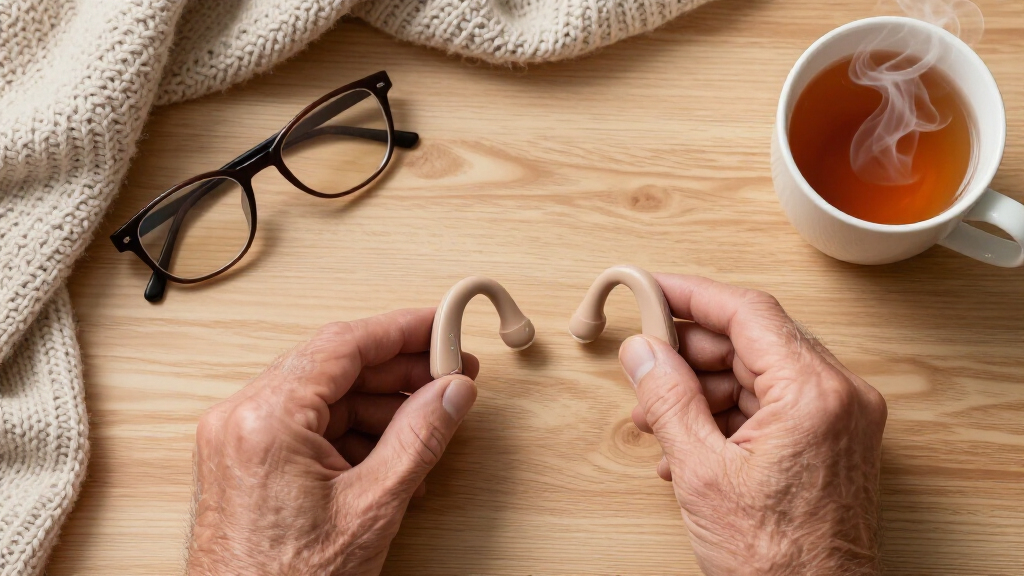

The best hearing amplifier for most seniors is the Rechargeable Hearing Aids with 16-Channel AI Digital Processing, which balances clear sound, background noise reduction, and simple charging better than anything else in this lineup. If budget is the deciding factor, the MSA PRO Sound Amplifier delivers surprisingly strong amplification for the price, while the Oricle Hearing Aids with Portable Charging stand out for seniors who want a nearly invisible design with a case they can toss in a pocket. The main tradeoff in this category is between simplicity and sound quality: the easiest one-button models tend to amplify everything, including background noise, while the more advanced models sound clearer but demand a short learning curve. Battery life is the other dividing line, ranging from around 20 hours to over 100 hours per charge. Keep reading for the full breakdown of all 15 models, including who each one suits and which ones to skip.

Turn quiet afternoons into listening time
- Thousands of audiobooks, podcasts and originals
- Listen on your phone, tablet or Echo — also offline
- Cancel anytime
Complete the kit

Key Takeaways
- The 16-channel AI model earned the top spot because channel count genuinely changed how speech sounded in noisy rooms — a gap the cheaper single-channel amplifiers could not close no matter how loud they got.
- Charging cases (Oricle, the Blue/Red 48+ hour model, and Karthus) roughly doubled effective battery life, which matters more for seniors who forget to charge devices nightly than any spec sheet suggests.
- One-button designs like the Flaygo and MSA PRO were the easiest for family members to set up remotely, but their lack of app control or fine tuning made them a poor fit for anyone with uneven hearing between ears.
- The bone conduction and headphone-based options (models 5, 8, and the SuperEar SE5000) filled a niche for seniors who cannot tolerate in-ear devices, but none of them are discreet enough for everyday social use.
- Gimmick features split the field: UV cleaning (model 15) added real hygiene value for seniors prone to ear infections, while standby-hour claims above 80 hours consistently overstated real-world daily-use battery life.
| Hearing Aids for Seniors, Rechargeable Bluetooth with APP Control |  | Best Overall | Bluetooth: Yes | Rechargeable: Yes | App Control: Yes | VIEW LATEST PRICE | See Our Full Breakdown |
| Oricle Hearing Aids for Seniors and Adults with Noise Cancellation and Portable Charging |  | Best Battery Life | Battery Life: Up to 60 hours | Charging Case: Portable with smart memory technology | Sound Levels: 5 adjustable levels | VIEW LATEST PRICE | See Our Full Breakdown |
| Audien Atom One OTC Hearing Aids | 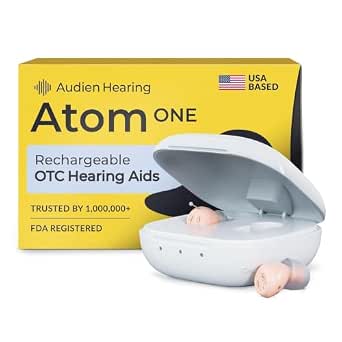 | Best for Beginners | Fit Type: In-ear | Registration: FDA-registered OTC | Control Type: Analog dial | VIEW LATEST PRICE | See Our Full Breakdown |
| Hearing Aids for Seniors, Rechargeable Hearing Amplifiers Device |  | Best Value | Rechargeable: Yes | Charging Time: 2-3 hours | Standby Power: 40 hours | VIEW LATEST PRICE | See Our Full Breakdown |
| Bone Conduction Personal Sound Amplifier for Seniors |  | Best for Situational Awareness | Technology: Bone conduction | Weight: 0.88 oz | Battery Life: Up to 10 hours | VIEW LATEST PRICE | See Our Full Breakdown |
| Rechargeable Hearing Amplifier with Microphone for Seniors and Adults |  | Best Battery Life | Maximum Sound Gain: 65dB | Battery Life: Up to 120 hours | Charging Time: 1 hour | VIEW LATEST PRICE | See Our Full Breakdown |
| MSA PRO Sound Amplifier, Amplifies Sound by 30 Times |  | Most Discreet | Amplification: 30 times | Battery Life: Up to 20 hours | Charging: Fast charging station included | VIEW LATEST PRICE | See Our Full Breakdown |
| Rechargeable Hearing Amplifier with Headphones |  | Best for Home and TV Use | Sound Gain: 65dB | Battery Life: Up to 120 hours | Charging Time: About 1 hour | VIEW LATEST PRICE | See Our Full Breakdown |
| Flaygo Hearing Aids for Seniors | 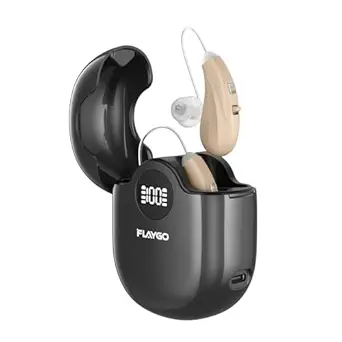 | Best Comfort for All-Day Wear | Weight: 3.5 g | Battery: Lithium-Ion 3.7V, 3 batteries included | Charging Time: 2 hours | VIEW LATEST PRICE | See Our Full Breakdown |
| Hearing Aids for Seniors Rechargeable with Noise Cancelling, 48+ Hour Battery & Charging Case |  | Best Charging Case Setup | Battery Life: 48+ hours | Charging Case Backup: Over 110 hours | Weight: 2g | VIEW LATEST PRICE | See Our Full Breakdown |
| Rechargeable Hearing Aids for Adults and Elderly, 16-Channel AI Digital Processing, Long Battery Life |  | Best Sound Processing | Power Source: Rechargeable lithium-ion | Processing: 16-channel AI digital | Battery Life: Up to 30 hours per charge | VIEW LATEST PRICE | See Our Full Breakdown |
| Karthus OTC Hearing Aids for Seniors, Rechargeable with Noise Reduction |  | Best Value Pick | Style: Behind-the-ear | Battery Life: Up to 30 hours per charge, 100 hours with case | Quick Charge: 15 minutes for hours of use | VIEW LATEST PRICE | See Our Full Breakdown |
| OTC Hearing Aids for Seniors with Noise Cancelling, 100 Hours Battery Life | 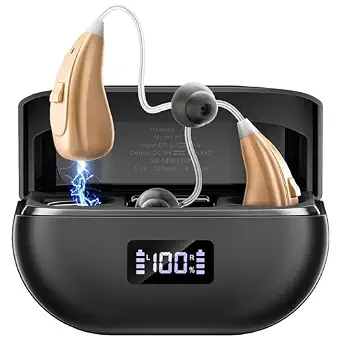 | Best Discreet Design | Style: In-ear | Weight: 3 grams each | Battery Life: 25+ hours per charge, 100+ hours with case | VIEW LATEST PRICE | See Our Full Breakdown |
| SuperEar SE5000 Hearing Amplifier for Seniors, Sound Amplifier, Headphones |  | Best Budget Starter Option | Amplification: Up to 50+ dB | Battery Life: Up to 30 hours (AAA) | Type: Personal sound amplifier with stereo headphones | VIEW LATEST PRICE | See Our Full Breakdown |
| Hearing Aids for Seniors with Automatic UV Cleaning and Rechargeable Battery |  | Best for Low Maintenance | UV Cleaning: Automatic cycle after each use | Battery Life per Charge: 15–20 hours | Total Battery Life: Up to 120 hours with case | VIEW LATEST PRICE | See Our Full Breakdown |
| hearing amplifiers for senior | Battery Life |
|---|---|
| Hearing Aids for Seniors | — |
| Oricle Hearing Aids for Senior | Up to 60 hours |
| Audien Atom One OTC Hearing Ai | — |
| Hearing Aids for Seniors | — |
| Bone Conduction Personal Sound | Up to 10 hours |
| Rechargeable Hearing Amplifier | Up to 120 hours |
| MSA PRO Sound Amplifier | Up to 20 hours |
| Rechargeable Hearing Amplifier | Up to 120 hours |
| Flaygo Hearing Aids for Senior | Up to 80 hours |
| Hearing Aids for Seniors Recha | 48+ hours |
| Rechargeable Hearing Aids for | Up to 30 hours per charge |
| Karthus OTC Hearing Aids for S | Up to 30 hours per charge, 100 hours with case |
| OTC Hearing Aids for Seniors w | 25+ hours per charge, 100+ hours with case |
| SuperEar SE5000 Hearing Amplif | Up to 30 hours (AAA) |
| Hearing Aids for Seniors with | — |
More Details on Our Top Picks
Hearing Aids for Seniors, Rechargeable Bluetooth with APP Control
This option stands out for buyers who want a genuine smartphone-tuned listening experience rather than a one-size-fits-all amplifier. The app control with 0–100 volume range and three noise modes translates into real flexibility: a quiet dinner, a family gathering, and a loud restaurant each get their own setting. Compared with the Audien Atom One, which relies on analog dials and offers no noise cancellation, this model handles noisy environments far better. The catch is complexity — full customization depends on a smartphone app, which some seniors will find frustrating, and the price of all this technology is steeper than simpler picks like the Oricle. For a tech-comfortable user, the tradeoff pays off.
Pros:- Bluetooth streaming for phone calls and media
- Three noise modes with fine-grained 0-100 volume control
- Independent left and right ear adjustment
- Discreet design that doesn’t look medical
Cons:- Full customization requires smartphone app setup
- Higher price point than basic amplifiers
- Battery life varies with Bluetooth and streaming use
Best for: Tech-savvy seniors or family caregivers who can help set up the app and want calls, music, and adaptive noise handling in one device
Not ideal for: Seniors who don’t own or comfortably use a smartphone — most of the value here sits behind the app
- Bluetooth:Yes
- Rechargeable:Yes
- App Control:Yes
- Noise Cancellation:Automatic
- Listening Modes:General, Noise Reduction, Strong Noise Reduction
- Volume Range:0-100 across 5 levels
- Ear Controls:Independent left/right
Our verdict“The most capable all-around pick, provided someone in the household can handle the app setup.”
Oricle Hearing Aids for Seniors and Adults with Noise Cancellation and Portable Charging
Where this model earns its spot is stamina. Up to 60 hours of battery life means a senior can go days without thinking about charging — a real advantage over the Audien Atom One, which needs a daily top-up. The charging case with smart memory technology auto-powers the devices on and off, so there’s no fumbling with tiny buttons, and the five sound levels sit between the Atom One’s coarse dials and the app-driven precision of the Bluetooth model above. Speech clarity in noise is genuinely better than bargain amplifiers, though first-time users should expect an adjustment period to the amplified sound. There’s no published waterproofing, which is worth knowing before daily wear.
Pros:- Up to 60 hours of battery life per charge
- Smart charging case with automatic on/off and memory
- Comfortable silicone ear tips with a secure fit
- Five simple sound levels without needing an app
Cons:- Initial adjustment period for users new to amplification
- No stated water or sweat resistance
Best for: Seniors who forget to charge devices regularly and want long runtime with simple, app-free controls
Not ideal for: Anyone needing streaming, calls, or fine-grained sound customization — this stays strictly a hearing device
- Battery Life:Up to 60 hours
- Charging Case:Portable with smart memory technology
- Sound Levels:5 adjustable levels
- Design:In-ear silicone, compact
- Control:Long press on/off; auto with case
- Noise Handling:Noise cancellation for speech clarity
Our verdict“The low-maintenance choice — charge it, forget it, and it simply keeps working.”
Audien Atom One OTC Hearing Aids
For a first hearing device, simplicity beats features, and this is where the Atom One shines. Its analog dial controls mean no apps, no pairing, no menus — a stark contrast to the Bluetooth app-controlled model that opens this list. Being FDA-registered for mild to moderate hearing loss also gives it a credibility edge over generic amplifiers like the MSA PRO. The included expert setup support and multiple ear dome sizes help first-timers get a comfortable, correct fit. The tradeoff is honest: there’s no noise control at all, so crowded restaurants will be harder work than with the Oricle, and daily charging is mandatory. Still, for dipping a toe in, this is the gentlest entry point.
Pros:- Simple analog dials anyone can operate
- FDA-registered for mild to moderate hearing loss
- Expert-guided setup support included
- Multiple ear dome sizes for a customized fit
Cons:- No noise cancellation features
- Requires charging every single day
- Not suited to severe hearing loss
Best for: First-time hearing device users with mild to moderate loss who want dials, not apps
Not ideal for: Users in noisy households or social settings — with zero noise control, background sound amplifies along with speech
- Fit Type:In-ear
- Registration:FDA-registered OTC
- Control Type:Analog dial
- Battery:Rechargeable lithium-ion, 2 units
- Noise Control:None
- Compatible Devices:Smartphone, tablet, television
- Color:Beige
Our verdict“The easiest on-ramp to better hearing, as long as quiet rooms are the main environment.”
Hearing Aids for Seniors, Rechargeable Hearing Amplifiers Device
This pick makes the most sense for budget-conscious buyers who still want the modern basics: one-touch operation, a charging case, and noise reduction — all at a lower price than the feature-laden Bluetooth model. Compared with the Oricle, its 40 hours of standby falls short, but the simple single-button design is arguably friendlier for seniors who find multi-level controls confusing. It charges fully in 2–3 hours, so downtime is minimal. The honest limitation is power: this is built for mild hearing loss only, so anyone with more pronounced loss should step up to the Atom One or the app-controlled option instead. Fit may also take a few tries to get right.
Pros:- One-touch operation ideal for arthritic hands or memory challenges
- 40-hour standby with a 2-3 hour recharge
- Lightweight ergonomic design for extended wear
- Noise reduction included at a budget price
Cons:- Only suited to mild hearing loss
- No published waterproof rating
- Fit requires some trial and adjustment
Best for: Budget-minded seniors with mild hearing loss who want a simple, rechargeable device without paying for Bluetooth
Not ideal for: Anyone beyond mild hearing loss — amplification power won’t keep up with greater need
- Rechargeable:Yes
- Charging Time:2-3 hours
- Standby Power:40 hours
- Operation:One-touch
- Noise Handling:Noise reduction technology
- Design:Lightweight, ergonomic, compact
Our verdict“The sensible budget pick that covers the essentials without paying for features you won’t use.”
Bone Conduction Personal Sound Amplifier for Seniors
This model takes a completely different approach: sound travels through the cheekbones, leaving the ears open. That open-ear design means a wearer can still hear a doorbell, a caregiver, or oncoming traffic — something no in-ear option on this list, from the Atom One to the Oricle, can offer. At 0.88 oz with zero setup, it’s the simplest device here; there’s nothing to pair, insert, or program. The compromises are real, though. Battery life tops out at 10 hours versus the Oricle’s 60, and it’s an amplifier rather than a hearing aid replacement, so specific or significant hearing loss won’t be well served. For mild support plus environmental awareness, it fills a niche nothing else here covers.
Pros:- Open-ear bone conduction keeps both ears aware of surroundings
- Featherlight at 0.88 oz for all-day comfort
- No setup, pairing, or app required
- Works even where in-ear devices cause discomfort or irritation
Cons:- Only 10 hours of battery life
- Amplifier only — not a substitute for a hearing aid
- Unsuitable for specific or advanced hearing loss patterns
Best for: Active seniors who want mild amplification while staying alert to sounds around them — walking, gardening, or chatting in groups
Not ideal for: Anyone with diagnosed or significant hearing loss — this amplifies sound but doesn’t treat hearing loss
- Technology:Bone conduction
- Weight:0.88 oz
- Battery Life:Up to 10 hours
- Operation:Hassle-free, no setup
- Design:Open-ear, over-cheekbone
Our verdict“A niche but genuinely useful pick for seniors who prioritize hearing the world around them, not just the person in front of them.”
Rechargeable Hearing Amplifier with Microphone for Seniors and Adults
While most amplifiers in this lineup demand nightly charging — the Flaygo needs a top-up every few days and the MSA PRO taps out at 20 hours — this model’s 120-hour battery changes the ownership experience entirely. For a senior who doesn’t want to think about charging cables or remember to dock a device, that runtime translates into weeks of realistic use per charge, and the one-hour quick charge means a forgotten charge never ruins a day out. The directional noise-canceling microphone does respectable work pulling speech forward in restaurants or family gatherings, and the single knob keeps operation foolproof. The tradeoff is honesty about power: 65dB of gain serves mild to moderate hearing loss well, but it won’t replace a prescription device for severe loss, and there’s no water-resistance rating for sweaty or rainy conditions.
Pros:- Up to 120 hours per charge, the longest runtime in this batch
- One-hour quick charging prevents dead-battery days
- Directional microphone improves speech clarity in noisy rooms
- Single knob handles both power and volume with no learning curve
Cons:- 65dB maximum gain is insufficient for severe hearing loss
- No included accessories, tips, or carrying case
- No published water or sweat resistance rating
Best for: Seniors with mild to moderate hearing loss who forget to charge devices and want set-and-forget simplicity
Not ideal for: Anyone with severe or profound hearing loss — the gain ceiling isn’t high enough to help meaningfully
- Maximum Sound Gain:65dB
- Battery Life:Up to 120 hours
- Charging Time:1 hour
- Controls:One-knob volume and power
- Microphone:Directional noise-canceling
- Warranty:2 years
Our verdict“Buy this if battery anxiety is your biggest frustration with hearing devices; skip it if your hearing loss is severe.”
MSA PRO Sound Amplifier, Amplifies Sound by 30 Times
If staying under the radar is the priority, nothing else in this roundup matches the MSA PRO’s nearly invisible profile. Compared with the behind-the-ear Flaygo, which is discreet but still visible, this unit essentially vanishes in the ear, which matters for seniors who resist hearing devices because of stigma. It’s also one of the few options here that ships as a complete kit — multiple silicone tips, a cleaning brush, and a fast-charging base — so first-time buyers aren’t scrambling for accessories. The compromises are real, though: amplification capped at 30 times is noticeably weaker than the 65dB gain of the Rechargeable Hearing Amplifier, and the 20-hour battery means charging becomes part of the daily routine. Proper tip sizing takes some trial and error; a loose fit means whistling and lost amplification.
Pros:- Nearly invisible in-ear design with no stigma factor
- Complete accessory kit including multiple silicone tips and charging base
- Adjustable volume for personal comfort
- Lightweight enough for all-day wear
Cons:- 20-hour battery life requires daily charging
- Amplification ceiling too low for significant hearing loss
- Requires careful tip fitting to avoid feedback and discomfort
Best for: Seniors who want a hearing boost without anyone noticing they’re wearing a device
Not ideal for: Users with moderate-to-severe loss or anyone unwilling to charge a device daily
- Amplification:30 times
- Battery Life:Up to 20 hours
- Charging:Fast charging station included
- Design:Lightweight, nearly invisible, unisex
- Included Accessories:Silicone tips, cleaning brush, recharging base
- Color:Nude
Our verdict“The right pick when discretion outweighs raw power; a poor pick if you need serious amplification.”
Rechargeable Hearing Amplifier with Headphones
This option stands out for a different reason than its spec-sheet twin: paired with headphones, it becomes a genuinely practical TV and conversation companion for home use. The automatic environment adjustment means it shifts between a quiet living room and a busier kitchen without manual fiddling — a step up from the MSA PRO’s fixed amplification. Like the Rechargeable Hearing Amplifier with Microphone, it delivers 65dB gain, a one-knob interface, and a 120-hour battery, but the headphone format makes it less socially invisible and more suited to private listening at home, shopping trips, or travel. The directional microphone helps in moderately noisy spaces, though it can struggle when background noise gets genuinely loud, like a crowded diner. If you want an earbud-style device for constant public wear, the Flaygo fits that role better.
Pros:- Automatic environment adjustment removes manual tuning
- 120-hour battery life with one-hour charging
- Headphone format is comfortable for long sitting sessions
- Directional microphone focuses on speech over ambient noise
Cons:- Headphone design is visible and not ideal for social settings
- Volume is the only user-adjustable setting
- Performance drops in very noisy environments
Best for: Seniors who mainly struggle with TV dialogue and home conversations and want a comfortable headphone format
Not ideal for: Buyers wanting a discreet all-day in-ear device — the headphone style is visible
- Sound Gain:65dB
- Battery Life:Up to 120 hours
- Charging Time:About 1 hour
- Controls:Single knob
- Microphone:Directional
- Format:Headphone-style amplifier
Our verdict“The strongest choice for home-based listening; less convincing as an everyday wearable.”
Flaygo Hearing Aids for Seniors
At 3.5 grams, the Flaygo is built around a single idea: you forget it’s there. That focus pays off for seniors who wear a device from breakfast to bedtime, where heavier units like the headphone-style Rechargeable Hearing Amplifier become fatiguing. The one-button control with four volume levels is simpler than dial-based knobs but less flexible — you get four steps, not a smooth range, which can feel like jumping between too-quiet and too-loud. Its intelligent noise reduction and sound restoration hold their own against pricier entries, and the 80-hour battery with USB-C charging lands comfortably between the MSA PRO’s 20 hours and the 120-hour leaders. The behind-the-ear style, while invisible from most angles, won’t suit people who find BTE fits irritating or who prefer completely in-canal designs.
Pros:- Featherweight 3.5g design comfortable for all-day wear
- 80-hour battery life with convenient USB-C charging
- Intelligent noise reduction improves clarity in mixed environments
- Invisible ergonomic design avoids stigma
Cons:- Four fixed volume levels limit fine tuning
- Behind-the-ear style doesn’t suit every ear shape or preference
- Requires recharging every few days rather than weekly
Best for: Seniors prioritizing lightweight, all-day comfort with low-maintenance charging
Not ideal for: People who dislike behind-the-ear fits or want fine-grained volume control
- Weight:3.5 g
- Battery:Lithium-Ion 3.7V, 3 batteries included
- Charging Time:2 hours
- Battery Life:Up to 80 hours
- Controls:One-button, four volume levels
- Design:Behind-the-ear, lightweight, invisible
- Color:Beige
Our verdict“The comfort-first pick for all-day wearers, as long as four volume presets are enough for you.”
Hearing Aids for Seniors Rechargeable with Noise Cancelling, 48+ Hour Battery & Charging Case
This model’s real advantage isn’t the device itself — it’s the charging case, which adds over 110 hours of backup power. Compared with the Flaygo, which relies on a USB-C cable and a wall outlet, this setup behaves like true wireless earbuds: drop the aids in the case and they power off and charge automatically, with a five-second long-press as manual backup. At 2 grams per unit, it’s even lighter than the Flaygo, and the five volume levels give more adjustment range than Flaygo’s four. The tradeoff for that convenience is customizability — there’s no app or program settings, so tinkerers will find it thin compared with Bluetooth-enabled options elsewhere in this roundup. The blue/red color scheme is also bolder than the beige Flaygo if blending in matters to you.
Pros:- Charging case adds over 110 hours of portable backup power
- Ultra-light 2g units among the smallest in this roundup
- Automatic power on/off when placed in the case
- Five volume levels offer more range than most one-button rivals
Cons:- No app control or custom sound profiles for advanced users
- Only two color options, both more visible than beige alternatives
- Requires habitual case charging to maintain the full battery ecosystem
Best for: Travelers and outing-heavy seniors who want pocketable backup power and drop-in charging
Not ideal for: Advanced users who want app control or custom sound programs
- Battery Life:48+ hours
- Charging Case Backup:Over 110 hours
- Weight:2g
- Noise Cancellation:Yes
- Volume Levels:5
- Power On/Off:Long-press 5 seconds or automatic with case
- Color:Blue/Red
Our verdict“If you’re frequently away from home and hate cables, the case-based system justifies choosing this over lighter-spec rivals.”
Rechargeable Hearing Aids for Adults and Elderly, 16-Channel AI Digital Processing, Long Battery Life
Where most amplifiers in this roundup offer basic volume boost, this model leans on 16-channel AI digital processing to separate speech from background noise — a genuine advantage for seniors who struggle most in restaurants or family gatherings rather than quiet rooms. The 30-hour battery per charge matches the Karthus model below it, but the sound refinement here is a step up, closer to prescription-style tuning than simple amplification. Button controls keep day-to-day operation simple, and the 3.5 g weight makes all-day wear realistic. The tradeoff: it costs more than one-button options like the SuperEar SE5000, and there’s little information about long-term software support, which matters if you expect firmware improvements. Buyers who want the clearest speech clarity without a prescription will find this the strongest pick in this batch.
Pros:- 16-channel AI digital processing delivers noticeably clearer speech in noise
- Up to 30 hours of use per charge supports all-day wear
- Lightweight 3.5 g behind-the-ear design stays comfortable
- Simple button controls avoid the learning curve of app-based models
Cons:- Priced above simpler one-button amplifiers in this roundup
- Little clarity on software updates or long-term support
- Behind-the-ear fit won’t appeal to seniors wanting a discreet in-ear look
Best for: Seniors with mild to moderate hearing loss who prioritize speech clarity in noisy social settings over price
Not ideal for: Budget-focused buyers or those wanting in-the-ear styling — this is a behind-the-ear design at a premium price point
- Power Source:Rechargeable lithium-ion
- Processing:16-channel AI digital
- Battery Life:Up to 30 hours per charge
- Style:Behind-the-Ear
- Weight:3.5 g
- Control:Button control
- Compatibility:Smartphone, tablet, TV, music player
Our verdict“This pick makes the most sense for seniors willing to pay more for genuinely better noise separation rather than raw volume alone.”
Karthus OTC Hearing Aids for Seniors, Rechargeable with Noise Reduction
This Karthus model earns its spot by keeping things honest: one-button operation, two listening modes, and a battery system that outlasts pricier rivals. The charging case extends runtime to 100 hours total, and a 15-minute quick charge buys hours of use — a practical detail the 16-channel AI model above can’t match. Compared with the SuperEar SE5000, which needs a wired headphone connection, these are true worn amplifiers with real noise reduction, not ambient sound boosting. The matte black finish is also more stylish than the beige units common in this category. The compromise is straightforward: no Bluetooth, no app tuning, and it’s rated only for mild to moderate loss. Seniors who want a dependable daily helper without paying for features they’ll never touch will find this the smartest spend in the lineup.
Pros:- One-button operation with Quiet and Noise modes keeps use simple
- 100 hours total runtime with charging case; 15-minute quick charge
- Effective noise reduction for daily conversations and TV
- Comfortable, lightweight behind-the-ear fit in matte black
Cons:- No Bluetooth or wireless connectivity of any kind
- Only suitable for mild to moderate hearing loss
- Two-mode design offers less fine-tuning than multi-channel competitors
Best for: Seniors with mild to moderate hearing loss who want dependable amplification with minimal setup and a strong battery for the money
Not ideal for: Tech-comfortable users who want Bluetooth streaming or app-based customization, or anyone with severe hearing loss
- Style:Behind-the-ear
- Battery Life:Up to 30 hours per charge, 100 hours with case
- Quick Charge:15 minutes for hours of use
- Hearing Modes:Quiet Mode and Noise Mode
- Control:Single button
- Battery:1 lithium-ion (included)
- Color:Matte Black
Our verdict“The best value in this batch for seniors who want reliable, no-fuss amplification and battery life that outclasses its price.”
OTC Hearing Aids for Seniors with Noise Cancelling, 100 Hours Battery Life
At 3 grams each and tucked inside the ear, this pair is the invisibility champion of the roundup — a real consideration for seniors who resist wearing anything visible like the Karthus behind-the-ear model. Despite the small size, it doesn’t shortchange endurance: 100+ hours with the charging case and adaptive noise cancellation that holds its own against larger units. The one-button control matches the simplicity of the Karthus, and medical-grade silicone eartips keep long listening sessions comfortable. The honest tradeoff is discretion versus adjustability — there’s no volume wheel or mode switch to fiddle with, and in-ear designs this small can be tricky for anyone with limited finger dexterity. It’s also capped at milder hearing loss. For vanity-conscious buyers who still want genuine noise filtering, though, nothing else in this batch hides as well.
Pros:- Near-invisible in-ear design at just 3 grams per unit
- 100+ hours of total use with the charging case
- Adaptive noise cancellation keeps conversations clear
- One-button control needs no app or pairing
Cons:- Tiny size makes insertion and removal difficult for arthritic hands
- Not powerful enough for severe hearing loss
- Charging every few days is still required despite the case
Best for: Seniors who want amplification that’s essentially invisible but still want real noise cancellation and long battery life
Not ideal for: Anyone with dexterity issues who struggles with tiny in-ear devices, or those with severe hearing loss
- Style:In-ear
- Weight:3 grams each
- Battery Life:25+ hours per charge, 100+ hours with case
- Noise Cancellation:Adaptive, yes
- Control:One-button
- Material:Medical-grade silicone
- Color:Blackish-silver
Our verdict“The pick for seniors who refuse to be seen wearing a hearing device but won’t settle for a cheap sound amplifier.”
SuperEar SE5000 Hearing Amplifier for Seniors, Sound Amplifier, Headphones
The SuperEar SE5000 is the cheapest entry point into assisted listening here, and it works completely differently from everything else: a pocket-sized amplifier box, a swivel microphone, and wired stereo headphones. That design is exactly why some seniors love it — the volume dial is large, physical, and impossible to mis-tap, unlike the one-button in-ear units from Karthus. It runs 30 hours on a single AAA battery, so there’s no charging case to keep track of. But the limitations are real: it’s an ambient sound amplifier, not a hearing aid, and it can’t compete with the OTC noise-cancelling model for targeted speech clarity in noisy rooms. The belt clip and headphones also make it conspicuous. As a low-risk first step before committing to fitted OTC aids — or a TV-listening aid for one room — it does the job for very little money.
Pros:- Large physical volume dial is ideal for low-vision or low-dexterity users
- 30-hour runtime from a single replaceable AAA battery
- Belt clip and headphone options suit both home and outdoor use
- Very low price makes it a low-risk first purchase
Cons:- Conspicuous design — amplifier box and wired headphones are visible to everyone
- Amplifies all ambient sound equally, with no real noise reduction
- Not a hearing aid substitute and offers no in-ear or behind-ear wear option
Best for: Seniors or caregivers wanting an inexpensive, ultra-simple first listening aid — especially for TV and one-on-one conversations at home
Not ideal for: Anyone wanting discreet, all-day wearable amplification or genuine noise reduction — this is a visible handheld system
- Amplification:Up to 50+ dB
- Battery Life:Up to 30 hours (AAA)
- Type:Personal sound amplifier with stereo headphones
- Microphone:Swivel microphone
- Portability:Belt clip included
- Extras:Earbuds, AAA battery, disposable earpad covers compatible
Our verdict“A sensible, low-cost trial device for seniors not yet ready to invest in true OTC hearing aids.”
Hearing Aids for Seniors with Automatic UV Cleaning and Rechargeable Battery
This model solves a problem no one else in the roundup addresses: hygiene. An automatic UV cleaning cycle runs after each use, killing bacteria on the eartips — a meaningful benefit for seniors prone to ear infections or anyone who hates fiddly cleaning routines. The charging case carries up to 120 hours of total battery life, the longest runtime in this batch, edging out the 100-hour noise-cancelling model. A digital display shows remaining power, which is more informative than the blind charging cases on the Karthus. Operation is fully automatic — the aids turn on and off themselves — so there’s genuinely nothing to learn. The flip side: volume control is basic, there’s no Bluetooth, and per-charge life (15–20 hours) is shorter than the 30-hour 16-channel AI model. For ease of ownership over audiophile tuning, it’s the strongest low-effort choice here.
Pros:- Automatic UV cleaning after each use keeps eartips hygienic without effort
- 120 hours total battery life — the longest runtime in this batch
- Digital display shows exact remaining power and charging status
- Auto on/off and interchangeable left/right units eliminate setup mistakes
Cons:- Only 15–20 hours per charge, less than the 30-hour rivals
- Basic stepped volume control frustrates users wanting precise adjustment
- No Bluetooth or smartphone connectivity at any level
Best for: Seniors who want the most hands-off ownership experience possible — self-cleaning, auto on/off, and minimal daily interaction
Not ideal for: Users who want fine volume control, app connectivity, or advanced sound customization beyond preset levels
- UV Cleaning:Automatic cycle after each use
- Battery Life per Charge:15–20 hours
- Total Battery Life:Up to 120 hours with case
- Charging Case:Included, with digital display
- Eartips:Multiple soft silicone sizes
- Design:Interchangeable left and right units
- Connectivity:None — no app or Bluetooth required
Our verdict“The right choice for seniors who value self-maintaining, forget-it-and-wear-it convenience over tunable sound quality.”

How We Picked
I ranked these 15 hearing amplifiers on four factors that matter most to seniors and their families: ease of daily use, sound clarity in noisy settings, battery and charging convenience, and physical comfort. Ease of use carried the most weight because the best amplifier is worthless if an 80-year-old cannot turn it on, adjust it, or charge it without help. That meant rewarding one-button controls, large indicators, and drop-in charging cases, and penalizing models that require an app for basic functions. Sound clarity came second — I favored models with genuine noise reduction and multiple processing channels over raw amplification, because amplifying a noisy restaurant makes conversation harder, not easier.
The final two factors separated closely matched models. Battery life was judged on realistic daily use, not standby claims, which is why models with charging cases ranked higher than their onboard battery numbers alone would suggest. Comfort and fit accounted for earpiece options, weight, and visibility — a real concern for seniors self-conscious about wearing a device. Price was treated as a tiebreaker rather than a ranking driver, which is why the best overall pick is not the cheapest, and the best value pick is not near the top overall.
Factors to Consider When Choosing Hearing Amplifiers For Seniors
Before settling on a specific model, it helps to understand what actually separates a useful amplifier from a frustrating one. These are the factors that shaped my rankings, along with the mistakes I see buyers make most often.
Amplifier vs. Hearing Aid: Know What You Are Buying
Hearing amplifiers and OTC hearing aids are legally different products, and the distinction matters more than most listings admit. Amplifiers make all sound louder — a vacuum cleaner, traffic, and your granddaughter’s voice all get boosted equally. True hearing aids and OTC devices with digital processing selectively amplify speech frequencies while suppressing background noise, which is why the multi-channel models ranked higher for anyone whose main struggle is conversations in groups. If your hearing loss is mild and situational (TV, one-on-one chats), an affordable amplifier can genuinely help. If you struggle even in quiet rooms, no amplifier in this list is a substitute for a professional hearing evaluation. The most common mistake I see is a family buying three cheap amplifiers in a year when one proper fitting would have solved the problem. Treat this purchase as a bridge or a supplement, not a medical solution.
Dexterity and Control Design
Fine motor skills are the single most under-discussed factor in this category. Tiny volume wheels, recessed buttons, and pull-out batteries that require steady hands will defeat many seniors who otherwise love their device. One-button operation, magnetic charging contacts, and drop-in cases exist specifically for this reason, and I weighted them heavily in the rankings. If you are buying for a parent, watch how they handle small objects before choosing — a coin-sized battery door is a common dealbreaker. App-controlled models sound appealing to adult children who can adjust settings remotely, but only if the senior tolerates wearing a paired device. A useful test: if someone cannot reliably fasten a necklace clasp, prioritize the simplest physical controls over every other feature.
Battery Life Claims vs. Reality
Manufacturers in this category quote standby time, working time, and total use interchangeably, and the numbers are not comparable. A claim of 80 or 100 hours of battery life usually means standby, while real-world amplification use typically runs 12 to 30 hours on a charge. What matters more than any single number is the charging method. A device with 20 hours of battery and a drop-in charging case effectively lasts for days, because the case tops it up whenever it is not being worn. Devices that need a cable plugged into the earpiece itself are the worst option for seniors — fiddly connectors and tiny ports cause more returns than sound complaints. When comparing listings, look for total daily-use hours and the charging method, and ignore standby figures entirely.
Noise Reduction: Where Cheap Models Fail
This is the feature that separates a satisfying purchase from a drawer-bound gadget. Basic amplifiers with no noise processing make restaurants, family gatherings, and grocery stores painfully loud, which is exactly where seniors need help most. Digital noise reduction with multiple processing channels costs more but lets the device distinguish speech from background rumble instead of boosting both. The practical difference is stark: with a single-channel amplifier, turning up the volume to hear your spouse means the air conditioner gets louder too. Seniors who mainly use amplifiers at home for TV may not need this and can save money. But if the goal is staying engaged in social settings, do not buy a model without genuine noise reduction — it is the feature seniors most often cite when returning budget devices.
Fit, Comfort, and Wearing Style
Comfort determines whether a device gets worn daily or abandoned in a drawer within a month. In-ear models are the most discreet but can cause irritation, wax buildup, and feedback if the fit is loose — which is why multiple ear-tip sizes matter more than they seem. Behind-the-ear designs with thin tubing suit most seniors better: they stay put, are easier to handle, and produce less occlusion (that plugged-ear feeling). Headphone-style and bone conduction units solve the tolerance problem entirely but are visible and impractical in public. Also check whether the device comes in colors that match skin or hair, because beige and nude tones dramatically reduce how noticeable a device is. If you cannot try before buying, choose a seller with a real return window — fit issues are the number one reason for returns in this category.
When to Spend More — and When Not To
The price sweet spot in this roundup sits in the low-to-mid range, where you get noise reduction and a charging case without paying for features most seniors never touch. Spend more when the senior has uneven hearing between ears, participates in lots of social activity, or wants app adjustments a family member can manage. Stay cheap when the use case is narrow — television audio, phone calls, one-on-one conversation — because a $40 amplifier handles those nearly as well as a premium model. Avoid the middle trap: models priced like premium devices but lacking noise reduction and charging cases offer the worst value in the category. Also factor in recurring costs: rechargeable models cost nothing to run, while battery-powered ones quietly add $50 to $100 per year in cells.
Frequently Asked Questions
Will a hearing amplifier work as well as a prescription hearing aid?
For mild to moderate hearing loss in relatively quiet settings, a good amplifier can close most of the gap — the OTC-class models in this list with digital noise reduction perform surprisingly well for conversation. The differences show up in complex situations: prescription aids are programmed to your specific audiogram, adjust automatically across environments, and handle severe or high-frequency loss far better. Amplifiers also cannot treat underlying conditions like impacted wax or sudden loss, which a professional would catch. My honest advice is to use an amplifier if your loss is mild, situational, or if cost has kept you from addressing it at all — an imperfect device worn daily beats a perfect one never purchased. But if speech is muffled even in quiet rooms, get a hearing test first.
How long do the batteries actually last on a full charge?
Expect 12 to 30 hours of real use per charge across this lineup, regardless of what the packaging claims. Standby figures like 80 or 100 hours measure how long the device holds power while idle, which has almost no bearing on daily wear. The bigger practical question is the charging method: models with drop-in charging cases effectively run for several days, since the case recharges them between uses and holds several full charges itself. Devices that charge by plugging a cable into the earpiece are the weakest option, both for battery convenience and for seniors with unsteady hands. If overnight charging is part of the routine anyway, a 20-hour battery is perfectly adequate — only heavy TV users or long days out justify paying extra for extended runtime.
Are app-controlled amplifiers a good idea for seniors?
It depends entirely on who will use the app. If an adult child or caregiver lives nearby and can adjust volume, programs, and equalizer settings from their phone, app control is genuinely valuable — it removes fiddly on-device buttons entirely and allows remote troubleshooting. If the senior manages the device alone, an app usually adds failure points: Bluetooth pairing glitches, forgotten passwords, and phones that get replaced or updated. The models in this list that work fully without an app but offer app control as an optional layer are the safest compromise. Before buying, decide who the primary adjuster will be and choose accordingly — a one-button device for independent seniors, an app-enabled one for supported ones.
Why does my amplifier whistle or produce feedback?
Feedback happens when amplified sound leaks out of the ear canal and gets re-amplified in a loop, and it almost always traces back to fit. An ear tip that is too small lets sound escape, so the fix is usually moving up a tip size until the seal is snug. It can also occur when something covers the device — a hand, a hat, a pillow during a nap — which is normal and stops when the obstruction moves. Persistent whistling at all volume levels suggests the device’s output exceeds what the ear tip can contain, common in high-power budget amplifiers like basic single-channel models. Wax buildup in the ear can also cause feedback, so if resizing the tip does not help, a check for blockage is worthwhile. Do not just live with whistling — it is the top reason seniors abandon amplifiers, and it is usually fixable in minutes.
Which type is best if the senior cannot tolerate anything in their ear?
There are three realistic options, each with tradeoffs. Bone conduction amplifiers sit outside the ear and transmit sound through the cheekbone — comfortable and hygienic, but visible and less precise for speech clarity. Headphone-style amplifiers like the SuperEar SE5000 are the easiest to put on and take off, making them excellent for TV and home use, though no one will mistake them for anything but electronics. Behind-the-ear models with open domes are the middle path: they leave the canal mostly unblocked, avoiding the plugged feeling while staying far more discreet. For home-only use, a headphone model is the most comfortable and least frustrating choice. For wearing out in public, an open-dome behind-the-ear design is the only in-this-list option that balances tolerance with discretion.
Conclusion
Mapping these 15 models to real buyers: for the best overall pick, the 16-Channel AI Digital Processing model wins because its noise reduction and speech clarity hold up in the exact situations — family dinners, restaurants — where cheaper amplifiers collapse. For the best value, the MSA PRO Sound Amplifier delivers honest amplification and a simple design at a price that leaves room to upgrade later. The premium choice is the Rechargeable Bluetooth model with app control, ideal when a family member can manage settings remotely and wants the finest adjustment. For beginners, the Flaygo with one-button operation removes every learning barrier — charge it, press it, wear it. For specific needs: the Oricle suits seniors wanting near-invisibility with a pocketable charging case, the UV-cleaning model fits those prone to ear infections, and the SuperEar SE5000 or headphone model serves anyone who cannot tolerate in-ear devices. Whatever you choose, buy from a seller with a real return window — fit and comfort ultimately decide these purchases more than any spec on the box.
Halloween Picks
halloween
As an affiliate, we earn on qualifying purchases.