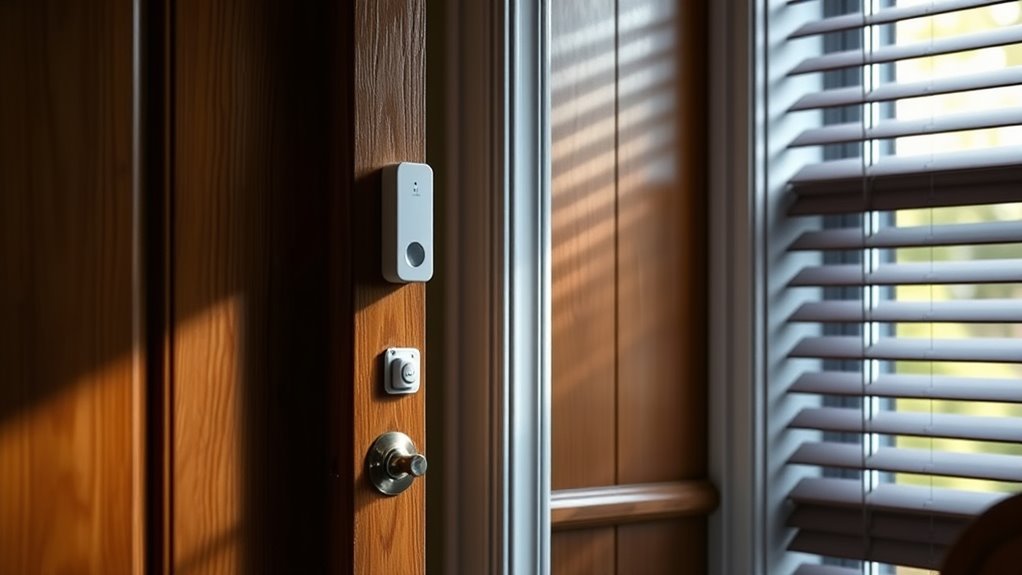
Door alarms for dementia patients can alert a caregiver when someone opens an exterior door, but the right setup depends on the home, the person’s hearing, and how quickly someone can respond. My best overall pick is the Wireless Door Alarm System with 3 Sensors and 2 Receivers, which pairs several monitored doors with receivers in more than one location. The PHYSEN Smart WiFi Door Chime stands out for connected alerts, while the Satisure system with 700-foot range suits homes where the caregiver may be farther from the door. The main tradeoff is between simple, immediate local alerts and wider-reaching notifications, with noise level, coverage, and setup also shaping the choice. Read on for how all 15 options compare and which type of alarm may fit your care routine.

Get comfort and care essentials delivered free — and shop member deals
- Fast, free delivery on millions of items
- Access to Prime Big Deal Days deals on October 6–7
- Prime Video, Amazon Music and more included
Complete the kit


Key Takeaways
- Multi-door coverage is a clear differentiator: the three-sensor, two-receiver system is the strongest fit among these picks for monitoring several entry points and hearing an alert in more than one room.
- Wi-Fi adds reach, not automatic reliability: the PHYSEN and SanJie Wi-Fi options can suit caregivers who need phone notifications, while local receivers avoid dependence on a connected setup.
- Receiver placement can matter more than alarm loudness: the Satisure 700-foot system is aimed at larger homes or yards where a caregiver may not be near the monitored door.
- Simple sensor packs favor straightforward monitoring: Noopel, TECKNET, METAK, and other basic contact-alarm options are better suited to buyers who want door alerts without a more involved receiver or app system.
- A loud alarm is not automatically the best care alert: options rated up to 125 dB may draw attention, but caregiver comfort, the person’s response to sudden noise, and the ability to hear alerts across the home matter too.
| SanJie Wireless Door Chime Alarm for Kids Safety, Home, and Business |  | Best for Multi-Door Coverage | Sensor type: Contact sensor | Maximum range: 500 feet | Maximum sound level: 110 dB | VIEW ON AMAZON | See Our Full Breakdown |
| Noopel Door and Window Alarms for Home Security and Child Safety (2 Pack) |  | Best for a Direct, High-Volume Alert | Pack size: 2 alarms | Sensor type: Contact sensor | Alarm volume: 120 dB | VIEW ON AMAZON | See Our Full Breakdown |
| 120 dB Wireless Door and Window Alarm Sensor 3 Pack for Home Security, Kids, and Dementia Patients Safety |  | Best Value for Three Local Alarms | Pack size: 3 alarms | Sensor type: Contact sensor | Alarm volume: 120 dB | VIEW ON AMAZON | See Our Full Breakdown |
| PHYSEN Smart WiFi Door Chime and Window Sensor Alarm |  | Best for Smartphone Notifications | Connectivity: WiFi | App compatibility: Tuya or Smart Life | Maximum range: 500 feet | VIEW ON AMAZON | See Our Full Breakdown |
| Door Chime Wireless Sensor Alarm for Home, Business, Store |  | Best for Long-Range Chime Customization | Coverage range: 600 feet | Included sensors: 1 | Melodies: 58 | VIEW ON AMAZON | See Our Full Breakdown |
| Wireless Door Alarm with Remote – 110dB Loud Alarm for Home & Safety (4 Pack) |  | Best for Remote Control | Pack contents: 2 alarms and 2 remotes | Alarm volume: 110dB | Remote range: Up to 164 feet | VIEW ON AMAZON | See Our Full Breakdown |
| UltraPro Personal Security Window and Door Alarm, 2 Pack, Wireless Chime |  | Best for Simple Day-to-Day Alerts | Pack size: 2 alarms | Alarm volume: 120dB siren | Sound modes: Siren and chime | VIEW ON AMAZON | See Our Full Breakdown |
| TECKNET Door and Window Alarm (3 Pack) |  | Best for Multiple Alert Modes | Pack size: 3 alarms | Alarm volume: Up to 130dB | Sound settings: Five modes; three volume levels | VIEW ON AMAZON | See Our Full Breakdown |
| Sanjie Door Window Alarm Sensors, 5 Pack, 125dB, Volume Control |  | Best for Covering More Openings | Pack size: 5 sensors | Sound modes: 125dB alarm, 100dB alarm, 100dB chime | Battery type: 3 LR44 button batteries included | VIEW ON AMAZON | See Our Full Breakdown |
| Satisure Wireless Doorbell Sensor Alarm |  | Best for Long-Range Receiver Alerts | Wireless range: Up to 700 feet | Melodies: 58 selectable | Volume levels: 5 | VIEW ON AMAZON | See Our Full Breakdown |
| SanJie WiFi Door Chime and Sensor with Phone Notifications |  | Best for Shared Phone Alerts | Sensor type: Contact sensor | Connectivity: 2.4GHz Wi-Fi | Alert control: Smartphone app | VIEW ON AMAZON | See Our Full Breakdown |
| Satisure Wireless Door Chime and Alarm System with 2 Contact Sensors and 700ft Range |  | Best for Long-Range Receiver Alerts | Included components: 1 receiver and 2 contact sensors | Maximum range: 700 feet | Chime options: 58 melodies | VIEW ON AMAZON | See Our Full Breakdown |
| Door Chime When Door Opens, 2-Sensor 1-Receiver Wireless Door Alarm System |  | Best for Simple Two-Door Setup | Included sensors: 2 | Included receivers: 1 | Wireless range: 500 feet | VIEW ON AMAZON | See Our Full Breakdown |
| Wireless Door Alarm System with 3 Sensors and 2 Receivers for Home Security and Dementia Care |  | Best for Multi-Entry Coverage | Included components: 3 sensors and 2 receivers | Detection range: 260 feet | Chime options: 58 ringtones | VIEW ON AMAZON | See Our Full Breakdown |
| METAK Window & Door Alarm 5-Pack (White) |  | Best for Independent Local Alarms | Pack size: 5 alarms | Alarm volume: Adjustable 90 dB or 120 dB | Power source: 2 AAA batteries per alarm, not included | VIEW ON AMAZON | See Our Full Breakdown |
| door alarms for dementia patient | Mounting | Dimensions |
|---|---|---|
| SanJie Wireless Door Chime Ala | Protruding; adhesive tape or screws included | 3 x 3 x 2 inches |
| Noopel Door and Window Alarms | Wall mount with adhesive tape | 3 x 1.5 x 0.6 inches |
| 120 dB Wireless Door and Windo | — | 1.5 x 0.37 x 2.9 inches |
| PHYSEN Smart WiFi Door Chime a | — | — |
| Door Chime Wireless Sensor Ala | — | 3.15 x 3.15 x 3.15 inches |
| Wireless Door Alarm with Remot | Door mount; adhesive installation | 1.69 x 0.59 x 3.5 inches |
| UltraPro Personal Security Win | Door or window mount; double-sided tape | 2.3 x 0.6 x 2.3 inches |
| TECKNET Door and Window Alarm | Door or window mount; adhesive backing | — |
| Sanjie Door Window Alarm Senso | Door or window mount; 3M tape | 3 x 2 x 3 inches |
| Satisure Wireless Doorbell Sen | — | — |
| SanJie WiFi Door Chime and Sen | Adhesive door mount | — |
| Satisure Wireless Door Chime a | Double-sided tape | — |
| Door Chime When Door Opens | — | — |
| Wireless Door Alarm System wit | — | — |
| METAK Window & Door Alarm 5-Pa | — | 4.18 × 1.2 × 0.6 inches |
More Details on Our Top Picks
SanJie Wireless Door Chime Alarm for Kids Safety, Home, and Business
The SanJie is a strong fit for caregivers who need one receiver to cover several exit points: its expandable sensors can be assigned across doors or windows, while a 500-foot range gives more flexibility in a larger home. The 26 chimes and adjustable sound level let you choose an alert that stands out without relying on a phone. Compared with the Noopel 2-pack, which sounds a very loud alarm at each sensor, this setup centralizes alerts at a plug-in receiver—useful when a caregiver is listening from another room, but less helpful if that receiver is out of earshot. Sensors need batteries, and the stated maximum of 110 dB may still be hard to hear over household noise. I’d choose it for flexible coverage, not for app-based remote monitoring.
Pros:- Expandable sensors can cover multiple doors and windows
- 500-foot stated range suits larger homes
- 26 chimes and adjustable volume allow alert customization
- Adhesive mounting and a plug-in receiver support straightforward setup
Cons:- Sensor batteries require periodic replacement
- No smartphone notifications are listed
- The receiver may not be audible in very noisy areas
Best for: Caregivers who want a central receiver and the option to add sensors for multiple doors or windows in a larger home.
Not ideal for: Households that need phone alerts when the caregiver is away, or where the receiver cannot be placed within hearing range.
- Sensor type:Contact sensor
- Maximum range:500 feet
- Maximum sound level:110 dB
- Chimes:26
- Sensor batteries:2 x 12V batteries included
- Receiver power:120 volts
- Mounting:Protruding; adhesive tape or screws included
- Dimensions:3 x 3 x 2 inches
Our verdict“Choose the SanJie when you want a customizable central chime with room to add sensors around the home.”
Noopel Door and Window Alarms for Home Security and Child Safety (2 Pack)
Noopel’s main advantage is simplicity: each compact sensor sounds its own 120 dB siren when a monitored door or window opens. That direct alarm can suit a caregiver who needs a forceful local warning without setting up a receiver or app. By comparison, the SanJie Wireless Door Chime routes alerts to a separate receiver and offers more chime choices; Noopel instead gives you two self-contained alarms that can be placed at separate openings. That also means the alarm is local, so it may not reach someone in another part of the home as reliably as a receiver placed nearby. Alignment matters—the sensor and magnet must sit close together—and adhesive may be less dependable on textured or uneven frames. I’d favor it for straightforward coverage of two carefully chosen exits, not for whole-home monitoring.
Pros:- Two independent alarms cover two openings
- 120 dB siren provides a forceful local warning
- Slim profile fits many door and window frames
- Adhesive installation and included batteries avoid wiring
Cons:- Requires precise sensor alignment within 0.39 inches
- Local alarms may not alert a caregiver elsewhere in the home
- Contact sensing does not detect movement or glass breakage
Best for: Caregivers who want a simple, battery-powered siren on two doors or windows and can hear the alarm from nearby rooms.
Not ideal for: People needing a central receiver, app alerts, or dependable mounting on uneven and textured door frames.
- Pack size:2 alarms
- Sensor type:Contact sensor
- Alarm volume:120 dB
- Power:Battery powered
- Batteries:3 x LR44 included
- Dimensions:3 x 1.5 x 0.6 inches
- Mounting:Wall mount with adhesive tape
- Color:Silver and black
Our verdict“Pick Noopel for two compact, loud local alarms when a separate receiver or remote notification is unnecessary.”
120 dB Wireless Door and Window Alarm Sensor 3 Pack for Home Security, Kids, and Dementia Patients Safety
This three-pack offers a practical way to put a separate 120 dB alarm on several likely exit points without adding a central receiver. The slim adhesive sensors can also be placed on cabinets or windows, giving caregivers more placement options than a door-only setup. Compared with the Noopel 2-pack, it includes an additional alarm, but the tradeoff is the same local-alert approach: the sound comes from the sensor rather than a receiver positioned where a caregiver spends time. Each unit needs three LR44 batteries, and battery life is listed as varying from six to 12 months. The sensor and magnet also need close placement, so careful fitting matters. I’d choose this over Noopel when three openings need coverage; I’d look elsewhere for app alerts or a remote receiver.
Pros:- Three alarms cover more openings than the Noopel two-pack
- 120 dB local alarm can be heard near the monitored opening
- Adhesive installation supports flexible placement
- Compact size works on doors, windows, and cabinets
Cons:- Each alarm requires three LR44 batteries
- Reported battery life varies from six to 12 months
- Close sensor placement is required and alerts are not centralized
Best for: Caregivers who want to monitor three specific doors, windows, or cabinets with separate audible alarms.
Not ideal for: Households where the caregiver needs alerts delivered to a central room or smartphone, or where frequent battery checks are impractical.
- Pack size:3 alarms
- Sensor type:Contact sensor
- Alarm volume:120 dB
- Power:Battery powered
- Batteries:3 x LR44 per alarm
- Maximum range:750 feet
- Dimensions:1.5 x 0.37 x 2.9 inches
- Color:White
Our verdict“Choose this three-pack when you need separate alarms on several openings and can maintain their batteries.”
PHYSEN Smart WiFi Door Chime and Window Sensor Alarm
The PHYSEN is the clearest choice here for caregivers who want app notifications alongside an audible household alert. It works with the Tuya or Smart Life app, and its support for up to 20 sensors makes it better suited to a growing monitoring setup than the Satisure Door Chime Wireless Sensor Alarm, which is described as a plug-and-play chime with one included sensor. Five volume levels and 32 ringtones can help distinguish one monitored entrance from another without checking the phone each time. The tradeoff is dependence on WiFi for remote app alerts; optional SMS and phone calls require a paid subscription. Adhesive installation avoids wiring, but app setup adds steps that simpler local alarms like the Noopel do not require. I’d pick it when remote notifications matter, not when WiFi-free operation is the priority.
Pros:- App notifications are available through Tuya or Smart Life
- Supports up to 20 sensors for wider coverage
- Five volume levels and 32 ringtones help distinguish alerts
- Adhesive installation avoids sensor wiring
Cons:- Remote app notifications depend on WiFi
- SMS and phone call alerts require a paid subscription
- App configuration is more involved than a basic local alarm
Best for: Caregivers who want phone notifications and plan to monitor multiple doors using a home WiFi connection.
Not ideal for: Households without reliable WiFi, or caregivers who want a basic alarm with no app setup or subscription-dependent call and text alerts.
- Connectivity:WiFi
- App compatibility:Tuya or Smart Life
- Maximum range:500 feet
- Maximum sound level:110 dB
- Volume levels:5
- Ringtones:32
- Sensor capacity:Up to 20 sensors
- Installation:Self-adhesive
Our verdict“Choose PHYSEN when smartphone alerts and expandable WiFi-connected coverage matter more than a simple standalone setup.”
Door Chime Wireless Sensor Alarm for Home, Business, Store
Satisure stands out for its 600-foot stated range and broad choice of 58 melodies, making it appealing when a caregiver wants a recognizable chime from a receiver across a large home. It has five volume levels, with a maximum listed level of 110 dB, and pre-paired components make setup more direct than the app-dependent PHYSEN Smart WiFi system. The key limitation for dementia care is coverage: this version includes one door sensor, so monitoring additional exits means adding sensors if compatible. Its many melodies offer choice, but they may be unnecessary if a simple, consistent alert is easier for the household to recognize. Unlike Noopel’s self-contained sirens, Satisure relies on a separate receiver and battery power. I’d choose it for one distant entry point and a customizable chime, not for an out-of-the-box multi-door system.
Pros:- 600-foot stated range suits larger properties
- 58 melodies and five volume levels allow sound customization
- Pre-paired components simplify initial setup
- Receiver-based chime can alert caregivers away from the door
Cons:- Only one door sensor is included
- Battery power means replacement is part of upkeep
- No smartphone notifications are listed, and the melody selection may be excessive for some households
Best for: Caregivers monitoring one main entrance in a larger property who want a receiver-based alert and a choice of chimes.
Not ideal for: Families needing several monitored exits immediately, smartphone alerts, or the simplest possible alert sound.
- Coverage range:600 feet
- Included sensors:1
- Melodies:58
- Volume levels:5
- Maximum sound level:110 dB
- Power source:Battery
- Battery life:20 months
- Dimensions:3.15 x 3.15 x 3.15 inches
Our verdict“Pick Satisure for a customizable receiver chime at one distant entrance, and plan for added sensors if more doors need monitoring.”
Wireless Door Alarm with Remote – 110dB Loud Alarm for Home & Safety (4 Pack)
The HOMATTER four-piece set suits caregivers who want alarms at several doors or windows and a remote to manage alerts from a distance. Its stated 164-foot remote range and adjustable chime and volume options give it more control flexibility than the straightforward UltraPro 2-pack, which uses a side switch on each alarm. The set description lists two alarms and two remotes, while also stating support for up to eight alarms with one remote; check that distinction when planning coverage. Battery power and adhesive mounting avoid wiring, but the units still need periodic AAA replacements. A 110dB alert may be disruptive in a quiet home, and this door-and-window setup does not cover other exit points. I’d choose it for distributed coverage and remote operation, not for a discreet or app-connected system.
Pros:- Remote control range is listed as up to 164 feet.
- Adjustable volume and chime settings allow different alert styles.
- Adhesive installation requires no wiring.
- The system description says one remote can support up to eight alarms.
Cons:- The listed pack contents are two alarms and two remotes, despite the four-pack title.
- The alarms require AAA battery replacements over time.
- A 110dB alert may be too loud for a quiet household.
Best for: Caregivers who want to monitor multiple doors or windows and control alarms remotely without wiring or an app.
Not ideal for: Households needing alerts from non-door entry points, a quiet notification by default, or smartphone notifications.
- Pack contents:2 alarms and 2 remotes
- Alarm volume:110dB
- Remote range:Up to 164 feet
- Power:2 AAA batteries required; included
- Sensor technology:Photoelectric sensor
- Compatible locations:Doors and windows
- Mounting:Door mount; adhesive installation
- Dimensions:1.69 x 0.59 x 3.5 inches
Our verdict“Choose this set if remote control and coverage across several door or window locations matter more than app alerts or a gentle default sound.”
UltraPro Personal Security Window and Door Alarm, 2 Pack, Wireless Chime
The UltraPro 2-pack is a practical pick for caregivers who want a simple local alert rather than a remote receiver or app. Its side switch changes between a 120dB siren and a gentler chime, making it easier to use a softer sound for routine movement and a loud alert when needed. Compared with the TECKNET three-pack, UltraPro offers fewer units and fewer described modes, but its controls are uncomplicated and it can also be placed on cabinets or drawers. Adhesive mounting keeps installation tool-free; the tradeoff is reliance on magnetic alignment and tape rather than a more flexible remote setup like the HOMATTER set. Each unit uses four LR44 batteries, so replacements may become a recurring task, and the 90-day limited warranty is short. I’d skip it if a receiver that can alert from another room is essential.
Pros:- Switches between a 120dB siren and a chime.
- Tool-free adhesive installation needs no wiring.
- Can be used on doors, windows, cabinets, and drawers.
- Batteries and a low-battery LED indicator are included.
Cons:- Each unit requires four LR44 batteries, which need replacement over time.
- The 90-day limited warranty is relatively short.
- Two alarms provide less listed coverage than the five-unit SanJie set.
Best for: Caregivers who need a basic door, window, cabinet, or drawer alert with a choice between a loud siren and a chime.
Not ideal for: People who need remote alerts across the home, extensive mode choices, or a longer stated warranty.
- Pack size:2 alarms
- Alarm volume:120dB siren
- Sound modes:Siren and chime
- Battery type:LR44; 4 per unit, included
- Sensor technology:Contact sensor
- Compatible locations:Doors, windows, cabinets, and drawers
- Mounting:Door or window mount; double-sided tape
- Dimensions:2.3 x 0.6 x 2.3 inches
- Warranty:90-day limited warranty
Our verdict“Pick UltraPro for a straightforward local chime-or-siren alert, but choose a remote-receiver system if you need to hear alerts from elsewhere in the home.”
TECKNET Door and Window Alarm (3 Pack)
The TECKNET three-pack stands out for households that want more than a simple open-door siren: it offers five alarm modes, including chime and delayed-alarm options, plus three volume levels. That variety gives caregivers more ways to distinguish routine passage from an alert that needs attention. Compared with UltraPro’s two sound modes, TECKNET offers finer choices and one additional alarm, though its 0.78-inch trigger distance calls for careful sensor alignment. The stated maximum of 130dB is very loud; volume adjustment helps, but caregivers should select a setting appropriate to the resident and household. Adhesive installation avoids wiring, yet tape may be unreliable on textured surfaces. Small LR44 cells also mean battery maintenance. I’d choose it over the SanJie five-pack when adjustable modes matter more than the larger listed quantity and longer stated battery life.
Pros:- Five alarm modes include chime and delayed-alarm options.
- Three volume levels provide sound adjustment.
- Three alarms are included for multi-location coverage.
- Adhesive mounting allows installation without wiring.
Cons:- The 0.78-inch trigger distance requires precise sensor alignment.
- Included LR44 batteries will need replacement over time.
- Adhesive backing may not hold well on textured surfaces.
Best for: Caregivers who want several alert styles and adjustable volume across a small number of doors or windows.
Not ideal for: People who cannot keep sensors precisely aligned, need long-life power, or plan to mount alarms on textured surfaces.
- Pack size:3 alarms
- Alarm volume:Up to 130dB
- Sound settings:Five modes; three volume levels
- Power:3 LR44 batteries included
- Sensor technology:Magnetic contact sensor
- Trigger distance:0.78 inches
- Compatible locations:Doors and windows
- Mounting:Door or window mount; adhesive backing
- Warranty:36 months
Our verdict“Choose TECKNET if selectable modes and volume matter more than battery longevity or forgiving sensor alignment.”
Sanjie Door Window Alarm Sensors, 5 Pack, 125dB, Volume Control
For caregivers who want alarms on several potential exit points, the SanJie five-pack offers more listed units than HOMATTER’s two-alarm-and-two-remote bundle. Its three modes—125dB alarm, 100dB alarm, and 100dB chime—make it possible to use a less forceful sound for everyday awareness and reserve the louder setting for a stronger alert. The stated battery life of up to 13 months may also reduce maintenance compared with alarms that provide no longevity estimate, though actual life depends on use. These are local magnetic alarms, not a remote-receiver or phone-notification system. One behavior deserves attention for dementia care: the alarm continues for 31 seconds after the door or window closes, which can be startling and may not stop as soon as the opening is shut. Indoor installation is recommended for best performance.
Pros:- Five sensors cover more locations than the UltraPro two-pack.
- Three sound modes include a 100dB chime and two alarm levels.
- Battery life is listed as up to 13 months.
- Adhesive tape allows installation without wiring.
Cons:- The alarm continues for 31 seconds after the opening closes.
- Indoor installation is recommended for optimal performance.
- No remote receiver or phone notification is listed.
Best for: Caregivers who want to place local alarms on several indoor doors, windows, cabinets, or drawers and value a chime option.
Not ideal for: Households that need remote or phone alerts, outdoor installation, or an alarm that stops immediately when an opening closes.
- Pack size:5 sensors
- Sound modes:125dB alarm, 100dB alarm, 100dB chime
- Battery type:3 LR44 button batteries included
- Battery life:Up to 13 months
- Sensor type:Magnetic door/window alarm
- Mounting:Door or window mount; 3M tape
- Dimensions:3 x 2 x 3 inches
- Color:Silver
- Model:YYDOA01
Our verdict“Choose the SanJie five-pack when broad indoor coverage and a chime setting matter more than remote alerts or an alarm that stops immediately.”
Satisure Wireless Doorbell Sensor Alarm
The Satisure wireless sensor alarm is the better fit when a caregiver needs to hear a door alert from another part of the home. Its stated 700-foot range and plug-and-play setup separate it from local-siren options such as the SanJie five-pack, which places an alarm at each opening but does not list a separate receiver. The receiver offers 58 melodies, five volume levels, and an RGB flash mode, giving households a way to choose a recognizable sound or a visual cue. The maximum volume is listed as 110dB, but range can drop when walls or other obstacles intervene, so the open-area figure should not be treated as a guarantee indoors. Sensor mounting and battery upkeep still apply, and the product data does not specify battery type or sensor count. I’d favor this for caregiver awareness at a distance, not as a standalone high-volume siren at every exit.
Pros:- Wireless signal range is listed as up to 700 feet in open areas.
- 58 melodies and five volume levels allow alert customization.
- RGB LED flash mode offers a visual cue.
- Setup does not require WiFi or an app.
Cons:- Walls and other obstructions may reduce the stated range.
- Sensors require physical mounting and battery management.
- The provided product data does not specify sensor count or battery type.
Best for: Caregivers who spend time away from an exit and want a receiver with customizable sound and a visual alert.
Not ideal for: Buyers who need a specified multi-sensor bundle, phone notifications, or guaranteed signal performance through multiple walls.
- Wireless range:Up to 700 feet
- Melodies:58 selectable
- Volume levels:5
- Maximum volume:110dB
- Connectivity:Wireless; no WiFi or app required
- Visual alert:RGB LED flash mode
- System feature:Modular expansion
Our verdict“Choose Satisure when a receiver’s long-range sound and flash alerts are more useful than a siren mounted directly at each opening.”
SanJie WiFi Door Chime and Sensor with Phone Notifications
For households where a caregiver may be away from the receiver, the SanJie WiFi Door Chime stands out because it pairs a loud local chime with phone notifications and family alert sharing. That gives it a different role from the Satisure Wireless Door Chime System, which relies on its included receiver and wireless range rather than Wi-Fi app alerts. The SanJie also offers 20 chimes and five volume levels, so a household can choose a sound that is recognizable without using the same setting everywhere.
The tradeoff is connectivity: reliable remote alerts require a stable 2.4GHz Wi-Fi network, and phone call or text alerts require a paid subscription. It is also not recommended for metal doors, which narrows placement options. I would choose it when remote family awareness matters more than a self-contained receiver system; skip it if the home needs alerts that do not depend on Wi-Fi or subscriptions.
Pros:- Combines a local chime with app notifications and shared family alerts.
- Offers 20 chime choices and five volume levels for tailoring the alert.
- Adhesive installation avoids wiring and tools.
- Uses one included AAA battery, with stated battery life up to two years.
Cons:- Reliable phone notifications depend on a stable 2.4GHz Wi-Fi connection.
- Phone call and text alerts require a paid subscription.
- Not recommended for use on metal doors.
Best for: Families who want caregivers to receive app alerts when they are away from the monitored door and can provide stable 2.4GHz Wi-Fi.
Not ideal for: Households with metal doors, unreliable Wi-Fi, or caregivers who need phone or text alerts without a subscription.
- Sensor type:Contact sensor
- Connectivity:2.4GHz Wi-Fi
- Alert control:Smartphone app
- Audible volume:Up to 110 dB
- Chime options:20
- Volume settings:5
- Battery:1 included AAA battery
- Mounting:Adhesive door mount
Our verdict“Choose this SanJie when shared remote phone alerts matter, but pick a receiver-based system if you need monitoring without Wi-Fi or subscription limits.”
Satisure Wireless Door Chime and Alarm System with 2 Contact Sensors and 700ft Range
The Satisure X6 is a strong match for a caregiver who needs a receiver to sound well away from a monitored entry: its stated 700-foot range gives it the longest reach in this batch, and the kit includes two pre-paired sensors. That makes it more useful for a spread-out home than the 500-foot Door Chime When Door Opens system, while avoiding the Wi-Fi dependency of the SanJie phone-alert model. Distinct melodies for the two zones can help a caregiver tell which entry opened without checking each door.
Its five volume levels up to 110 dB allow a loud alert, but the system still depends on hearing the receiver; it does not provide the remote phone alerts described for SanJie. The kit covers only two sensor zones, and adhesive mounting may not suit every surface. I’d choose it for long-distance, no-monthly-fee receiver coverage, not for households needing phone-based monitoring or many entry points from the outset.
Pros:- Stated 700-foot wireless range supports receiver placement far from monitored doors.
- Includes two pre-paired contact sensors and one receiver.
- Distinct melodies can identify which of the two monitored zones opened.
- Offers 58 chimes, five volume levels, and no monthly fees.
Cons:- The included kit is limited to two sensor zones.
- Alerts depend on the receiver being within range and audible to the caregiver.
- Double-sided tape may not adhere well to all surfaces.
Best for: Caregivers in larger homes who want two entry points monitored by a receiver without Wi-Fi or monthly fees.
Not ideal for: Households needing phone alerts, more than two monitored zones from this kit, or mounting on surfaces where adhesive tape will not hold.
- Included components:1 receiver and 2 contact sensors
- Maximum range:700 feet
- Chime options:58 melodies
- Volume levels:5 levels
- Maximum audible volume:110 dB
- Mounting:Double-sided tape
- Control method:Touch
- Model:X6
Our verdict“Pick the Satisure X6 for long-range receiver alerts across two entries, but choose SanJie if caregivers need alerts sent to their phones.”
Door Chime When Door Opens, 2-Sensor 1-Receiver Wireless Door Alarm System
This system suits caregivers who want a straightforward two-door chime setup rather than app features or a large starter kit. It arrives with two pre-paired sensors and one receiver, and the 58 melody choices and five volume levels let households tailor alerts to their preferences. Compared with the Satisure X6, it offers a 500-foot stated range rather than 700 feet; for a more compact home, that may be enough, while the Satisure has the advantage when receiver distance is the priority.
Installation can use adhesive tape or screws, giving it a more secure mounting option than tape-only systems. The main uncertainty is practical: the supplied product data gives no battery-life or power-source details, so caregivers should check those before relying on it for ongoing monitoring. The basic package also covers only two sensors, and very large or complex layouts may bring interference. I’d favor it for a simple, local alert arrangement, not for remote phone notifications or broad multi-entry coverage.
Pros:- Includes two pre-paired sensors and one receiver for a simple setup.
- Offers 58 melodies and five adjustable volume levels up to 110 dB.
- Can be mounted with double-sided tape or screws.
- Expandable design can accommodate additional entry points.
Cons:- The basic package includes only two sensors.
- Product data does not specify battery life or power-source details.
- The stated 500-foot range is shorter than the Satisure X6’s 700-foot range, and complex environments may cause interference.
Best for: Caregivers monitoring two nearby doors who want a pre-paired receiver system with a choice of adhesive or screw mounting.
Not ideal for: Families who need phone alerts, documented battery and power details, or longer stated range for a large home.
- Included sensors:2
- Included receivers:1
- Wireless range:500 feet
- Chime options:58 melodies
- Volume levels:5
- Maximum volume:110 dB
- Installation:Double-sided tape or screws
- System type:Wireless, pre-paired sensors
Our verdict“Choose this system for a simple two-door receiver setup with flexible mounting, but favor the Satisure X6 when longer range is more important.”
Wireless Door Alarm System with 3 Sensors and 2 Receivers for Home Security and Dementia Care
Among these receiver-based options, this system gives caregivers the most ready-to-use coverage in the box: three sensors and two receivers can monitor several doors or windows while placing alerts in two parts of the home. Its LED indicators add a visual cue when a sensor triggers, a useful distinction from the Satisure X6, which includes two sensors and is built around one receiver. The capacity to support up to 20 sensors per receiver also leaves room to expand beyond the starter kit.
The tradeoff is range: at a stated 260 feet, it falls short of both the Satisure X6’s 700 feet and the 500-foot two-sensor chime system. The receivers also need standard electrical outlets, and adhesive mounting may weaken over time. I’d put this ahead of smaller kits when coverage across multiple rooms and a visual alert matter more than maximum distance; it is less suited to a large property or a location with limited outlet access.
Pros:- Includes three sensors and two receivers for broader initial coverage.
- LED indicators provide a visual cue alongside the audible alert.
- Supports up to 20 sensors per receiver for future expansion.
- Offers 58 chimes and five volume settings up to 110 dB.
Cons:- Its stated 260-foot range is shorter than the Satisure X6 and the 500-foot two-sensor system.
- Receivers require standard electrical outlets.
- Adhesive tape may lose stickiness over time.
Best for: Caregivers who want to monitor several entry points and place two receivers in separate rooms, especially when a visual alert is helpful.
Not ideal for: Households with long distances between sensors and receivers, limited outlet access, or a preference for screw-mounted sensors.
- Included components:3 sensors and 2 receivers
- Detection range:260 feet
- Chime options:58 ringtones
- Volume levels:5 levels, 0–110 dB
- Expansion capacity:Up to 20 sensors per receiver
- Accessibility feature:Built-in LED indicator
- Installation:Plug and play with adhesive tape
Our verdict“Choose this kit when multiple monitored entries and two receiver locations matter more than long-distance range.”
METAK Window & Door Alarm 5-Pack (White)
The METAK five-pack takes a different approach from the receiver kits: each unit gives a local alarm at the door or window, so the setup does not depend on a central receiver, Wi-Fi, or a phone app. That can be useful when several openings need a basic alert and caregivers want to avoid the range limitations of systems such as the Satisure X6. Its adjustable 90 or 120 dB alarm and low-battery LED add practical control and a maintenance cue.
That independence comes with an important limitation for dementia care: these alarms do not offer remote control or shared notifications, and caregivers elsewhere in the home may not hear an alarm at the monitored entry. Unlike the Wireless Door Alarm System with 3 Sensors and 2 Receivers, METAK does not place alerts in other rooms. It also requires two AAA batteries per unit, which are not included. I’d use it for simple, localized coverage—not as a substitute for alerts that must reach a caregiver at a distance.
Pros:- Five independent units can cover multiple doors or windows.
- Adjustable 90 dB or 120 dB alarm offers two loudness settings.
- Wire-free self-adhesive installation avoids receiver placement and wiring.
- Low-battery LED helps signal when maintenance is needed.
Cons:- No remote control, receiver, or phone notification feature is specified.
- Caregivers may not hear the alarm from another room or elsewhere in the home.
- Two AAA batteries per unit are required and are not included.
Best for: Caregivers who want five wire-free, self-adhesive local alarms for nearby doors or windows and do not need receiver or phone alerts.
Not ideal for: Households where a caregiver may be in another room or away from home and needs an alert delivered remotely.
- Pack size:5 alarms
- Alarm volume:Adjustable 90 dB or 120 dB
- Power source:2 AAA batteries per alarm, not included
- Installation:Self-adhesive
- Connectivity:Wire-free
- Low-battery indicator:LED
- Dimensions:4.18 × 1.2 × 0.6 inches
- Color:White
Our verdict“Choose METAK for several simple local alarms, but use a receiver or phone-alert system when caregivers need to hear openings from farther away.”

How We Picked
I compared these 15 products as caregiver alert systems, not as a general home-security list. The main criteria were whether a setup could cover the doors a household actually needs to monitor, how an alert reaches a caregiver, and how manageable installation and daily use are likely to be. I also considered receiver range, the choice between a chime and a loud alarm, the number of included sensors and receivers, and whether a product offers phone notifications. Features were treated as useful only when they addressed a practical care need.
The ranking favors options that can alert caregivers reliably across multiple doors or locations, then distinguishes simpler, lower-complexity choices from systems with more reach or connectivity. That puts the three-sensor, two-receiver system first for broad local coverage, while Wi-Fi and long-range kits rank for more specific needs. Basic sensor packs remain useful for buyers who want uncomplicated alerts, but they rank lower when they offer fewer ways to hear or receive an alert. Product names and listed specifications do not establish compatibility with every home or guarantee that an alert will be heard; placement and testing remain part of choosing a setup.
Factors to Consider When Choosing Door Alarms For Dementia Patients
Before choosing a model, I would map the doors that need monitoring and decide who needs to receive the alert, where, and how quickly. A door alarm is one part of a care plan; it does not prevent a person from leaving or replace supervision. These broader checks can help avoid buying a system that sounds suitable on paper but does not fit the household’s routine.
Map Every Exit and the Caregiver’s Listening Locations
Start with the doors a person can reach without help, including less obvious exits such as a garage or patio door. Then note where caregivers spend time, sleep, or work; a sounder near the entry may be useless if nobody can hear it. Sensor count alone does not equal useful coverage if the included receivers cannot be placed where alerts will be noticed. A common mistake is to monitor only the front door and miss another accessible route. Multi-sensor kits can help, but check how each sensor connects to the receiver and whether the layout leaves a listening gap. If the home has separate floors or thick walls, plan receiver locations before selecting a system.
Choose an Alert the Caregiver Can Hear and Respond To
A loud siren may attract attention, while a chime can be less startling and easier to live with during repeated openings. Neither sound is automatically right for every person or caregiver. Consider hearing ability, sleep schedules, household noise, and whether sudden loud sounds could cause distress. The useful alert is the one that prompts a timely response, not simply the one with the largest decibel figure. If the person can open a door repeatedly, a harsh alarm may become disruptive or be switched off. Check whether the system offers a chime, adjustable volume, or a different alert mode, and assess that choice as part of the care routine.
Decide Whether Local Receivers or Phone Alerts Fit the Routine
Local receiver systems can alert people at home without depending on a phone app, while Wi-Fi models may reach a caregiver who is elsewhere. Phone alerts can be helpful when a household member steps into the yard or another part of the property, but they rely on connectivity, a charged phone, app settings, and attention to notifications. Remote notification does not replace a nearby response plan if no one is available to act. Buyers sometimes choose Wi-Fi for its reach without checking whether the person responsible will keep notifications enabled. Think through who receives alerts, what happens if the network fails, and whether another caregiver needs a local audible signal.
Treat Range as a Home-Layout Question
A listed wireless range is not a guarantee that a receiver will work from every room or through every wall. Building materials, floors, appliances, and the location of the sensor can affect signal performance. Test the intended route between sensor and receiver after installation, with doors closed and caregivers in their usual locations. For a large home, detached space, or yard, a longer-range kit may be more suitable than a basic chime, but placement still matters. Avoid assuming that a high range figure removes the need for testing. If signals are inconsistent, moving the receiver may help more than adding another sensor.
Balance Sensor Coverage Against Setup and Upkeep
More sensors can cover more exits, but they also mean more contact points to install, check, and maintain. Before buying a multi-pack, consider whether the household can keep track of batteries, test each monitored door, and notice a sensor that has shifted out of position. Simple routines improve day-to-day reliability: assign someone to check the system and replace batteries according to the manufacturer’s directions. A basic two-pack may be a better fit than a larger kit if only one or two doors need monitoring. Conversely, adding sensors later can leave coverage incomplete or create extra setup work. Match the package to actual access points rather than choosing by sensor count alone.
Use an Alarm as One Layer of a Safety Plan
A door alarm can provide warning, but it cannot stop someone from opening a door or guarantee that a caregiver will hear the alert. Pair it with a response plan that identifies who checks the door and what to do if the alert sounds. Keep exits usable for emergencies and avoid installing devices in a way that creates a fire-safety hazard or obstructs normal access. A caregiver should consider whether the alarm’s sound or flashing indicators could confuse or distress the person. Test the setup at different times of day and revisit it if routines, mobility, or caregiving arrangements change. Professional care guidance may help when wandering risk is changing or difficult to manage at home.
Frequently Asked Questions
Should I choose a loud siren or a door chime for dementia care?
I would base the choice on who needs to hear the alert and how the person responds to sudden sounds. A siren may cut through household noise, but it can be startling and disruptive if the door opens often. A chime may be easier to tolerate while still alerting a nearby caregiver, though it may be missed in a noisy room. Check whether the model lets you adjust the volume or switch alert modes. Test it during the household’s normal routine and make sure a caregiver can respond promptly.
Do I need a Wi-Fi door alarm if a caregiver is usually at home?
Not necessarily. A local receiver may be simpler when a caregiver stays within hearing range and does not need alerts sent to a phone. Wi-Fi can be useful when the caregiver moves around the property or needs notifications while away, but it adds dependence on the network, app settings, and phone availability. Consider who will receive the notification and what backup alert exists if connectivity drops. Choose connected features for a real gap in coverage, not just because they are available.
How many door sensors should I install?
Count every accessible exit the person might use, rather than choosing a sensor quantity based only on the package. That may include a front door, back door, patio entrance, or garage access, depending on the home. More sensors only help if each is installed correctly and the caregiver can hear or receive its alert. A small home with one main exit may need fewer sensors than a multi-level home with several routes outside. Walk through the home from the person’s perspective and review the list as mobility or routines change.
Will a wireless door alarm work through several rooms or floors?
It may, but the stated range should not be treated as a promise for every building. Walls, floors, appliances, and receiver placement can weaken a wireless signal. Set up the sensor and receiver in their intended locations, then test alerts from the rooms where caregivers spend time. If the connection is unreliable, try repositioning the receiver before relying on the system. For a home with multiple floors or distant areas, a kit with more than one receiver may address coverage better than a single receiver alone.
Can a door alarm replace supervision or prevent someone from leaving?
No. A contact alarm can notify someone that a door has opened, but it does not stop the door from opening or guarantee that a caregiver will hear the alert. Its usefulness depends on a working sensor, a suitable receiver or notification path, and a person able to respond. Treat it as one layer in a broader plan that fits the person’s needs and the home. Keep exits safe to use in an emergency, and seek guidance from care professionals if wandering risks increase or the current plan is not working.
Conclusion
For the broadest local coverage in this lineup, my best overall choice is the Wireless Door Alarm System with 3 Sensors and 2 Receivers; its multi-door, multi-location setup fits households that need alerts heard in more than one place. The best value for simple coverage is the Noopel 2-pack for buyers monitoring a small number of doors without needing phone notifications. For a best premium-style connected option, I would choose the PHYSEN Smart WiFi Door Chime when phone alerts match the caregiver’s routine; the SanJie Wi-Fi model is another option for shoppers comparing connected setups. The best choice for beginners is a straightforward contact-sensor kit such as TECKNET, provided its alert style and coverage fit the home. For larger homes or caregivers farther from the door, the Satisure 700-foot system is the specific-range pick. Whichever model you choose, map the exits, test the alert from real caregiver locations, and treat the alarm as a warning layer rather than a substitute for supervision.
Fall Picks
fall essentials
As an affiliate, we earn on qualifying purchases.