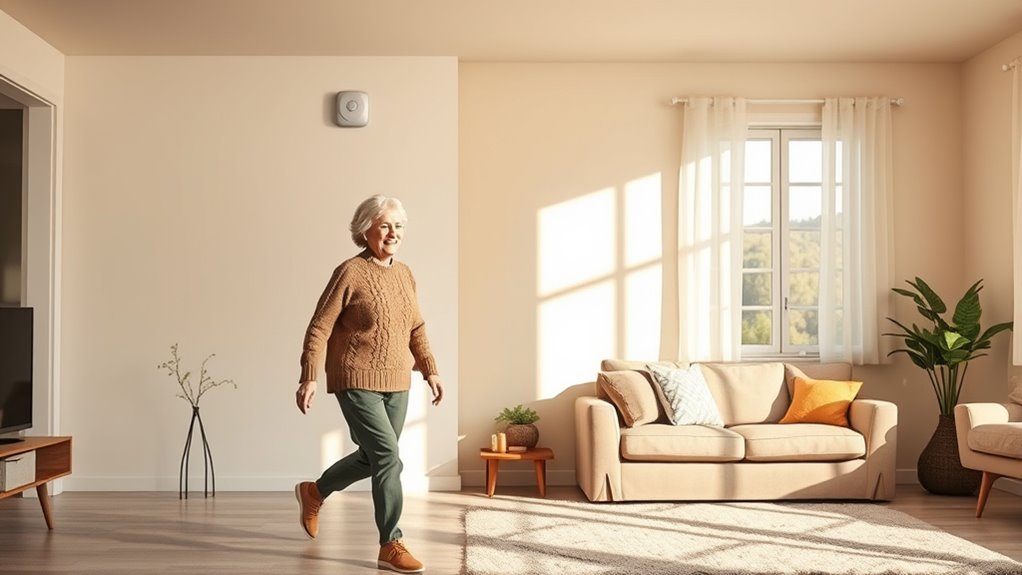

Choosing the right motion sensor alarms for elderly care requires balancing sensitivity, ease of use, and reliability. The Wireless Caregiver Pager Motion Sensor Alarm stands out as the best overall choice for its simple plug-and-play setup and clear auditory alerts. For those needing discreet nighttime monitoring, the CallToU Bed Alarm with Vibration offers silent alerts that won’t disturb sleep partners. Meanwhile, the WiFi Smart Bed Sensor is ideal for remote caregivers who need app-based notifications. The main tradeoff in this category is between basic, affordable wireless pagers and advanced smart home integrations that require stable internet. Read on to see how these fifteen options compare in accuracy, range, and ease of installation.

Turn quiet afternoons into listening time
- Thousands of audiobooks, podcasts and originals
- Listen on your phone, tablet or Echo — also offline
- Cancel anytime
Complete the kit


Key Takeaways
- Most basic motion sensors suffer from false alarms caused by pets or HVAC drafts; top picks feature adjustable sensitivity to mitigate this.
- Plug-in receivers are superior to battery-only units for continuous monitoring because they eliminate the risk of dead batteries during critical nighttime hours.
- Vibration and silent alert modes are the most valued feature for shared bedrooms, preventing caregiver sleep disruption while maintaining safety.
- Multi-sensor kits provide better coverage for wandering risks than single-unit systems, though they require more complex initial pairing.
- WiFi-enabled models offer remote access for family members but often lack the reliability of dedicated radio-frequency pagers during power outages.


| motion sensor alarms for elderly | Maximum Range | Power Source | Sensor Technology | Mounting Type |
|---|---|---|---|---|
| Wireless Caregiver Pager Motio | 16.4 feet | Battery Powered | — | Wall Mount |
| CallToU Bed Alarm for Elderly | — | 3 AAA batteries (included) | Motion | — |
| Bed Alarm for Elderly Care wit | 500 feet | — | — | — |
| SYNLETT Wireless Bed Alarm wit | 150 meters | — | Infrared | Wall Mount or Stand |
| PILSAMAS Bed Alarms for Elderl | 1000 feet | Rechargeable Lithium Polymer Battery | Motion Sensor | — |
| HENDUN Motion Sensor Doorbell | 25.92 feet (indoor effective range) | Battery (3x AAA) or USB-C | Motion Sensor | Wall Mount |
| Lunderg Wireless Early Alert B | 400 feet | Battery Powered (2 AA included) | Lunderg Pre-Alert Smart Sensor | Wall Mount / Bed Placement |
| Wireless Bed Alarm with Motion | 150 meters (~500 feet) | Battery Powered (5 AA included) | Infrared | Door Mount, Wall Mount |
| Upgraded 2026 Bed Alarm for El | 918 feet | 3xAA batteries or Micro USB | Motion Sensor | Floor Mount |
| Professional Bed Sensor Alarm | 918 feet | Battery or Micro USB | Passive Infrared Sensor | — |
| Caregiver Wireless Motion Sens | 16.4 feet | Battery Powered | — | Door Mount |
| Upgraded Bed Sensor Alarm and | 182 meters | Battery Powered | Contact Sensor | Door Mount |
| CallToU Bed Alarm for Elderly | 10 feet | 3 AAA batteries (included) | Motion | — |
| Wireless Motion Sensor Alarm S | 8 meters | Battery Powered | — | |
| WiFi Smart Bed Sensor Alarm an | 330 feet | 4 AAA batteries (3V) | Contact Sensor | Door Mount |
More Details on Our Top Picks
Wireless Caregiver Pager Motion Sensor Alarm Indoor Room Bed Alarms and Fall Prevention for Home, Elderly, Dementia, and Kids (1 Plug-in Receiver and 1 Motion Sensor)
This set stands out for its plug-in receiver, which eliminates the worry of a caregiver’s pager dying in a pocket. The 16.4-foot detection range is modest but sufficient for monitoring a single bed or room, making it ideal for straightforward, single-room setups. Compared to the CallToU Bed Alarm, this system’s visual and audible alerts offer better accessibility for caregivers with hearing impairments. However, the limited range means it lacks the flexibility of longer-range alternatives like the PILSAMAS system.Pros:- Plug-in receiver ensures the alert device never runs out of battery.
- Visual and audible alerts accommodate hearing-impaired caregivers.
- Very easy to install and operate with no apps or Wi-Fi required.
- Supports adding more sensors and receivers for future expansion.
Cons:- Short 16.4-foot range limits its use to a single room.
- Sensors require periodic replacement of AAA batteries.
Best for: Caregivers who need a simple, no-fuss system for monitoring a single room or bed without complex setup.
Not ideal for: Users who need to monitor multiple rooms or require long-range alerts throughout a home.
- Power Source:Battery Powered
- Maximum Range:16.4 feet
- Mounting Type:Wall Mount
- Batteries Required:2 AAA batteries (included)
- Color:White
- Item Dimensions:1.42″D x 2.17″W x 3.39″H
- Alert Type:Visual and Sound
Our verdict“This is the most straightforward choice for beginners who need reliable, single-room monitoring with a never-dying receiver.”
CallToU Bed Alarm for Elderly Adults, Sensor Alarm and Fall Prevention, Portable Caregiver Pager with 5 Volume Levels
The silent and vibrate modes make this a thoughtful option for nighttime monitoring where loud alarms could be disruptive. With five adjustable volume levels and a powerful 110 dB maximum alert, it offers more flexibility than the fixed-alert system from the Wireless Caregiver Pager. Its compact, portable design is easier to move between rooms than bulkier plug-in units. However, unlike the SYNLETT system, it is limited to a single sensor, which restricts its ability to monitor multiple entry points simultaneously.Pros:- Includes silent and vibration modes for discreet alerting.
- Five volume levels and multiple ringtones allow for personalization.
- Compact and lightweight design for easy portability.
- Smart infrared detection helps reduce the frequency of false alarms.
Cons:- Only includes one motion sensor, limiting coverage.
- The small pager could be easily misplaced or overlooked.
Best for: Caregivers who need discreet, silent, or vibrating alerts to avoid waking other household members.
Not ideal for: Those who need to monitor multiple areas or doors at the same time with one set.
- Power Source:3 AAA batteries (included)
- Audible Noise:110 dB
- Sensor Technology:Motion
- Control Method:Remote, Voice
- Item Dimensions:2.75″L x 2.3″W x 0.59″H
- Alert Modes:Audible, Silent, Vibrate
- Color:White
Our verdict“This model is the best choice for those who prioritize quiet, customizable alerts and portability over multi-room coverage.”
Bed Alarm for Elderly Care with 2 Motion Sensors and Plug-in Receiver, Caregiver Pager for Seniors, Bed Exit and Doorway Alert with Chime and Flashing Light
This system offers an impressive 500-foot range and includes two motion sensors, allowing you to monitor a bed and a doorway simultaneously. Compared to the CallToU single-sensor system, this provides significantly better coverage for a small apartment or house. The plug-in receiver ensures the main alert unit is always powered, unlike the battery-only pagers in the SYNLETT kit. The primary drawback is the need for six AAA batteries across the sensors, which adds a minor maintenance task.Pros:- Includes two motion sensors for broader coverage.
- Long 500-foot range is excellent for in-home use.
- Plug-in receiver guarantees the alert device is always active.
- Combines chime and flashing light alerts for better visibility.
Cons:- Requires six AAA batteries, increasing long-term upkeep.
- Sensors must be carefully aimed to avoid false alerts from pets.
Best for: Families who need to monitor two key areas, like a bedroom and its door, on a budget.
Not ideal for: Individuals who prefer a completely maintenance-free, rechargeable system.
- Maximum Range:500 feet
- Number of Batteries:6 AAA batteries required
- Item Weight:0.32 kg
- Frequency:433.92 MHz
- Number of Sensors:2
- Alert Types:Chime and Flashing Light
- Color:White
Our verdict“This kit provides the best combination of range and sensor count for users who need to monitor multiple points in a home.”
SYNLETT Wireless Bed Alarm with 2 Motion Sensors and Caregiver Pager
The SYNLETT system excels with its 150-meter (over 490-foot) range and a portable pager that can be clipped to a belt or pocket. This makes it more mobile than the stationary, plug-in receivers used in the Bed Alarm for Elderly Care and Wireless Caregiver Pager kits. While it includes two sensors for good coverage, the system’s reliance on eight AA batteries is a significant maintenance burden compared to the rechargeable PILSAMAS model. It’s best for caregivers who move around the house and need alerts on their person.Pros:- Portable, pocket-sized pager can be carried by the caregiver.
- Long 150-meter range provides excellent coverage throughout the home.
- Includes two motion sensors to monitor multiple areas.
- Offers flexible mounting options with wall brackets or a stand.
Cons:- Requires eight AA batteries, which is a high maintenance load.
- The corded-electric listing is misleading, as the system is battery-powered.
Best for: Caregivers who are mobile around the home and need to carry the alert device with them.
Not ideal for: Users who want a low-maintenance system without frequent battery changes.
- Maximum Range:150 meters
- Number of Batteries:8 AA batteries required (included)
- Sensor Technology:Infrared
- Item Weight:0.47 kg
- Model Number:D29G2
- Warranty:1 year
- Mounting Type:Wall Mount or Stand
- Color:White
Our verdict“This is the best choice for active caregivers who need to carry a pager, but be prepared for frequent battery changes.”
PILSAMAS Bed Alarms for Elderly Dementia Patients, Motion Sensor Pager Set
This premium set is built for full-home coverage with an exceptional 1000-foot wireless range, far surpassing the SYNLETT and Bed Alarm for Elderly Care systems. Its rechargeable lithium-polymer battery eliminates the need for constant battery replacements, a clear advantage over every other product in this lineup. The sensor ID display helps users identify which area has triggered the alert, a feature absent from simpler kits like the CallToU. The privacy-focused design, with no audio or video recording, adds a layer of comfort for sensitive environments.Pros:- Exceptional 1000-foot range for monitoring an entire property.
- Rechargeable lithium-polymer battery reduces long-term maintenance.
- Sensor ID display shows exactly which area triggered the alert.
- Privacy-focused with no monthly fees or audio/video recording.
Cons:- Requires periodic recharging, though less often than battery swaps.
- Sensor placement may need adjustment for optimal performance.
Best for: Those with large homes or who want a premium, rechargeable system with clear sensor identification.
Not ideal for: Buyers looking for the most budget-friendly, basic motion sensor solution.
- Maximum Range:1000 feet
- Power Source:Rechargeable Lithium Polymer Battery
- Sensor Technology:Motion Sensor
- Connectivity Technology:Wireless
- Item Dimensions:2.6 x 1.2 x 3.9 inches
- Item Weight:9.6 ounces
- Sensor Identification:Yes, sensor ID display
- Alert Type:Motion Only
Our verdict“This system is the ideal premium choice for large homes, offering a rechargeable design and superior range.”
HENDUN Motion Sensor Doorbell for Elderly and Business
This device distinguishes itself from standard bed alarms by focusing on entryway and hallway activity. While the Lunderg Wireless Early Alert excels at detecting bed exits, the HENDUN is better suited for monitoring when a senior leaves a room or approaches a door. Its customizable ringtones allow caregivers to distinguish between different alert zones, a feature often missing in basic beep-only systems. However, the detection range is narrower than some competitors, and it lacks the tactile feedback of a pressure pad, meaning it alerts after movement is already underway rather than before. It is a strong choice for perimeter monitoring but less effective for immediate bed-exit prevention.
Pros:- Customizable ringtones help distinguish alert sources.
- Dual power options (battery/USB) offer installation flexibility.
- High audible volume (113 dB) ensures alerts are heard.
- Compact design fits discreetly in narrow spaces.
Cons:- Detection range is shorter than dedicated long-range pagers.
- Lacks pre-alert capability; alerts occur after motion is detected.
- Not optimized for bed placement compared to pressure pads.
Best for: Caregivers who need to monitor doorways, hallways, or business entrances rather than just bed exits.
Not ideal for: Users requiring immediate pre-alert notifications for bed exits, as motion sensors react to movement rather than pressure.
- Power Source:Battery (3x AAA) or USB-C
- Maximum Range:25.92 feet (indoor effective range)
- Audible Noise:113 dB
- Sensor Technology:Motion Sensor
- Control Method:Remote
- Mounting Type:Wall Mount
- Item Dimensions:3.94″L x 1.97″W x 2.76″H
Our verdict“Choose this if you need reliable alerts for doorways and hallways rather than direct bed monitoring.”
Lunderg Wireless Early Alert Bed Alarm System for Elderly & Fall Prevention
The Lunderg system stands out because it uses a hip-level pressure pad rather than a passive motion sensor. This allows it to detect the shift in weight before a senior fully exits the bed, offering a critical window for intervention that the Upgraded 2026 Bed Alarm cannot provide. The portable pager is particularly useful for caregivers moving between rooms, with options for vibration or sound. The tradeoff is the single pad coverage; if the senior shifts significantly away from the sensor area, alerts may be missed. It is less versatile for multi-room monitoring but superior for specific bed-exit prevention.
Pros:- Pre-alert sensor detects movement before the user leaves the bed.
- Portable pager offers vibration and sound options for discreet alerts.
- No Wi-Fi or app setup required for immediate use.
- Incontinence-resistant pad material is easy to clean.
Cons:- Single sensor pad limits coverage on wider mattresses.
- Requires periodic battery replacement for continuous operation.
- Specific placement is required for optimal sensitivity.
Best for: Caregivers needing advance warning of bed exits to prevent falls during the act of getting up.
Not ideal for: Users who need to monitor multiple rooms or large beds where a single 10×33 inch pad might not cover all movement patterns.
- Sensor Technology:Lunderg Pre-Alert Smart Sensor
- Maximum Range:400 feet
- Pad Size:10×33 inches
- Control Method:Touch
- Power Source:Battery Powered (2 AA included)
- Item Weight:0.74 kg
- Mounting Type:Wall Mount / Bed Placement
Our verdict“Ideal for those who prioritize catching bed exits early over broad room monitoring.”
Wireless Bed Alarm with Motion Sensor and Caregiver Pager
This unit offers flexible mounting options, allowing it to be used as a bed alarm or a doorway monitor. Compared to the Professional Bed Sensor Alarm, which is more rigid in its design, this system adapts better to different room layouts. The 500-foot range is competitive, though the volume control has been noted as potentially insufficient for noisy environments. It strikes a balance between cost and functionality, making it a solid middle-ground choice for families who want one device to handle multiple monitoring scenarios without complex setup.
Pros:- Versatile mounting for doors, walls, or beds.
- Compact caregiver pager is easy to carry.
- Long wireless range supports larger homes.
- Simple touch controls for quick adjustments.
Cons:- Alert volume may be too low for some users.
- Requires 5 AA batteries, which adds maintenance.
- Indoor-only use limits outdoor application.
Best for: Users who want a single device that can switch between bed, door, or wall mounting.
Not ideal for: Caregivers in loud environments who require exceptionally high-volume alerts without external amplification.
- Sensor Technology:Infrared
- Maximum Range:150 meters (~500 feet)
- Control Method:Touch
- Power Source:Battery Powered (5 AA included)
- Mounting Type:Door Mount, Wall Mount
- Item Highlight:Wireless motion sensor and battery powered caregiver pager
- Warranty:Amazon.com 30-Day Return Guarantee
Our verdict“A flexible all-rounder for caregivers who need to monitor varying locations.”
Upgraded 2026 Bed Alarm for Elderly Dementia Patients – Wireless Fall Detection & Motion Sensor Alert System
Boasting a 918-foot range, this system is engineered for large properties where the pager must reach a caregiver in a distant wing or outbuilding. It outperforms the HENDUN in raw transmission distance, ensuring alerts are received even through multiple walls. The dual alert system (sound and LED) is helpful for hard-of-hearing seniors or caregivers. However, the floor mount design requires careful placement to avoid false triggers from pets or HVAC airflow. It is a powerful tool for expansive monitoring but demands more attention to sensor positioning than simpler bed pads.
Pros:- Extended 918-foot wireless range covers large areas.
- Dual alerts (sound and light) accommodate different hearing needs.
- Flexible power options (battery or USB) ensure uptime.
- Self-test feature verifies system readiness.
Cons:- Motion sensors can be sensitive to environmental factors.
- Limited compatibility with other brand receivers.
- High volume may be disruptive in quiet settings.
Best for: Caregivers in large homes or facilities who need maximum wireless range.
Not ideal for: Users in small apartments where the long range is unnecessary and sensor sensitivity might cause false alarms.
- Maximum Range:918 feet
- Sensor Technology:Motion Sensor
- Power Source:3xAA batteries or Micro USB
- Audible Noise:110 db
- Mounting Type:Floor Mount
- Control Method:Touch
- Includes:1 Sensor, 1 Receiver, USB cable, accessories
Our verdict“The best choice for monitoring seniors across large or multi-story homes.”
Professional Bed Sensor Alarm and Fall Prevention for Elderly and Dementia Care, Wireless Motion Sensor with 5 Volume Levels
The Professional Bed Sensor Alarm prioritizes user comfort with its 5 distinct volume levels, allowing caregivers to tailor the alert intensity to the senior’s hearing and the home’s noise floor. While the Wireless Bed Alarm with Motion Sensor offers similar range, this model provides finer control over auditory output, reducing sleep disruption for the patient. It uses a passive infrared sensor, which is reliable but less sensitive to subtle weight shifts than the Lunderg pressure pad. This is a solid pick for those who find standard alarms too harsh or too quiet.
Pros:- 5 volume levels allow for customized alert intensity.
- Long-range transmission up to 918 feet.
- Dual power options (battery/USB) provide reliability.
- Simple setup with minimal technical knowledge required.
Cons:- Lacks waterproofing or durability ratings for high-moisture areas.
- Motion-only detection misses pre-exit weight shifts.
- Limited detailed information on long-term durability.
Best for: Caregivers who need precise control over alert volume to avoid startling the patient.
Not ideal for: Users needing pre-alert warnings, as this relies on motion detection rather than pressure sensitivity.
- Sensor Technology:Passive Infrared Sensor
- Maximum Range:918 feet
- Power Source:Battery or Micro USB
- Control Method:Touch
- Compatible Devices:Motion Detector
- Warranty:Amazon.com 30-Day Return Guarantee
- Batteries:3 AAA batteries required (included)
Our verdict“Ideal for homes where adjusting alert volume is a priority for patient comfort.”
Caregiver Wireless Motion Sensor Alert System (2 Receivers + 3 Sensors)
This system stands out for its ability to monitor multiple zones simultaneously, making it a strong contender for larger living spaces. Unlike the single-sensor CallToU Bed Alarm, which focuses on one bed or doorway, this kit includes three sensors and two receivers, allowing a caregiver to watch the bedroom, hallway, and front door at once. The adjustable volume and 58 ringtones help distinguish which room triggered the alert, a critical feature when multiple sensors are active. However, the 16.4-foot sensor range is modest compared to the 300-foot pager range seen in other models, meaning sensors must be placed relatively close to the monitored area. It relies on battery power for the sensors, requiring periodic maintenance.
Pros:- Includes 3 sensors and 2 receivers for multi-zone coverage
- 58 ringtones allow identification of specific alert sources
- Flexible power options (battery or USB) for receivers
Cons:- Limited sensor detection range of 16.4 feet
- Requires 6 AAA batteries for sensors, adding ongoing maintenance
Best for: Caregivers who need to monitor multiple distinct areas (e.g., bedroom, living room, entryway) simultaneously.
Not ideal for: Users with very large properties or those who prefer a single, long-range alert without managing multiple sensor batteries.
- Power Source:Battery Powered
- Maximum Range:16.4 feet
- Mounting Type:Door Mount
- Compatible Devices:Wireless Plug-in Receiver
- Number of Batteries:6 AAA batteries required
- Item Weight:1.2 pounds
- Color:White
Our verdict“Choose this if you need to watch several rooms at once and can manage multiple sensor batteries.”
Upgraded Bed Sensor Alarm and Fall Prevention for Elderly and Dementia Patients, Wireless Motion Sensor Alert with 5 Volume Levels
Designed specifically for fall prevention, this unit excels at detecting bed exits with a contact sensor technology that often triggers fewer false alarms than motion detectors. Its 182-meter wireless range is significantly longer than the 10-foot range of the CallToU Bed Alarm, allowing caregivers to place the receiver in a separate building or far down a hallway. The dual LED and sound alerts provide redundancy, ensuring the caregiver notices an exit even if one alert method fails. While effective, the setup can be complex for tech-averse users, and the reliance on batteries for both sensor and receiver means consistent upkeep is necessary to prevent silent failures.
Pros:- Extensive 182-meter signal range for flexible receiver placement
- Contact sensor technology minimizes false alarms from pets
- Dual LED and sound alerts ensure caregiver notification
Cons:- Setup and testing procedures can be complex for some users
- Requires regular battery replacements for continuous operation
Best for: Caregivers needing reliable bed-exit alerts over long distances, such as in two-story homes or separate apartments.
Not ideal for: Users seeking a plug-and-play experience without technical setup or those who dislike battery replacements.
- Power Source:Battery Powered
- Compatible Devices:Motion Detector
- Battery Description:Alkaline
- Number of Batteries:3 AAA batteries required (included)
- Control Method:App, Touch
- Mounting Type:Door Mount
- Maximum Range:182 meters
- Sensor Technology:Contact Sensor
Our verdict“Ideal for long-distance monitoring needs where false alarms are a primary concern.”
CallToU Bed Alarm for Elderly and Dementia Patients, Portable Pager & Sensor with Vibration and Silent Alert
This compact system prioritizes discretion, offering a silent vibration mode that alerts caregivers without waking the patient or disturbing household members. In contrast to the audible-heavy Caregiver Wireless Motion Sensor Alert System, this pager-based unit is ideal for shared living spaces or nighttime monitoring. The 10-foot detection range is tight, meaning it works best for immediate bed-exit scenarios rather than room-wide surveillance. Its 360-degree rotation sensor helps reduce false triggers from minor movements, but the limited range means it cannot replace a full security system. It is a specialized tool for specific bed-exit prevention tasks.
Pros:- Silent vibration mode prevents waking the patient
- 360-degree sensor rotation reduces false alarms
- Compact, portable design suitable for travel or hospital use
Cons:- Limited 10-foot detection range restricts coverage area
- Requires battery replacements which may interrupt service
Best for: Caregivers who need silent, vibration-based alerts to avoid disturbing patients during sleep.
Not ideal for: Those needing to monitor large rooms or require loud audible alarms for hearing-impaired caregivers.
- Power Source:3 AAA batteries (included)
- Control Method:Remote, Voice
- Audible Noise:110 dB
- Maximum Range:10 feet
- Sensor Technology:Motion
- Color:White
- Item Dimensions:2.75″L x 2.3″W x 0.59″H
Our verdict“Select this for discreet, close-range bed-exit monitoring without auditory disruption.”
Wireless Motion Sensor Alarm System with Pager for Fall and Wandering Prevention
Centered around a pocket-sized pager, this system offers mobility that fixed receivers lack. Unlike the plug-in receiver models which stay tethered to a wall outlet, this allows the caregiver to move freely around the home while staying connected to the sensor. The 300-foot range is competitive, ensuring coverage across most residential layouts. However, the system is somewhat dated in its simplicity; it lacks the app connectivity of the WiFi Smart Bed Sensor Alarm and requires batteries that are not included. It serves well as a standalone, no-frills alert tool for wandering prevention.
Pros:- Portable pager allows caregiver mobility up to 300 feet
- Silent alerts prevent startling the monitored individual
- Lightweight and easy to mount or carry
Cons:- Batteries and mounting brackets sold separately
- No compatibility with other smart home devices or apps
Best for: Caregivers who move around the house frequently and prefer a handheld pager over a fixed receiver.
Not ideal for: Users who want smartphone integration or included batteries for immediate setup.
- Power Source:Battery Powered
- Maximum Range:8 meters
- Mounting Type:Pocket
- Battery Type:AA
- Number of Batteries:4 AA batteries required
- Temperature Range:73 °F
- Item Weight:11.2 ounces
- Warranty:90 day warranty
Our verdict“A solid choice for mobile caregivers who prefer a physical pager over app notifications.”
WiFi Smart Bed Sensor Alarm and Fall Prevention for Elderly, Adults, Seniors, Dementia, Wireless Caregiver Motion Sensor with App
This device bridges the gap between simple alarms and smart home systems by offering app-based monitoring. Unlike the standalone pagers in the lineup, this allows caregivers to check status remotely from anywhere, provided they have internet access. The expandable hub system supports multiple sensors, making it scalable for larger homes, similar to the multi-sensor approach of the Caregiver Wireless Motion Sensor Alert System. However, it demands a 2.4GHz WiFi network, which may be a hurdle for users with older routers or poor connectivity. The reliance on an app also introduces potential software glitches that purely analog systems avoid.
Pros:- Remote monitoring via smartphone app for off-site caregivers
- Expandable system supports adding multiple sensors and hubs
- Long range up to 330 feet outdoors for flexible placement
Cons:- Requires a 2.4GHz WiFi network, excluding 5GHz-only setups
- Limited to one phone connection directly to the hub
Best for: Tech-comfortable caregivers who want remote app access and the ability to expand the system with additional sensors.
Not ideal for: Users without reliable 2.4GHz WiFi or those who prefer non-digital, immediate physical alerts.
- Power Source:4 AAA batteries (3V)
- Compatible Devices:Motion Detector
- Battery Description:Alkaline
- Number of Batteries:4
- Voltage:3 volts
- Control Method:App
- Mounting Type:Door Mount
- Maximum Range:330 feet
- Sensor Technology:Contact Sensor
Our verdict“The go-to option for users who want digital records and remote access via their smartphone.”

How We Picked
I evaluated these motion sensor alarms based on detection reliability, ease of installation, and alert versatility. Since elderly care often involves individuals with dementia or mobility issues, false positives are a major frustration, so I prioritized models with adjustable sensitivity settings. I also looked at the range of alert methods, favoring systems that offer both audible and silent (vibration/light) options to accommodate different living situations.
Build quality and maintenance were other key factors. I distinguished between units that require frequent battery changes and those with rechargeable or plug-in receivers, as the latter reduces long-term hassle. Finally, I considered the scalability of each system, noting which kits allow for adding extra sensors or receivers without requiring a complete system replacement. This ranking reflects a balance between affordability for basic needs and robust features for complex care environments.
| motion sensor alarms for elderly | Sensor Technology | Control Method |
|---|---|---|
| Wireless Caregiver Pager Motio | — | — |
| CallToU Bed Alarm for Elderly | Motion | Remote, Voice |
| Bed Alarm for Elderly Care wit | — | — |
| SYNLETT Wireless Bed Alarm wit | Infrared | — |
| PILSAMAS Bed Alarms for Elderl | Motion Sensor | — |
| HENDUN Motion Sensor Doorbell | Motion Sensor | Remote |
| Lunderg Wireless Early Alert B | Lunderg Pre-Alert Smart Sensor | Touch |
| Wireless Bed Alarm with Motion | Infrared | Touch |
| Upgraded 2026 Bed Alarm for El | Motion Sensor | Touch |
| Professional Bed Sensor Alarm | Passive Infrared Sensor | Touch |
| Caregiver Wireless Motion Sens | — | — |
| Upgraded Bed Sensor Alarm and | Contact Sensor | App, Touch |
| CallToU Bed Alarm for Elderly | Motion | Remote, Voice |
| Wireless Motion Sensor Alarm S | — | — |
| WiFi Smart Bed Sensor Alarm an | Contact Sensor | App |
Factors to Consider When Choosing Motion Sensor Alarms For Elderly
Selecting a motion sensor alarm is not just about picking the cheapest option; it is about matching the technology to the specific behavioral and physical needs of the person being cared for. Here are five critical factors to weigh before purchasing.Sensitivity And False Alarm Prevention
Motion sensors work by detecting changes in infrared heat or movement within a field of view. Adjustable sensitivity is the most important spec to look for, as it allows you to fine-tune the detection zone to ignore small movements like shifting in bed while still catching the act of standing up or wandering. Low-quality sensors often lack this adjustment, leading to frequent false alarms from pets, curtains moving in the breeze, or even body heat rising from a blanket. If the person you are caring for has dementia and tends to wake up frequently, a high false-alarm rate can cause alarm fatigue, where the caregiver eventually ignores the alerts. Always choose a model that lets you customize the detection range to fit the specific room size and furniture layout.
Alert Types And Discreteness
Consider who needs to be alerted and where they are sleeping. Audible alarms are effective for caregivers sleeping in adjacent rooms or for individuals who need a reminder to stay in bed. However, if the caregiver and patient share a room, loud alarms are disruptive. In these cases, vibration-only pagers or models with flashing lights are far superior, as they provide a private signal that does not wake the patient or disturb the household. Some advanced units offer silent app notifications, which are great for daytime monitoring but risky for overnight use if the phone is silenced or left in another room. Matching the alert type to the living arrangement prevents unnecessary sleep deprivation for everyone involved.
Power Source And Reliability
The most common failure point in these systems is a dead battery. Plug-in receivers are generally more reliable than battery-operated units because they provide constant power and eliminate the need for frequent replacements. For the sensors themselves, look for long-life lithium batteries or rechargeable options to reduce maintenance. A system that relies on disposable AA batteries for both the sensor and the pager can become a chore to maintain, leading to gaps in protection when you forget to swap them out. If you choose a battery-operated system, set a recurring reminder to check them monthly, or invest in a kit that includes low-battery indicators on the receiver unit.
Range And Signal Stability
Wireless signals can struggle with walls, floors, and interference from other electronics. Radio frequency (RF) pagers typically offer better wall-penetration than WiFi-based systems, making them more reliable for multi-story homes. If you need to monitor a ground-floor bedroom from a second-floor living room, a dedicated RF system is often more dependable than a WiFi sensor that might drop connection if the router is far away. Check the stated range specifications, but understand that these are usually measured in open spaces. In a typical home with drywall and furniture, you should expect to lose about 30-50% of the advertised range. For large properties, consider systems that support signal repeaters or mesh networks to extend coverage.
Ease Of Use For The Patient
The person wearing or using the system should not have to interact with it complexly. Passive detection is the gold standard here; the sensor should work automatically when the person moves, without requiring them to press buttons or wear a specific device. If a wearable pendant is required, ensure it is comfortable, waterproof, and difficult for a person with dementia to remove or break. Avoid systems that require the patient to acknowledge an alarm to stop it, as this can cause confusion and distress. The goal is for the technology to operate invisibly in the background, alerting the caregiver without burdening the patient with technical tasks.
Frequently Asked Questions
Will a motion sensor alarm work through blankets or heavy bedding?
Standard passive infrared (PIR) motion sensors generally cannot detect movement through thick blankets or duvets because they rely on line-of-sight heat signatures. If the person is completely covered, the sensor may not trigger when they try to exit the bed. For bed monitoring, pressure-sensitive mats or bed-edge sensors are often more reliable than overhead motion detectors. If you prefer motion sensors, place them at bed-level where the legs or torso become visible as the person sits up, rather than on the ceiling where blankets block the view.How do I stop my pet from triggering the elderly care alarm?
Pets are a common cause of false alarms because they emit heat and move quickly. To mitigate this, you can use pet-immune motion sensors, which have a detection mask that ignores animals under a certain height (usually 30-50 pounds). Alternatively, you can adjust the sensitivity setting to a lower level, though this might miss slow movements. Another effective strategy is to position the sensor in a doorway or specific zone where the pet is not allowed, rather than covering the entire room. Physical barriers, like baby gates, can also restrict pet access to the monitored area.Can these alarms work if the internet goes down?
This depends entirely on the type of system you choose. Dedicated radio-frequency (RF) wireless pagers do not rely on internet connectivity and will continue to function as long as the devices have power and are within range of each other. In contrast, WiFi-enabled smart alarms require an active internet connection to send push notifications to your smartphone. If the internet fails, these smart systems may only trigger local audible alarms or stop working entirely. For critical 24/7 safety, a standalone RF system is more resilient than a smart home integration.Are motion sensor alarms suitable for people with severe dementia?
Yes, but with caveats. Motion sensors are excellent for detecting wandering or bed exits without requiring the patient to perform any actions, which is beneficial for those with cognitive decline. However, patients with severe dementia may become agitated by loud audible alarms. For these individuals, silent vibration pagers or visual light alerts are much better choices to prevent distress. Additionally, ensure the sensors are placed out of reach to prevent the patient from tampering with them, and consider using tamper-proof mounts or hiding the devices behind decorative items.How many motion sensors do I need for a single bedroom?
For a standard bedroom, one motion sensor placed facing the bed or the doorway is usually sufficient. However, if the room is L-shaped, very large, or has multiple exits, you may need two sensors to eliminate blind spots. It is often more effective to use one sensor for the bed area to detect bed exits and a second sensor in the hallway to detect wandering before the person leaves the room. Start with one sensor and add more only if you notice gaps in detection during testing.Conclusion
Choosing the right motion sensor alarm depends on your specific caregiving environment and the needs of the individual. For most families, the Wireless Caregiver Pager Motion Sensor Alarm is the Best Overall choice due to its balance of range, reliability, and simple setup. If you are on a tight budget and need basic functionality, the CallToU Bed Alarm offers excellent Value with its multiple volume levels. For caregivers sharing a room, the CallToU Bed Alarm with Vibration is the Best for Silent Alerts, ensuring you get notified without waking the patient. Tech-savvy users who want remote monitoring should look at the WiFi Smart Bed Sensor as the Best Premium/Smart Option, provided they have stable internet. Finally, for those needing extensive coverage, the Caregiver Wireless Motion Sensor Alert System (2 Receivers + 3 Sensors) is the Best Multi-Sensor Kit for larger homes or multiple care recipients.