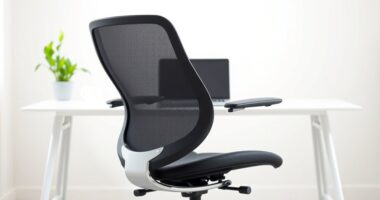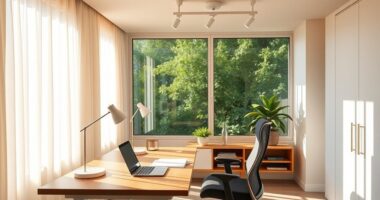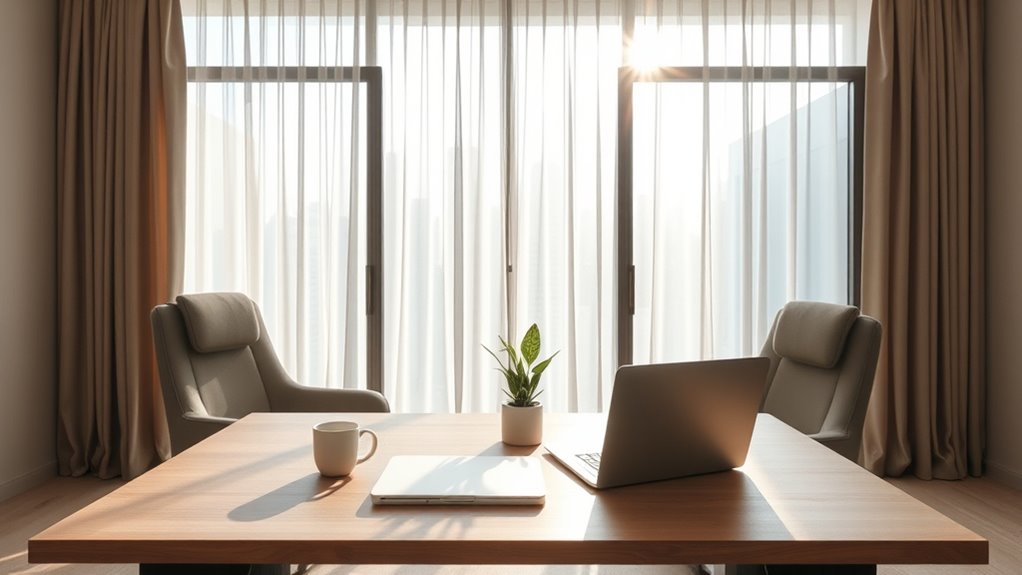

To design effective focus zones for deep work, prioritize soundproofing by using thick walls, double-glazed windows, and soft materials like carpets and upholstered furniture to absorb noise. Position your workspace away from high-traffic areas and utilize white noise machines or ambient sounds to mask distractions. Keep your environment organized and well-lit to promote calm and concentration. By optimizing these elements, you’ll create a space that supports sustained focus—stay with us to discover more ways to enhance your deep work environment.

Get comfort and care essentials delivered free — and shop member deals
- Fast, free delivery on millions of items
- Access to Prime Big Deal Days deals on October 6–7
- Prime Video, Amazon Music and more included
Key Takeaways
- Incorporate soundproofing elements like thick walls, double-glazed windows, and acoustic panels to minimize noise intrusion.
- Position work areas away from high-traffic zones, doors, and shared walls to reduce external distractions.
- Use soft materials such as carpets, upholstered furniture, and fabric-covered surfaces to absorb ambient sound.
- Implement consistent auditory backgrounds like white noise or ambient sound machines to mask interruptions.
- Design lighting and layout to promote calm, organization, and mental clarity, supporting sustained deep work sessions.

Have you ever struggled to concentrate in a noisy or distracting environment? If so, creating a dedicated focus zone can greatly boost your productivity. Designing spaces with soundproof environments in mind helps minimize interruptions and keeps your mind centered on your tasks. Soundproofing isn’t just about blocking out noise; it’s about establishing a haven where ambient noise control is optimized. When your environment is free from external distractions, your brain can dive deeper into complex problems or creative projects without constantly shifting attention.
Creating a focus zone minimizes distractions, boosting productivity and enabling deep, uninterrupted work.
To achieve effective ambient noise control, start by evaluating your space. Thick walls, double-glazed windows, and quality insulation can make a noticeable difference in reducing external sounds. If building modifications aren’t feasible, consider portable soundproof panels or heavy curtains that absorb noise. White noise machines or ambient sound apps can also contribute by masking distracting sounds. These tools create a consistent auditory backdrop, helping your brain stay focused on the work at hand.
Beyond physical soundproofing, think about the layout and furniture of your focus zone. Choose a desk and seating arrangement that minimizes exposure to high-traffic areas or common sources of noise. Position your workspace away from doors, windows, or shared walls that allow sound to seep in. Using soft materials like carpets, upholstered chairs, and fabric-covered pinboards can absorb sound within the space itself, further enhancing ambient noise control. The goal is to craft an environment where sounds don’t intrude but instead fade into the background, allowing you to sustain concentration for longer periods.
Lighting and clutter also play roles in maintaining focus. Well-designed lighting reduces eye strain and creates a calming atmosphere, which supports sustained attention. Keeping your space organized prevents mental clutter, which can be just as distracting as external noise. When your environment feels calm and controlled, your mind can settle into a state of deep work more naturally. Additionally, understanding the importance of soundproofing in relation to focus zones emphasizes how crucial environment control is for productivity. Remember, the key to a productive focus zone isn’t just silence but a balanced environment where distractions are actively managed.
Creating a dedicated focus zone is an investment in your productivity and mental clarity. By prioritizing soundproof environments and ambient noise control, you set the stage for deep work sessions that are more effective and less interrupted. The effort you put into designing this space pays off by enabling you to enter a flow state more easily and achieve your goals with greater consistency. When your environment supports your focus, you’ll find that deep work becomes less of a challenge and more of an attainable daily routine.
As an affiliate, we earn on qualifying purchases.
Frequently Asked Questions
How Do I Identify My Ideal Focus Zone?
To identify your ideal focus zone, start by evaluating where you feel most productive and least distracted. Use soundproofing techniques like panels or curtains to minimize noise, and choose ergonomic furniture to stay comfortable. Experiment with different spaces, noting how well you concentrate. Over time, you’ll discover which environment supports your deep work best, helping you create a personalized focus zone that boosts your efficiency and focus.
What Materials Promote Quiet in Focus Zones?
You can promote quiet in your focus zone by using soundproofing techniques like acoustic panels, carpets, and heavy curtains to block noise. Incorporate calming color schemes such as soft blues, greens, or neutrals to create a soothing environment. These materials reduce sound distractions and help you stay focused, making your space more conducive to deep work. Combining effective soundproofing with tranquil colors enhances your ability to concentrate fully.
Can Focus Zones Be Adapted for Group Work?
Did you know that 68% of workers find collaborative focus more effective in shared workspaces? Yes, focus zones can be adapted for group work by creating designated areas that balance quietness with collaboration. You can incorporate soundproof partitions, flexible seating, and technology-enabled spaces to foster both individual concentration and teamwork. This way, your shared workspaces support deep work while encouraging productive collaboration.
How to Prevent Distractions in Shared Focus Areas?
To prevent distractions in shared focus areas, you should implement soundproofing techniques like acoustic panels or carpets to block noise. Also, optimize lighting by using adjustable, soft lighting that minimizes glare and creates a calming environment. Encourage users to respect quiet zones by setting clear guidelines. These measures help maintain focus, reduce interruptions, and create an effective space for deep work.
What Are Cost-Effective Ways to Create Focus Zones?
Creating focus zones on a shoestring budget might feel like building an empire from dust, but it’s doable. You can use soundproofing techniques like heavy curtains or DIY acoustic panels to block noise. Pair these with budget-friendly furnishings such as second-hand desks and comfy chairs. Incorporate plants or rugs to absorb sound and define the space. These simple, affordable steps transform any area into a peaceful haven for deep work.
As an affiliate, we earn on qualifying purchases.
Conclusion
Creating focus zones is like carving out your personal sanctuary amid chaos. By designing quiet spaces tailored for deep work, you’ll find it easier to concentrate, produce quality results, and feel more fulfilled. Think of these zones as your mental retreats, where distractions fade away like distant echoes. Embrace the process, set clear boundaries, and watch your productivity soar. Your best work awaits—ready to flourish in the calm and focused environment you create.
As an affiliate, we earn on qualifying purchases.
As an affiliate, we earn on qualifying purchases.
Cold & flu season Picks
humidifiers
As an affiliate, we earn on qualifying purchases.