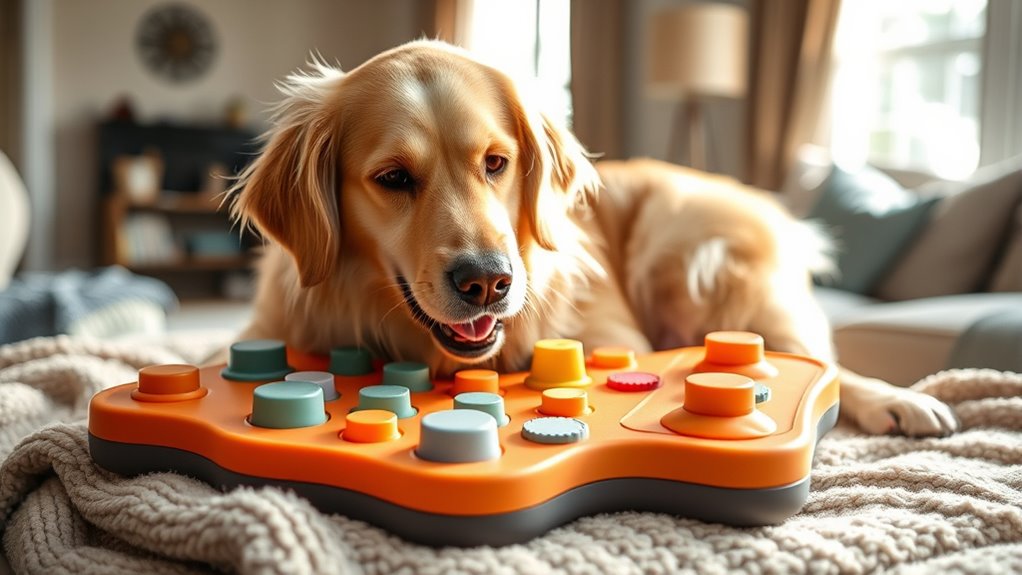

To keep your senior pets active and happy, choose adaptive toys that suit their changing needs. Soft plush toys, gentle puzzle feeders, and calming playthings help maintain mental sharpness and physical comfort. Place toys in accessible spots and select lightweight options to encourage independent play without overtaxing their joints. By selecting the right toys, you’ll support your pet’s health and happiness during their golden years—discover more ways to enhance their well-being below.
Key Takeaways
- Choose soft, lightweight toys that are easy for aging pets to carry and handle comfortably.
- Incorporate puzzle toys with larger openings to stimulate the mind without stressing joints.
- Place toys within easy reach and accessible locations to encourage independent play.
- Use gentle, non-noise-making toys that promote activity without causing frustration or discomfort.
- Select toys that enhance mental engagement, helping prevent cognitive decline and strengthen pet-owner bonding.
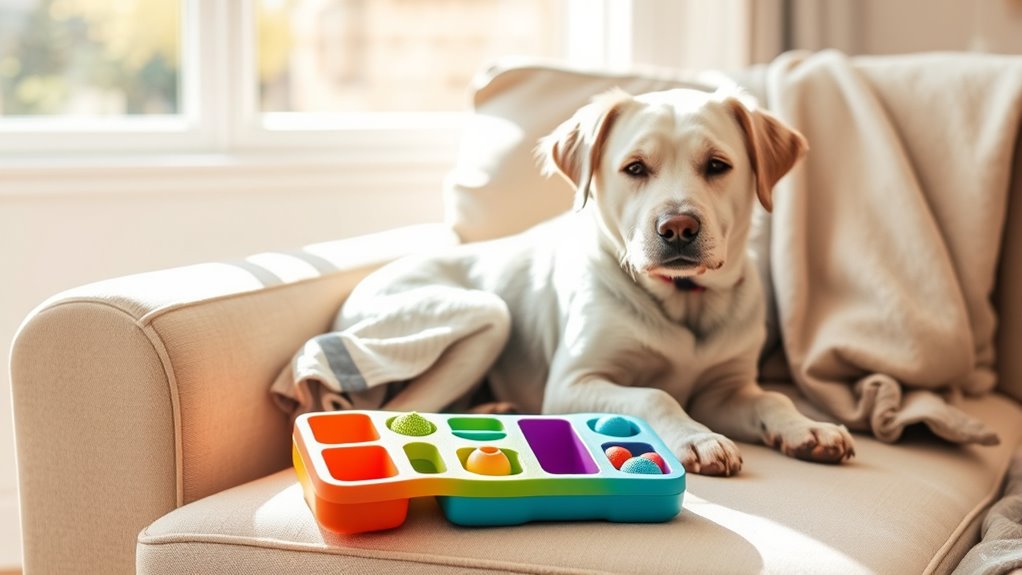
As pets age, their needs and abilities change, making traditional toys less suitable or even frustrating for senior animals. You might notice that your aging dog struggles with high-impact games or that your senior cat no longer chases after fast-moving toys. These changes can lead to boredom, decreased activity, and even health issues if you don’t adapt your approach. Addressing aging dog challenges and providing senior cat enrichment isn’t just about keeping them entertained; it’s about supporting their physical health and mental well-being.
Older dogs often develop joint pain, arthritis, or reduced stamina, meaning their play options need to be gentler and more accessible. Toys that are too loud, too small, or too vigorous can cause discomfort or even discourage activity altogether. For senior dogs, consider plush toys that are soft and easy to carry, or puzzle toys designed with larger openings so they can easily grasp or paw at them. These toys stimulate their mind without overtaxing their joints. Similarly, for senior cats, enrichment tools should encourage gentle play without demanding too much energy or agility. Catnip-filled plush toys, soft balls, or puzzle feeders that dispense treats slowly can keep them engaged without stressing their aging bodies.
Gentle, accessible toys support your senior pet’s comfort and mental engagement.
The key is to choose adaptive toys that align with your pet’s current capabilities. For dogs with limited mobility, low-impact toys that can be easily manipulated or carried are ideal. For cats with diminishing agility, toys that move slowly or can be bathed in catnip provide stimulating distraction without overwhelming them. You should also think about the environment — placing toys in accessible locations and ensuring they’re lightweight enough for your pet to handle comfortably. This encourages independent play and reduces frustration.
Providing senior pet enrichment isn’t just about physical activity; it’s also about mental stimulation. Puzzle toys that challenge their problem-solving skills can prevent cognitive decline, while gentle interactive toys foster bonding without requiring intense movement. Ensuring your pet remains engaged helps maintain their quality of life, reduces anxiety, and keeps them mentally sharp.
Ultimately, the goal is to choose adaptive toys that respect your pet’s age-related limitations while still offering opportunities for activity and mental engagement. By doing so, you help your senior pet enjoy their golden years with comfort, happiness, and a sense of purpose. This approach not only addresses aging dog challenges and senior cat enrichment but also strengthens your bond, knowing you’re doing your best to keep your old friends active and fulfilled.
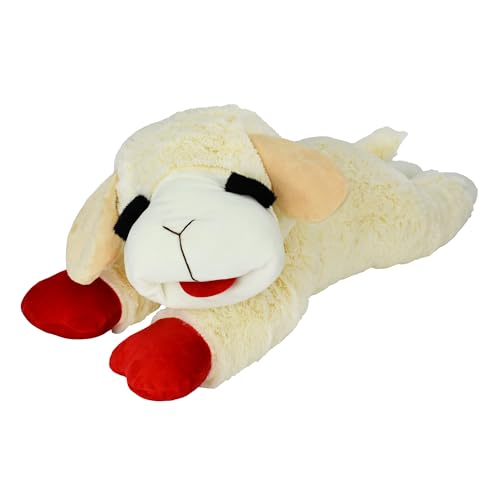
Multipet Lamb Chop Dog Plush Toy – Squeaky Toy for All Dogs – Extra Soft Plush – Stuffed Animal for Cuddling & Playing – Jumbo (24", Cream)
24-Inch XXL Toy
As an affiliate, we earn on qualifying purchases.
As an affiliate, we earn on qualifying purchases.
Frequently Asked Questions
How Do I Choose the Right Adaptive Toy for My Senior Pet’s Needs?
To choose the right adaptive toy for your senior pet, focus on selecting durable materials that withstand wear and tear. Consider toys that promote cognition, like puzzle games that challenge their mental skills. Pay attention to your pet’s specific needs, such as mobility or sensory limitations, and pick toys that are easy to handle and safe. By doing this, you can keep your old friend engaged, active, and happy.
Are There Any Safety Concerns With Using Adaptive Toys for Older Pets?
Like a knight wary of dragons, you should stay alert about safety when using adaptive toys for your senior pet. Chewing hazards and choking risks are real concerns, so always supervise their playtime. Choose sturdy toys without small parts that could break off, and regularly inspect for wear and tear. Ensuring your pet’s safety lets them enjoy their activities without danger, keeping their golden years happy and healthy.
How Often Should I Introduce New Adaptive Toys to My Senior Pet?
You should introduce new adaptive toys to your senior pet gradually, ideally rotating toys every few weeks to keep their engagement fresh. Monitor their interest and activity levels, ensuring they don’t become overwhelmed or bored. Incorporate regular toy rotation to promote mental stimulation and physical activity, but always prioritize safety. Adjust the frequency based on your pet’s response, keeping their comfort and enjoyment at the forefront.
Can Adaptive Toys Help With Specific Health Issues in Senior Pets?
Adaptive toys act like a gentle breeze, soothing your senior pet’s health worries. They can boost mental stimulation, helping keep their mind sharp, and improve mobility by encouraging gentle movement. If your pet faces arthritis or cognitive decline, these toys offer comfort and engagement, making each day brighter. You’re giving your old friend a chance to stay active and happy, even as their health needs change.
What Materials Are Safest for Adaptive Toys for Elderly Animals?
You should look for adaptive toys made from non-toxic materials and durable fabrics. These guarantee safety and longevity, especially since senior pets tend to chew or tug more. Avoid any toys with small parts or toxic paints, as they can pose health risks. By choosing sturdy, pet-safe materials, you help keep your elderly animal entertained and healthy without compromising their safety.

Catstages Nina Ottosson Rainy Day Puzzle & Play Cat Puzzle Feeder – Interactive Treat Game for Indoor Cats, Level 3 Slow Feeder Enrichment Toy, 13.8" x 14"
Interactive Level 3 Cat Puzzle Toy: 13.8" x 14" cat puzzle feeder that triggers natural hunting and foraging…
As an affiliate, we earn on qualifying purchases.
As an affiliate, we earn on qualifying purchases.
Conclusion
By choosing adaptive toys, you’re giving your senior pet the gift of activity and joy in their golden years. These toys help maintain their mental and physical health, making every day special. Isn’t providing comfort and stimulation what being a loving pet owner is all about? With the right toys, you can keep your old friend happy, active, and engaged—proving that age is just a number when it comes to fun!
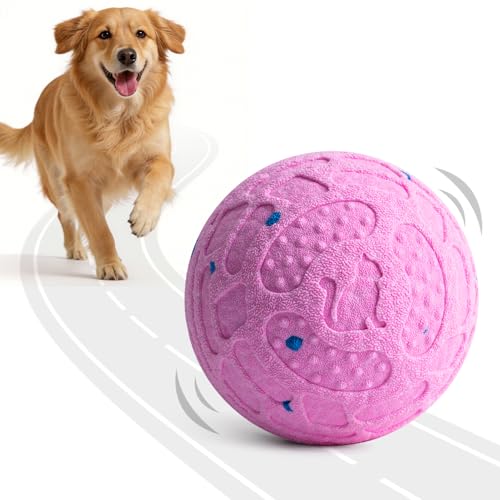
Roinoim Automatic Interactive Dog Ball Toy, Motion Activated Durable Rope Dog Chew Toy, USB Rechargeable Pet Exercise Ball for High Energy Dogs, Indoor Outdoor Playing, Pink
𝐒𝐌𝐀𝐑𝐓 𝐌𝐄𝐍𝐓𝐀𝐋 𝐒𝐓𝐈𝐌𝐔𝐋𝐀𝐓𝐈𝐎𝐍 𝐅𝐎𝐑 𝐇𝐎𝐔𝐑𝐒: Engineered as the ultimate interactive dog ball, this moving dog toy provides essential…
As an affiliate, we earn on qualifying purchases.
As an affiliate, we earn on qualifying purchases.

PET ARENA Snuffle Mat for Dogs – Adjustable Interactive Puzzle Toy for Large & Small Breed Slow Feeder for Mental Stimulation & Stress Relief Encourages Natural Foraging Ideal for Indoor & Outdoor Use
TRAIN YOUR DOG’S SMELL TO HUNT: Boost your pet’s mental stimulation with a snuffle mat! Perfect enrichment toys…
As an affiliate, we earn on qualifying purchases.
As an affiliate, we earn on qualifying purchases.