TL;DR
This article shows you how to produce a full publishing kit from a single video directly on your machine. It covers the process, benefits, and limitations, emphasizing control, speed, and privacy. No cloud needed.
Picture this: one video drops into your editing software, and hours later, you have a ready-to-publish media kit. No waiting for cloud uploads, no data leaks, just raw control. That’s what a local workflow can do for you—turn a single input into dozens of polished assets ready for any platform.
It’s a game-changer for creators who value privacy, speed, and total control. With the right tools, you can cut out the middleman and handle everything from scripting to publishing—locally, securely, and efficiently.
Key Takeaways
- A local-first workflow can generate a full publishing kit—titles, descriptions, clips, graphics—all on your machine, avoiding cloud reliance.
- Speed and control are the biggest advantages; files stay private, and processing is instant compared to cloud-based solutions.
- Automation still needs human oversight; review every asset for accuracy and quality before publishing.
- Setting up a local workflow requires some technical know-how but pays off in privacy, speed, and flexibility.
- Use open-source tools like ChannelHelm to build your own custom, offline content factory tailored to your needs.
![WavePad Audio Editing Software - Professional Audio and Music Editor for Anyone [Download]](https://m.media-amazon.com/images/I/B1fcLEGCs6S._SL500_.png)
WavePad Audio Editing Software – Professional Audio and Music Editor for Anyone [Download]
Full-featured professional audio and music editor that lets you record and edit music, voice and other audio recordings
As an affiliate, we earn on qualifying purchases.
As an affiliate, we earn on qualifying purchases.
How a Local Workflow Turns One Video Into a Publishing Powerhouse
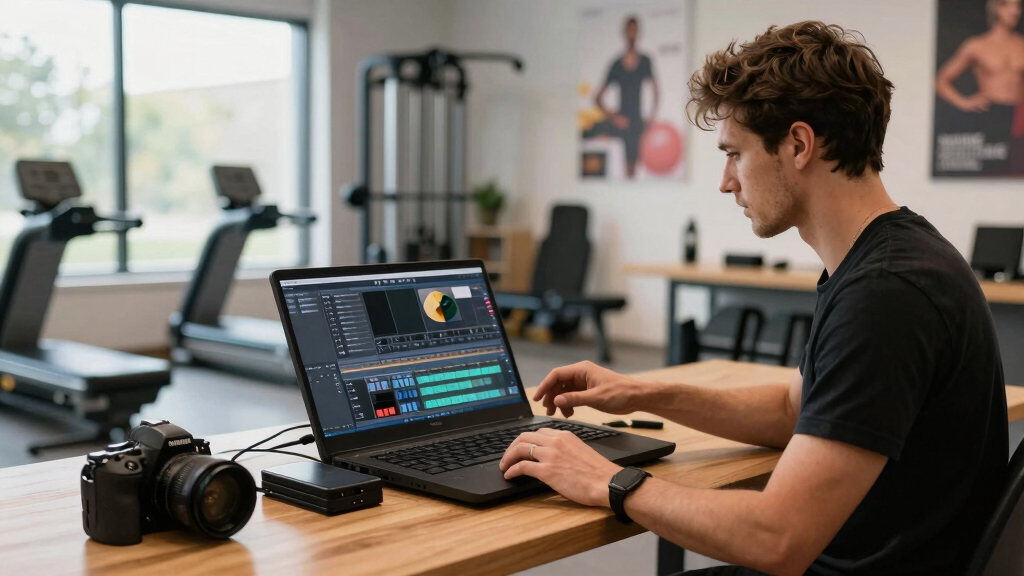
Your video is more than just a file. It’s a rich source of content—visuals, speech, on-screen text—that, when analyzed locally, can produce a full suite of assets. Think of it like a factory that transforms raw footage into a media kit, social posts, and promotional snippets—all without sending your files to the cloud.
Imagine dropping a 20-minute interview into a local app. It transcribes, detects scene changes, reads on-screen graphics, and then suggests titles, hashtags, short clips, and blog drafts. All stored on your machine, ready to tweak and publish.

Kaisi Professional Electronics Opening Pry Tool Repair Kit with Metal Spudger Non-Abrasive Nylon Spudgers and Anti-Static Tweezers for Cellphone iPhone Laptops Tablets and More, 20 Piece
Kaisi 20 pcs opening pry tools kit for smart phone,laptop,computer tablet,electronics, apple watch, iPad, iPod, Macbook, computer, LCD…
As an affiliate, we earn on qualifying purchases.
As an affiliate, we earn on qualifying purchases.
Why Going Local Matters: Privacy, Speed, and Control
Many creators worry about privacy and data security. When everything happens on your own hardware, you keep full control over your files. No cloud servers, no third-party data handling. This is especially critical when dealing with sensitive or proprietary content—your ideas, personal footage, or confidential business materials. By processing locally, you eliminate the risk of data breaches or leaks that can occur during cloud transmission or storage.
Speed is another big win. Local processing means you’re not dependent on internet speed or API rate limits, which can bottleneck your workflow. Results are instant, allowing rapid iteration—crucial when deadlines loom or when you want to experiment with different assets quickly. Additionally, avoiding cloud subscriptions and API charges can lead to significant cost savings over time, especially for frequent content creators or small teams.
Take Sarah, a small author, who used to wait hours for cloud-based tools to generate her book promo assets. Now, with a local workflow, she has her entire media kit ready in 15 minutes—without exposing her manuscript data or paying extra for cloud services. This shift not only saves time but also restores full ownership and confidentiality of her work, empowering her to work without compromise.
Understanding the importance of local processing extends beyond privacy—it influences your creative flexibility. Without reliance on external servers, you can iterate faster, test different asset variations, and make adjustments on the fly. This agility allows you to respond quickly to trends or feedback, giving you a competitive edge while ensuring your content remains proprietary and secure.


Dictation Depot LLC Express Scribe Transcription Kit – Professional Software, Heavy Duty Infinity IN-USB-3 Foot Pedal, Spectra FLX-10 Headset – 16GB Memory, USB Interface
Software is from a download link provided, No CD needed.
As an affiliate, we earn on qualifying purchases.
As an affiliate, we earn on qualifying purchases.
The Four Steps to a Fully Automated Publishing Kit
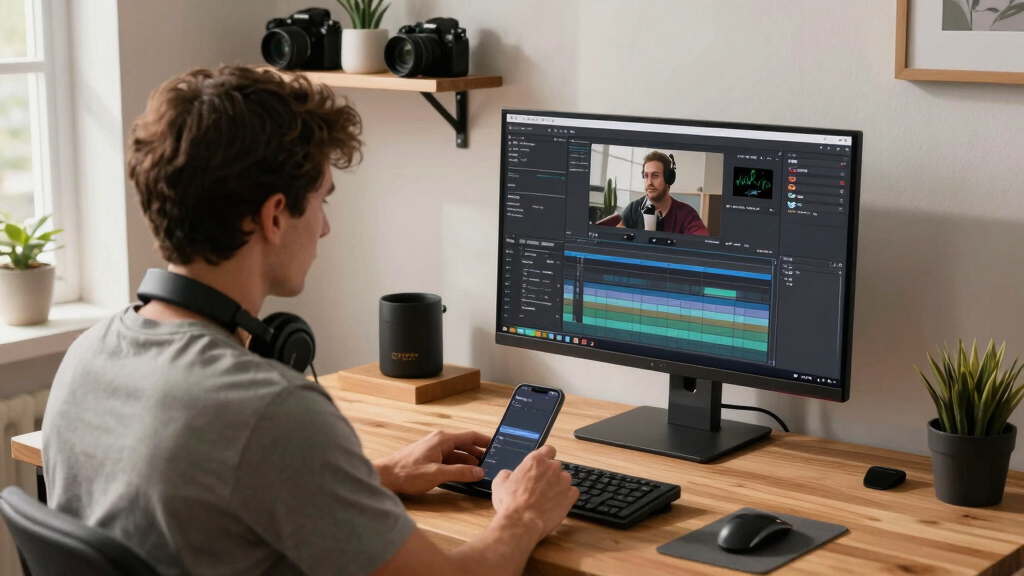
- Ingest: Drop your video file or paste a link. The system detects the channel or source automatically, saving you setup time and reducing manual input errors. This automation ensures consistency and speeds up the initial phase of content processing, which is crucial when managing multiple videos or channels.
- Understand: Local background workers transcribe speech, analyze visuals, and fuse data into a structured scene log. This step creates a semantic map of your content, enabling precise asset generation. The deeper the analysis, the more tailored your outputs—titles that truly reflect content nuances, clips that highlight key moments, and descriptions that improve SEO. The tradeoff is that more complex analysis might require more processing power, so balancing depth with hardware capabilities is essential.
- Review: You see the draft assets—titles, clips, descriptions—in a dedicated workspace. You can edit, regenerate, or approve assets on the fly. This human-in-the-loop approach ensures quality control, preventing errors from automated misinterpretations. It also allows customization—adding brand voice, adjusting tone, or refining keywords—before publishing. The ability to iterate quickly on your own terms is a key advantage of local workflows.
- Dispatch: Assets are exported in formats ready for upload—social posts, video clips, blog drafts, press kits—directly to your chosen platforms. This step can be automated further, enabling scheduled releases or multi-platform distribution without manual re-uploading, saving time and reducing the risk of oversight. The main tradeoff here is that setup requires some initial configuration, but once established, it streamlines your entire publishing pipeline.

Windows 11 for Seniors Made Simple: Your Visual Guide to Digital Independence: Enjoy Easy Video Calls with Grandkids, Breeze Through Printer, Email & Wi-Fi Setup, and Confidently Stay Secure Online
As an affiliate, we earn on qualifying purchases.
As an affiliate, we earn on qualifying purchases.
What Does a Complete Publishing Kit Include? A Real-World Breakdown
A well-rounded publishing kit isn’t just a video file. It’s a comprehensive set of assets designed to maximize engagement and discoverability across platforms. Each component serves a purpose: titles attract clicks, descriptions improve search rankings, thumbnails entice viewers, and clips fit specific platform formats. Generating these locally ensures you retain full control over the content and timing, avoiding delays caused by cloud processing or API limitations.
For example, a tech review video can generate a click-worthy title that resonates with search algorithms, a detailed blog post for your website, a series of Instagram stories to tease highlights, and a YouTube Shorts clip for quick engagement—all from one local run. This integrated approach allows for rapid iteration and customization, giving you the flexibility to adapt assets to changing trends or feedback without waiting on external services.
Having all these assets generated locally means you can experiment with different combinations, tweak titles or descriptions instantly, and respond to audience feedback without delays. This agility can significantly boost your content marketing effectiveness, ensuring your assets are always aligned with current trends and audience preferences, ultimately leading to better engagement and higher visibility.

Comparison: Cloud vs Local — Which Workflow Fits You?
| Feature | Cloud-Based Workflow | Local Workflow |
|---|---|---|
| Privacy | Data stored on third-party servers, increasing risk of breaches and loss of proprietary content. | Files and assets remain on your device, ensuring full control and confidentiality, vital for sensitive projects or intellectual property. |
| Speed | Dependent on internet bandwidth and API rate limits, which can introduce delays and bottlenecks, especially during peak usage or large batch processing. | Processing speed depends on your hardware—CPU, RAM, storage—but generally provides immediate results, enabling faster iterations and tighter project timelines. |
| Cost | Ongoing subscription fees, API usage costs, and potential overage charges can accumulate, especially with high-volume content creation. | Initial hardware investment and software setup costs are upfront, but ongoing expenses are minimal, making it more economical in the long run for consistent use. |
| Control | Limited; files are processed remotely, and customization depends on cloud service features and APIs. | Complete; you control every asset, setting, and output parameters, allowing tailored workflows and rapid adjustments. |
| Flexibility | Dependent on cloud services’ capabilities and updates, which may introduce limitations or changes over time. | Highly customizable; you can modify tools, add features, and adapt workflows without being tied to external providers. |
How to Set Up Your Local Publishing Factory
Getting started is easier than you think, but it does require some initial setup and a bit of technical familiarity. You’ll need a decent PC or Mac with reliable storage—preferably SSD for faster processing—and a selection of open-source or commercial tools. For example, ChannelHelm, an open-source project, can be installed from GitHub. It runs entirely offline, handling everything from video analysis to transcript generation and asset creation. The installation process involves cloning repositories, installing dependencies, and configuring settings—once set, it’s a powerful automator.
Once installed, you feed it your videos, and it takes care of the rest. Expect a learning curve as you customize prompts and workflows, but the payoff is a robust, private content factory that you can operate entirely offline, with full control over your assets and output formats. This independence from external servers means you can work seamlessly in environments with limited or no internet access, ensuring your productivity never stalls due to connectivity issues.

Handling Errors and Improving Your Outputs
No system is perfect, especially when it’s based on automation and complex analysis. Local tools might misread speech, misdetect scene changes, or generate inaccurate tags. Recognizing these limitations is key to maintaining quality. Regular review of generated assets is essential—automatic suggestions should be treated as drafts, not final products. Mistakes like misinterpreted titles or overlooked context can diminish the professionalism of your content if left uncorrected.
To mitigate errors, implement iterative review cycles: regenerate assets with adjusted prompts, manually tweak outputs, and use provenance logs to trace issues back to their source. This human-in-the-loop approach ensures you maintain high standards. Additionally, staying updated with software patches and community tips helps improve accuracy over time. Remember, automation is a tool to assist, not replace, your creative judgment—your oversight ensures your final assets truly reflect your vision and quality standards.

Perfect For Who? Creators, Marketers, and Small Publishers
This approach is ideal for solo creators, small publishers, and marketing teams who want full control without relying on cloud services. By harnessing a local workflow, you can produce media kits, social content, and promotional assets entirely on your own hardware. This independence is especially valuable when working with sensitive or proprietary content, or when internet access is unreliable or costly.
It’s perfect for authors wanting to launch a book with a comprehensive press kit, course creators building promotional videos and landing pages, or small studios managing multiple projects. The ability to generate, review, and publish assets locally not only speeds up the process but also ensures confidentiality and adaptability. As your needs grow, you can scale this setup—adding more automation, integrating new tools, or customizing workflows—to match your ambitions without being limited by third-party cloud constraints.

Limitations to Watch Out For
Automation isn’t flawless, and understanding its limitations helps you set realistic expectations. Some errors—such as inaccurate titles, misidentified scene changes, or formatting issues—are inevitable, especially with complex or ambiguous content. Hardware constraints can also slow down processing, particularly with large or high-resolution videos like 4K footage, which may take hours to analyze fully on modest systems. This can impact your project timelines and require patience or hardware upgrades.
Furthermore, certain assets—like advanced graphics, specific formats, or nuanced language—may still need manual refinement to meet professional standards. Recognizing these tradeoffs allows you to plan your workflow more effectively, balancing automation with manual editing where necessary. Being proactive about these limitations ensures you avoid frustration and maintain high-quality outputs, leveraging automation as a powerful assistant rather than a perfect solution.

Maximize Your Workflow: Tips for Smarter Automation
- Start with clear goals—know what assets you need for each platform to guide your automation and prompt design effectively.
- Regularly update your models and prompts based on performance feedback to improve output quality over time.
- Allocate time for human review—automation speeds up production, but your oversight ensures accuracy and brand consistency.
- Optimize your hardware: use SSDs, ensure ample RAM, and keep your CPU updated to handle intensive processing tasks efficiently.
- Leverage open-source tools and active communities—like ChannelHelm—to customize and extend your workflow, staying at the forefront of local automation tech.
Frequently Asked Questions
Does this process require any internet connection?
No, once set up, most local workflows run entirely offline. Files are processed on your hardware, keeping your data private and reducing dependence on internet speed.
What file formats can I generate with a local publishing kit?
You can produce video clips in MP4, social images in PNG, text assets like markdown or PDF, and even ebook formats like EPUB or MOBI, depending on your tools.
How much technical knowledge do I need to get started?
Basic familiarity with your operating system and some command-line skills help. Many open-source tools, like ChannelHelm, have detailed guides to ease setup and customization.
Can I use this workflow for both fiction and nonfiction projects?
Absolutely. The process adapts well to different content types—whether storytelling, tutorials, or promotional videos—by customizing prompts and assets.
Is it worth the investment compared to cloud solutions?
If privacy, speed, and full control matter most, then yes. While initial setup can be technical, the long-term savings and security often outweigh cloud subscription costs.
Conclusion
Automation doesn’t mean sacrificing control. With the right local tools, you can produce a full publishing kit from a single video—faster, safer, and more private. It’s about working smarter, not harder.
Imagine a future where your entire media rollout happens in-house, with every asset perfectly tailored and ready at your fingertips. That’s the promise of a local, automated workflow—powerful enough to keep you ahead in the fast-paced world of content creation.