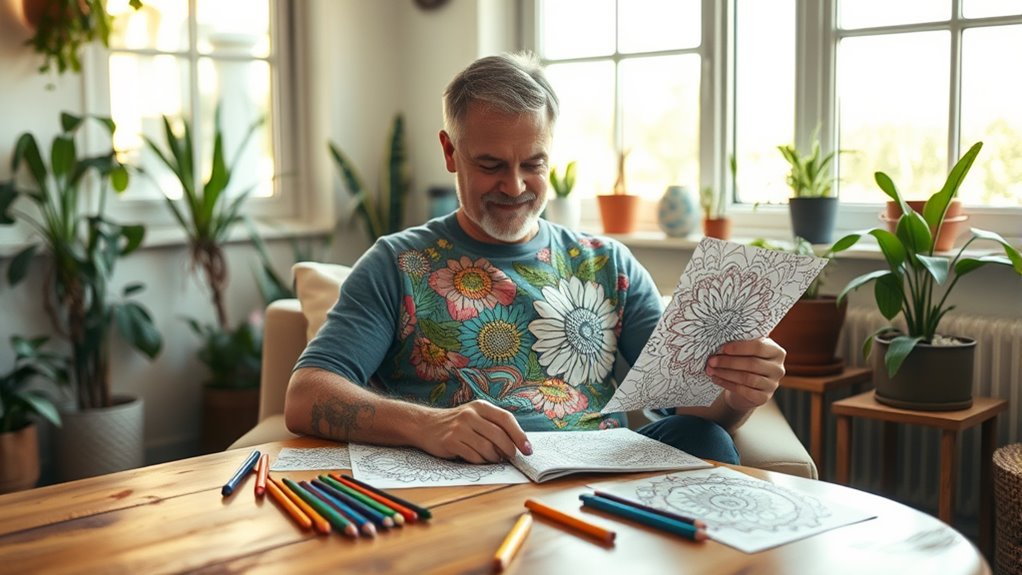

Coloring can profoundly benefit your mental and emotional health by reducing stress, improving focus, and promoting mindfulness. As you concentrate on colors and patterns, you create a calming, meditative state that helps quiet your mind and ease anxiety. It also offers a safe space for emotional expression and self-care, boosting your mood and resilience. By engaging in this simple activity regularly, you’ll discover more about how coloring can support your overall well-being—so keep exploring its powerful benefits.
Key Takeaways
- Coloring promotes mindfulness and mental clarity by encouraging focused attention and meditative states.
- It provides a safe emotional outlet, helping to release tension and reduce anxiety.
- Engaging in coloring develops a mindful approach, enhancing awareness and stress management skills.
- Coloring serves as a relaxing self-care activity that boosts mood and emotional resilience.
- Regular coloring can act as a therapeutic practice, supporting emotional balance and overall mental health.
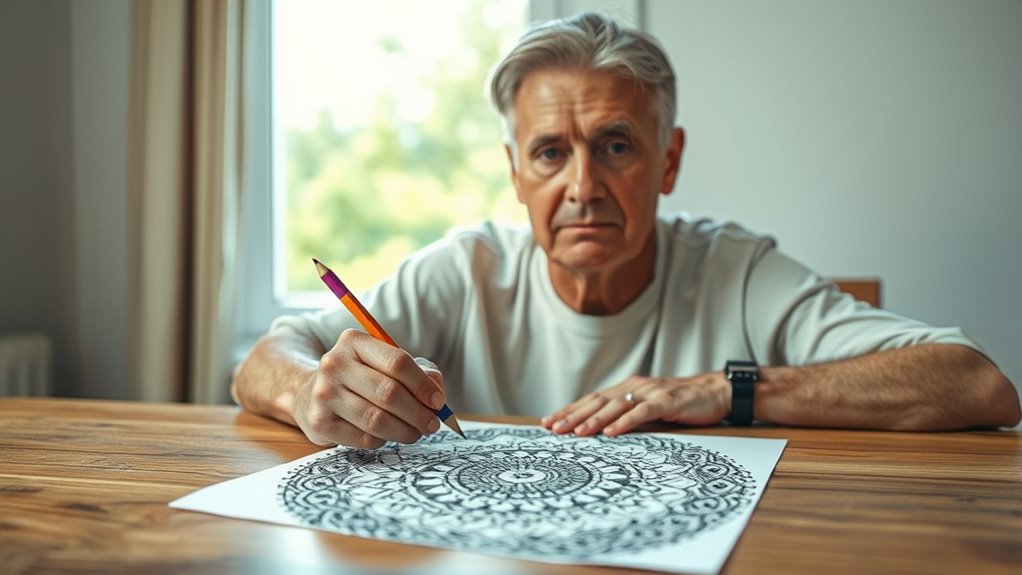
Coloring isn’t just a fun pastime; it also offers surprising health benefits that can improve your well-being. When you pick up coloring tools, you’re engaging in more than just a creative activity—you’re tapping into practices like mindfulness meditation and emotional expression that can help you manage stress and promote mental clarity. As you focus on choosing colors and filling in intricate designs, you naturally quiet your mind, similar to what mindfulness meditation encourages. This focused attention helps you stay present, reducing worries about past or future concerns and allowing you to experience a calming, meditative state.
Moreover, coloring provides a safe space for emotional expression. When words feel insufficient to articulate your feelings, colors become a powerful outlet. You might find yourself gravitating toward certain shades that reflect your mood or using bold strokes to release tension. This act of selecting and applying colors becomes an act of emotional release, helping you process complex feelings without judgment. As you immerse yourself in coloring, you may notice a decrease in anxiety and an increase in emotional clarity, which can translate into a more balanced outlook.
Engaging in coloring also helps you develop a mindful approach to your emotions and thoughts. Instead of rushing through your day or getting caught up in negative patterns, coloring encourages you to slow down and pay close attention to each brushstroke or crayon mark. This mindfulness can carry over into other aspects of your life, making you more aware of your emotional states and better equipped to handle stress. The repetitive motion of coloring, combined with your focus on selecting colors and shading within lines, creates a rhythmic, meditative experience that quiets mental chatter and fosters relaxation.
Additionally, coloring can serve as a form of self-care, giving you a moment to disconnect from screens and daily pressures. As you fill in a page, your brain shifts into a relaxed, receptive mode, which can improve your overall mood. This simple activity supports emotional resilience by offering a healthy outlet for expressing feelings and cultivating a sense of accomplishment. With regular practice, coloring can become a therapeutic ritual—helping you cultivate mindfulness meditation habits and encouraging emotional expression—ultimately contributing to your mental and emotional health in a meaningful way. Incorporating creative outlets like coloring into your routine can further enhance your overall well-being, as they provide additional avenues for stress relief and emotional balance.
Frequently Asked Questions
Can Coloring Improve Mental Health in Adults?
You might wonder if coloring can boost your mental health. It definitely can, as it promotes mindfulness practice, helping you stay present and reduce stress. Plus, it encourages creative expression, which can be very therapeutic. When you focus on choosing colors and creating designs, you engage your mind positively. This simple activity offers a calming break from daily worries, making it a valuable tool for improving your overall mental well-being.
What Are the Best Coloring Tools for Stress Relief?
You might think any coloring tool will do, but the truth is, your stress relief depends on choosing the right coloring mediums and thoughtful color palette choices. Fine-tipped markers, colored pencils, or watercolors let you focus and relax, while bold colors boost your mood. Ironically, simple tools can create complex calming effects, so experiment with different mediums to find what truly helps you unwind and de-stress.
How Often Should Adults Color for Health Benefits?
You should aim for a regular coloring routine, such as 3-4 times a week, to experience the health benefits. Consistent coloring allows you to unwind, foster creative expression, and reduce stress. Even short sessions of 20-30 minutes can make a difference. Incorporate coloring into your schedule as a relaxing activity, and you’ll notice improvements in your mood and mental clarity over time.
Are There Specific Coloring Techniques That Enhance Relaxation?
Think of coloring as a calming dance for your mind. To enhance relaxation, try mandala coloring, which promotes focus and symmetry, helping you unwind. Incorporate watercolor techniques to add fluidity and spontaneity, making your experience more soothing. Use gentle strokes and slow movements, allowing your thoughts to drift away. These techniques turn coloring into a meditative practice, helping you find peace amidst everyday chaos.
Can Coloring Help With Anxiety or Depression Management?
Coloring therapy can considerably help with anxiety and depression management. When you engage in coloring, you actively express your emotions through creative activity, which can be therapeutic. This emotional expression allows you to process feelings more easily and find calmness. Many find that regular coloring sessions reduce stress, improve mood, and provide a safe outlet for emotions. So, incorporating coloring into your routine might be a helpful step toward emotional well-being.
Conclusion
So, next time you pick up colored pencils, remember you’re not just creating art—you’re boosting your mental health. In a world filled with chaos, coloring offers a calming escape, contrasting the stress you face daily. While it may seem simple, this activity provides profound benefits, helping you relax and recharge. Don’t underestimate the power of a few strokes of color; they might just be your secret weapon against stress. Grab your colors and start healing today.