
Creating miniature worlds like book nooks and tiny scenes allows you to transform small spaces into detailed, immersive environments. Focus on carefully selecting furniture, adding tiny details, and designing lush gardens with miniature plants and pathways. Precision, patience, and attention to detail are key to making these scenes come alive. If you keep exploring, you’ll discover how to craft enchanting worlds that blend indoor charm with outdoor magic, just waiting for you to bring them to life.

Turn quiet afternoons into listening time
- Thousands of audiobooks, podcasts and originals
- Listen on your phone, tablet or Echo — also offline
- Cancel anytime
Key Takeaways
- Creating miniature book nooks involves designing cozy, detailed scenes within bookshelves or hollowed-out books.
- Incorporate tiny furniture, books, and decorative elements to enhance realism and storytelling in small scenes.
- Use miniature plants, lighting, and textured materials to add depth and ambiance to your book nook.
- Precision and patience are essential for assembling tiny components that fit seamlessly into the miniature environment.
- Combining indoor and outdoor miniature elements transforms simple spaces into captivating, immersive worlds.
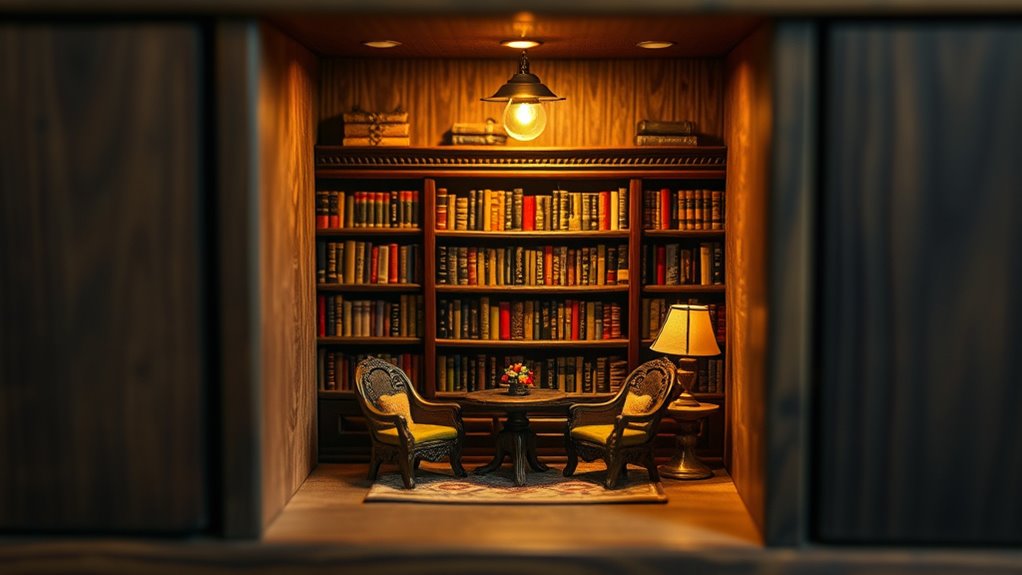
Miniature worlds captivate your imagination by revealing tiny, detailed environments that often go unnoticed. When you immerse yourself in creating these small-scale scenes, you realize how much detail and care can transform a simple space into a fascinating universe. One of the most engaging aspects is designing dollhouse furniture. You choose each piece carefully, ensuring it fits perfectly within the miniature setting. Whether it’s a tiny dining table, a cozy bed, or a miniature bookshelf, these pieces bring your scene to life and make it feel authentic. The challenge lies in selecting furniture that matches your theme and scale, but the satisfaction of seeing everything come together is worth every effort. As you assemble your dollhouse furniture, you start to notice how even the smallest details, like tiny doorknobs or miniature curtains, add character and realism. These touches make your miniature world more immersive and invite viewers to explore every corner.
Equally fascinating is tiny garden design, which allows you to craft lush, vibrant outdoor scenes in miniature. You get to choose the plants, flowers, and trees that will populate your tiny garden, paying close attention to color, texture, and placement. With small tools and a steady hand, you can create pathways, tiny benches, or decorative elements like miniature birdbaths or sculptures. The process is both relaxing and rewarding, as you see your garden grow and evolve with each addition. Using various materials, you add soil, moss, or tiny pebbles to mimic real terrain, giving depth and realism. Tiny garden design isn’t just about aesthetics; it’s about creating a space that feels alive and welcoming, even on a small scale. You can incorporate miniature lighting to highlight certain features or set a specific mood, making your scene even more enchanting. Developing a sense of leadership and organization helps streamline your process and maintain focus throughout your miniature project.
When you combine dollhouse furniture with tiny garden design, your miniature worlds become more dynamic and engaging. You might place a tiny settee next to a garden bench or position a miniature table beneath a flowering tree. These details help tell a story and make your scene feel complete. Crafting these tiny environments requires patience and attention to detail, but the results are incredibly satisfying. You’ll find yourself lost in the process, tweaking and perfecting every element until your scene feels just right. Whether you’re building a cozy indoor nook or an outdoor miniature paradise, the joy comes from transforming everyday materials into a tiny universe that sparks wonder and curiosity. In the end, these miniature worlds remind you how much beauty and complexity can exist in the smallest of spaces.
miniature dollhouse furniture set
As an affiliate, we earn on qualifying purchases.
As an affiliate, we earn on qualifying purchases.
Frequently Asked Questions
What Are the Best Materials for Creating Durable Book Nooks?
For durable book nooks, you should use sturdy materials like wood and foam board, which are excellent for scale modeling and provide reliable material durability. Balsa wood is lightweight yet strong, making it easy to work with, while foam board offers a smooth surface for detailed scenery. Incorporate acrylic paints for longevity, and seal everything with a clear coating to protect your miniature scene from wear and tear.
How Long Does It Typically Take to Complete a Miniature Scene?
On average, it takes about 10 to 20 hours to complete a miniature scene, but this depends greatly on your skill level and the complexity of the design. Beginners might need more time to perfect details, while experienced crafters can work faster. The time commitment varies, but patience and planning help guarantee your project turns out beautifully. Expect to invest several sessions, especially if you’re aiming for intricate, detailed results.
Can Beginners Successfully Craft Intricate Miniature Worlds?
Yes, beginners can successfully craft intricate miniature worlds, but they’ll face common beginner challenges like mastering tiny details and building steady skills. To succeed, you should start with simple designs, practice patience, and learn from tutorials. Over time, your skill development will improve, allowing you to create more complex scenes. With persistence and enthusiasm, you’ll find that crafting miniature worlds becomes easier and incredibly rewarding.
What Tools Are Essential for Assembling Tiny Detailed Elements?
Think of your toolkit like a painter’s palette, full of essential tools for tiny details. You’ll need precision scissors, tweezers, and a craft knife to handle delicate elements. For assembling, consider tools that help with scaling techniques, like fine-tipped brushes for color matching and tiny glue applicators. These tools let you craft intricate scenes with accuracy, ensuring each miniature detail fits perfectly, making your world come alive.
How Do You Prevent Miniature Scenes From Getting Damaged Over Time?
To prevent your miniature scenes from damage over time, you should apply protective coatings like sealants or varnishes to safeguard against dust and moisture. Store your creations in sturdy storage solutions, such as labeled boxes or display cases, to minimize handling and physical damage. Keep them away from direct sunlight and extreme temperatures, which can cause fading or warping. Regularly inspect and clean your miniatures to maintain their pristine condition.
miniature garden tools and accessories
As an affiliate, we earn on qualifying purchases.
As an affiliate, we earn on qualifying purchases.
Conclusion
Now that you’ve explored the art of creating tiny worlds, it’s clear that craftsmanship and imagination turn small spaces into magical domains. With a little patience, your own miniature scene can transport you anywhere—be it Victorian London or a futuristic city. Remember, every detail matters, so don’t be afraid to experiment. Soon, you’ll be crafting scenes so enchanting, even a time traveler from the 1920s would be captivated by your tiny, timeless masterpiece.
LED miniature lighting for scenes
As an affiliate, we earn on qualifying purchases.
As an affiliate, we earn on qualifying purchases.
As an affiliate, we earn on qualifying purchases.
Fall Picks
fall essentials
As an affiliate, we earn on qualifying purchases.