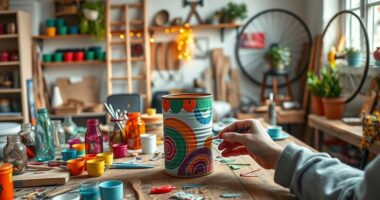
You can easily upcycle furniture and save money by using DIY chalk paint to refresh your space. It’s simple to make with common household ingredients, and it allows you to customize colors and add vintage charm through distressing. Upcycling items you already have, like old furniture or secondhand finds, helps you create stylish, one-of-a-kind pieces without spending much. Keep exploring for more tips on transforming your home affordably and creatively.

Turn quiet afternoons into listening time
- Thousands of audiobooks, podcasts and originals
- Listen on your phone, tablet or Echo — also offline
- Cancel anytime
Key Takeaways
- Use DIY chalk paint to refresh furniture affordably and customize colors to match your decor.
- Repurpose secondhand or old furniture pieces into stylish statement items with simple upcycling techniques.
- Thorough cleaning, light sanding, and sealing ensure a professional look and durability in your painted furniture.
- Transform everyday items like ladders or trunks into functional decor pieces, reducing waste and saving money.
- Upcycling promotes sustainability, creativity, and cost savings by giving new life to existing or secondhand furniture.

Looking to refresh your space without breaking the bank? You’re in the right place. Dupe-it-yourself decor is all about transforming your home with creative, budget-friendly projects. One of the easiest ways to do this is by using DIY chalk paint, which allows you to give old furniture a fresh, stylish look without investing in expensive new pieces. Instead of buying new, why not repurpose furniture you already own or find cheap secondhand finds? With a little effort, you can turn a tired-looking dresser or side table into a standout piece that looks like it belongs in a designer home.
Transform your space affordably with DIY chalk paint and creative furniture repurposing.
The beauty of DIY chalk paint lies in its simplicity. You don’t need special skills or fancy equipment—just some simple ingredients you probably already have at home. Typically, DIY chalk paint is made by mixing latex paint with plaster of Paris or chalk. This creates a matte, velvety finish that’s perfect for giving furniture a shabby chic or modern look. You can choose a color that complements your existing decor or go bold with a bright hue. The process is straightforward: clean your furniture thoroughly, lightly sand it to help the paint adhere, and then apply your DIY chalk paint with a brush or roller. Usually, two coats are enough for a smooth, even finish. Once dry, you can add some distressing by lightly sanding edges or corners for a vintage effect. To seal your work and protect it from everyday wear, apply a clear wax or polyurethane. And just like that, you’ve repurposed furniture into a beautiful, custom piece without spending much.
Repurposing furniture isn’t just about saving money; it’s also about adding personality and uniqueness to your home. Think outside the box—an old ladder can become a quirky bookshelf, or a vintage trunk can serve as both storage and a statement piece. The key is to look for items with good bones that just need a little love. Instead of tossing out or buying new, give these pieces a second life. Painting them with DIY chalk paint can completely change their look, making them fit seamlessly into your decor style. Plus, it’s a rewarding process—you get to see your project evolve from start to finish, knowing you created something special with your own hands.
In the end, this approach lets you decorate your space creatively and affordably. DIY chalk paint and repurposing furniture are perfect ways to upcycle and save money while making your home uniquely yours. It’s about making clever choices, being resourceful, and enjoying the satisfaction of turning old into new. So, gather your supplies, pick a piece of furniture, and get ready to transform your space, one DIY project at a time.
DIY chalk paint kit for furniture
As an affiliate, we earn on qualifying purchases.
As an affiliate, we earn on qualifying purchases.
Frequently Asked Questions
What Are the Best Tools for Beginner Upcycling Projects?
For beginner upcycling projects, start with basic tools like scissors, paintbrushes, and sandpaper. These help you master recycling techniques and give your projects a polished look. Always prioritize tool safety by wearing gloves and eye protection. A hot glue gun and chalk paint are also great for quick transformations. Keep your workspace organized, and don’t rush—practice makes perfect as you learn new upcycling skills.
How Do I Choose the Right Materials for DIY Decor?
You should choose materials based on their durability and how well they match your color scheme. Visualize your project’s use—if it’s a high-traffic piece, pick sturdy materials like wood or metal. For aesthetics, select colors that complement your existing decor. This way, you’ll guarantee your DIY decor is both practical and visually cohesive, making your upcycled creations last longer and look harmoniously integrated.
Are There Eco-Friendly Paint Options for Upcycling?
Yes, you can find eco-friendly paint options for upcycling. Look for eco paints that contain low or zero volatile organic compounds (VOCs), which are better for the environment and your health. Natural finishes like beeswax, plant-based oils, or water-based paints also offer sustainable alternatives. These options help you achieve beautiful, upcycled decor while reducing your carbon footprint, making your projects both stylish and eco-conscious.
How Can I Ensure Safety During Upcycling Projects?
To guarantee safety during upcycling projects, always wear appropriate safety gear like gloves, masks, and goggles to protect against hazards like fumes and sharp objects. Stay aware of potential hazards in your workspace, such as unstable furniture or toxic paints. Keep your area well-ventilated, work with good lighting, and follow product instructions carefully. Being proactive about hazard awareness helps you avoid accidents and enjoy your creative projects safely.
What Are Creative Ways to Repurpose Everyday Household Items?
Think of household items as blank canvases awaiting your touch. You can transform an old ladder into a charming bookshelf or turn teacups into decorative accents that tell stories. Repurpose jars as vases or storage containers, giving them new life and meaning. Furniture transformation becomes a symbol of renewal, while simple objects like trays or fabric scraps can become personalized decor. Let your creativity breathe, turning everyday items into meaningful, stylish pieces.
As an affiliate, we earn on qualifying purchases.
Conclusion
By upcycling your decor, you not only save money—did you know the average household wastes about $1,200 annually on unused or discarded items—but you also get to create unique, personalized pieces. With a little creativity and effort, you can transform everyday objects into stylish accents that reflect your personality. So go ahead, embrace dupe-it-yourself decor, and turn trash into treasure while keeping your budget and the planet happy!
As an affiliate, we earn on qualifying purchases.
As an affiliate, we earn on qualifying purchases.
Cold & flu season Picks
humidifiers
As an affiliate, we earn on qualifying purchases.