When a self-driving car makes a moral decision that causes harm, responsibility isn’t clear-cut. It could lie with the manufacturer, the developer who wrote the algorithms, or the owner who configured the vehicle. Ethical programming, liability laws, and societal standards all influence accountability. Since the field is evolving and standards vary, understanding who’s responsible can be complex. To discover how these issues are addressed and who might be held accountable, keep exploring the key considerations involved.

Turn quiet afternoons into listening time
- Thousands of audiobooks, podcasts and originals
- Listen on your phone, tablet or Echo — also offline
- Cancel anytime
Key Takeaways
- Responsibility for autonomous vehicle decisions involves manufacturers, developers, and owners, depending on the scenario.
- Ethical programming complexities can complicate liability attribution during accidents involving moral dilemmas.
- Flawed algorithms or biased decision-making increase legal and moral responsibility for creators and operators.
- Lack of standardized ethical guidelines hinders clear assignment of liability in autonomous vehicle incidents.
- Developing transparent, consistent moral frameworks is essential for accountability and societal trust.
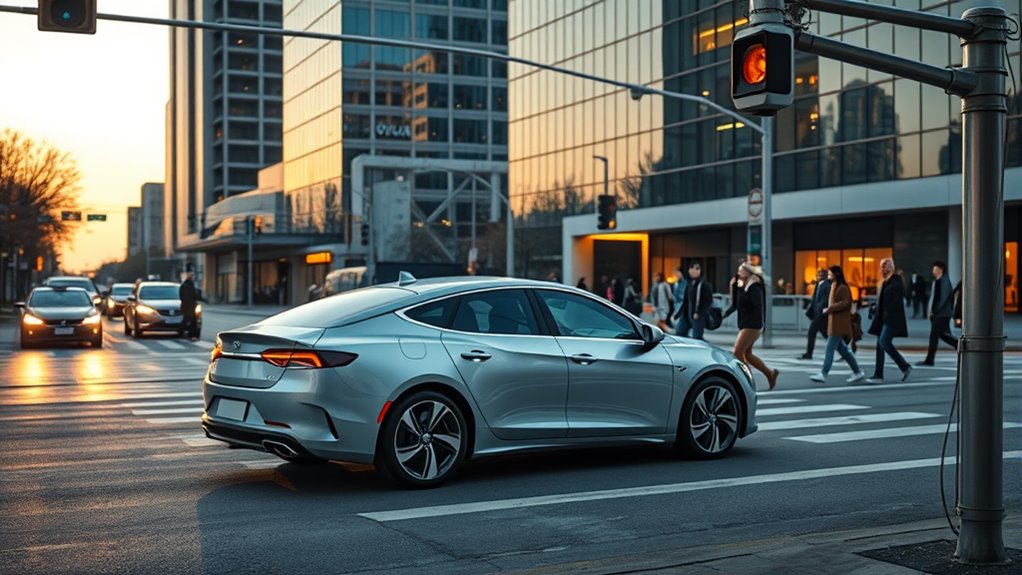
Have you ever wondered how autonomous vehicles make ethical decisions in critical situations? It’s a question that challenges everyone involved in developing this technology. When an autonomous car faces a sudden obstacle or a potential accident, tough choices must be made—choices about who or what to prioritize. These moments bring up complex liability dilemmas because it’s not just about the vehicle’s mechanical function anymore; it’s about the moral programming embedded within. Who is responsible when an autonomous vehicle makes a decision that results in injury or damage? Is it the manufacturer, the software developer, or perhaps the owner? These questions highlight the core challenge: designing moral programming that aligns with societal values while also clarifying accountability.
Liability dilemmas are at the heart of public concern. As autonomous vehicles become more prevalent, the question isn’t just whether they can operate safely but also who bears responsibility when something goes wrong. If an autonomous vehicle chooses to swerve to avoid a pedestrian and hits another car, who’s liable? Is it the company that created the vehicle, the programmer who coded the decision-making algorithms, or the owner who failed to maintain it properly? These dilemmas aren’t straightforward because moral programming within the vehicle is based on pre-set algorithms that attempt to replicate ethical reasoning. But morality isn’t black and white, which makes coding it a formidable task. Developers must decide how to prioritize different lives or outcomes, raising concerns about bias and fairness.
Liability in autonomous vehicles hinges on moral programming, raising complex questions about responsibility and ethical decision-making.
Moral programming involves creating rules and priorities that guide an autonomous vehicle’s decision-making process. These rules aren’t just about obeying traffic laws; they’re about making split-second ethical judgments. For example, should the vehicle prioritize the safety of its occupants over pedestrians? Should it attempt to minimize harm at all costs, even if that means risking its own passengers? These questions force engineers to encode moral values into algorithms that often reflect societal norms, but those norms can vary widely. The challenge lies in making these ethical frameworks transparent, consistent, and adaptable to different cultural contexts. Additionally, understanding dynamic communication exercises for human drivers can inform how autonomous systems interpret and react to real-time social cues, further enhancing decision-making processes.
The stakes are high because the moral programming directly impacts liability. If a vehicle’s decision-making process is flawed or biased, responsibility can become murky. Manufacturers might argue they followed industry standards, but if those standards are inadequate or unethical, blame shifts. Conversely, assigning personal blame to individual programmers or owners complicates the legal landscape. Until we develop universally accepted guidelines for moral programming, liability dilemmas will persist, and questions about responsibility will remain at the forefront of autonomous vehicle ethics. As you consider these issues, remember that the decisions made now will shape the future of safe, ethical autonomous transportation.
autonomous vehicle liability insurance
As an affiliate, we earn on qualifying purchases.
As an affiliate, we earn on qualifying purchases.
Frequently Asked Questions
How Do Manufacturers Determine Ethical Decision-Making Algorithms?
Manufacturers determine ethical decision-making algorithms by focusing on algorithm design that incorporates diverse moral frameworks. You’re involved in selecting principles like utilitarianism or deontology, ensuring the system balances safety and fairness. You work closely with ethicists and engineers to embed these moral considerations into the software, testing how the vehicle responds in complex scenarios. Your goal is to create algorithms that make ethically sound decisions while prioritizing passenger safety and public trust.
What Legal Liabilities Exist if an Autonomous Vehicle Causes Harm?
If an autonomous vehicle causes harm, you’re likely to face legal liabilities under existing legal frameworks. Liability insurance plays a vital role in covering damages, but laws are still evolving around who’s responsible—manufacturer, owner, or software developer. You should stay informed about local regulations and make sure your vehicle has adequate liability insurance, as this provides financial protection and clarifies responsibilities in case of accidents.
How Are Passenger Safety and Data Privacy Prioritized?
Imagine stepping into a sleek car, feeling confident your passenger trust is built on cutting-edge safety features. You’re comforted knowing data encryption shields your personal info, while advanced sensors prioritize passenger safety. The vehicle’s systems constantly monitor surroundings, ensuring protection. Privacy is safeguarded seamlessly, letting you focus on the journey ahead. With these measures, autonomous vehicles make safety and data privacy top priorities, so you can travel with peace of mind.
Who Is Accountable in Multi-Vehicle Accidents Involving Autonomous Cars?
In multi-vehicle accidents involving autonomous cars, liability allocation depends on factors like ethical programming and fault. You should comprehend that manufacturers, software developers, and even the vehicle owners might share responsibility, especially if faulty programming or maintenance issues contributed. Ultimately, determining accountability involves examining the vehicle’s ethical programming, data logs, and adherence to safety standards to assign fault accurately and ensure just liability allocation.
How Do Cultural Differences Influence Autonomous Vehicle Ethical Standards?
You’ll find that cultural norms and moral frameworks are like the GPS of autonomous vehicle ethics, guiding decisions with regional flair. In some places, saving the many trumps individual safety, while others prioritize personal responsibility. These differences spin a global dance floor where what’s acceptable in Tokyo might raise eyebrows in Toronto. So, as you navigate, remember: your car’s moral compass is shaped by the cultural map it follows.
self-driving car ethical decision software
As an affiliate, we earn on qualifying purchases.
As an affiliate, we earn on qualifying purchases.
Conclusion
As you navigate the world of autonomous vehicles, remember that responsibility isn’t just on the technology but also on developers and regulators. For example, if an autonomous car causes an accident, questions arise: who’s liable—the manufacturer, the software developer, or the owner? As these vehicles become more common, clear ethical guidelines and accountability will help guarantee everyone’s safety. Ultimately, your trust in autonomous vehicles depends on understanding and addressing these complex ethical responsibilities.
autonomous vehicle accident liability kit
As an affiliate, we earn on qualifying purchases.
As an affiliate, we earn on qualifying purchases.
self-driving car safety monitoring system
As an affiliate, we earn on qualifying purchases.
As an affiliate, we earn on qualifying purchases.
Fall Picks
fall essentials
As an affiliate, we earn on qualifying purchases.