Vehicle-to-grid (V2G) technology lets your electric car act as a mobile energy storage unit that can send power back to the grid when needed. This helps balance supply and demand, especially with renewable sources like solar and wind. Your EV can store excess energy during low demand and release it during peak times to support grid stability. Curious about how this smarter energy exchange works? Keep exploring to discover more about this innovative system.

Turn quiet afternoons into listening time
- Thousands of audiobooks, podcasts and originals
- Listen on your phone, tablet or Echo — also offline
- Cancel anytime
Key Takeaways
- V2G technology enables electric vehicles to act as mobile energy storage units that can supply power back to the grid.
- It helps balance renewable energy supply and demand, reducing waste and enhancing grid stability.
- Smart communication and automation coordinate vehicle charging/discharging without affecting vehicle readiness.
- Advanced battery management ensures V2G participation does not shorten battery lifespan.
- V2G positions electric vehicles as vital assets in a sustainable, resilient energy future.
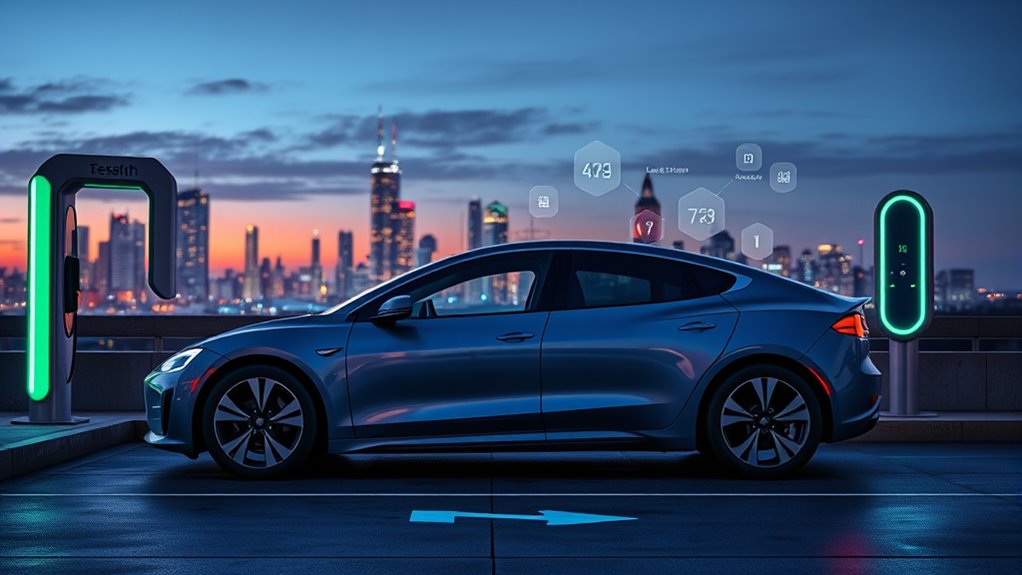
Vehicle-to-Grid (V2G) technology is transforming how we think about energy management by enabling electric vehicles to serve as mobile energy storage units. Instead of just driving around, your EV can communicate with the power grid, helping balance supply and demand. When there’s excess renewable energy, such as solar or wind, your car can store that energy, ready to send it back to the grid when needed. This process relies heavily on effective battery integration, guaranteeing your vehicle’s battery can handle frequent charge and discharge cycles without degrading rapidly. Proper battery integration is essential because it maintains the health of your EV’s battery while maximizing its role in grid support.
By incorporating your electric vehicle into the grid, you contribute to greater grid stability. During periods of high demand, your car can release stored energy, alleviating stress on power plants and preventing blackouts. Conversely, when renewable energy production is low, your vehicle can absorb excess energy, preventing wastage and helping to smooth out fluctuations in supply. This dynamic exchange of energy makes the entire system more resilient and adaptable, especially as renewable sources become more prevalent. You’re not just charging your car; you’re actively participating in a symbiotic relationship that benefits everyone.
The integration process is seamless because V2G systems are designed to work with smart chargers and grid management software. These systems monitor grid conditions and communicate with your vehicle to determine the best times for charging or discharging. This means you don’t need to worry about manual interventions; the technology handles the coordination in real-time. It’s a smart, efficient way to guarantee your EV is always ready for driving while also serving as an asset for the energy network.
Furthermore, battery integration in V2G systems emphasizes safety and longevity. Advanced control algorithms protect your battery from excessive cycling and thermal stress, ensuring it remains healthy over the years. This focus on battery health reassures you that participating in V2G won’t shorten your vehicle’s lifespan, but instead, can extend its utility by making your car a valuable part of the energy ecosystem. As the technology evolves, expect even tighter integration and smarter management, making your electric vehicle a key player in creating a more stable, sustainable energy future. Incorporating advanced battery materials can further enhance performance and durability in V2G applications. By embracing V2G, you’re not just driving a clean vehicle—you’re empowering the grid, contributing to renewable energy adoption, and taking part in a revolutionary shift toward smarter energy use.
smart EV charger with V2G support
As an affiliate, we earn on qualifying purchases.
As an affiliate, we earn on qualifying purchases.
Frequently Asked Questions
How Secure Is Vehicle-To-Grid Data Transmission?
Vehicle-to-Grid data transmission is generally secure thanks to robust cybersecurity protocols and data encryption. These measures protect your information from unauthorized access and cyber threats. You can trust that industry standards are continuously updated to address new vulnerabilities. While no system is completely invulnerable, implementing strong encryption and cybersecurity practices considerably reduces risks, ensuring your vehicle’s energy data remains safe during transmission.
What Are the Costs Associated With Implementing Vehicle-To-Grid Systems?
Think of this like launching a new spaceship—costs can be hefty. You’ll need a detailed cost analysis to understand expenses, including advanced infrastructure requirements like smart meters and charging stations. Upfront investments might be high, but long-term benefits can offset costs. You should also consider maintenance, technology upgrades, and potential incentives. Overall, while initial costs are significant, strategic planning helps you maximize savings and efficiency over time.
How Does Vehicle-To-Grid Impact Electric Vehicle Battery Lifespan?
Vehicle-to-grid impacts your electric vehicle’s battery lifespan mainly through increased battery degradation caused by additional charging cycles. When you use your car for energy storage, it undergoes more frequent charging and discharging, which accelerates wear. However, with proper management and technology improvements, the effects on battery health can be minimized. Overall, V2G can be beneficial, but you should be mindful of how charging cycles influence your battery’s longevity.
Are There Specific Vehicle Models Compatible With Vehicle-To-Grid Technology?
Think of vehicle-to-grid compatibility as finding the right puzzle piece. Not all electric vehicles fit the bill; only specific models like the Nissan Leaf, Chevrolet Volt, and certain BMW i3s are compatible, primarily due to their adherence to standardized charging standards like CHAdeMO and CCS. Before you plug in, verify your vehicle’s compatibility to guarantee seamless energy exchange, turning your car into a powerful energy partner.
What Are the Regulatory Challenges for Widespread Vehicle-To-Grid Adoption?
You’ll face regulatory challenges like evolving policies that govern grid integration and guarantee safety, reliability, and fair compensation. Regulatory policy must adapt to accommodate vehicle-to-grid systems, addressing issues like data privacy, ownership rights, and interoperability standards. Without clear regulations, widespread adoption stalls. Collaborating with policymakers and utilities helps create a framework that supports seamless integration, encourages innovation, and protects consumer interests in this emerging energy storage solution.
home vehicle-to-grid energy storage system
As an affiliate, we earn on qualifying purchases.
As an affiliate, we earn on qualifying purchases.
Conclusion
Think of vehicle-to-grid technology as a symphony where your car becomes a conductor, harmonizing energy flow between your vehicle and the grid. By embracing this innovation, you’re not just charging a car—you’re fueling a smarter, more resilient energy future. It’s like turning your vehicle into a battery-powered lighthouse, guiding us toward sustainability. When you plug in, you’re casting a ripple that can brighten the entire energy landscape, making clean power more accessible for all.
electric vehicle bidirectional charger
As an affiliate, we earn on qualifying purchases.
As an affiliate, we earn on qualifying purchases.
As an affiliate, we earn on qualifying purchases.
Fall Picks
fall essentials
As an affiliate, we earn on qualifying purchases.