
To boost your car’s fuel efficiency, regularly check and inflate your tires to the correct pressure, and remove unnecessary weight from your vehicle. Practice smooth driving by accelerating and braking gently, maintaining a steady speed, and avoiding aggressive habits. Keep up with routine maintenance like oil changes and air filter replacements, and minimize resistance by removing roof racks or carriers if not needed. These simple tips will help you save fuel—more secrets await as you continue.
Key Takeaways
- Regularly check and maintain proper tire pressure to reduce rolling resistance and improve fuel economy.
- Practice smooth driving with gradual acceleration and deceleration, avoiding aggressive behaviors.
- Remove unnecessary weight and roof racks to decrease vehicle resistance and engine load.
- Perform routine vehicle maintenance like oil changes and air filter replacements for optimal performance.
- Use cruise control on highways and anticipate traffic flow to maintain steady speeds and save fuel.
If you want to save money at the pump, understanding how to boost your car’s fuel efficiency is essential. One of the simplest yet most effective ways to do this is by paying attention to your tire pressure. Underinflated tires create more rolling resistance, meaning your engine has to work harder to move your car forward. Check your tire pressure regularly—at least once a month—and keep them inflated to the manufacturer’s recommended levels. Properly inflated tires not only improve fuel economy but also enhance safety and extend tire life. Don’t forget to inspect your tires for uneven wear, which could indicate a need for realignment or balancing, further optimizing your vehicle’s efficiency. Additionally, maintaining proper tire pressure can help reduce fuel consumption and minimize environmental impacts. Your driving habits play an important role in how much fuel your car consumes. Aggressive driving, such as rapid acceleration, hard braking, and speeding, can considerably decrease your fuel efficiency. Instead, aim for smooth and gradual acceleration and deceleration. Maintain a steady speed whenever possible, especially on highways, by using cruise control if your car has it. Avoid idling for extended periods; if you’re going to be stopped for more than a minute, turn off your engine to conserve fuel. Anticipate traffic flow and traffic lights, so you can slow down gradually rather than braking sharply or accelerating unnecessarily. These habits reduce unnecessary fuel consumption and lessen wear and tear on your vehicle. Another aspect of mindful driving involves avoiding excessive speeds. The faster you go, the more aerodynamic drag your vehicle faces, which increases fuel consumption. Staying within the speed limit not only keeps you safe but also improves your miles per gallon. Additionally, removing excess weight from your car can make a difference—clear out unnecessary items from your trunk or backseat, as extra weight forces your engine to work harder. Similarly, avoid carrying roof racks or carriers unless needed, as they create additional air resistance. Maintaining a consistent driving style, combined with proper tire pressure and mindful habits, helps your vehicle run more efficiently. Regular vehicle maintenance, like oil changes, air filter replacements, and ensuring your spark plugs are in good condition, also contributes to better fuel economy. Remember, small adjustments in your driving routines and vehicle upkeep can lead to noticeable savings at the pump, making every mile more economical while extending the lifespan of your car.
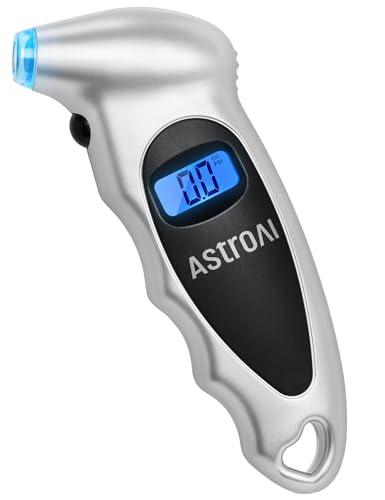
AstroAI Digital Tire Pressure Gauge 150PSI, ±1PSI Accuracy for Car Truck
- Calibrated for Accurate Readings: ±1 PSI factory calibration for reliability
- Backlit LCD & Nozzle Light: Illuminated display and nozzle for night use
- Multiple Measurement Units: Switch between PSI, Bar, Kgf/cm², KPA
As an affiliate, we earn on qualifying purchases.
As an affiliate, we earn on qualifying purchases.
Frequently Asked Questions
How Do Tire Pressure and Alignment Affect Fuel Economy?
Maintaining proper tire pressure and wheel alignment directly impacts your fuel economy. When your tires have the right tire pressure, they roll more efficiently, reducing resistance and saving fuel. Proper wheel alignment ensures your tires wear evenly and roll straight, preventing unnecessary drag. Regularly check and adjust your tire pressure and wheel alignment to keep your car running smoothly and maximize fuel efficiency. These simple steps can make a noticeable difference in your fuel savings.
Can Using Premium Fuel Increase My Car’s Efficiency?
You might notice that sometimes, using premium fuel feels like a small upgrade in your car’s performance. While premium fuel benefits engines designed for it, it doesn’t necessarily boost fuel efficiency if your vehicle runs fine on regular. Using premium can improve engine performance in high-compression engines, but for most cars, sticking to the recommended fuel is best for efficiency. So, check your owner’s manual before making the switch.
What Role Does Vehicle Weight Play in Fuel Consumption?
Vehicle weight considerably impacts your fuel efficiency because heavier cars require more engine load to move. This increased load leads to higher fuel consumption. Additionally, more weight can heighten aerodynamic drag, making your engine work harder. To improve efficiency, keep your vehicle as light as possible and remove unnecessary items. Lighter vehicles reduce engine strain, improve fuel economy, and lessen overall fuel costs.
How Does Driving Style Influence Fuel Efficiency?
Think of your driving style as the steering wheel of your fuel savings. Your driving habits and acceleration techniques directly impact fuel efficiency—smooth accelerations and gentle braking save gas, while aggressive driving wastes it. When you drive calmly and anticipate traffic flow, you’re steering your car toward better mileage. Remember, every thoughtful choice behind the wheel adds up, turning your daily commute into a fuel-saving journey.
Are There Specific Maintenance Schedules to Maximize Fuel Savings?
You should follow a regular maintenance schedule to maximize fuel savings. Make sure to get oil changes as recommended by your vehicle’s manual, since fresh oil keeps your engine running smoothly. Additionally, check and replace your air filter if it’s dirty, as a clean air filter improves airflow and fuel efficiency. Staying on top of these simple tasks helps your car run more efficiently and saves you money on fuel in the long run.

EPAuto GP213 (17220-R1A-A01) Engine Air Filter Replacement for Honda
- Compatibility: Fits Honda Civic and Acura ILX
- Part Number: Genuine Honda/Acura 17220-R1A-A01
- Performance Boost: Enhances engine performance and protection
As an affiliate, we earn on qualifying purchases.
As an affiliate, we earn on qualifying purchases.
Conclusion
So, there you have it—simple tricks to squeeze more miles out of every tank. Ironically, the biggest fuel wasters are often the little things we overlook: underinflated tires, aggressive driving, or neglecting maintenance. It’s funny how tiny tweaks can save you money, yet many of us still ignore them. Next time you’re tempted to ignore your car’s needs, remember, a little effort now can make your wallet a lot fuller later. Who knew saving fuel could be so easy?

Car Cruise Control Switches Fits 2001-2023 Corolla Tacoma RAV4 Highlander
- OEM Part Numbers: 84632-34011, 84632-08021, 84632-34017
- Vehicle Compatibility: Fits various Toyota models from 2001-2023
- Excludes Certain Features: Without Non-Adaptive Cruise or Collision Mitigation
As an affiliate, we earn on qualifying purchases.
As an affiliate, we earn on qualifying purchases.

Weld Racing Wheel, V-Series 2.0 1 Piece, 17 x 4.5 in, 2.250 in Backspace, 5 x 4.75 in Bolt Pattern, Aluminum, Black Anodize, Each, 84B-1704274
- Construction: Forged 6061 monoblock
- Weight Optimization: Designed for weight reduction
- Finish Options: Black anodized or polished
As an affiliate, we earn on qualifying purchases.
As an affiliate, we earn on qualifying purchases.