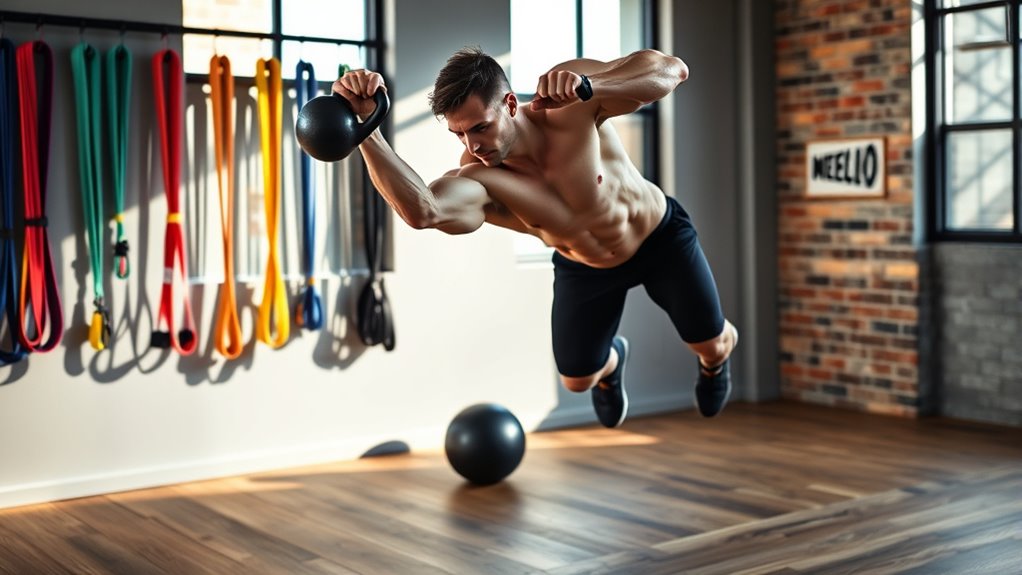

Functional training builds your strength by focusing on movements used in daily life, like lifting, bending, and twisting. It improves your core stability and balance, making everyday tasks easier and safer. By engaging multiple muscles simultaneously and emphasizing proper form, you enhance coordination and resilience. This approach not only reduces injury risk but also boosts confidence in handling routine activities. Keep exploring to discover how tailored exercises can further improve your overall movement and strength.

Turn quiet afternoons into listening time
- Thousands of audiobooks, podcasts and originals
- Listen on your phone, tablet or Echo — also offline
- Cancel anytime
Key Takeaways
- Functional training mimics real-world movements to improve strength, coordination, and efficiency in daily activities.
- It emphasizes core stability, enhancing posture, balance, and injury prevention during everyday tasks.
- Incorporating natural movement patterns like squatting and twisting builds muscular endurance and joint mobility.
- Diverse exercises increase engagement and focus on control, promoting better movement quality over mere lifting.
- Strengthening functional muscles supports resilience, reduces fatigue, and improves overall quality of life.
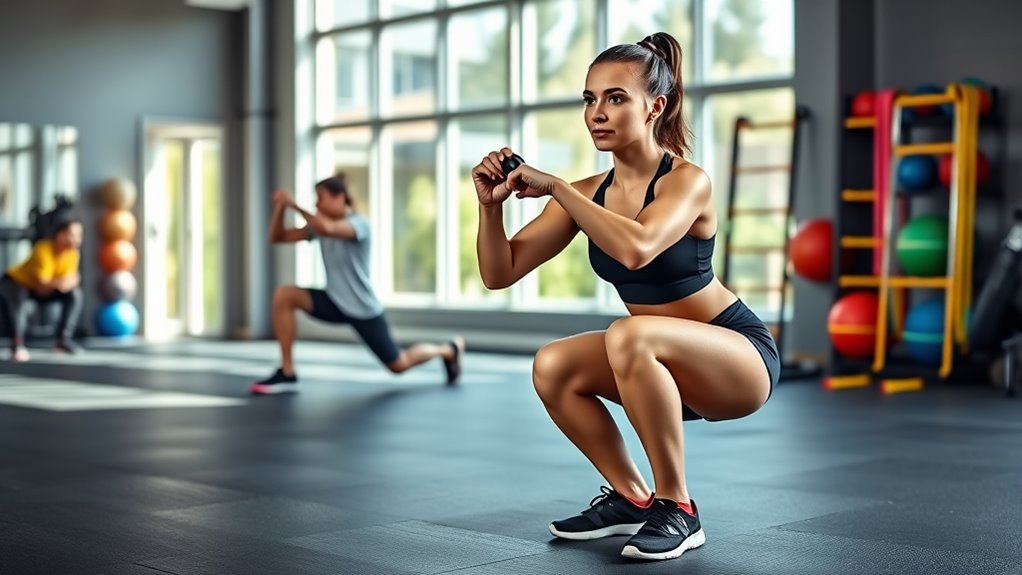
Have you ever wondered how to improve your daily movement and strength? If so, you’re not alone. Many people seek ways to make everyday tasks easier and reduce the risk of injury. Functional training is a highly effective approach because it targets the muscles and movements you actually use in real life. Instead of focusing solely on isolated exercises, it emphasizes movement patterns that mimic daily activities like lifting, bending, twisting, and reaching. This means you’re training your body to be more efficient and resilient during routine tasks, whether you’re carrying groceries, playing with your kids, or doing yard work.
One of the core principles of functional training is developing core stability. Your core isn’t just your abs; it includes muscles around your abdomen, back, hips, and pelvis. When these muscles work together, they provide a solid foundation for all your movements. Improving core stability helps you maintain proper posture and prevents unnecessary strain on your spine and joints. As you enhance your core, you’ll notice better balance enhancement, which is fundamental for preventing falls and maintaining coordination. Balance isn’t just about standing on one leg; it involves stabilizing your body during dynamic activities, and functional training routines are designed to challenge and improve this aspect of your fitness. By engaging in exercises that require you to stabilize while moving, you develop a more integrated sense of balance that translates directly into everyday life.
Developing core stability enhances posture, prevents injury, and improves balance for everyday life activities.
Incorporating functional movements into your workout also means using your body’s natural motion patterns. This can include squatting as if you’re picking up something from the floor, pushing as if opening a heavy door, or twisting as if reaching behind to grab an object. These movements activate multiple muscle groups simultaneously, fostering strength and coordination that are directly applicable to real-world scenarios. With continuous practice, you’ll notice increased muscular endurance and better joint mobility, which are essential for handling everyday stresses and preventing injuries. Jeep Tuning modifications, like suspension upgrades, are an example of how optimizing your vehicle’s performance can enhance off-road capability, similar to how targeted exercises improve functional strength in your body.
Furthermore, functional training tends to be engaging because it involves varied movements that keep your workout interesting. It encourages you to move more naturally, focusing on control and proper form rather than just lifting heavy weights. Over time, this approach helps you build a balanced physique, emphasizing functional strength rather than just aesthetics. As you progress, you’ll find yourself more confident in your ability to perform daily activities, reducing fatigue and improving overall quality of life. In essence, by prioritizing core stability and balance enhancement through functional movements, you equip your body to handle whatever life throws at you with greater ease and resilience.
Products Worth Considering
Withings Sleep Under-Mattress Sleep Tracking Pad

Levoit Core 600S-P Smart Air Purifier for Large Rooms

Blueair Blue Pure 511i Max Air Purifier
As an affiliate, we earn on qualifying purchases.
Frequently Asked Questions
Can Functional Training Help With Injury Recovery?
Yes, functional training can help with injury recovery by incorporating rehabilitation techniques that focus on restoring movement and strength. It emphasizes mobility enhancement, allowing you to regain flexibility and improve joint stability. By targeting specific muscle groups and movements used in daily activities, functional training speeds up recovery and reduces the risk of future injuries, making it an effective approach for returning to full strength safely.
How Often Should I Incorporate Functional Exercises?
You should incorporate functional exercises 2 to 3 times a week, balancing exercise frequency with your overall workout scheduling. This approach allows you to build strength steadily without overtraining. Consistency is key, so aim for regular sessions that target real-life movements. Adjust the frequency based on your progress and how your body responds, ensuring you stay safe and effective in improving your daily activity performance.
Is Functional Training Suitable for Seniors?
Yes, functional training is suitable for seniors when tailored with age-appropriate exercises. It helps improve balance, which reduces fall risk, and enhances mobility for daily activities. You should focus on exercises that match your fitness level, gradually increasing intensity. Always consult your healthcare provider before starting, and work with a trainer if possible. This approach guarantees safe, effective workouts that support your overall strength and independence.
What Equipment Is Needed for Effective Functional Workouts?
For effective functional workouts, you mainly need equipment essentials like resistance bands, dumbbells, stability balls, and a step or platform. These tools enhance workout versatility, allowing you to perform a wide range of movements that mimic daily activities. They help improve strength, balance, and coordination. Keep your equipment simple and accessible, so you can easily incorporate functional exercises into your routine at home or the gym.
Can Beginners Safely Start With Functional Training?
Yes, you can safely start with functional training as a beginner. Focus on proper form to prevent injuries and gradually increase workout variation to challenge your muscles. Start with simple movements and light weights or bodyweight exercises, listening to your body. As you gain confidence and strength, you can add more complex exercises. Consistency and proper technique are key to a safe and effective functional training journey.
Conclusion
By embracing functional training, you’re forging a sturdy bridge between your workouts and everyday life. Each move you master adds a brick to your foundation of strength, making daily tasks feel like a gentle walk rather than a mountain climb. Keep building with purpose, and watch your body become a well-oiled machine ready to conquer whatever life throws your way. With every session, you’re sculpting a resilient core that stands tall through life’s twists and turns.