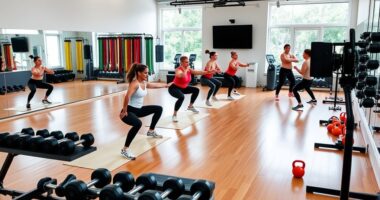

Slowing down your lifts helps you focus more deeply on each movement, making it easier to engage the correct muscles and maintain proper form. It enhances your awareness of joint alignment and tension, leading to better technique and stronger results over time. Additionally, controlled reps improve your breath control and stability, preventing injury and fostering mental resilience. Keep exploring how mindful pacing can transform your training—future insights will help you maximize your progress even further.

Turn quiet afternoons into listening time
- Thousands of audiobooks, podcasts and originals
- Listen on your phone, tablet or Echo — also offline
- Cancel anytime
Key Takeaways
- Slowing down lifts enhances focus, allowing better muscle engagement and precise technique for more effective strength development.
- Controlled reps improve breath management, increasing stability and reducing injury risk during weight training.
- Mindful pacing helps identify weaknesses, optimize muscle activation, and promote consistent, quality movement.
- Deliberate lifts cultivate patience and discipline, training the nervous system for stronger, more efficient muscle recruitment.
- Slower, mindful workouts support mental well-being, reduce stress, and foster sustainable, injury-free training habits.

Mindful strength training combines physical effort with focused awareness, helping you connect more deeply with each movement. When you slow down your lifts, you create space to hone your breath control and sharpen your mental focus. Instead of rushing through reps, you pay close attention to how your body feels during each phase of the movement. This heightened awareness allows you to engage the right muscles more effectively and reduces the risk of injury. By consciously controlling your breath—inhale during the eccentric phase and exhale during the concentric—you enhance stability and power while maintaining calmness under pressure. Breath control becomes an anchor that keeps your mind grounded, preventing distraction and fostering a sense of control over your workout.
As you slow down, you gain the opportunity to observe subtle muscle engagements and joint alignments that often go unnoticed at higher speeds. This deliberate pace shifts your focus inward, making your mental focus a crucial component of each lift. Instead of mindlessly moving through the motions, you become an active participant in your strength training. This mental clarity helps you identify areas of tension or weakness, so you can adjust your form in real-time. The result is a more efficient workout that targets muscles more precisely, leading to better strength gains over time.
Slower lifts also allow you to maximize the benefits of each repetition. When you lift with control, you’re not just moving weight from point A to point B—you’re building a deeper connection with your body. This connection makes your workouts more intentional, which can boost motivation and consistency. Furthermore, the process encourages patience and discipline, essential qualities for long-term progress. With each controlled rep, you’re training your nervous system to recruit muscles more effectively, translating to increased strength and stability.
Practicing mindful strength training also cultivates a more positive relationship with your body. As you focus on breath control and mental presence, you learn to listen to your body’s signals. This awareness helps prevent overtraining and burnout, promoting sustainable habits. The slower pace offers a chance to breathe deeply, relax tense muscles, and reset mentally between sets. Over time, this mindfulness approach transforms your workouts into not just physical exertion but also a form of active meditation that nourishes both body and mind. Ultimately, by integrating breath control and mental focus into your slower lifts, you create a more mindful, effective, and sustainable strength training practice.
mindful strength training weights
As an affiliate, we earn on qualifying purchases.
As an affiliate, we earn on qualifying purchases.
Frequently Asked Questions
Can Mindful Strength Training Prevent Injuries More Effectively?
Yes, mindful strength training can prevent injuries more effectively. By focusing on movement control, you become more aware of your form and technique, reducing the risk of strain or improper execution. Slower lifts allow you to engage muscles properly and listen to your body’s signals. This deliberate approach promotes injury prevention by ensuring safe, controlled movements, helping you build strength while minimizing the chances of accidents or overuse injuries.
How Does Slower Lifting Impact Muscle Hypertrophy?
Gentle pacing enhances your muscle hypertrophy by allowing you to deepen muscle recruitment and maximize metabolic stress. When you lift more slowly, you engage fibers more thoroughly, increasing tension and fatigue. This deliberate tempo fosters greater muscle growth, as it encourages sustained tension and stimulates anabolic processes. By slowing down, you give your body the chance to adapt more effectively, leading to improved results over time.
Is Mindful Training Suitable for Advanced Athletes?
Yes, mindful training suits advanced athletes because it enhances mental focus, helping you push through plateaus. By emphasizing slower lifts, you can refine your technique, leading to better training progression. This approach keeps you engaged and prevents burnout, allowing you to prioritize quality over quantity. As an experienced athlete, incorporating mindfulness into your routine can optimize your performance and help you achieve new strength levels more effectively.
What Equipment Is Best for Slow, Mindful Lifts?
Like a sculptor chiseling marble, your equipment selection enhances slow, mindful lifts. Use a sturdy barbell or dumbbells for controlled movements, ensuring proper grip techniques. Opt for equipment with a secure grip and smooth motion to maximize focus and safety. Resistance bands can add gentle tension, helping you stay mindful throughout each lift. Prioritize quality, grip comfort, and control to deepen your connection with every movement, boosting your results.
How Long Should Each Mindful Strength Training Session Last?
You should aim for a training duration of 30 to 45 minutes for mindful strength training. Keep your session structure focused on quality over quantity, dedicating time to slow, controlled lifts and mindful breathing. This approach maximizes muscle engagement and mental focus. Stick to this timeframe to prevent fatigue, maintain proper form, and guarantee each session remains effective and enjoyable, helping you build strength with mindfulness.
slower lifting workout equipment
As an affiliate, we earn on qualifying purchases.
As an affiliate, we earn on qualifying purchases.
Conclusion
By slowing down your lifts and focusing on each movement, you can improve strength and reduce injury risk. Studies show that mindful training can increase muscle activation by up to 30%, making every rep more effective. So, next time you hit the gym, remember that taking your time isn’t just about safety; it’s about maximizing results. Embrace slower, more deliberate lifts, and watch your strength grow faster than you imagined.
controlled reps resistance bands
As an affiliate, we earn on qualifying purchases.
As an affiliate, we earn on qualifying purchases.
breath control fitness accessories
As an affiliate, we earn on qualifying purchases.
As an affiliate, we earn on qualifying purchases.
Fall Picks
fall essentials
As an affiliate, we earn on qualifying purchases.