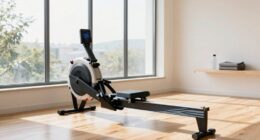
The biggest mistake beginners make when rowing at home is neglecting proper posture, which leads to ineffective workouts and increases injury risk. Instead of maintaining a straight back and engaging your core, you might slouch or lean too far back, reducing efficiency. Rushing through strokes or overusing your arms also hampers progress. If you fix these common errors and focus on proper form, you’ll see better results and stay safer—keep going to find out how to improve your technique.
Key Takeaways
- Beginners often rush through strokes, sacrificing proper form and increasing injury risk.
- Overusing arms instead of engaging legs and core reduces workout effectiveness.
- Poor posture, such as slouching or hunching, strains the back and diminishes efficiency.
- Neglecting proper equipment setup leads to misalignment and improper technique.
- Failing to focus on controlled breathing disrupts rhythm and decreases stamina.

Seenelling Rowing Machine Adjustable Foot Straps Compatible With Concept 2 Rower Fitness, 4 Pack Replacement Reusable Straps
Versatility for Various Models: Our replacement foot straps are compatible with Concept 2 Model D & E. Please…
As an affiliate, we earn on qualifying purchases.
As an affiliate, we earn on qualifying purchases.
What Are the Most Common Mistakes Beginners Make When Rowing at Home?

When you start rowing at home, it’s easy to fall into common mistakes that can hinder your progress and even cause injury. One of the most frequent errors involves poor rowing posture, like slouching or leaning too far back, which strains your back and reduces efficiency. Many beginners also neglect proper breathing techniques, holding their breath or breathing shallowly instead of syncing breath with movement. This can lead to fatigue and decreased stamina. Additionally, rushing through strokes or pulling with your arms rather than engaging your legs and core lessens workout effectiveness and increases the risk of injury. Paying attention to maintaining a straight back, engaging your core, and practicing steady, deep breathing will help you avoid these pitfalls and develop a safe, effective rowing routine. Understanding proper technique is essential for maximizing your workout and preventing injury. Being mindful of your rowing form and making adjustments as needed can greatly improve your overall performance and safety. Incorporating core engagement exercises into your routine can further enhance your stability and power during each stroke. For example, controlling the ear wax odor in your training environment can improve focus and comfort, making your sessions more productive. Additionally, choosing the right fake fireplace options for relaxation can create a calming atmosphere after intense workouts, promoting recovery and mental well-being.
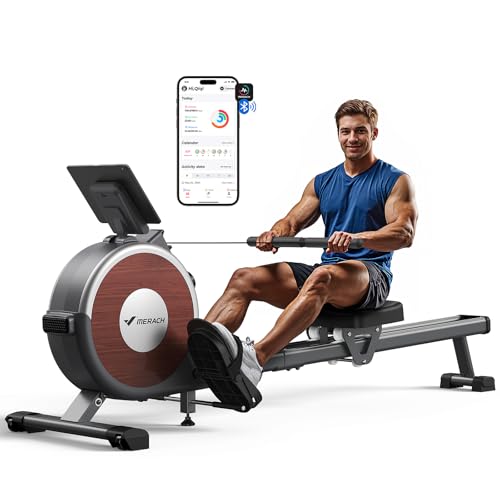
Merach Rowing Machine, Magnetic Rower Machine for Home, 16 Levels of Quiet Resistance, Dual Slide Rail with Max 350lb Weight Capacity, App Compatible with LCD Monitor, Q1S
MERACH APP: Our App offers various courses and programmed exercises for you, Taking the courses can bring your…
As an affiliate, we earn on qualifying purchases.
As an affiliate, we earn on qualifying purchases.
Why Proper Rowing Technique Is Crucial for Safety and Effectiveness
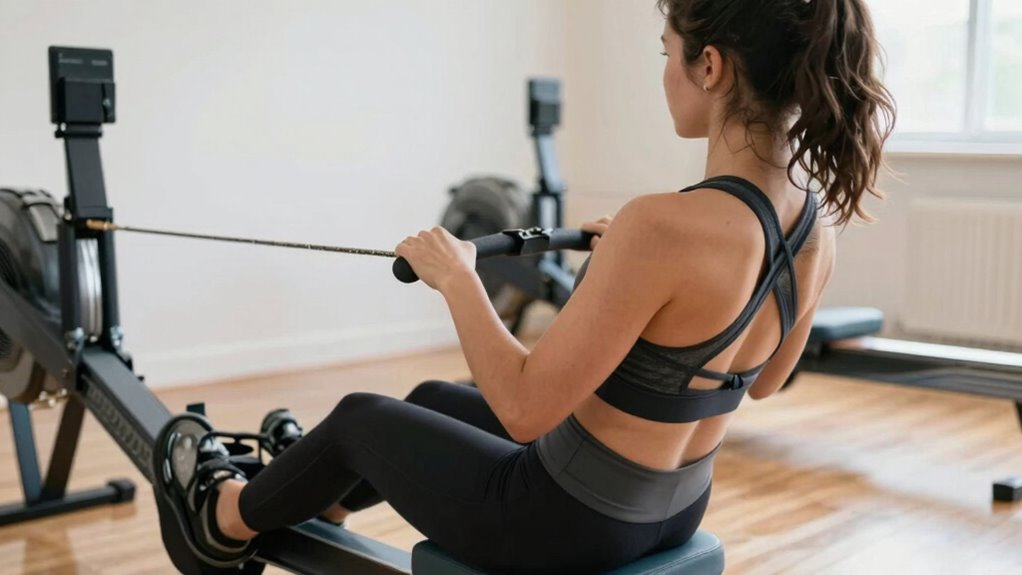
Using proper rowing form helps prevent injuries and keeps you safe during your workout. It also makes your exercise more efficient, so you get better results in less time. When you focus on technique, you’ll enjoy a safer, more effective rowing experience.
Prevents Injury Risks
Proper rowing technique is essential because it considerably reduces the risk of injury. Maintaining correct rowing posture helps protect your back, shoulders, and knees from strain. Focus on keeping your spine straight and engaging your core throughout the movement. Proper equipment adjustments, such as setting the foot straps and seat height, guarantee your body aligns correctly and reduces unnecessary stress. If your rowing posture is off or equipment isn’t fitted properly, you risk overextending or putting undue pressure on joints and muscles. Taking the time to get these details right minimizes injury chances and allows you to train safely and effectively. Always prioritize correct posture and equipment setup before starting, so you can enjoy rowing without setbacks or pain. Proper equipment setup is crucial for achieving optimal performance and safety. Additionally, understanding correct rowing techniques helps ensure you perform each stroke efficiently and safely. Being aware of ergonomic principles can further enhance your safety and comfort during workouts. Incorporating proper biomechanics into your routine can also help prevent repetitive strain injuries and improve overall efficiency.
Enhances Workout Efficiency
Maintaining correct rowing form maximizes the effectiveness of your workout by ensuring you engage the right muscles and generate peak power. Proper rowing posture and equipment setup are key to this. When your rowing posture is correct, you minimize wasted effort and improve muscle activation. To optimize efficiency:
- Adjust your foot straps and seat for a comfortable, secure fit.
- Keep your back straight and core engaged throughout the stroke.
- Drive with your legs first, then lean back slightly, and finish with your arms.
- Return smoothly to the starting position, maintaining a steady rhythm.
- Using a properly adjusted rowing machine can help support correct form and prevent injury, especially since correct ergonomic setup enhances safety and performance.

Rowing Machines for Home, MOSUNY Magnetic Rowing Machine, 16-Level Adjustable Resistance, 350 lb Weight Capacity, Upgraded Dual Slide Rails with Data Display Screen
16-Level Powerful Magnetic:MOSUNY rowing machine is equipped with a high-quality magnetic control system and an upgraded 16-level adjustable…
As an affiliate, we earn on qualifying purchases.
As an affiliate, we earn on qualifying purchases.
How to Recognize Poor Rowing Form During Your Workout?

If you’re not paying close attention during your rowing session, it’s easy to overlook signs of poor form. Watch for slouched shoulders or a hunched back, which indicate posture correction is needed. Your back should stay straight, and your core engaged throughout the stroke. Pay attention to your breathing techniques—if you find yourself holding your breath or breathing irregularly, it can affect your rhythm and efficiency. Proper breathing helps maintain stamina and control. Also, notice if your arms are overusing momentum instead of engaging your legs and core; this is a clear sign of poor form. By staying mindful of your posture correction and breathing techniques, you can identify these issues early and maintain proper technique during your workout. Recognizing the importance of good technique can help prevent injuries and improve your overall rowing performance. Additionally, understanding the fundamentals of rowing biomechanics can further enhance your efficiency and reduce the risk of strain. Paying attention to form cues during your session can help you develop better habits and maximize the benefits of your workout. Developing a strong foundation in proper technique is essential for consistent progress and injury prevention. Being aware of spiritual connections like twin flame signs can also help you stay motivated and aligned with your personal growth journey beyond fitness.

Sunny Health & Fitness Smart Compact Adjustable Rowing Machine, 12 Levels Adjustable Resistance, Complete Body Workout, Connect via Bluetooth with Exclusive SunnyFit App – SF-RW1205SMART
【FULL BODY WORKOUT】Complete body workout that engages all major muscle groups with the smooth, hydraulic resistance that targets…
As an affiliate, we earn on qualifying purchases.
As an affiliate, we earn on qualifying purchases.
A Step-by-Step Guide to Fixing Your Rowing Technique
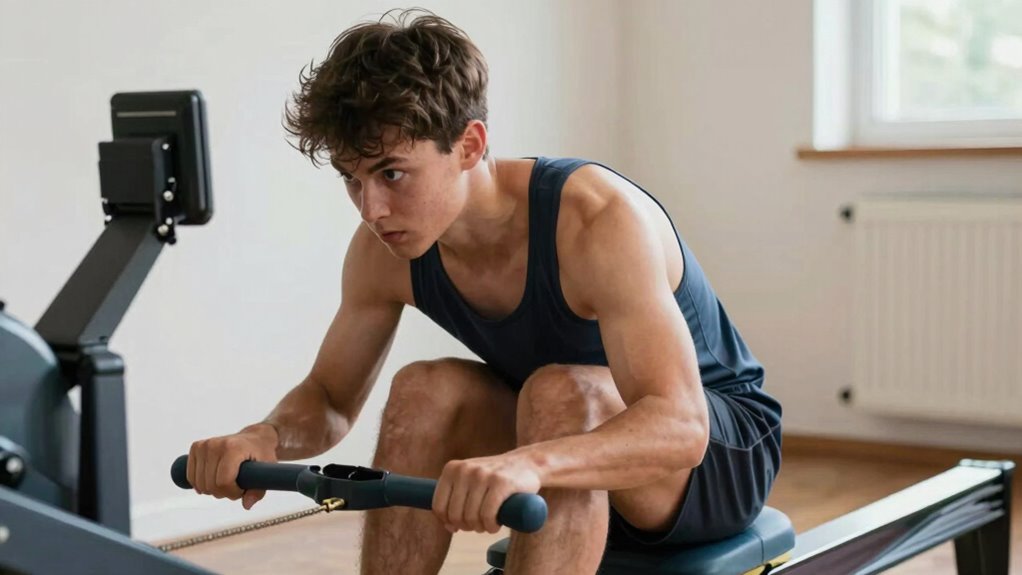
To improve your rowing technique, focus on maintaining proper body positioning and executing each stroke correctly. Pay attention to how you set up your posture and guarantee your movements are smooth and controlled. By mastering these key points, you’ll make your workouts more effective and reduce the risk of injury. Incorporating solar energy solutions and creative uses can also help you analyze and refine your form through technology. Utilizing technology tools can provide real-time feedback to make immediate adjustments and ensure your technique remains optimal. Additionally, paying attention to ergonomic principles can help you adopt more natural and sustainable rowing motions for long-term performance. Understanding ownership structures and how they influence motivation can further enhance your commitment to consistent training and improvement.
Proper Body Positioning
Getting your body positioning right is essential because it sets the foundation for an efficient and safe rowing stroke. Focus on posture awareness and core engagement to maintain proper alignment. To do this:
- Keep your back straight and shoulders relaxed, avoiding slouching.
- Engage your core muscles to support your spine and stabilize your body.
- Maintain a slight forward lean from the hips, not the waist, during the drive.
- Confirm your knees are slightly bent and tracking straight as you slide on the seat.
Correct Stroke Execution
Mastering proper stroke execution is essential for getting the most out of your rowing workout and preventing injury. To do this, focus on maintaining correct rowing posture throughout each phase. Start by leaning slightly back at the finish, engaging your core, and keeping your back straight. When you slide forward, guarantee your knees drive the movement, not your arms. Equipment adjustments are crucial—set your foot straps securely and adjust the footrests to match your height for ideal posture. During the drive, push through your legs, then lean back slightly, and finally pull the handle toward your lower ribs. Reverse this sequence during recovery. Consistently refining your technique and making small equipment tweaks help you achieve smooth, efficient strokes and reduce the risk of strain. Paying attention to equipment calibration, such as seat positioning, can also improve your form and overall performance.
Top Drills and Exercises to Improve Your Rowing Form
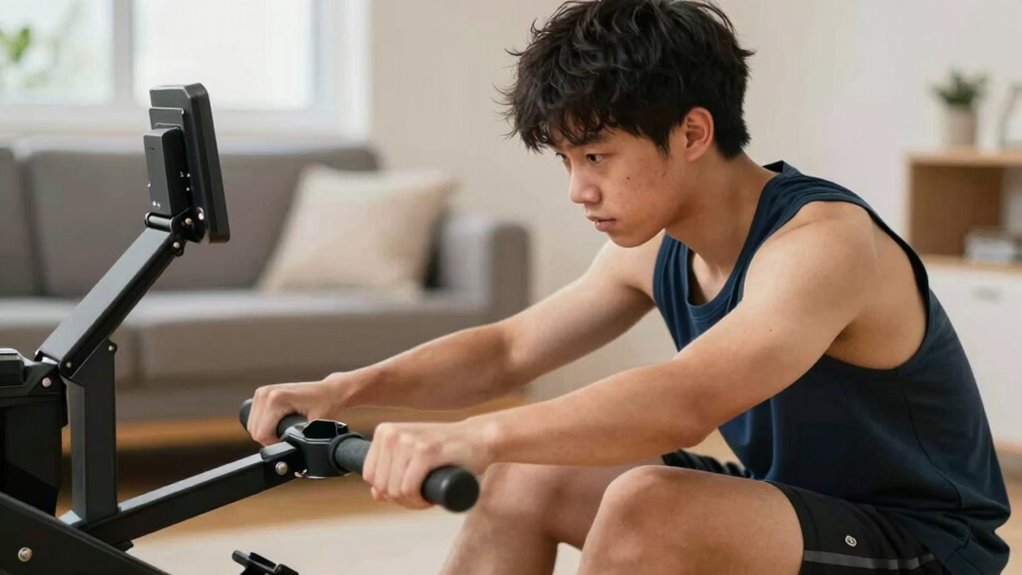
Improving your rowing form at home starts with targeted drills and exercises that build strength, coordination, and technique. Focus on maintaining proper rowing posture and practicing breathing techniques to maximize efficiency. Here are top drills to help you improve:
- Pause Drills: Row slowly and pause at the catch, focusing on maintaining good posture and controlled breathing.
- Leg Drive Focus: Emphasize powerful leg drive while keeping your back straight and engaging core muscles.
- One-Arm Rows: Use one arm at a time to develop symmetry, paying attention to posture and steady breath.
- Breath Control Exercises: Practice slow, deep inhales and exhales to improve breathing rhythm during your strokes.
These drills reinforce proper form and help you develop consistency and strength.
Common Bad Habits in Rowing and How to Correct Them
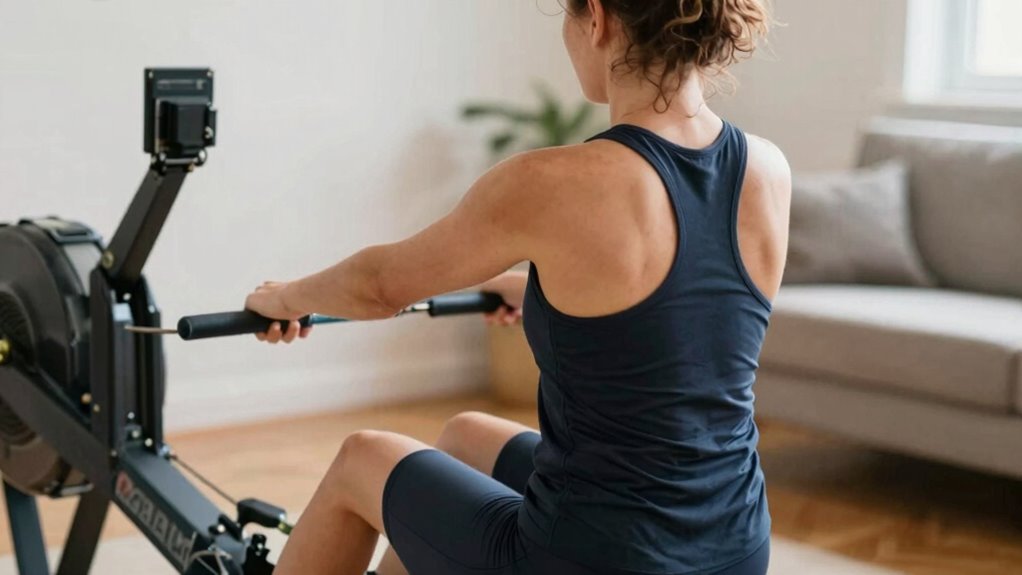
Many beginners develop bad habits in rowing that can hinder progress and increase the risk of injury. One common mistake is holding your breath or not breathing properly, which can cause fatigue and reduce performance. Focus on breathing techniques that synchronize your breath with your stroke—inhale during the recovery and exhale during the drive. Another habit is neglecting equipment adjustments; using the wrong foot straps or seat position can lead to poor posture and inefficient strokes. Regularly check and fine-tune your equipment to guarantee proper alignment. These bad habits often stem from rushing or lack of awareness, but correcting them improves comfort, efficiency, and safety. Developing good breathing techniques and maintaining proper equipment adjustments are essential for consistent, injury-free rowing at home.
Tools and Resources to Help You Maintain Proper Rowing Form
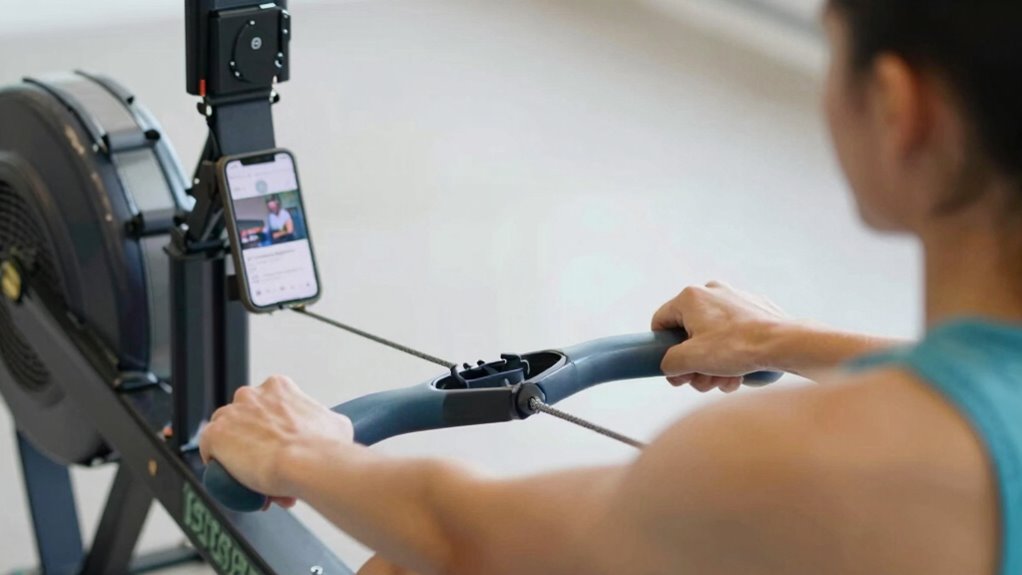
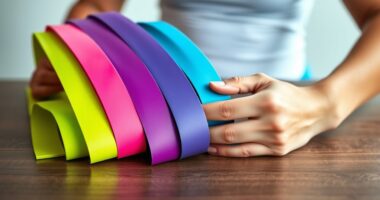
Using the right tools and resources can make it much easier to maintain proper rowing form at home. Rowing accessories like adjustable foot straps and quality resistance bands help you stay aligned and focused. Motivation techniques such as tracking your progress with apps or setting achievable goals keep you committed. Here are some key resources:
Using the right tools and motivation techniques ensures proper form and consistent progress during home rowing workouts.
- Form-focused mirrors or video tutorials to check your posture
- Rowing accessories like seat cushions and grip pads for comfort
- Fitness apps that provide real-time feedback and performance tracking
- Online coaching programs or virtual classes for expert guidance
These tools help you stay motivated and guarantee correct technique, reducing the risk of bad habits and injury. Incorporate them into your routine for consistent, effective training at home.
The Benefits of Mastering Proper Rowing Technique

Mastering proper rowing technique opens a range of benefits that can greatly enhance your workout. When you focus on maintaining good rowing posture, you reduce the risk of injury and improve efficiency. Proper posture ensures your muscles work together smoothly, making each stroke more effective. Additionally, mastering breathing techniques helps you stay energized and maintain stamina throughout your session. When you breathe correctly—inhale during the recovery and exhale during the drive—you optimize oxygen flow and reduce fatigue. These elements work together to maximize your workout results, improve your overall fitness, and build strength more safely. Incorporating ergonomics tips can further support your form and comfort during rowing sessions. Understanding the importance of proper equipment setup can also prevent strain and ensure you get the most out of each session. Paying attention to technique can significantly improve your efficiency and prevent common mistakes that beginners often make. By consistently practicing proper technique, you’ll enjoy a more comfortable, productive rowing experience that encourages long-term progress.
Frequently Asked Questions
How Can I Prevent Back Pain While Rowing at Home?
To prevent back pain during indoor rowing, guarantee your rowing equipment is set up properly, with the foot straps secure and the monitor at eye level. Focus on maintaining a strong core, engaging your abs, and avoiding excessive leaning back. Keep your back straight throughout the stroke, especially during the drive and recovery phases. Proper form minimizes strain, helping you enjoy indoor rowing without discomfort or injury.
What Are the Signs of Overusing Incorrect Rowing Form?
You notice signs of overusing incorrect rowing form when you feel persistent back pain, fatigue, or discomfort in your shoulders and arms. Poor rowing biomechanics often lead to these issues, especially if your equipment isn’t properly adjusted. If you experience these symptoms, it’s essential to revisit your form, ensuring your equipment adjustments support correct posture and movement. Proper technique prevents strain and helps you row efficiently without overdoing it.
How Often Should I Check My Rowing Technique?
You should check your rowing technique regularly, ideally after each session or every few workouts, to guarantee proper form. Use your rowing equipment to monitor your posture and movement. Incorporate technique drills into your routine to identify and correct mistakes early. Watching yourself in a mirror or recording your sessions helps spot errors and refine your form, preventing injury and improving efficiency. Consistent checks keep you on the right track.
Are There Specific Warm-Up Routines for Rowing?
Imagine you’re setting sail in ancient times—your warm-up is just as vital. You should do specific rowing warm-up routines like light cardio, dynamic stretches, and technique drills to prepare your muscles and refine your form. Use proper rowing gear, such as a rowing machine or resistance bands, to enhance your warm-up. These routines boost your technique, prevent injuries, and guarantee you get the most out of every workout.
Can Poor Form Affect My Rowing Endurance?
Poor form can definitely impact your rowing endurance. When your technique isn’t consistent, you might not engage the right muscles properly, leading to muscle fatigue more quickly. Over time, this fatigue can slow you down and reduce your stamina. Maintaining good technique consistency helps make certain you’re using your muscles efficiently, preventing fatigue and allowing you to row longer and stronger without risking injury or burnout.
Conclusion
Mastering proper rowing form isn’t just about better workouts—it can reduce your injury risk by up to 80%. As you practice, stay vigilant for common mistakes like overreaching or poor posture. Consistent effort and using the right drills will make a huge difference. Remember, nearly 60% of beginners struggle with technique initially, so don’t get discouraged. Keep refining your form, and you’ll reveal the full benefits of rowing safely and effectively.