
TL;DR

Turn quiet afternoons into listening time
- Thousands of audiobooks, podcasts and originals
- Listen on your phone, tablet or Echo — also offline
- Cancel anytime
Tai Chi teacher Brian Thompson shared a four-part routine designed to take about five minutes, combining self-massage, breathing and slow movements. He says the practice may help ease stiffness and support a calmer, more focused start to the day; the source provides no study results or measured outcomes for this specific routine.
Tai Chi teacher Brian Thompson has shared a four-part morning routine that takes about five minutes, combining self-massage, controlled breathing and slow movements. In a report published by Fit&Well, Thompson said a morning practice can help people wake up stiff joints and begin the day with a calmer, more focused mindset; those benefits are his description, not measured results reported for this routine.
The sequence begins seated, either on a chair or at the edge of a bed. Practitioners massage the neck, arms, midsection and legs, then cup their hands and gently pat the shoulders, chest, torso and legs. Thompson’s instructions call for a relaxed upright posture and soft wrists, so the tapping remains gentle.
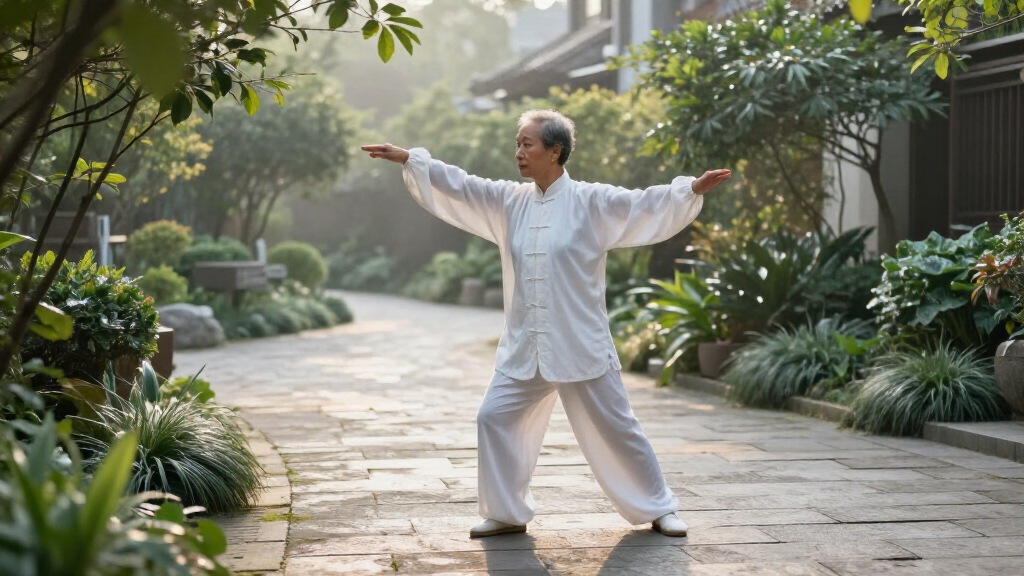
The next movement, called “lifting water,” is done standing with feet about shoulder-width apart. Raise relaxed arms to shoulder height while inhaling, then turn the palms forward and lower the arms slowly while exhaling through the nose. The report suggests three to five repetitions, with knees slightly bent and aligned with the feet.
For “silk reeling,” practitioners shift their weight from side to side while turning the waist and tracing a smooth arc with one hand, then repeat on the other side. The final movement, “gather and release,” involves raising the arms out to the sides and overhead with palms up, then lowering them with palms down in a wave-like motion. Fit&Well presents both movements as slow, continuous actions with soft, unlocked joints.
A Brief Practice for the Start of the Day
The routine offers readers a short, structured way to add gentle movement and attention to breathing to a morning. Its stated purpose is to help people ease into activity rather than rush straight into the day. Thompson says the practice can support a calm, focused mindset and steady breathing, but the report does not cite research testing this particular five-minute sequence or quantify its effects.
That distinction matters because the article combines practical instructions with an expert’s account of potential benefits. The movements can be described as the routine Thompson recommends; claims about reduced tension, improved focus or energy remain attributed benefits, rather than outcomes established by data in the supplied source.
How the Four Movements Fit Together
Tai Chi is described in the report as a mindful movement practice built around slow, intentional exercises. Thompson, identified as a Tai Chi teacher and founder of bnew4life, says it can gently release joint stiffness, muscle tightness and mental stress. The report does not provide further details about his qualifications or cite independent sources for those claims.
The routine moves from seated touch-based movements into standing exercises, progressing from basic body awareness to coordinated arm and weight shifts. Its instructions emphasize relaxed shoulders, a centered stance and nasal breathing. Thompson advises practitioners not to rush, describing the intended pace as smooth and continuous. The supplied material does not specify whether the routine is suitable for every fitness level or address modifications for people with health conditions.
“It works to gently release deep-seated joint stiffness, muscle tightness, and mental stress.”
— Brian Thompson, Tai Chi teacher
Benefits and Adaptations Remain Unspecified
The source does not report a study, clinical assessment or measured outcomes for Thompson’s routine, so the degree to which it reduces tension or improves focus is not established here. It also gives no publication date in the supplied material, and does not say how often people should practice to experience the effects Thompson describes.
The instructions do not cover adaptations for people who find a movement uncomfortable, have limited mobility or have a health condition. The report does not present the routine as medical treatment or give individualized guidance.
Readers Can Follow the Sequence
Fit&Well’s report provides the full sequence for readers who want to try the practice: begin seated with massage and gentle tapping, then move to lifting water, silk reeling and gather and release. Thompson recommends moving slowly and keeping the joints relaxed. The source names no follow-up research, scheduled event or additional milestone, so whether further evidence or guidance will be published is unclear.
Key Questions
How long does the morning Tai Chi routine take?
Thompson describes it as a five-minute practice with four parts: self-massage and body cupping, lifting water, silk reeling, and gather and release.
Who shared the routine?
Brian Thompson, identified by Fit&Well as a Tai Chi teacher and founder of bnew4life, shared the sequence and his reasons for practicing in the morning.
What benefits does Thompson associate with morning Tai Chi?
Thompson says it may help wake stiff joints and support calm focus and steady breathing. The supplied report does not give measured results for this specific routine.
Does the report say how often to do the routine?
No. The report describes the movements and repetition counts for some exercises, but does not set a daily or weekly schedule.
Source: rss
Cold & flu season Picks
humidifiers
As an affiliate, we earn on qualifying purchases.