
TL;DR

Turn quiet afternoons into listening time
- Thousands of audiobooks, podcasts and originals
- Listen on your phone, tablet or Echo — also offline
- Cancel anytime
A 2024 study by researchers at Houston’s Michael E. DeBakey VA Medical Center examined why care transitions for people with dementia can be difficult for families. Its findings, reported by Being Patient on October 19, 2026, highlight the need for caregiver training, dementia-specific guidance and support after discharge.
A 2024 study by researchers at the Michael E. DeBakey VA Medical Center found that transitions from hospital or rehabilitation care can leave family caregivers of people with dementia without enough support to manage care at home. Being Patient reported on the research on October 19, 2026, highlighting the gap between a discharge plan that is medically suitable and one a caregiver can carry out.
The researchers interviewed family caregivers and health professionals, including social workers and geriatrics providers, about transitions from hospital to home, hospital to rehabilitation, and rehabilitation to home. Caregivers were interviewed an average of 18 days after discharge. The report says the study identified areas where these transitions often need more support.
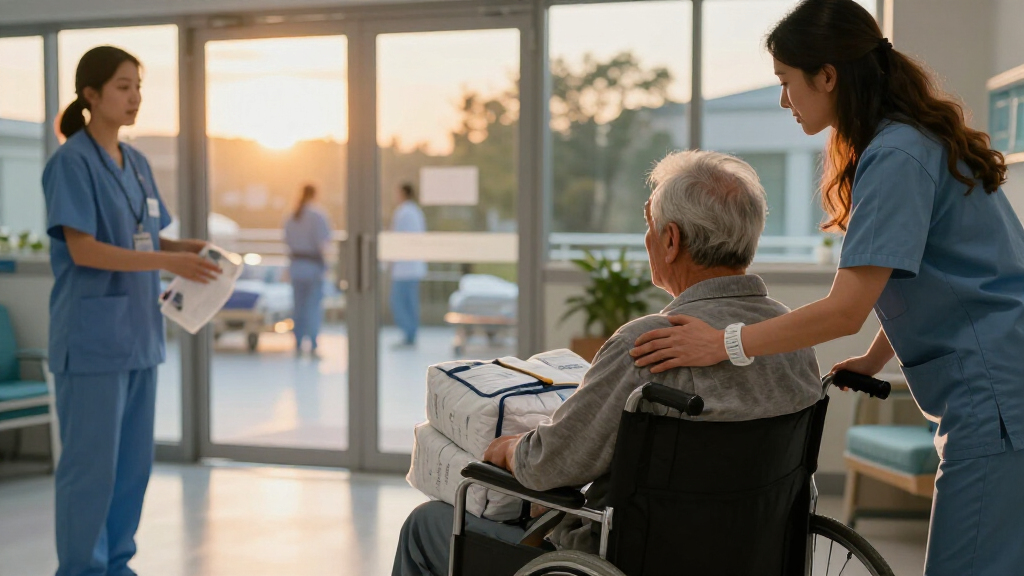
At home, tasks that had been handled by hospital staff may fall to a family caregiver, including medications, meals, mobility, bathing, appointments and safety. The report gives medication refusal as an example of a problem that can arise when discharge instructions do not explain how to respond to a situation involving dementia.
The study’s recommendations include treating caregivers as partners in the care team, giving them dementia-specific information and training, connecting them with home- and community-based services, and offering support after discharge. Flournoy Health Systems CEO Faris Flournoy said discharge planning should account for whether families have the understanding, time, physical ability and resources to follow the plan.
When Discharge Plans Reach Home
The transition matters because a person can be judged medically ready to leave a hospital while the practical work of care shifts quickly to family members. A plan that does not address what a caregiver can realistically manage may leave them unsure how to handle medication changes, mobility needs or signs of a new problem.
The report says hospitalization can raise risks for people with dementia, including falls, delirium and functional decline. It also says that around a third of U.S. adults with dementia are hospitalized each year. Those figures are presented in the source report; it does not provide further detail about the underlying estimate. Better instructions and follow-up could help families understand what to do and when to seek help, while also recognizing caregivers’ own needs.
dementia medication management tools
As an affiliate, we earn on qualifying purchases.
As an affiliate, we earn on qualifying purchases.
The Study Behind the Report
The research focused on care transitions rather than one particular hospital discharge or patient. Researchers held guided conversations with caregivers and health professionals and asked about experiences moving between care settings. The report does not name the study’s journal or provide its full methods, sample size or detailed results.
Being Patient’s report translates the study’s recommendations into practical questions for families. It advises caregivers to clarify what changed during the hospital stay, what must happen next, and which signs should prompt them to seek help. It also recommends reviewing medication instructions, follow-up appointments, fall precautions and any planned home health or therapy support before the transition.
“We have to look beyond whether a discharge plan is medically appropriate and ask whether it is executable at home.”
— Faris Flournoy, CEO of Flournoy Health Systems
home safety devices for dementia patients
As an affiliate, we earn on qualifying purchases.
As an affiliate, we earn on qualifying purchases.
What the Report Does Not Establish
The source article summarizes the study but does not give its sample size, full study citation or detailed findings, so readers cannot assess those aspects from the report alone. It also does not establish how common each specific discharge problem is or whether any particular intervention has been shown to reduce adverse outcomes.
The report’s service examples should not be read as a guarantee that a patient qualifies for home health, hospice or a home health aide. Coverage and eligibility details are not specified, and the article does not describe one patient’s case or a single discharge policy change.
caregiver training kits for dementia
As an affiliate, we earn on qualifying purchases.
As an affiliate, we earn on qualifying purchases.
Questions to Resolve Before Going Home
The report recommends that caregivers ask hospital staff to explain medication names, doses, timing and purpose, including which medicines were added or stopped. If the home medication list differs from the discharge list, or an instruction is unclear, Flournoy advises contacting an appropriate physician, pharmacist or clinician rather than guessing.
Caregivers should also confirm follow-up appointments, fall precautions and whether recommended home health or therapy has been arranged. The report calls for support after discharge, but does not identify a new program, deadline or policy change. It is not clear from the source whether further research or implementation steps are planned.
fall detection systems for seniors
As an affiliate, we earn on qualifying purchases.
As an affiliate, we earn on qualifying purchases.
Key Questions
What did the 2024 study examine?
Researchers at the Michael E. DeBakey VA Medical Center interviewed caregivers and health professionals about transitions between hospital, rehabilitation and home care for people with dementia.
What can caregivers clarify before discharge?
The report advises asking what changed, what needs to happen next and what should prompt a call for help. Caregivers can also review medication instructions, follow-up visits, fall precautions and planned services with the care team.
Does the report say every patient qualifies for home health or hospice?
No. It discusses these services as possible sources of support, but does not set out eligibility rules. Coverage and qualification depend on the patient’s circumstances and should be checked with the provider or insurer.
What is still unknown about the study?
The Being Patient report does not provide the study’s sample size, full citation or detailed results, and it does not quantify how often each kind of transition problem occurs.
Source: rss
Cold & flu season Picks
humidifiers
As an affiliate, we earn on qualifying purchases.