
TL;DR

Turn quiet afternoons into listening time
- Thousands of audiobooks, podcasts and originals
- Listen on your phone, tablet or Echo — also offline
- Cancel anytime
A study in the Journal of the National Cancer Institute found that about 6 in 10 highly frail older breast cancer survivors received no Medicare home health care in a given year. The research measured use, not eligibility, and did not include Medicare Advantage; traditional Medicare home health coverage is limited to people who are homebound and need skilled care.
A study published in the Journal of the National Cancer Institute found that about 6 in 10 highly frail breast cancer survivors aged 66 or older had no Medicare home health care in a given year. The finding points to a possible gap between survivors’ support needs and the services they use, although the study measured care use—not whether participants qualified for coverage.
Researchers examined 347,953 survivor-years involving 134,410 women aged 66 and older with invasive breast cancer. The women were between two and 10 years past diagnosis, and the records covered 2017 to 2020. The team linked cancer registry data with Medicare enrollment and claims, along with assessments completed when home health care begins.
About 7% of survivors were classified as highly frail in a given year. Roughly 40% of that group used Medicare home health care, compared with 11% of survivors overall. Frailty was estimated using claims-based information, including diagnoses and medical equipment, calibrated against in-home assessment data. The researchers applied the score to survivors whether or not they had received a home health assessment.
The analysis did not include Medicare Advantage enrollees. It also did not establish whether people who went without home health care wanted it, were eligible for it, or received assistance through other sources. The results describe patterns of use in the study population, rather than proving that every highly frail survivor had an unmet need.
Where Medicare Home Care Falls Short
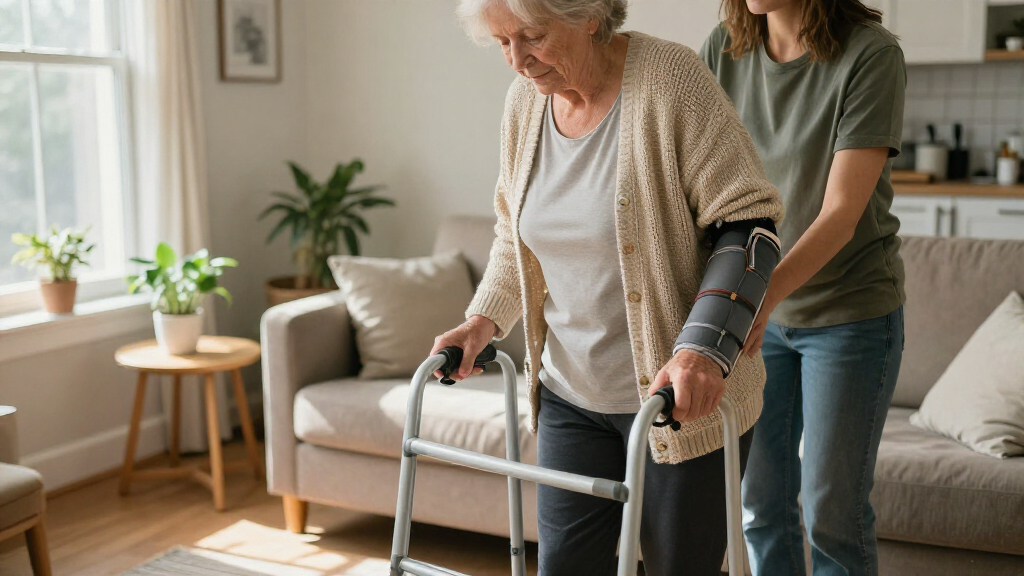
The findings matter because frailty can make everyday activities difficult, including walking, bathing and dressing. For survivors living with these limitations, support at home may affect their ability to manage safely and independently. Lead author Dr. Xuanzi Shirley Qin said that, without support, frail people may face greater risks of falls or hospital stays; the study itself did not measure whether missing home health care caused either outcome.
Traditional Medicare’s home health benefit is limited: coverage generally requires a person to be homebound and need skilled care. The source report says personal care is covered only when tied to a skilled need. That means someone who mainly needs help with bathing, dressing or other personal tasks—or who does not meet the homebound requirement—may not qualify for the benefit, even if they have substantial functional limitations.
The study therefore adds evidence to discussion of whether survivorship care and Medicare benefits address the needs of older adults after cancer treatment. It does not establish that changing coverage would reduce falls, hospitalizations or costs. Those questions would require further research.
home care personal assistance for seniors
As an affiliate, we earn on qualifying purchases.
As an affiliate, we earn on qualifying purchases.
How Researchers Defined Frailty
The researchers, including Qin and Dr. Jie Chen of the University of Maryland School of Public Health, studied women with invasive breast cancer who were at least 66 years old and two to 10 years past diagnosis. The team used records from the Surveillance, Epidemiology, and End Results cancer registry program linked to Medicare data. The study was published in 2026 under the title “Claims-based frailty, dual eligibility, and potential unmet home-health needs in older breast cancer survivors.”
In this research, frailty referred to accumulated health problems and functional limitations, such as difficulty walking or dressing, falls, memory problems, incontinence and exhaustion. The researchers developed a claims-based score and calibrated it using information from the Outcome and Assessment Information Set, a set of assessments made when home health care starts. They then used the score to assess the wider survivor group, including people who had never been assessed for home care.
The researchers reported that women six to 10 years after diagnosis were as frail as women two to five years after diagnosis. Qin said this pattern suggests that needs may reflect aging as well as cancer treatment. The study does not isolate the causes of frailty for individual survivors.
“In a given year, about 6 in 10 highly frail survivors had none.”
— Dr. Xuanzi Shirley Qin, lead author and assistant professor at the University of Maryland School of Public Health
As an affiliate, we earn on qualifying purchases.
Coverage and Unmet Needs
The study shows that most highly frail participants did not use Medicare home health care in a given year, but it does not show how many were eligible or how many lacked all forms of assistance. Researchers measured utilization, not entitlement to services, unmet demand, or the reasons care was not used. Some participants may have received support from family, other programs or paid caregivers; the supplied report does not quantify those possibilities.
Because the data excluded Medicare Advantage, the results cannot establish home health use among all older adults with Medicare. The study also covers records from 2017 through 2020, so it does not directly describe current use. The report does not provide a policy change, a new coverage rule or evidence that a particular intervention would improve health outcomes.
fall prevention equipment for seniors
As an affiliate, we earn on qualifying purchases.
As an affiliate, we earn on qualifying purchases.
Screening and Coverage Proposals
Qin called for routine frailty screening during survivorship care and argued that Medicare should cover personal care at home for frail survivors. The source report says some clinics are beginning to screen, but survivorship guidelines do not yet call for it. It does not identify a formal guideline revision or a Medicare policy proposal with a timetable.
Further research could examine eligibility, support received outside Medicare, and whether home assistance changes outcomes such as falls or hospital stays. For now, the study provides a measure of home health use in an older, fee-for-service Medicare population and a basis for discussion among researchers and policymakers; no coverage change is reported.
mobility and support devices for frail elderly
As an affiliate, we earn on qualifying purchases.
As an affiliate, we earn on qualifying purchases.
Key Questions
What did the study find?
About 6 in 10 highly frail older breast cancer survivors had no Medicare home health care in a given year. Around 40% of survivors classified as highly frail used the service.
Who was included in the research?
The study covered 134,410 women aged 66 or older with invasive breast cancer, two to 10 years after diagnosis. Its data came from 2017 to 2020.
Does the study show that these women were denied care?
No. The researchers measured whether home health care was used, not whether participants qualified for it or were denied. The study also does not establish whether participants received help from other sources.
Why might a frail person not receive Medicare home health care?
Traditional Medicare generally limits home health coverage to people who are homebound and need skilled care. Someone who mainly needs help with personal care may not meet those conditions, according to the report.
Did the study include Medicare Advantage or announce a coverage change?
No. The research excluded Medicare Advantage, and the report described no new Medicare coverage rule. The study author recommended broader personal-care coverage, but that is a policy recommendation.
Source: rss
Halloween Picks
halloween
As an affiliate, we earn on qualifying purchases.