
AI enhances your hormonal health by offering personalized insights through sophisticated algorithms that analyze your daily data, like hormone levels, symptoms, and lifestyle factors. It detects subtle patterns and early signs of imbalances, allowing you to take proactive steps such as adjusting your diet or managing stress. This technology constantly learns from your input, refining recommendations over time. If you’re curious about how AI can transform your health journey, there’s more to discover ahead.

Turn quiet afternoons into listening time
- Thousands of audiobooks, podcasts and originals
- Listen on your phone, tablet or Echo — also offline
- Cancel anytime
Key Takeaways
- AI analyzes daily hormonal data to provide personalized insights and detect subtle patterns for better health management.
- Customized algorithms learn from individual inputs to improve accuracy and tailor health recommendations over time.
- Continuous monitoring of hormones like estrogen, cortisol, and insulin helps identify imbalances proactively.
- AI-driven tools turn complex hormonal information into actionable steps, enhancing overall well-being.
- Real-time feedback and adaptive strategies empower users to make informed decisions and optimize hormonal health.
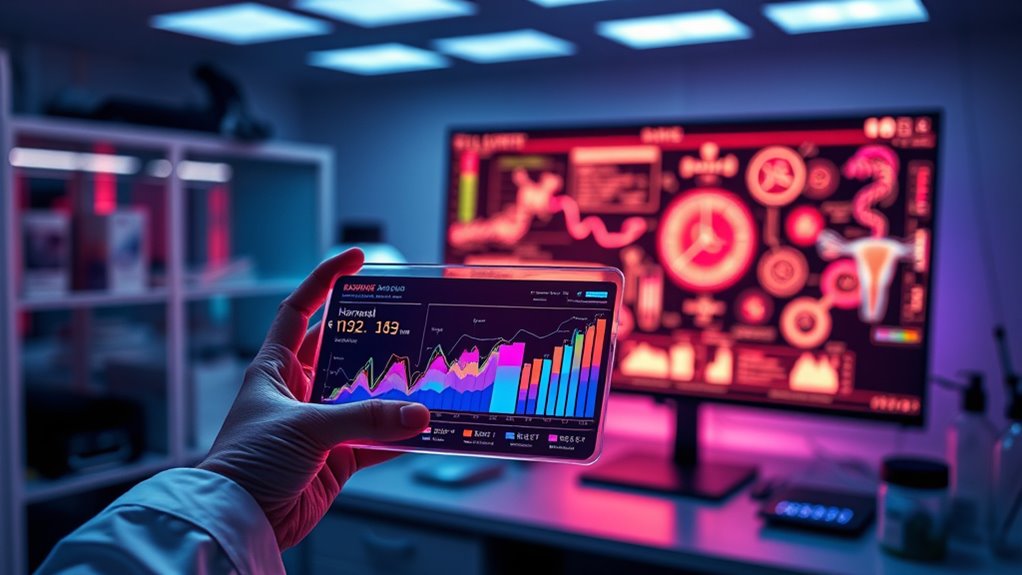
Have you ever wondered how artificial intelligence is transforming hormonal health? It’s revolutionizing the way you understand and manage your body’s complex hormonal landscape. With advanced tools, you can now access personalized insights that were once out of reach. Central to this transformation is hormone tracking—analyzing your daily data to monitor fluctuations in hormones like estrogen, progesterone, cortisol, and insulin. When you consistently log your symptoms, sleep patterns, stress levels, and other health metrics, AI algorithms can process this information to identify subtle patterns and trends. This means you no longer have to guess when your hormones are out of balance; instead, you gain a clear picture of your unique hormonal rhythm.
AI hormone tracking reveals your unique hormonal patterns, empowering personalized health decisions.
The key to turning raw data into meaningful insights lies in algorithm customization. These algorithms are tailored specifically to your data set, learning from your input over time to become more accurate and relevant. As you continue to log your information, the AI refines its understanding of your hormonal patterns, providing customized recommendations that suit your body’s specific needs. Whether it’s adjusting your diet, exercise, or sleep habits, these algorithms help you make informed decisions that are backed by data. This personalized approach ensures that your health plan isn’t a one-size-fits-all solution but a dynamic, evolving strategy designed around your body’s responses.
By harnessing AI-powered hormone tracking and algorithm customization, you can also anticipate hormonal changes before they cause noticeable symptoms. For example, if your data indicates a dip in progesterone during a particular phase of your cycle, you can proactively implement strategies to support balance, such as dietary changes or stress reduction techniques. Regular hormone monitoring can further enhance your understanding and management of these fluctuations. Over time, the insights gained can improve your overall hormonal resilience and reduce the risk of issues like mood swings, fatigue, or irregular cycles. The beauty of this technology is that it makes complex hormonal data accessible and actionable, turning abstract numbers into practical steps.
In essence, AI-driven tools empower you to take control of your hormonal health with precision. Instead of relying solely on periodic blood tests or guesswork, you get continuous, real-time feedback. This ongoing monitoring, combined with algorithm customization, helps you understand your body’s unique signals and respond in a timely, effective manner. As AI continues to evolve, these personalized insights will become even more sophisticated, giving you a powerful tool to optimize your well-being and navigate hormonal changes with confidence.
Frequently Asked Questions
How Accurate Are AI Predictions for Individual Hormonal Fluctuations?
AI predictions for your hormonal fluctuations can be quite accurate, but they’re not perfect. The predictive accuracy depends on the quality of data and individual variability. Since each person’s hormonal patterns are unique, AI tools are best when personalized and regularly updated. You should use these insights as helpful guides, but remember that your body’s fluctuations can sometimes surprise even the most advanced algorithms.
Can AI Detect Rare Hormonal Disorders Early?
Ever wonder if AI can catch rare hormonal disorders early? It can, by analyzing genetic markers and symptom patterns that might be overlooked. AI systems sift through complex data, spotting subtle signs of these conditions before they become severe. While not foolproof, this technology enhances early detection, giving you a better chance for timely treatment. So, yes—AI plays a promising role in identifying rare hormonal issues sooner than traditional methods.
Is There a Risk of Data Privacy Breaches With Hormonal Health AI Tools?
Yes, there’s a risk of data privacy breaches with hormonal health AI tools. To safeguard your information, developers use data encryption and implement strict consent management policies. These measures help secure your sensitive health data and ensure you control what’s shared. However, it’s essential to stay informed about how your data is handled and choose platforms that prioritize your privacy and transparency.
How Does AI Personalize Hormonal Health Recommendations?
You might worry about privacy, but AI personalizes hormonal health recommendations through algorithm customization, analyzing your unique data input variability. By continuously learning from your input, like symptoms and lifestyle factors, the AI adapts its suggestions specifically for you. This targeted approach guarantees recommendations are relevant, helping you manage hormonal health more effectively. Rest assured, your personalized insights come from your data, used responsibly to support your well-being.
Are Ai-Based Hormonal Health Insights Suitable for All Age Groups?
AI-based hormonal health insights can be suitable for most age groups, but you should consider age-specific considerations and lifestyle factors. As your body changes over time, the algorithms adapt to your unique hormonal patterns, but it’s crucial to consult healthcare professionals for personalized advice. This way, you guarantee the insights align with your age, lifestyle, and health goals, making AI a helpful tool rather than a sole solution.
Conclusion
By harnessing AI for hormonal health, you can gain personalized insights that empower you to make better choices. Imagine a woman tracking her symptoms and receiving tailored advice—she adjusts her diet and activity, leading to improved energy and mood. AI tools can help you identify patterns and optimize your well-being. With this technology, you’re not alone in managing your hormonal health—you’re equipped to take control and thrive.
Fall Picks
fall essentials
As an affiliate, we earn on qualifying purchases.