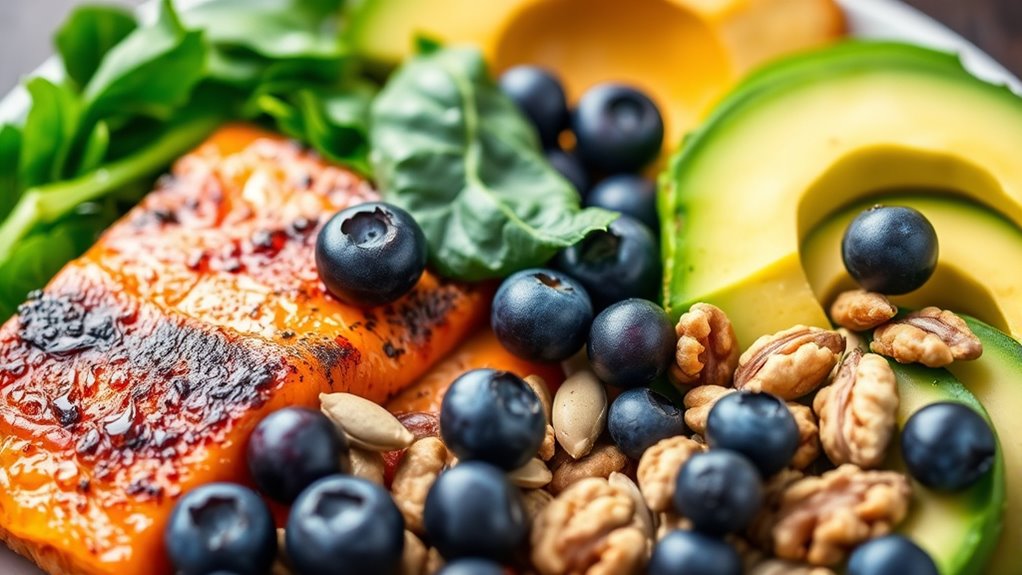

To support your endocrine function, focus on eating healthy fats like avocados, nuts, and olive oil, which help produce hormones. Incorporate high-quality proteins such as eggs and lean meats to supply amino acids needed for hormone creation. Make sure to include zinc and magnesium-rich foods like shellfish, spinach, and seeds, which regulate hormone levels. Avoid processed foods and excess sugar to prevent imbalances, and stay well-hydrated to boost gland function. Keep exploring for more tips on optimizing your hormonal health.

Turn quiet afternoons into listening time
- Thousands of audiobooks, podcasts and originals
- Listen on your phone, tablet or Echo — also offline
- Cancel anytime
Key Takeaways
- Incorporate healthy fats like avocados, nuts, and olive oil to support hormone synthesis and endocrine health.
- Consume high-quality proteins such as eggs, lean meats, and legumes to provide essential amino acids for hormone production.
- Include zinc-rich foods like shellfish, pumpkin seeds, and chickpeas to regulate hormone levels effectively.
- Eat antioxidant-rich fruits and vegetables, like berries and leafy greens, to reduce inflammation and support gland function.
- Avoid processed foods, excess sugar, and refined carbs to prevent insulin resistance and hormonal imbalance.
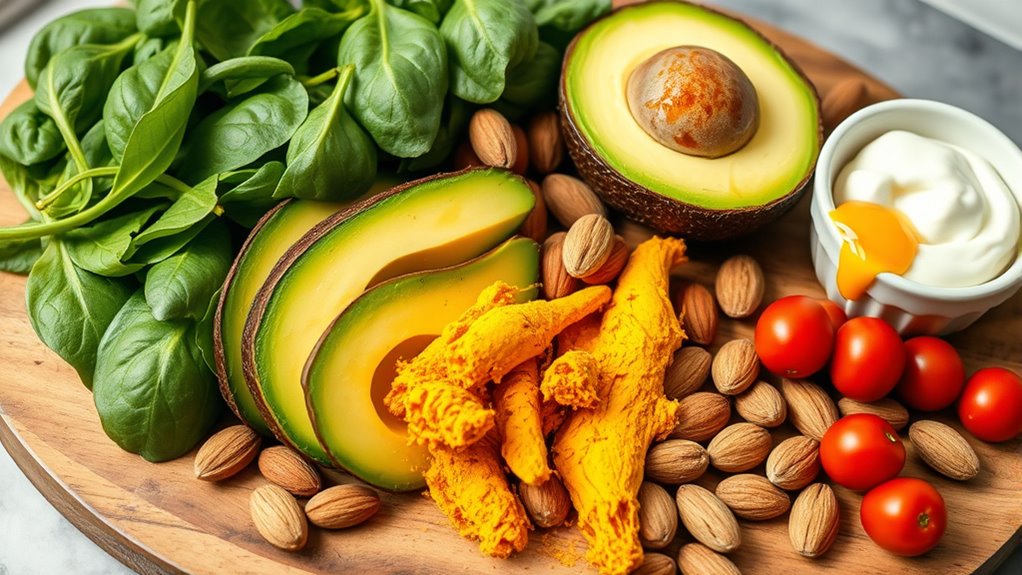
Hormonal diets have gained popularity because they target the body’s hormonal balance to promote weight loss and overall health. When you focus on balancing hormone levels through specific foods, you support your endocrine system, which plays a essential role in regulating metabolism, mood, and energy. Your endocrine system includes glands like the thyroid, adrenal, and pancreas, all of which produce hormones that influence how your body functions daily. By choosing foods that nourish these glands, you can help guarantee they operate at their best, making it easier to maintain a healthy weight and energy levels.
Balancing hormones through nourishing foods supports metabolism, mood, and energy for better health.
To support your endocrine system effectively, you want to include foods rich in nutrients that promote hormone production and balance. For instance, healthy fats like avocados, nuts, seeds, and olive oil are indispensable because they provide essential fatty acids needed for hormone synthesis. These fats help your body produce hormones such as estrogen, testosterone, and cortisol, all of which influence your metabolism and stress response. Incorporating high-quality protein sources like eggs, lean meats, and legumes supplies amino acids that are building blocks for hormone creation. These proteins also stabilize blood sugar, which prevents spikes and crashes that can disrupt hormonal balance.
Crucial to supporting your endocrine system are foods packed with vitamins and minerals. For example, zinc and magnesium play significant roles in hormone regulation. You can find zinc in shellfish, pumpkin seeds, and chickpeas, while magnesium is abundant in leafy greens, nuts, and whole grains. These nutrients help regulate insulin and thyroid hormones, which directly impact your metabolism and weight management. Additionally, including antioxidant-rich fruits and vegetables like berries, spinach, and broccoli helps reduce inflammation and oxidative stress—factors that can impair endocrine function over time.
Hormonal diets also emphasize avoiding processed foods, excess sugar, and refined carbs, as these can cause hormonal imbalances. High sugar intake can lead to insulin resistance, which hampers your body’s ability to regulate blood sugar and fat storage. Instead, opt for whole, unprocessed foods that support steady blood sugar levels and reduce strain on your endocrine system. Hydration is equally important; drinking plenty of water helps your glands function smoothly and facilitates the transportation of hormones throughout your body.
As an affiliate, we earn on qualifying purchases.
Frequently Asked Questions
Can Hormonal Diets Help With Menopause Symptoms?
Yes, hormonal diets can help with menopause symptom relief. By focusing on hormonal diet strategies, you might reduce hot flashes, mood swings, and sleep issues. Eating foods rich in phytoestrogens, healthy fats, and fiber supports your endocrine function and balances hormones naturally. Incorporating these dietary changes can make menopause more manageable, giving you better control over your symptoms and improving overall well-being.
Are Hormonal Diets Suitable for Teenagers?
Hormonal diets aren’t typically suitable for teenagers because their bodies are still growing and developing. Focusing on good teen nutrition is essential to maintain hormonal balance naturally. You should prioritize a balanced diet with plenty of fruits, vegetables, whole grains, and lean proteins. Instead of restrictive or specialized diets, encourage healthy eating habits to support your hormonal health, growth, and overall well-being during these crucial years.
Do Hormonal Diets Impact Fertility?
Hormonal diets can impact fertility by influencing hormonal balance. When you follow such diets, they may help support your reproductive health, especially if they include nutrient-rich foods that promote endocrine function. However, if the diet is restrictive or lacks essential nutrients, it could negatively affect fertility. Always consult a healthcare professional before making significant dietary changes to guarantee they support your fertility and overall hormonal health.
How Quickly Can I See Hormonal Balance Improvements?
You might notice hormonal balance improvements within a few weeks, especially if you prioritize hormonal testing and optimize nutrient timing. Consistent dietary changes, like eating nutrient-rich foods at strategic times, can support your endocrine health quickly. Keep in mind, individual results vary, but staying committed to your plan and monitoring progress through testing helps you track improvements effectively. Patience and persistence are key to achieving lasting hormonal harmony.
Are There Any Risks or Side Effects of Hormonal Diets?
Hormonal diets can carry risks like nutritional deficiencies if they cut out essential nutrients, and synthetic hormones may disrupt your natural balance. You might experience side effects such as fatigue, mood swings, or hormonal imbalances. It’s vital to consult a healthcare professional before starting, especially if you’re considering synthetic hormones or restrictive diets, to minimize risks and guarantee your body gets the nutrients it needs.
zinc supplements for hormone balance
As an affiliate, we earn on qualifying purchases.
As an affiliate, we earn on qualifying purchases.
Conclusion
By choosing foods that nurture your endocrine system, you’re planting seeds of balance in your body’s intricate garden. Each nourishing bite acts as a gentle rain, encouraging your hormones to dance in harmony. When you prioritize these supportive foods, you’re not just fueling your body — you’re orchestrating a symphony of vitality and well-being. Embrace this nourishing rhythm, and watch your health bloom like a radiant, unstoppable garden in full bloom.
magnesium capsules for stress relief
As an affiliate, we earn on qualifying purchases.
As an affiliate, we earn on qualifying purchases.
As an affiliate, we earn on qualifying purchases.
Fall Picks
fall essentials
As an affiliate, we earn on qualifying purchases.