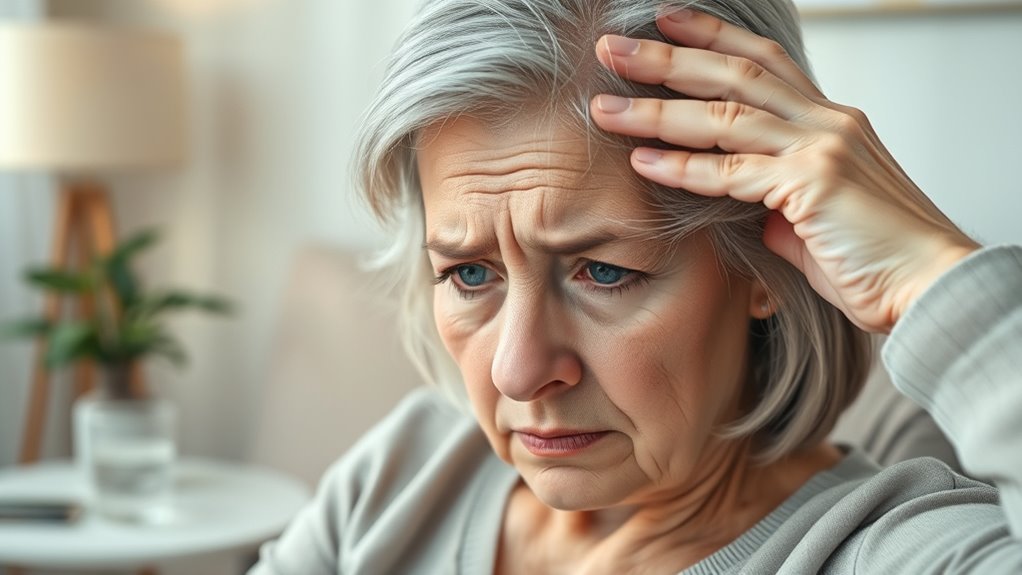

Hormonal headaches after 40 happen because of changing estrogen and progesterone levels during menopause and aging. These fluctuations can cause blood vessels to widen or narrow and affect neurotransmitters like serotonin, leading to headaches. You might also notice symptoms like hot flashes and irregular periods. Managing lifestyle factors, exploring medical options, and understanding your body’s signals can help reduce these headaches’ severity. Keep exploring to learn more about managing hormonal headaches effectively.

Turn quiet afternoons into listening time
- Thousands of audiobooks, podcasts and originals
- Listen on your phone, tablet or Echo — also offline
- Cancel anytime
Key Takeaways
- Hormonal fluctuations, especially shifts in estrogen and progesterone, are primary triggers for headaches after 40.
- Menopause-related symptoms like hot flashes and irregular periods often coincide with hormonal headache episodes.
- Managing lifestyle factors such as sleep, hydration, and diet can help reduce headache frequency and severity.
- Medical options like hormone therapy and migraine treatments are available to stabilize hormone levels and alleviate symptoms.
- Understanding the hormonal connection empowers women to adopt effective strategies for reducing hormonal headache impact.
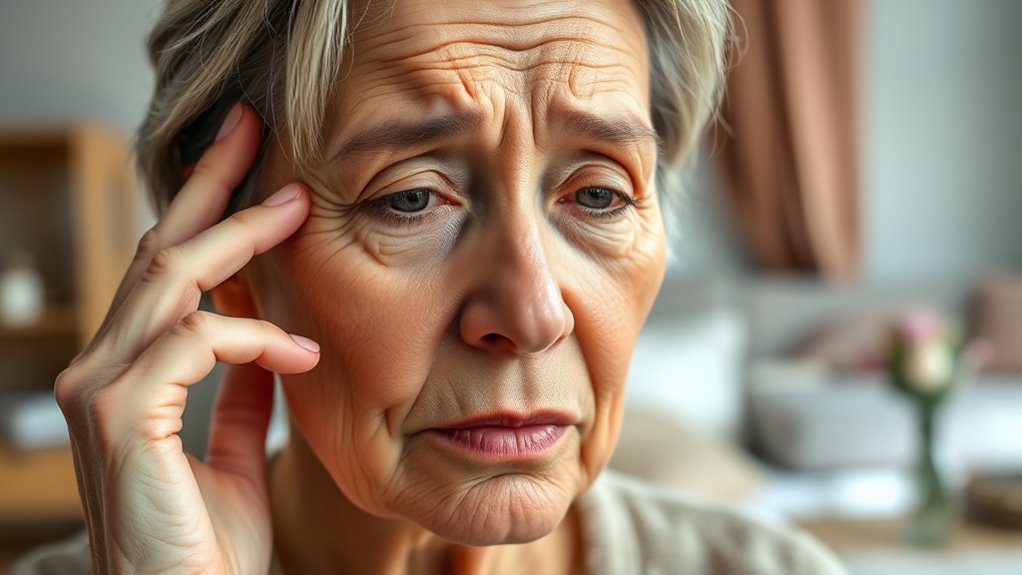
As women age past 40, hormonal changes can lead to unexpected headaches that disrupt daily life. These hormonal headaches often coincide with menopause symptoms, making it challenging to distinguish between different causes of discomfort. During this period, your estrogen and progesterone levels fluctuate unpredictably, which can trigger intense headaches or migraines. Many women find that these headaches occur around the time of their menstrual cycle, during menopause, or as a result of hormonal shifts. Recognizing the connection between hormones and head pain is essential for managing and reducing these episodes. Additionally, understanding the impact of hormonal fluctuations on blood vessel behavior can help women better comprehend why these headaches occur. Menopause symptoms, such as hot flashes, night sweats, and irregular periods, often go hand-in-hand with hormonal headaches. As your body adjusts to decreasing estrogen levels, you may notice that your headaches become more frequent or severe. This is because estrogen influences neurotransmitters in the brain, such as serotonin, which regulate pain and mood. When estrogen drops suddenly or fluctuates wildly, it can lead to vasodilation or vasoconstriction in blood vessels, causing headaches. Many women turn to hormone therapy as a way to stabilize these hormone levels. Hormone therapy can help alleviate menopause symptoms and, in some cases, reduce the frequency and intensity of hormonal headaches. However, it’s not suitable for everyone and should be discussed thoroughly with your healthcare provider. If you’re experiencing hormonal headaches after 40, it’s essential to understand that they’re often a symptom of your body’s natural transition, but they can be managed effectively. Lifestyle adjustments like maintaining a regular sleep schedule, managing stress, staying hydrated, and avoiding known headache triggers can make a significant difference. Some women find relief through dietary changes, such as reducing caffeine or certain processed foods that may exacerbate headaches. Additionally, medical assessment can help identify underlying causes and tailor treatment options to your specific needs. Exploring alternative therapies like acupuncture or biofeedback might also provide additional relief for some women. Medications, whether over-the-counter pain relievers or specific treatments for migraines, can also help control symptoms. If you’re considering hormone therapy, your doctor can evaluate the benefits and risks based on your health history and symptoms. Ultimately, recognizing the link between menopause symptoms and hormonal headaches empowers you to seek appropriate treatment and lifestyle strategies. While these headaches are common after 40, they don’t have to interfere with your daily routine. With proper management and medical support, you can reduce their frequency and severity, helping you feel more in control during this natural phase of life.
hormonal headache relief supplements
As an affiliate, we earn on qualifying purchases.
As an affiliate, we earn on qualifying purchases.
Frequently Asked Questions
Can Hormonal Headaches Signal Other Underlying Health Issues?
Hormonal headaches can sometimes signal other underlying health issues, such as hormonal imbalance or thyroid dysfunction. If you notice these headaches persist or worsen, it’s essential to pay attention, as they might indicate your hormones are out of sync. Addressing issues like hormonal imbalance or thyroid problems early can help prevent more serious health concerns. Always consult a healthcare provider to identify the root cause and get appropriate treatment.
Are Hormonal Headaches Different From Migraines?
Hormonal headaches differ from migraines mainly due to hormonal fluctuation, which causes changes in pain location and intensity. You might notice hormonal headaches often occur around your forehead or temples, linked to menstrual cycles or menopause. Migraines, on the other hand, usually involve more severe throbbing pain, often on one side, with additional symptoms like nausea or sensitivity to light. Recognizing these differences helps you manage and seek appropriate treatment.
How Long Do Hormonal Headaches Typically Last?
Did you know that hormonal headaches often last from a few hours to several days? Typically, their duration aligns with your menstrual cycle, as hormone fluctuations occur. You might experience headaches just before or during your period, and they usually resolve once hormone levels stabilize. Paying attention to your cycle can help you anticipate and manage these headaches, making it easier to find relief during those fluctuating hormone days.
Can Lifestyle Changes Help Reduce Hormonal Headaches After 40?
Yes, lifestyle changes can help reduce hormonal headaches after 40. You should consider diet modifications, like avoiding trigger foods and eating regular, balanced meals to stabilize blood sugar. Stress management techniques, such as yoga or meditation, can also lessen headache frequency. Staying active, staying hydrated, and getting enough sleep further support hormonal balance. These adjustments empower you to take control and potentially lessen your hormonal headaches effectively.
When Should I See a Doctor About Hormonal Headaches?
Think of hormonal fluctuations as unpredictable weather that can turn your day gloomy. If your hormonal headaches become severe or persistent, it’s time to see a doctor. Don’t ignore increasing headache severity, especially if it’s accompanied by vision changes, dizziness, or nausea. Early consultation guarantees proper diagnosis and relief. Trust your instincts—if headaches disrupt your life, seeking medical advice is the best step to clear the storm.
menopause hot flashes and headache relief
As an affiliate, we earn on qualifying purchases.
As an affiliate, we earn on qualifying purchases.
Conclusion
As you navigate hormonal headaches after 40, remember they’re like a changing tide—sometimes gentle, sometimes fierce. Think of Sarah, who found relief by tracking her symptoms, like a sailor reading the stars. With awareness and proper care, you can steer through these waves more smoothly. Don’t let uncertainty drown you; instead, harness knowledge like a compass. Your journey to relief starts with understanding and embracing these natural shifts.
migraine medication for hormonal headaches
As an affiliate, we earn on qualifying purchases.
As an affiliate, we earn on qualifying purchases.
biofeedback therapy for headaches
As an affiliate, we earn on qualifying purchases.
As an affiliate, we earn on qualifying purchases.
Fall Picks
fall essentials
As an affiliate, we earn on qualifying purchases.