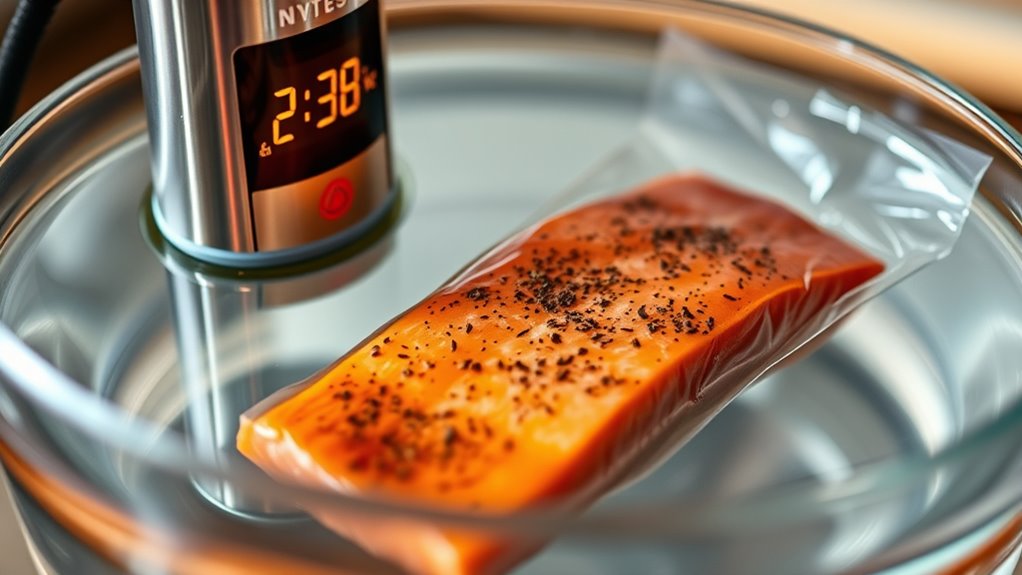
By using precise temperature control and vacuum sealing, you can master sous vide cooking at home to get consistently tender, flavorful results. An immersion circulator maintains a steady water temperature, while vacuum sealing guarantees even heat transfer and locks in juices and flavors. This combination simplifies achieving perfect doneness and texture every time. Keep exploring how these techniques can elevate your culinary skills and create restaurant-quality dishes with ease.
Key Takeaways
- Use precise temperature control with an immersion circulator for consistent, evenly cooked results.
- Vacuum seal ingredients to ensure optimal heat transfer and flavor infusion during sous vide cooking.
- Maintain accurate water temperatures throughout the process to prevent overcooking or undercooking.
- Incorporate herbs, spices, or marinades in vacuum bags for enhanced flavor infusion.
- Prepare ingredients in advance, utilizing sous vide’s gentle, precise heat to achieve tender, perfect textures at home.
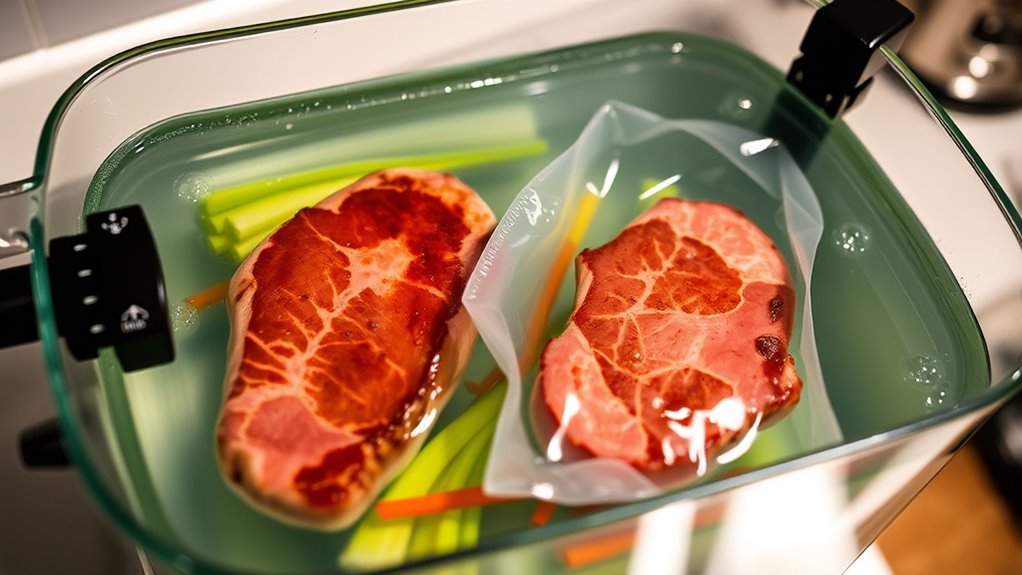
Have you ever wondered how to achieve perfectly cooked meals every time? The secret lies in mastering the fundamentals of sous vide, a technique that offers unmatched precision. At its core, sous vide relies heavily on temperature regulation. Unlike traditional cooking methods that can fluctuate and cause overcooked or undercooked results, sous vide uses precise temperature control to cook food evenly from edge to edge. This means you set your desired temperature, and your immersion circulator maintains it constantly, guaranteeing your proteins, vegetables, or even desserts come out exactly as intended. With such tight regulation, you eliminate the guesswork, making it easier to perfect your dishes and consistently impress.
Master sous vide with precise temperature control for perfectly cooked, tender, and flavorful meals every time.
A vital step in harnessing the full potential of sous vide is vacuum sealing. This process involves removing air from a specially designed bag before sealing it shut. Vacuum sealing serves multiple purposes: it ensures direct contact between the food and the water bath, promotes even heat transfer, and prevents water from seeping into the bag. When your food is tightly vacuum-sealed, heat penetrates uniformly, eliminating cold spots or uneven cooking. Plus, vacuum sealing helps preserve freshness by locking in juices, flavors, and nutrients, giving you a more flavorful and tender result.
Using a high-quality vacuum sealer is worth the investment. It’s straightforward to operate and creates airtight packages that last longer in the fridge or freezer. When you’re ready to cook, simply place the sealed bag into your water bath, set the temperature, and forget about it until the timer signals that your dish is perfectly cooked. This hands-free approach is especially advantageous if you’re juggling multiple dishes or preparing meals in advance. You can even prepare ingredients hours or days ahead, knowing they’ll retain their quality and be ready to serve once submerged in the water bath.
Another advantage of vacuum sealing is that it minimizes water evaporation during long cooking sessions, maintaining consistent cooking conditions. This consistency is key to achieving the tender, juicy textures that sous vide is famous for. Additionally, vacuum-sealed bags are versatile; you can add herbs, spices, or marinades directly into the bag for infused flavors. This integration of ingredients makes your dishes even more vibrant and complex.
In essence, mastering temperature control and vacuum sealing turns your kitchen into a professional-grade sous vide station. With these tools and techniques, you gain the ability to cook with precision, consistency, and confidence, transforming everyday meals into culinary masterpieces.
GORILLA GRIP Patented Bath Tub Shower Mat, Machine Washable Bathtub Floor Liner Mats, Suction Cups and Drain Holes to Keep Tubs Clean, Soft on Feet, Bathroom Essentials, 35x16 Inch, Clear
- Patented Design with Suction Cups: Securely stays in place with powerful suction
- Easy Water Drainage: Drain holes prevent water pooling
- BPA-Free and Textured: Soft, pebble-textured surface for comfort
As an affiliate, we earn on qualifying purchases.
Frequently Asked Questions
How Long Can I Leave Food in the Sous Vide Bath Safely?
You can safely leave food in a sous vide bath for the recommended durations, which vary by type. Generally, most meats stay safe for up to 4-6 hours, while tougher cuts can handle 24 hours or more. For fish and seafood, stick to 30-45 minutes. To guarantee food safety, always follow recommended durations and temperatures, and avoid leaving food in the bath longer than suggested to prevent bacterial growth.
Can I Cook Frozen Ingredients Sous Vide Without Thawing?
Yes, you can cook frozen ingredients sous vide without thawing. Just add them directly to the bath, but keep in mind that sous vide safety requires adjusting cooking times to account for the frozen state. You’ll need to increase the cooking duration to ensure thorough heating and safe consumption. This method works well for meats, vegetables, and seafood, providing even, precise cooking without the need for prior thawing.
What Are the Best Temperature Settings for Delicate Fish?
For delicate fish, set your sous vide cooker to around 122°F to 130°F. This temperature range guarantees ideal fish tenderness while maintaining a silky texture. Precision temperature control is key, so avoid going higher to prevent overcooking. If you prefer slightly firmer fish, bump it up to 135°F. Always use a reliable thermometer to monitor your water temperature, ensuring perfect results every time.
How Do I Prevent Vacuum-Sealed Bags From Floating?
To prevent vacuum-sealed bags from floating, guarantee you remove as much air as possible to eliminate air bubbles that cause buoyancy. Use a weight, like a specially designed sous vide weight or a heavy spoon, to keep the bag submerged. You can also place a small, food-safe weight directly inside the bag to counteract air bubbles and maintain stability during cooking.
Is It Necessary to Pre-Sear Meat After Sous Vide Cooking?
Think of it like the final brushstroke in a masterpiece—pre-sear isn’t always necessary, but it can elevate your dish. If you want that irresistible crust and flavor enhancement, a quick sear post-sous vide is worth it. It adds texture and depth, making your meat more appealing. So, whether to pre-sear depends on your desired finish; it’s your call for that perfect balance of tenderness and flavor.

TEESHLY Bath Tub and Shower Mats, Non Slip 40 x 16 Inch Extra Large Bathtub Mat, Machine Washable Bathmat with Drain Holes, Suction Cups for Bathroom Floor, Gray
- Large Non-Slip Bath Mat: 40 x 16 inches with 362 suction cups
- Massage-Style Pebbled Design: Provides a massage-like shower experience
- Optimized Drainage Holes: 327 large holes for water flow
As an affiliate, we earn on qualifying purchases.
Conclusion
Now that you’ve learned the basics of sous vide, you’re ready to elevate your home cooking with precision and confidence. With just a simple immersion circulator and some patience, you can achieve restaurant-quality results right in your kitchen. Isn’t it amazing how a little controlled heat can transform your dishes? So go ahead, experiment, and enjoy the perfect texture and flavor every time. Are you ready to take your cooking to the next level with sous vide?
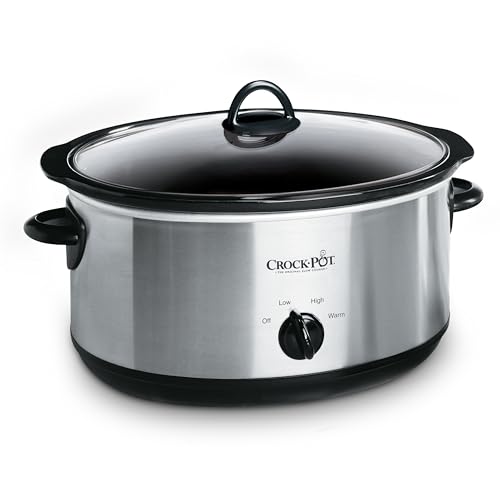
Crock-Pot 7-Quart Manual Slow Cooker, Family Size Serves 8+ People & Fits 6-lb Roast, Removable Stoneware with Warming Setting, Dishwasher Safe for Easy Cleanup, Stainless Steel
- Capacity: 7-quart size serves 8+ people
- Cooking Settings: High, low, and warm functions
- Convenience: Set and forget for easy cooking
As an affiliate, we earn on qualifying purchases.

bella SAVOR 6qt Programmable Slow Cooker, Plum
- Large 6-Quart Capacity: Perfect for family-sized meals and batch cooking
- Nonstick Ceramic Coating: PFAS, PFOA, PTFE, lead, and cadmium free
- Easy Food Release & Cleanup: Food slides out effortlessly, dishwasher safe
As an affiliate, we earn on qualifying purchases.