
Blue Zones show us that living longer and healthier hinges on habits like eating a mostly plant-based diet, staying socially connected, and staying active through everyday activities. Focusing on relationships, purpose, and moderation helps boost your well-being and longevity. These communities highlight that a simple, intentional lifestyle can make a real difference. If you want to uncover more secrets from these long-lived communities, there’s plenty to discover about how small changes can have a big impact.
Key Takeaways
- Blue Zones feature diets centered on plant-based foods, moderate meat intake, and minimal processed foods to promote longevity.
- Strong social connections and community engagement are vital for mental health and emotional resilience.
- Regular physical activity like walking, gardening, and communal activities supports physical health and lifespan.
- Lifestyle habits emphasize moderation, purpose, and intentionality, reducing stress and encouraging balanced living.
- Environmental and social factors in Blue Zones create supportive settings that foster healthy aging and well-being.
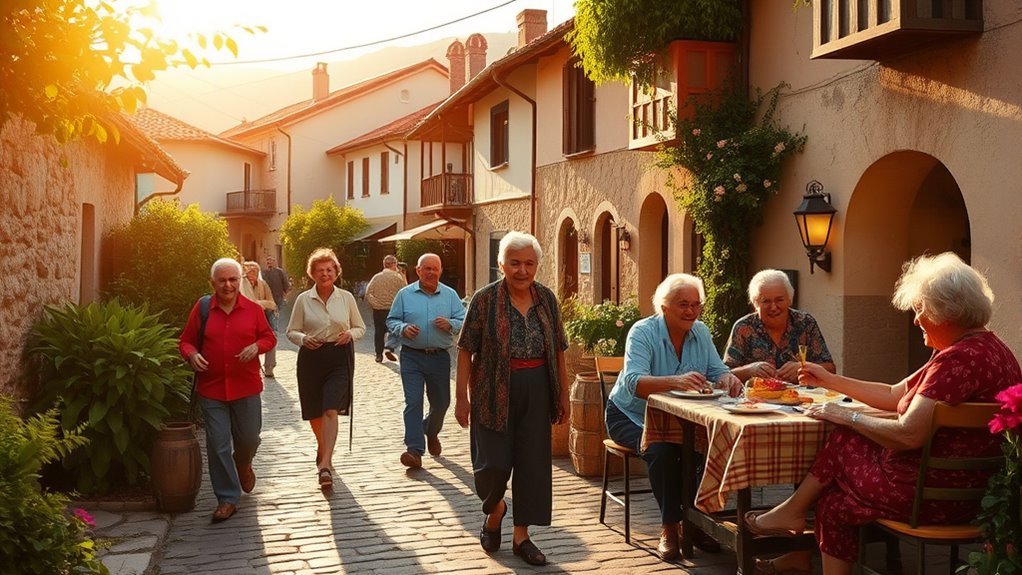
Blue Zones are regions around the world where people live markedly longer and healthier lives than average. When you explore these areas, you notice that their residents share common lifestyle traits that contribute to their longevity. One of the most essential factors is their diet habits. Instead of relying on processed foods or large portions, they eat a plant-based diet rich in vegetables, fruits, whole grains, nuts, and legumes. Meat is consumed sparingly, often only a few times a week, and portions are modest. This approach not only reduces calorie intake but also provides essential nutrients that support overall health. You might find that adopting similar diet habits can help improve your well-being, decrease chronic disease risk, and boost your energy levels.
Equally important is the role of social connections. In Blue Zones, strong community ties and close family bonds are a norm. People spend time with loved ones, share meals, and participate in community activities. These social interactions foster a sense of belonging and purpose, which are vital for mental health and emotional resilience. When you maintain meaningful relationships and stay engaged with your community, you’re more likely to experience lower stress levels and greater happiness. This social aspect encourages regular physical activity as well, since residents often walk or work together in communal settings. Building and nurturing your social connections can be a powerful way to add years to your life and make those years more fulfilling. Additionally, incorporating consistent physical activity into daily routines—like walking, gardening, or active hobbies—further promotes longevity.
In these communities, lifestyle choices revolve around moderation, purpose, and connection. You’re encouraged to focus on what truly matters—your health, relationships, and personal growth—rather than material possessions or superficial pursuits. The simplicity and intentionality of their habits serve as lessons for anyone looking to live longer and better. Incorporating their diet habits, such as eating more plant-based meals and controlling portions, can markedly impact your health. Simultaneously, fostering social connections can provide emotional support and mental clarity, helping you navigate life’s challenges with resilience.
Frequently Asked Questions
What Common Lifestyle Factors Contribute to Longevity in Blue Zones?
You can boost your longevity by adopting common lifestyle factors found in Blue Zones. Focus on healthy dietary patterns rich in plant-based foods, whole grains, and moderate alcohol intake. Prioritize strong social connections to foster a sense of community and support. Regular physical activity, purpose-driven living, and stress management also play crucial roles. These habits collectively help promote a longer, healthier life, just like those in the world’s longest-living communities.
How Can Urban Areas Incorporate Blue Zone Principles Effectively?
You can turn your urban chaos into a longevity hotspot by prioritizing green spaces and smart urban planning. Imagine parks where you actually want to spend time, encouraging walking, socializing, and outdoor activities—no more concrete jungles! Incorporate bike lanes, pedestrian-friendly streets, and community gardens. These small tweaks make your city healthier, happier, and more likely to boost your lifespan, proving that urban living can definitely be a recipe for longevity.
Are Genetics or Environment More Influential in Blue Zone Longevity?
Genetic predispositions and environmental influences both shape longevity, but environment often has a stronger impact. You can influence your lifespan through lifestyle choices like diet, activity, and social connections, which are environmental factors. While genetics provide a foundation, adopting healthy habits can mitigate genetic risks and promote longer, healthier lives. So, focus on creating a supportive environment around you to maximize your chances of living a long, vibrant life.
What Role Does Community Play in the Health of Blue Zone Residents?
Ever wonder how community impacts health? You’ll find that social cohesion and active community engagement are essential in blue zones. They encourage healthy behaviors, provide support, and foster a sense of purpose. When you’re connected to others, you’re more likely to stay motivated, manage stress, and maintain a balanced lifestyle. Your community becomes a cornerstone for longevity, proving that a strong social network truly benefits your overall well-being.
Can Blue Zone Habits Be Adopted Without Relocating?
Yes, you can adopt Blue Zone habits without relocating by focusing on diet modification and social engagement. Incorporate plant-based foods, reduce processed items, and practice regular physical activity. Engage with your community through social activities, volunteering, or shared meals, which promotes connection and well-being. These habits support longevity and health, proving you don’t need to move to embrace the Blue Zone lifestyle—small, consistent changes make a big difference.
Conclusion
You might think long life is just luck or genetics, but the Blue Zones prove otherwise. By adopting their simple habits—like eating plant-based foods, staying active, and building strong community—you can improve your chances of living a longer, healthier life. Sure, it takes effort, but the benefits are worth it. So why not start today? Small changes now could lead to a vibrant, extended life, proving that longevity is within your reach.