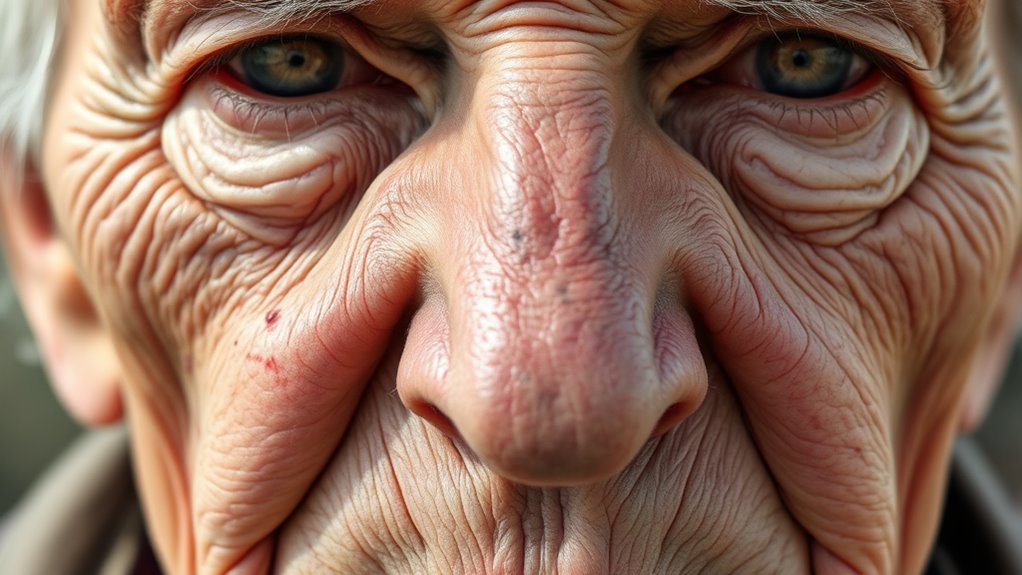

As you age, your skin loses its firmness and elasticity because collagen and elastin fibers break down over time. This process starts in your late twenties or early thirties, causing fine lines first, then deeper wrinkles. Environmental factors like sun exposure, pollution, and lifestyle choices speed up this decline. Understanding how these proteins weaken helps explain why your skin changes, and if you want to learn how to slow this process, there’s more to discover.
Key Takeaways
- Wrinkles form as skin loses collagen and elastin, reducing firmness and elasticity over time.
- Collagen breakdown weakens skin structure, leading to fine lines and deep wrinkles with age.
- Elastin fiber deterioration decreases skin’s ability to stretch and snap back, causing creases.
- Environmental factors like UV rays and pollution accelerate the loss of these essential skin proteins.
- The natural aging process gradually causes visible skin changes, but lifestyle choices can slow this decline.
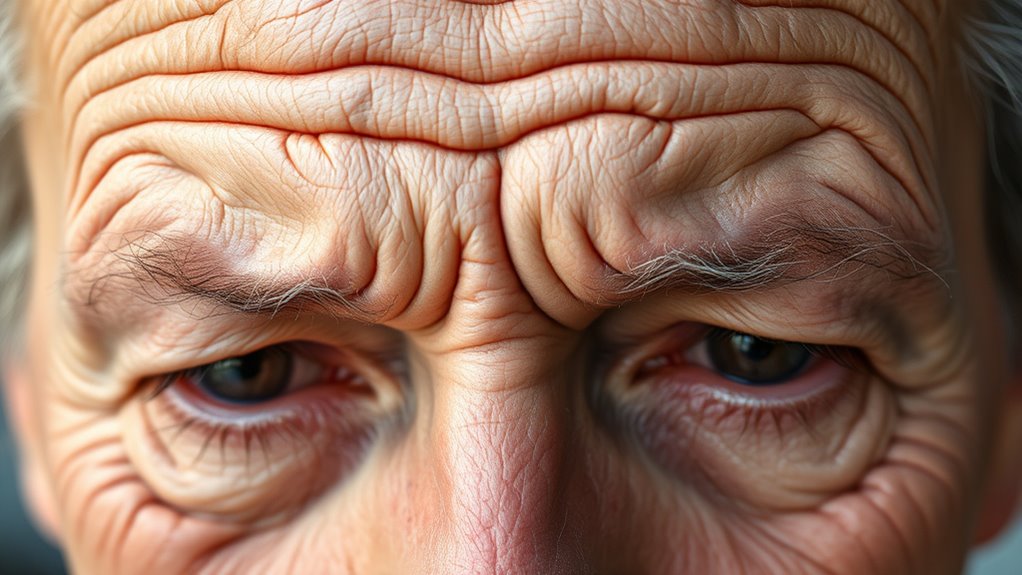
As you age, your skin naturally develops wrinkles, which are lines and creases that form as part of the aging process. These changes happen because your skin’s structure starts to weaken over time. One key factor is collagen breakdown. Collagen is a essential protein that provides your skin with strength and elasticity. When you’re younger, collagen fibers form a dense, supportive network that keeps your skin firm and smooth. But as you grow older, this network gradually deteriorates. Exposure to UV rays, pollution, and lifestyle choices like smoking accelerate collagen breakdown, leading to reduced skin elasticity. Without enough healthy collagen, your skin loses its firmness and begins to sag, creating those familiar lines.
As you age, collagen breakdown weakens skin, causing firmness loss and the formation of wrinkles and sagging.
Alongside collagen, elastin fibers play a critical role in maintaining your skin’s youthful bounce. Elastin is another protein that allows your skin to stretch and return to its original shape. Over time, elastin fibers also weaken and become less organized. This loss of elasticity means your skin can’t snap back as easily after facial expressions or movements, which contributes to the formation of wrinkles and fine lines. When elastin fibers degrade, your skin becomes less resilient, making creases more noticeable and persistent.
The combination of collagen breakdown and elastin fiber deterioration is a major driver behind the visible signs of aging skin. As these proteins diminish, your skin’s ability to repair itself slows down, and new collagen production decreases. This imbalance results in thinner, more fragile skin that’s prone to wrinkling. You might notice that areas like around your eyes, mouth, and forehead become more lined and less smooth. Sun exposure, poor nutrition, and environmental stressors can speed up this process, making wrinkles appear earlier and more pronounced.
Moreover, the loss of collagen and elastin fibers doesn’t happen overnight. It’s a gradual process that begins in your late twenties or early thirties but becomes more evident with age. You might start to see fine lines first, which then deepen into more prominent wrinkles over the years. Maintaining a healthy lifestyle, protecting your skin from UV rays, and using skincare products that stimulate collagen production can help slow this decline. Still, understanding that these changes are natural helps you accept and address aging with realistic expectations. Ultimately, the decline of collagen and elastin fibers is a fundamental part of why your skin changes over time, leading to those familiar signs of aging we all notice eventually.
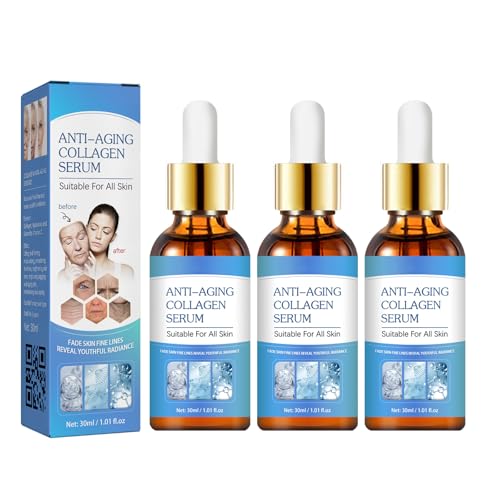
3 Pcs Facial Serum, Anti-aging Collagen Face Serum,Facial Skin Nourishing Hydrating Moisturizing Skin Care Essence,Tighten Skin,Reduces Wrinkles and Fine Lines,1.01 FL OZ Each
- Gentle Natural Ingredients: Made from natural, skin-safe ingredients
- Anti-Aging Effect: Reduces wrinkles and fine lines
- Skin Repair & Firming: Boosts collagen production and elasticity
As an affiliate, we earn on qualifying purchases.
As an affiliate, we earn on qualifying purchases.
Frequently Asked Questions
Can Lifestyle Changes Slow Down Wrinkle Formation?
You can slow down wrinkle formation by making simple lifestyle changes. Protect your skin from the sun with daily sun protection, like sunscreen and protective clothing, to prevent premature aging. Also, improve your dietary habits by eating antioxidant-rich foods, which support skin health. Staying hydrated and avoiding smoking further helps maintain your skin’s elasticity. These proactive steps can markedly reduce wrinkles and keep your skin looking youthful longer.
Do Genetics Play a Role in Wrinkle Development?
Like the saying “history repeats itself,” your genetics influence wrinkle development. Your genetic predisposition and inherited traits determine how your skin ages, affecting collagen production and elasticity. While lifestyle matters, your genes set the baseline for wrinkle formation. So, yes, your family history plays a role—making some people naturally more prone to wrinkles than others. Understanding this can help you tailor skincare and preventive measures effectively.
How Does Hydration Affect Skin Aging?
Hydration levels directly impact your skin aging process. When you stay well-hydrated, your skin retains moisture, keeping it plump and elastic. This reduces the appearance of fine lines and wrinkles, making your skin look smoother and more youthful. Conversely, low skin moisture causes dryness and sagging, which accelerates visible aging signs. By drinking enough water and using hydrating skincare, you help maintain healthy, youthful skin longer.
Are There Natural Remedies to Reduce Wrinkles?
You can try natural remedies like using botanical extracts such as aloe vera or green tea to improve your skin’s elasticity. Facial exercises may also help tone your muscles and reduce the appearance of wrinkles. Consistent skincare, staying hydrated, and protecting your skin from sun damage complement these remedies. While they won’t eliminate wrinkles completely, these approaches can support healthier, more youthful-looking skin naturally.
What Skincare Ingredients Are Most Effective Against Wrinkles?
You want to know which skincare ingredients fight wrinkles effectively. Look for anti-aging serums with ingredients like retinoids, peptides, and hyaluronic acid. Collagen boosters are also key—they stimulate your skin’s natural collagen production, making your skin look plumper and smoother. These ingredients work together to reduce fine lines, improve elasticity, and give you a more youthful appearance. Incorporate these into your routine for the best results.

Mill Creek Botanicals Elastin Cream , 4 Ounce
- Pure elastin cream: Pure elastin formula for skin
- Restores skin elasticity: Enhances skin firmness and elasticity
- Diminishes wrinkles: Reduces the appearance of wrinkles
As an affiliate, we earn on qualifying purchases.
As an affiliate, we earn on qualifying purchases.
Conclusion
So, as you age, your skin tells a story woven with time, sun, and life’s twists. Wrinkles may seem like signs of surrender, but they’re also badges of your journey. Remember, every line is a chapter, a reminder that you’ve truly lived. Embrace your skin’s mosaic—beautiful, unique, and full of character. After all, isn’t the most enchanting story one written on the canvas of your own face?

EltaMD UV Clear Face Sunscreen SPF, Oil-Free Sunscreen with Zinc Oxide, Dermatologist Recommended
- Broad Spectrum SPF 46: Protection from UVA and UVB rays
- Oil-Free, Non-Comedogenic: Suitable for acne-prone and sensitive skin
- Transparent Zinc Oxide Formula: No white cast residue
As an affiliate, we earn on qualifying purchases.
As an affiliate, we earn on qualifying purchases.

L’Oreal Paris Collagen Daily Face Moisturizer, Anti Aging Face Cream to Reduce Wrinkles and Provide Intense Hydration, 1.7 oz
- Day and night hydration: Hydrates face and chest daily
- Reduces wrinkles: Fills in lines for smoother skin
- Lightweight and non-greasy: Absorbs quickly without stickiness
As an affiliate, we earn on qualifying purchases.
As an affiliate, we earn on qualifying purchases.