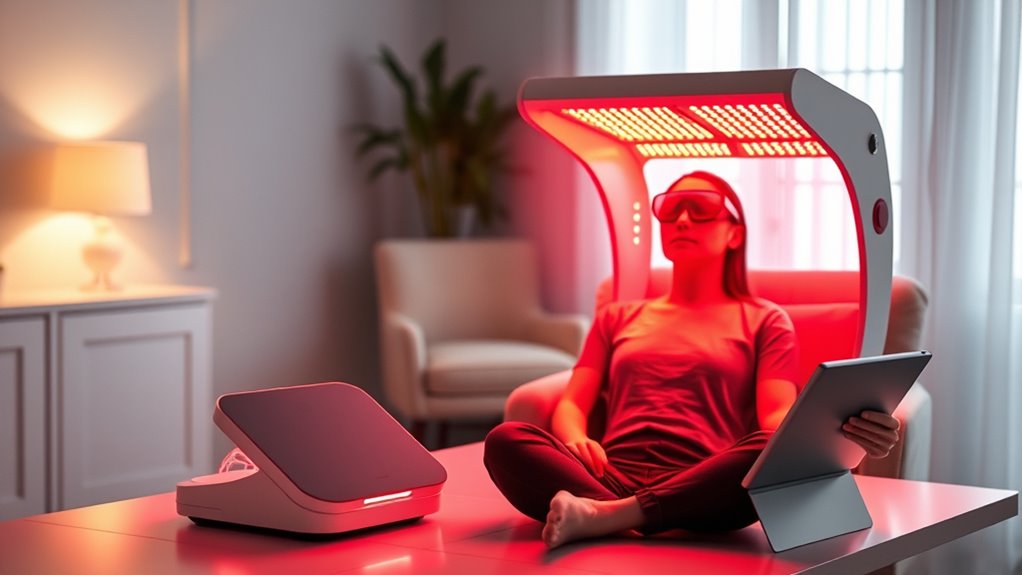
To safely use red light therapy at home, choose reputable devices with wavelengths between 630-670 nm or 810-850 nm, ensuring they deliver enough light energy. Follow manufacturer instructions for treatment time and distance, wear protective goggles, and avoid overexposure. Keep devices on stable surfaces and check for damage. Being informed about proper usage and safety can maximize benefits and minimize risks—more tips on selecting and using devices await if you keep exploring.

Turn quiet afternoons into listening time
- Thousands of audiobooks, podcasts and originals
- Listen on your phone, tablet or Echo — also offline
- Cancel anytime
Key Takeaways
- Choose high-quality devices with proven wavelengths (630-670 nm and 810-850 nm) for effective home red light therapy.
- Follow manufacturer instructions carefully to ensure safe treatment duration, distance, and protective measures like goggles.
- Regular, consistent use over weeks enhances results; avoid overexposure to prevent skin irritation.
- Use devices on stable surfaces in a dry, safe environment, and inspect for damage regularly.
- Consult healthcare providers if pregnant, have skin conditions, or use medications sensitive to light exposure.
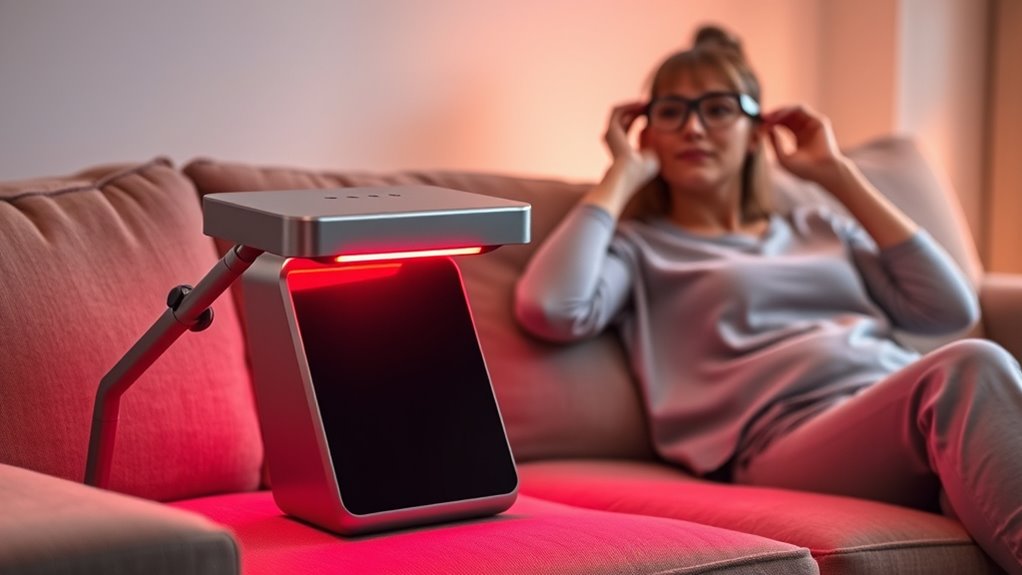
Red light therapy has become an accessible and convenient way to boost your health and wellness from the comfort of your home. With the rise of personal devices, you can now enjoy the benefits of red and near-infrared light therapy without scheduling appointments or visiting clinics. But before diving into this treatment, it’s vital to understand the effectiveness of the devices you choose and the safety precautions to keep in mind.
The effectiveness of a red light therapy device largely depends on its power output, wavelength, and treatment duration. High-quality devices typically emit wavelengths between 630-670 nm and 810-850 nm, which are proven to penetrate skin layers effectively and stimulate cellular repair. When selecting a device, look for those with sufficient irradiance (measured in mW/cm²), ensuring it delivers enough light energy to produce visible benefits. Consistency is key; regular use over several weeks tends to yield better results. Keep in mind that not all devices are created equal—cheaper models might not deliver the same therapeutic power, so investing in reputable brands can make a noticeable difference in your results.
While red light therapy is generally safe, there are important safety precautions to consider. First, always follow the manufacturer’s instructions regarding treatment time and distance from your skin. Overexposure can lead to mild side effects, such as skin redness or irritation, so moderation is critical. Avoid looking directly into the light to prevent eye strain or damage—many devices come with protective goggles, which you should use. If you have skin conditions, are pregnant, or are taking photosensitive medications, consult your healthcare provider before starting therapy. People with certain medical implants or conditions should also seek professional advice, as some devices may interfere with medical devices or health issues.
Follow manufacturer instructions, avoid overexposure, and consult your healthcare provider if needed.
Additionally, ensure your environment is safe for use. Use your device on a flat, stable surface, and keep it away from water or moisture to prevent electrical hazards. Regularly inspect your device for any damage or malfunction, and don’t attempt to modify or repair it yourself. Safety isn’t just about avoiding harm; it also involves setting realistic expectations. Red light therapy isn’t a miracle cure but a complementary treatment that can support your wellness routine when used responsibly and correctly. Being aware of the AI security implications, such as data privacy and device security, can help you safeguard your personal information while using these devices.
red light therapy device 630-670 nm
As an affiliate, we earn on qualifying purchases.
As an affiliate, we earn on qualifying purchases.
Frequently Asked Questions
Can Red Light Therapy Cause Skin Cancer?
Red light therapy doesn’t cause skin cancer because it uses low-level light, not UV exposure. Unlike UV rays, red light doesn’t penetrate deeply enough to damage DNA or increase skin sensitivity that could lead to cancer. You can safely use red light therapy at home without worrying about skin cancer risk. Just follow the device instructions and avoid overexposure to keep your skin healthy and safe.
How Long Does It Take to See Results at Home?
Imagine your skin waking up to gentle red light, feeling renewed. Typically, you’ll notice results after 4 to 6 weeks of consistent sessions, with each session lasting about 10–20 minutes. Staying disciplined with treatment consistency is key—regular use helps your skin respond faster. Keep at it, and you’ll gradually see improvements in glow, texture, or soreness, turning your at-home therapy into a glowing success story.
Are There Any Age Restrictions for Home Use?
There are generally no strict age restrictions for home use of red light therapy devices, but device suitability varies by age. If you’re considering it for children or seniors, you should consult a healthcare professional first. While most devices are safe for adults, younger users or those with specific health conditions should be cautious. Always follow manufacturer guidelines and seek medical advice to guarantee safe and effective use based on age.
Can I Use Red Light Therapy With Medications?
About 30% of people experience increased skin sensitivity with red light therapy, so you should verify for potential drug interactions first. If you’re on medications like photosensitizing drugs, using red light therapy could cause adverse reactions or skin irritation. Always consult your healthcare provider before starting, especially if you’re taking medications that may increase your skin’s sensitivity, to ensure safe and effective treatment.
What Should I Do if I Experience Side Effects?
If you experience side effects from red light therapy, stop using the device immediately. Focus on side effects management by consulting your healthcare provider to determine the cause and appropriate treatment. Follow safety precautions, such as avoiding direct eye exposure and using the device as directed. Keep track of symptoms, and don’t hesitate to seek medical advice if side effects persist or worsen. Your safety is the top priority.
near-infrared light therapy device 810-850 nm
As an affiliate, we earn on qualifying purchases.
As an affiliate, we earn on qualifying purchases.
Conclusion
As you explore red light therapy devices at home, remember that safety and consistency go hand in hand. It’s almost like finding the right balance in your routine—when you least expect it, improvements can happen. Just like how a simple device can unexpectedly boost your well-being, staying informed and cautious guarantees you get the most out of your sessions. Embrace the journey, and you might find that wellness becomes a happy coincidence in your daily life.
As an affiliate, we earn on qualifying purchases.
As an affiliate, we earn on qualifying purchases.
Fall Picks
fall essentials
As an affiliate, we earn on qualifying purchases.