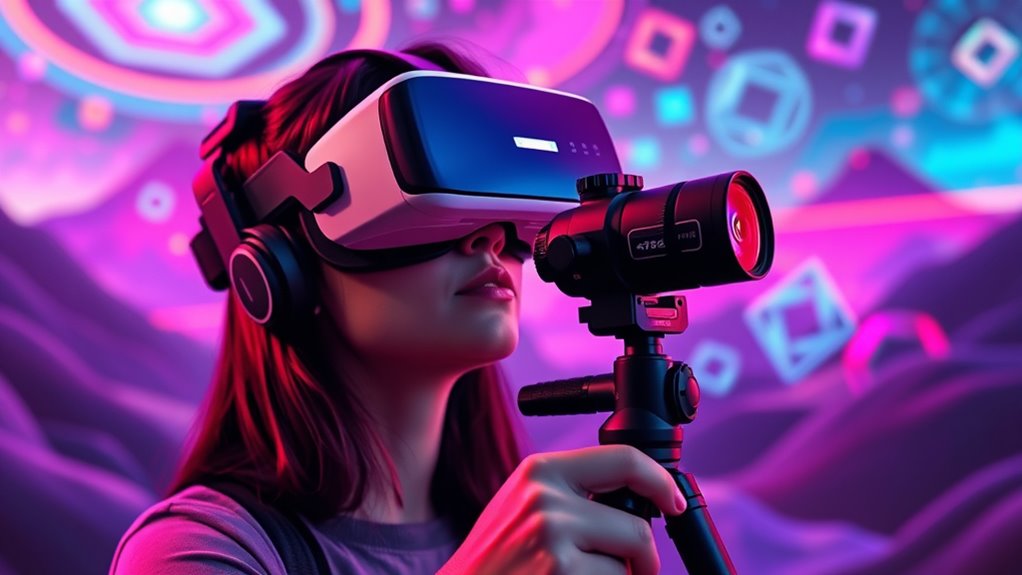

Virtual reality and 360° cameras let you create immersive content that feels real and interactive. By capturing or designing environments with these tools, you can fully engage multiple senses, like sight, sound, and even touch with haptic feedback. Technologies such as spatial audio and advanced visuals boost the realism, making viewers feel like they’re inside the scene. If you keep exploring, you’ll discover how these innovations can transform your content into compelling, multisensory experiences.

Turn quiet afternoons into listening time
- Thousands of audiobooks, podcasts and originals
- Listen on your phone, tablet or Echo — also offline
- Cancel anytime
Key Takeaways
- 360° cameras capture comprehensive footage, enabling immersive virtual reality experiences that allow users to explore environments interactively.
- VR technology enhances realism through haptic feedback and spatial audio, making virtual content more engaging and authentic.
- Combining multisensory elements like touch and sound creates deeper emotional connections and a sense of presence in virtual environments.
- Content creators utilize VR and 360° footage for applications in education, entertainment, and training, pushing immersive storytelling boundaries.
- Advances in display resolution and feedback tech continually improve the lifelike quality of virtual reality content.
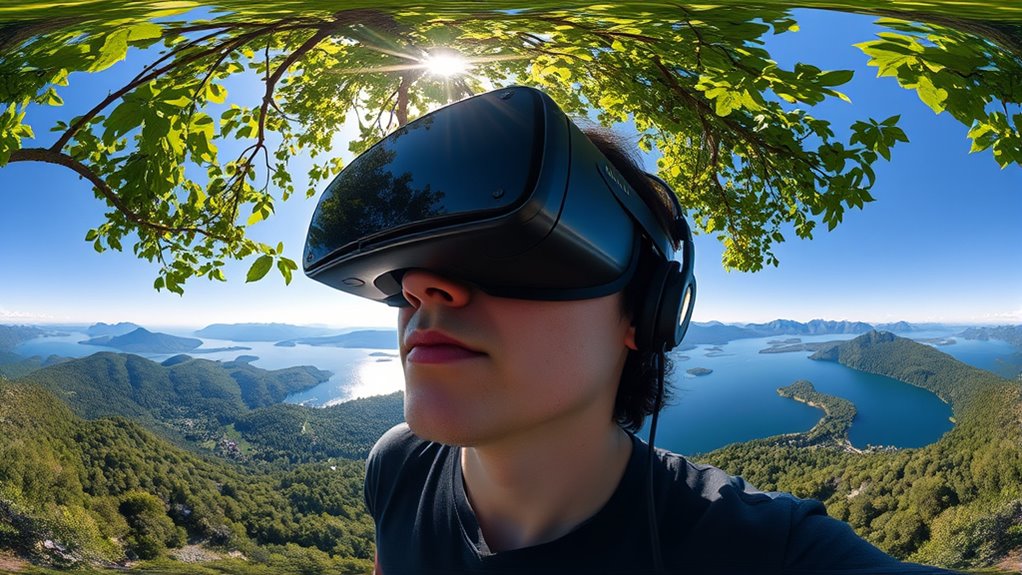
Virtual reality and 360° cameras are transforming how you experience digital content by immersing you in a fully interactive environment. When you put on a VR headset or explore a 360° video, you’re not just watching passively—you’re stepping inside the scene, feeling as if you’re truly there. This sense of presence is achieved through advanced technologies like haptic feedback and spatial audio, which work together to make the experience more realistic and engaging. Haptic feedback, for instance, allows you to feel vibrations or pressure that correspond to actions within the virtual space, such as a gentle tremor when walking on rough terrain or the recoil of a virtual gun. It’s like touch becomes part of your digital journey, heightening your immersion and making interactions feel tangible.
Spatial audio complements this by creating a three-dimensional sound environment that reacts to your head movements and position within the scene. Instead of flat, stereo sound, spatial audio makes sounds appear to come from specific directions and distances, mimicking real-world auditory cues. As you turn your head or move around, the audio shifts naturally, helping you locate objects or characters within the environment. This auditory realism deepens your sense of presence, making virtual worlds feel more authentic and alive. Whether you’re exploring a bustling cityscape or attending a virtual concert, spatial audio ensures that sounds are accurately placed, guiding your attention and enhancing emotional engagement.
As you navigate these immersive environments, the combination of haptic feedback and spatial audio creates a seamless, multisensory experience. You can feel the virtual wind brush past your face, hear footsteps approaching from behind, or sense the texture of objects you virtually touch, all through carefully designed feedback mechanisms. This synergy makes virtual interactions more intuitive and satisfying, encouraging you to explore further and engage more deeply with the content. Additionally, advancements in display technology and projector resolution are further elevating the visual fidelity of virtual environments, making the experience even more realistic. Content creators are leveraging these technologies to craft experiences that go beyond sight and sound, making virtual reality a powerful tool for education, entertainment, and training. The more you experiment with VR and 360° content, the more you realize how these innovations blur the lines between the digital and physical worlds, offering you an unprecedented level of immersion and realism.
360 degree camera for virtual reality
As an affiliate, we earn on qualifying purchases.
As an affiliate, we earn on qualifying purchases.
Frequently Asked Questions
What Are the Best VR Headsets for Beginners?
If you’re starting out, some of the best VR headset options include Oculus Quest 2, PlayStation VR, and Oculus Rift S. These headsets offer beginner-friendly features like easy setup, comfortable fit, and accessible controls. They don’t require powerful PCs or external sensors, making them perfect for newcomers. You’ll find these options affordable and simple to use, so you can jump right into immersive experiences without any hassle.
How Do 360° Cameras Handle Low-Light Environments?
Ever wonder if your 360° camera can handle moonlit nights? It depends on sensor sensitivity; higher sensitivity captures more light, letting you shoot better in low-light environments. Noise reduction technology also plays a crucial role, minimizing grainy images so your footage stays clear. Choose a camera with these features, and you’ll turn dim scenes into stunning, immersive content, even when the lights are low.
Can I Edit 360° Footage Easily?
Yes, you can easily edit 360° footage using specialized editing software like Adobe Premiere Pro or Final Cut Pro. These tools offer features like seamless editing, color correction, and effects. Plus, they include footage stabilization options to smooth out shaky shots. With user-friendly interfaces and powerful tools, you’ll find editing 360° content straightforward, allowing you to create immersive, professional-quality videos that captivate your audience.
What Are the Costs Associated With Professional VR Content Creation?
You’ll find that professional VR content creation costs vary based on your project’s scope and quality. Budget considerations include equipment, software, and skilled labor, which can add up quickly. Production expenses cover filming, editing, and post-production to guarantee immersive experiences. Plan ahead by setting a clear budget, so you can balance quality with affordability, and avoid surprises down the line. Investing wisely ensures your VR content meets your expectations without overspending.
How Do Viewers Interact With 360° Videos?
You interact with 360° videos by moving your device or using a VR headset to explore the scene in all directions. Viewer engagement increases through interaction methods like clicking hotspots, selecting objects, or using controllers to navigate. You can look around naturally, which creates an immersive experience. This active engagement keeps you more involved and enhances your overall interaction with the content, making it feel more real and personal.
As an affiliate, we earn on qualifying purchases.
Conclusion
As you explore the world of virtual reality and 360° cameras, remember you’re not just a viewer—you’re the captain of your own immersive adventure. These technologies open doors to experiences as limitless as your imagination. So, plunge in with curiosity and let your creativity soar. After all, isn’t life about weaving stories where reality and fantasy beautifully collide? Embrace the future, and let your immersive journey begin—because the only limit is what you dare to dream.
As an affiliate, we earn on qualifying purchases.
immersive virtual reality content creation kit
As an affiliate, we earn on qualifying purchases.
As an affiliate, we earn on qualifying purchases.
Fall Picks
fall essentials
As an affiliate, we earn on qualifying purchases.