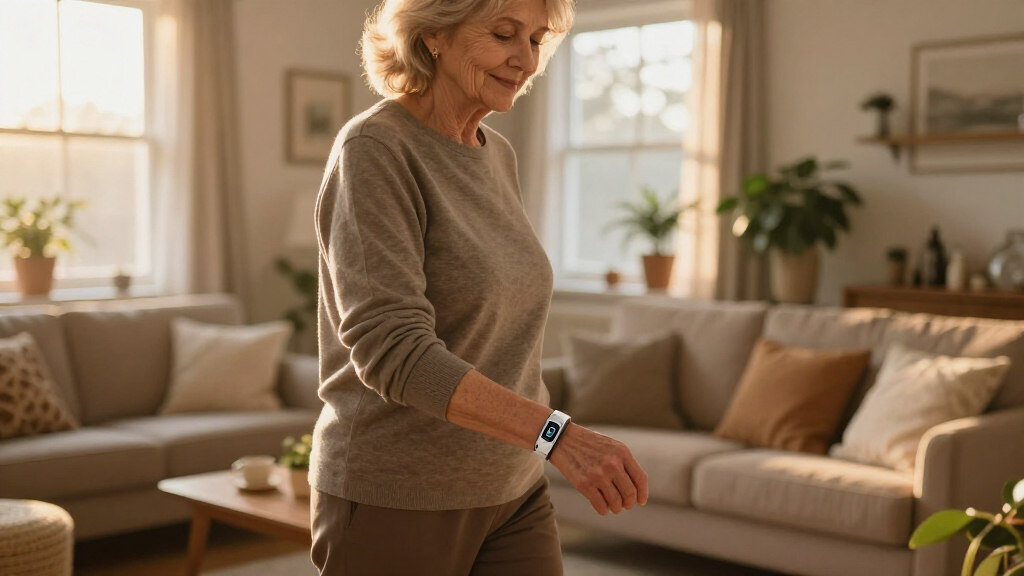

An automatic fall detection system only matters at the moment everything goes wrong — when a fall leaves someone unable to press a button. That is the standard I held this lineup to: not feature counts, but what each product does when a fall actually happens and help cannot be summoned manually. After comparing the options available in 2026, ADT On-The-Go stands out as my top overall pick because it pairs automatic fall detection with 24/7 professional monitoring and GPS, meaning a real human responds whether the wearer is in the kitchen or three towns away. For buyers watching their budget, SecuLife’s pendant delivers automatic fall detection, GPS tracking, and two-way calling for a $20 monthly subscription — noticeably cheaper than a professionally monitored plan. And for seniors who will not wear a pendant at all, the Nomo at-home system takes a different approach entirely, using sensors and motion detection instead of a device on the body.

Turn quiet afternoons into listening time
- Thousands of audiobooks, podcasts and originals
- Listen on your phone, tablet or Echo — also offline
- Cancel anytime
The main tradeoff in this category is who responds when a fall is detected. Professionally monitored systems like ADT connect to a live dispatch center that can send EMS, while self-monitored systems like SecuLife and Nomo alert family members or caregivers through an app — cheaper, but it puts the response burden on loved ones. The second tradeoff is wearable versus ambient: a pendant only works if it is worn (and worn correctly), while an in-home system covers a space but not the person once they leave it. I ordered these four picks around exactly those decisions, and I explain the logic for each one below.
Complete the kit


Key Takeaways
- Professional monitoring (ADT) costs more per month but guarantees a live dispatcher responds to a detected fall — self-monitored options (SecuLife, Nomo) rely on family or caregivers receiving app alerts.
- A wearable fall detector only protects the person wearing it; the Nomo at-home system covers a space instead, which suits seniors who refuse or forget pendants.
- Fall detection is an add-on cost on the ADT system (~$10 extra per month), while SecuLife bundles it into its flat $20 subscription.
- Battery life ranges from 6 days (SecuLife pendant) to 10 years (Nomo Movement Tags) — a direct tradeoff between GPS connectivity and maintenance-free wear.
- Cellular-based systems (ADT, SecuLife) work away from home; WiFi-based systems (Nomo) are strictly in-home and depend on network stability.
| ADT On-The-Go Emergency Medical Alert for Seniors, All-in-One |  | Best Overall | Brand: ADT | Model Number: MD5 | Water Resistance: IP57 | VIEW LATEST PRICE | See Our Full Breakdown |
| SecuLife Medical Alert Pendant for Seniors with Fall Detection and GPS Tracking |  | Best Value | Fall Detection: Yes, included | GPS Tracking: Yes, with geofence zones | Two-Way Calling: Yes | VIEW LATEST PRICE | See Our Full Breakdown |
| Nomo Medical Alert System with Fall Detection for Seniors at Home |  | Best for Seniors Who Won’t Wear a Pendant | Power Source: AC power with battery backup | Connectivity: Wireless, requires 2.4 GHz WiFi | Alert Type: Fall detection and motion sensing | VIEW LATEST PRICE | See Our Full Breakdown |
| Nomo Emergency Alert & Fall Detection Movement Tags, 2-Pack |  | Best Low-Maintenance Add-On | Pack Size: 2 tags | Battery Life: Up to 10 years | Water Resistance: Yes, shower-safe | VIEW LATEST PRICE | See Our Full Breakdown |
| automatic fall detection system | Water Resistance | Connectivity | Fall Detection | Included |
|---|---|---|---|---|
| ADT On-The-Go Emergency Medica | IP57 | Built-in cellular with GPS | Optional add-on (additional monthly fee) | Mobile device, lanyard, cradle charger |
| SecuLife Medical Alert Pendant | — | — | Yes, included | — |
| Nomo Medical Alert System with | — | Wireless, requires 2.4 GHz WiFi | — | — |
| Nomo Emergency Alert & Fall De | Yes, shower-safe | — | — | Lanyard (with 1-pack) |
More Details on Our Top Picks
ADT On-The-Go Emergency Medical Alert for Seniors, All-in-One
This option earns the top spot because it solves the problem the other three only partially address: who actually shows up after a fall. With ADT, a detected fall connects to a 24/7 professionally staffed monitoring center, and the built-in GPS means dispatchers know the wearer’s location whether they are at home, in a grocery store, or on a walk. Compared with SecuLife, which alerts family members through an app, ADT removes the risk that a fall happens at 3 a.m. and the only notified person is a sound-sleeping relative across town.
The all-in-one design also matters more than it might seem. There is no base station to place and no separate pendant to pair — the single device charges in a cradle and goes wherever the wearer goes, with IP57 water resistance handling shower and rain exposure. Compared with the Nomo systems, which stop protecting someone the moment they step outside, ADT’s cellular connection keeps protection mobile. The tradeoff is cost and honesty about the technology: fall detection is an optional add-on with its own monthly fee on top of the monitoring plan, and ADT is upfront that no fall detector catches 100% of falls — a limitation shared by every device in this category, but one that stings more at ADT’s price point. For buyers who want one decision that covers every scenario, this pick makes the most sense for that single-decision mindset.
Pros:- 24/7 professional monitoring with live dispatch rather than app-only alerts
- Built-in GPS and cellular service protect the wearer anywhere, not just at home
- All-in-one design with no accessories to lose or pair
- IP57 water resistance stands up to showers and daily wear
Cons:- Fall detection is an optional add-on with an extra monthly cost
- Like all fall detection, it cannot guarantee it will catch every fall
- Total monthly cost runs higher than self-monitored alternatives
Best for: Seniors and families who want professional emergency dispatch with GPS protection both at home and away
Not ideal for: Buyers avoiding monthly fees entirely, or those who only need coverage inside a single home
- Brand:ADT
- Model Number:MD5
- Water Resistance:IP57
- Connectivity:Built-in cellular with GPS
- Monitoring:24/7 professional monitoring center
- Fall Detection:Optional add-on (additional monthly fee)
- Contract:No long-term contract required
- Warranty:ADT Premium Protection Plan for active monitoring customers
- Included:Mobile device, lanyard, cradle charger
Our verdict“If you want one system that summons real help after a fall wherever it happens, ADT On-The-Go is the most complete answer in this lineup.”
SecuLife Medical Alert Pendant for Seniors with Fall Detection and GPS Tracking
Where ADT charges separately for monitoring, fall detection, and cellular service, SecuLife bundles automatic fall detection, GPS tracking, and two-way calling into a single $20 monthly subscription — the lowest ongoing cost in this lineup for a device that works away from home. That flat pricing is why I placed it second: for many families, a self-monitored pendant that a caregiver’s phone can answer represents 90% of the protection at roughly half the monthly outlay.
The feature set holds up well against the ADT device. It offers geofence zones so caregivers get notified if a wearer with dementia wanders beyond a set boundary — something ADT’s device does not emphasize — plus a large SOS button and a display that is easier to read than most button-only pendants. Its IP67 waterproofing actually beats ADT’s IP57 rating, making it the better choice for shower wear. The compromises are real, though. Six days of battery life means someone must remember to charge it weekly, and if the fall alert goes to family members who are unreachable, no dispatch center exists as a backstop. Compared with the Nomo tags’ decade-long batteries, the weekly charging routine is the price you pay for GPS and cellular connectivity.
Pros:- Automatic fall detection included in the flat $20 monthly subscription
- Real-time GPS tracking with geofence alerts for wandering concerns
- Two-way calling directly from the pendant
- IP67 waterproof rating suitable for continuous shower wear
Cons:- No professional monitoring center — alerts go to personal contacts
- Battery requires recharging roughly every 6 days
- Depends entirely on cellular network coverage in the wearer’s area
Best for: Budget-conscious families who want fall detection plus GPS for a low flat monthly rate and can rely on caregivers responding to alerts
Not ideal for: Seniors without dependable emergency contacts, or anyone likely to forget weekly charging
- Fall Detection:Yes, included
- GPS Tracking:Yes, with geofence zones
- Two-Way Calling:Yes
- Waterproof Rating:IP67
- Battery Life:Up to 6 days per charge
- Monthly Subscription:$20
- Monitoring Type:Self-monitored via caregiver contacts
Our verdict“SecuLife delivers the most fall detection capability per dollar in this comparison, as long as family members are able and willing to respond.”
Nomo Medical Alert System with Fall Detection for Seniors at Home
The hardest problem in fall detection is not technology — it is compliance. Many seniors resist wearing a pendant, remove it at night, or forget to put it back on after a shower. The Nomo at-home system sidesteps that entirely: it monitors the home itself, using motion sensing and fall detection without any camera, which makes it far more acceptable to privacy-conscious seniors who would refuse a wearable or a video device. That is its distinct role here, and no other product in this lineup fills it.
Setup is a genuine strength compared with ADT, which requires an account activation and monitoring plan from day one. Nomo is a wireless DIY install managed entirely from a smartphone or tablet app, with a 60-day free trial before any subscription decision. The camera-free design still tracks daily routines, so caregivers can notice changes — skipped meals, unusual inactivity — before a fall ever happens. The limitations define who should pass on it. It requires a stable 2.4 GHz WiFi network, so a rural home with unreliable internet is a poor match, and protection ends at the front door. Where ADT and SecuLife follow the person, Nomo guards the place, and the person must spend most of their time at home for it to matter.
Pros:- No wearable required — ideal for seniors who resist pendants
- Camera-free design respects privacy while still detecting falls and tracking routines
- Simple DIY wireless setup with a 60-day free trial
- Instant caregiver alerts through the companion app
Cons:- Protection is limited to inside the home
- Requires a stable 2.4 GHz WiFi connection and subscription after the trial
- Larger footprint than wearable alternatives at 1.24 kg
Best for: Homebound or mostly-homebound seniors who refuse wearables, and families who want routine monitoring without cameras
Not ideal for: Active seniors who leave the house regularly, or homes with unreliable WiFi
- Power Source:AC power with battery backup
- Connectivity:Wireless, requires 2.4 GHz WiFi
- Alert Type:Fall detection and motion sensing
- Control Method:Smartphone or tablet app
- Installation:Wireless DIY
- Compatible Devices:Smartphone, tablet
- Free Trial:60 days of monitoring service
- Dimensions:10.6 x 4.75 x 7.1 inches
- Weight:1.24 kg
Our verdict“For the senior who will not wear anything, Nomo’s camera-free in-home sensing is the best fall detection coverage you can actually get them to accept.”
Nomo Emergency Alert & Fall Detection Movement Tags, 2-Pack
These movement tags take the same philosophy as the Nomo base system — sensor-based, caregiver-alert safety — and shrink it into wearable water-resistant tags with up to 10 years of battery life. That decade-long battery is the standout spec in this entire roundup: compared with SecuLife’s six-day charge cycle, these tags are as close to zero-maintenance as fall detection gets. No nightly docking, no charging reminders, no dead battery discovered after a fall.
The catch, and it is a big one, is that these are expansion tags, not a standalone system. They require the Nomo Smart Care kit and an Essential+ subscription to function, so they only make sense for someone already invested in — or willing to build out — the Nomo ecosystem. Within that ecosystem, they are genuinely versatile: each tag works as a movement monitor, a fall detector, and a panic button, and the water resistance means one can live in the shower, the statistically riskiest room in the house. Think of this pick as the flexible accessory layer of an at-home safety setup rather than a first purchase. Compared with buying a second pendant for another room or another family member, a two-pack of multi-function tags is the cheaper and lower-maintenance route — provided the base system is already there.
Pros:- Up to 10 years of battery life with no charging required
- Three functions in one tag: movement monitor, fall detector, and panic button
- Water-resistant enough for shower use
- Two tags extend coverage to multiple rooms or wearers at a low per-unit cost
Cons:- Requires the Nomo Smart Care kit and Essential+ subscription — will not work alone
- Locked to the Nomo ecosystem with no standalone mode
- Same WiFi and home-only limitations as the base Nomo system
Best for: Families already using or buying the Nomo Smart Care system who want zero-maintenance fall and panic coverage in multiple rooms
Not ideal for: Anyone starting from scratch who needs a complete standalone fall detection system
- Pack Size:2 tags
- Battery Life:Up to 10 years
- Water Resistance:Yes, shower-safe
- Functions:Movement monitor, fall detector, panic button
- Compatibility:Nomo Smart Care Kit
- Subscription Required:Nomo Essential+ plan
- Alerts:Via Nomo app
- Included:Lanyard (with 1-pack)
Our verdict“These tags are the cheapest way to add decade-long, charge-free fall and panic coverage to a Nomo setup — and useless without one.”
How We Picked
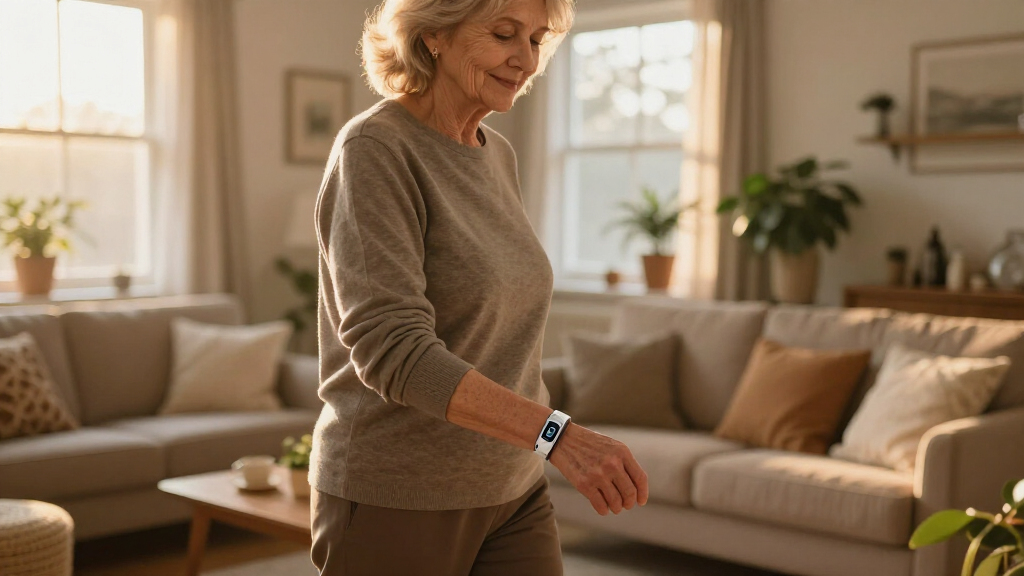
Because I could not rely on hands-on time with every device, I built this comparison around the factors that genuinely separate fall detection systems in real emergencies. My first filter was detection reliability and response path: I looked at whether a detected fall triggers a professional monitoring center, an app alert to caregivers, or both, because that difference defines what happens in the minutes after a fall. Second, I weighed coverage area — cellular GPS devices protect a person anywhere, while WiFi systems protect a home — and matched each product to the buyer it serves best. Third, I compared the true cost of ownership, since almost every device here requires a subscription and the sticker price is only part of the math. Finally, I looked at wearability and maintenance: waterproofing, battery life, and whether a senior will realistically keep the device on their body day after day. Products that scored well on response quality ranked higher than products with longer spec sheets, which is why the ordering below favors monitored service over features.
| automatic fall detection system | Water Resistance | Connectivity | Fall Detection | Included |
|---|---|---|---|---|
| ADT On-The-Go Emergency Medica | IP57 | Built-in cellular with GPS | Optional add-on (additional monthly fee) | Mobile device, lanyard, cradle charger |
| SecuLife Medical Alert Pendant | — | — | Yes, included | — |
| Nomo Medical Alert System with | — | Wireless, requires 2.4 GHz WiFi | — | — |
| Nomo Emergency Alert & Fall De | Yes, shower-safe | — | — | Lanyard (with 1-pack) |
Factors to Consider When Choosing Automatic Fall Detection Systems
Before choosing among these four systems, it helps to understand the decisions that actually drive outcomes during a fall emergency. I grouped the buying factors below around the two questions that matter most: who responds, and where the protection travels.Professional Monitoring vs. Self-Monitoring
This is the single biggest fork in the road. A professionally monitored system like ADT connects a detected fall to a staffed dispatch center that verifies the emergency and sends paramedics — even if the wearer is unconscious or cannot speak. A self-monitored system like SecuLife or Nomo sends app alerts to family or caregivers, who must then see the alert, respond, and call for help themselves. Self-monitoring typically costs $20–$30 less per month, but it shifts the entire response burden onto people who may be driving, working, or asleep. If the wearer lives alone and contacts are scattered across time zones, professional monitoring is worth every dollar of the premium.
Wearable vs. In-Home Coverage
A wearable pendant (ADT, SecuLife) protects the person everywhere the device goes, including outside the home — but only if it is actually worn. An in-home system (Nomo) protects the space regardless of whether the senior cooperates, but coverage stops at the front door. Be honest about the wearer: a senior who has rejected three pendants already will get zero protection from a fourth one, no matter how good its sensors are. Conversely, an active senior who gardens, walks, and drives needs GPS and cellular, not WiFi sensors.
Fall Detection Accuracy and Limits
No fall detection system on the market catches 100% of falls, and ADT says so explicitly in its own materials. Detection algorithms balance missed falls against false alarms — a system tuned to catch everything will also trigger during a hard sit onto a couch or a bumpy car ride. Expect the occasional false alert and treat a manual SOS button as the backup, never the other way around. Falls in the shower deserve special attention: check the waterproof rating (IP67 beats IP57) and whether the device is designed to be worn while bathing.
Total Cost of Ownership
Every product in this roundup requires a subscription, so the device price understates the real cost. Add up the monitoring fee, fall detection add-on fees, and any ecosystem subscriptions over a realistic three- to five-year horizon. SecuLife’s flat $20 plan is the cheapest ongoing option with GPS; ADT costs more once fall detection is added; Nomo’s tags look inexpensive until you price the required Smart Care kit and Essential+ plan. Also confirm cancellation terms — ADT requires no long-term contract, which is not universal in this industry.
Battery and Maintenance Realities
Battery life in this category spans three orders of magnitude: six days for SecuLife, roughly a day or two per charge for many cellular pendants, and ten years for the Nomo tags. Long battery life means nothing to remember and nothing to fail silently — but it usually comes bundled with home-only WiFi range. A charging routine is a genuine safety risk if the wearer has memory issues, because a dead pendant is worse than no pendant at all: it creates false confidence.
Frequently Asked Questions
Do automatic fall detection systems work without the senior pressing a button?
Yes, that is their defining feature. These systems use accelerometers and motion algorithms to sense the sudden acceleration and impact pattern of a fall, then trigger an alert automatically — critical for the most dangerous scenario, a fall that leaves the wearer unconscious or unable to move. That said, detection is not perfect. ADT openly states its fall detection will not catch 100% of falls, and every device in this roundup shares that limitation. That is why I treat the automatic detection as a supplement to, never a replacement for, a manual SOS button and regular check-ins.
Is professional monitoring worth the extra monthly cost over self-monitored alerts?
It depends on the wearer’s support network. If a senior lives alone, or their emergency contacts work long hours, live far away, or sleep with their phones off, professional monitoring is the difference between a dispatcher sending paramedics in minutes and an app alert sitting unread for hours. On the other hand, a family with an at-home caregiver or responsive nearby relatives can reasonably save money with a self-monitored system like SecuLife at $20 per month. The question to ask is blunt: at 3 a.m. on a Tuesday, who actually receives the alert, and how fast can they physically reach the fallen person?
Can fall detection devices be worn in the shower?
Most of the devices in this lineup are designed for it, but the ratings differ meaningfully. The SecuLife pendant carries an IP67 rating, which handles full immersion and makes it well suited for continuous shower wear. The ADT device’s IP57 rating covers splashes and brief water exposure — fine for showering, but less forgiving than SecuLife. The Nomo movement tags are water-resistant and explicitly marketed for shower use. Since the bathroom is one of the highest-risk rooms for falls, shower compatibility should be a hard requirement, not a nice-to-have, in any shortlist.
What happens if the fall alert goes to a caregiver who doesn’t respond?
With self-monitored systems like SecuLife and Nomo, an unanswered alert can simply go unanswered — there is no dispatch center as a backstop. That is the structural weakness of self-monitoring, and it is why I ranked ADT first for seniors who live alone. Some self-monitored platforms allow multiple contacts to be listed so alerts cascade from one person to the next, which partially mitigates the risk, but it still assumes someone eventually picks up. If that assumption feels fragile for your family’s situation, professional monitoring is the safer architecture, full stop.
Are there fall detection options for seniors who refuse to wear a device?
Yes, and it is one of the strongest reasons the Nomo system is in this lineup. Its base station and movement tags monitor the home environment — motion patterns, falls, and activity routines — without requiring the senior to wear or charge anything, and without cameras. The tradeoff is that this protection only exists inside the home, so it suits seniors who spend most of their time there. A common hybrid approach is an in-home system as the foundation, plus a wearable like SecuLife for outings, giving coverage both where they live and where they go.
Conclusion
Matching the right system to the right buyer comes down to two honest questions: does the senior leave the house, and will they wear a device? For active seniors who want maximum protection anywhere, my top pick is the ADT On-The-Go system — its professional monitoring and GPS make it the only option here where a live dispatcher responds to a fall wherever it happens. For budget-minded families with responsive caregivers, the SecuLife pendant bundles fall detection, GPS, geofencing, and two-way calling into a $20 plan that undercuts everything else with comparable mobility. For seniors who resist wearables or value privacy, the Nomo at-home system provides camera-free fall and routine monitoring they will actually accept, making it the pragmatic choice where compliance is the barrier. And for families already building a Nomo setup, the movement tags are a low-cost, zero-maintenance way to extend fall and panic coverage to more rooms with a battery that outlasts the decade. Whichever direction fits, the decision I would not compromise on is the response path: know exactly who is notified when a fall is detected, and be certain that person can act.
Halloween Picks
halloween
As an affiliate, we earn on qualifying purchases.