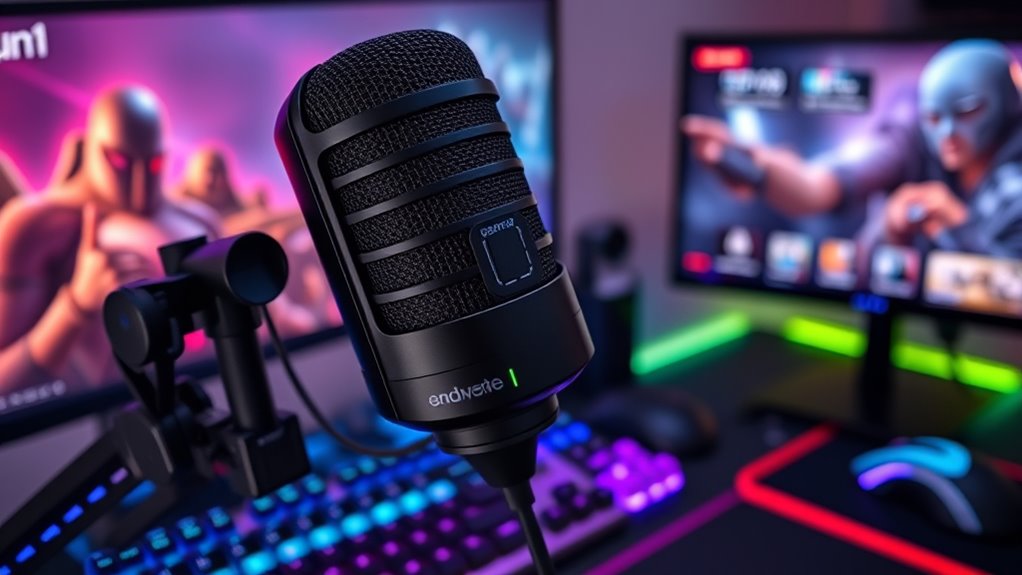
Gaming microphones range from plug-and-play USB models to dual-mode USB/XLR dynamics built for long-term streaming growth, and the right choice depends on your room, your platform, and how seriously you take vocal clarity. The FIFINE AmpliGame AM8 stands out as my best overall pick because its dynamic capsule tames noisy rooms while the USB/XLR flexibility keeps it useful if you later upgrade to an audio interface. For pure value, the FIFINE AmpliGame A6V delivers condenser clarity, RGB flair, and simple USB operation without draining your budget, while the Razer Seiren V3 Chroma is the strongest pick if you want tight ecosystem integration with Razer Synapse lighting. The main tradeoff in this category is between condenser mics that capture detail but also room noise, and dynamic mics that stay clean in untreated spaces but need more gain. Read on for the full ranked breakdown and buying guidance.

Turn quiet afternoons into listening time
- Thousands of audiobooks, podcasts and originals
- Listen on your phone, tablet or Echo — also offline
- Cancel anytime
Complete the kit


Key Takeaways
- Dynamic capsule models (FIFINE AM8, AmpliTank K688CT, AmpliGame AM8T) consistently outperformed condensers for noise rejection in untreated rooms, which is why they dominate the top of the ranking.
- Dual USB/XLR connectivity was the single biggest differentiator for long-term value — every mic with both outputs ranked higher because it survives an interface upgrade.
- Budget condensers under roughly the entry tier (MRSDY, the generic RGB condenser, TONOR TC310+) all showed the same pattern: great clarity for the money, but weaker noise handling and lighter boom arms.
- FIFINE appears six times in this lineup for good reason — its product ladder (A6V, A6T, AM8, AM8T, AM8W, K688CT) covers every budget and connectivity tier, which makes it the default brand comparison in this category.
- Built-in AI noise cancellation (TONOR XLR/USB, ZealSound) partially compensates for untreated rooms, but it can color your voice — a well-chosen capsule beats software correction every time.
| TONOR TD510 Air S H+ Dynamic Gaming Microphone |  | Best Future-Proof Pick | Connectivity: USB and XLR (dual output) | Microphone Type: Dynamic | Special Feature: Triple AI noise cancellation | VIEW ON AMAZON | See Our Full Breakdown |
| FIFINE AmpliGame A6V USB Gaming Microphone |  | Best Value Kit | Type: USB condenser microphone | Sampling Rate: 192kHz | Polar Pattern: Cardioid | VIEW ON AMAZON | See Our Full Breakdown |
| Razer Seiren V3 Chroma RGB USB Microphone | 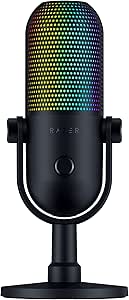 | Best RGB Ecosystem Pick | Microphone Type: Supercardioid condenser | Connectivity: USB | Lighting: Chroma RGB, stream-reactive | VIEW ON AMAZON | See Our Full Breakdown |
| Blue Yeti USB Microphone — Blackout | 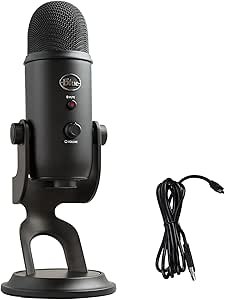 | Best for Multi-Purpose Creators | Connectivity: USB, plug and play | Capsule Array: Custom three-capsule condenser | Pickup Patterns: Cardioid, omnidirectional, bidirectional, stereo | VIEW ON AMAZON | See Our Full Breakdown |
| ZealSound K66 Podcast USB Microphone |  | Best for Mobile and Multi-Device Creators | Connectivity: USB with USB-C and Lightning adapters | Microphone Type: Top-addressed condenser | Polar Pattern: Cardioid | VIEW ON AMAZON | See Our Full Breakdown |
| Razer Seiren V3 Mini USB Microphone |  | Best Compact Pick | Type: Condenser microphone | Pickup Pattern: Supercardioid | Connectivity: USB | VIEW ON AMAZON | See Our Full Breakdown |
| TONOR TC310+ Gaming Microphone Set with Boom Arm | 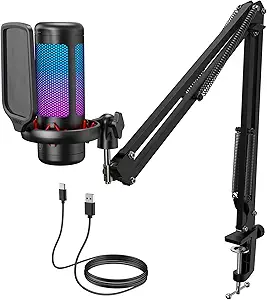 | Best Complete Starter Kit | Connectivity: USB-A | Polar Pattern: Unidirectional | Controls: Tap mute, rotating gain dial, RGB mode and brightness buttons | VIEW ON AMAZON | See Our Full Breakdown |
| FIFINE AmpliTank K688CT Podcast Microphone Kit | 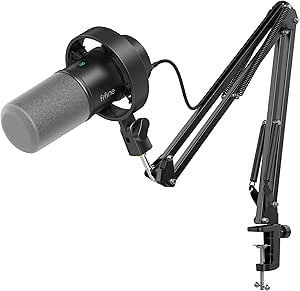 | Best Upgrade Path | Connectivity: USB and XLR | Polar Pattern: Unidirectional | Frequency Range: 50 Hz – 16 kHz | VIEW ON AMAZON | See Our Full Breakdown |
| MAONO DGM20S USB Gaming Microphone |  | Best for Console and Multi-Platform Gamers | Microphone Type: USB condenser | Pickup Pattern: Cardioid | Connectivity: USB / USB-C | VIEW ON AMAZON | See Our Full Breakdown |
| MRSDY USB Gaming Microphone with Noise Reduction and RGB |  | Best Bare-Bones Value | Connectivity: USB (Type-A) | Polar Pattern: Unidirectional | Monitoring: 3.5mm headphone jack, latency-free | VIEW ON AMAZON | See Our Full Breakdown |
| FIFINE AmpliGame A6T USB Gaming Microphone Kit, Condenser Mic for Streaming |  | Best Complete Starter Kit | Connectivity: USB-C to USB-A/C | Polar Pattern: Cardioid condenser | Compatibility: Windows, Mac OS, PS4, PS5 | VIEW ON AMAZON | See Our Full Breakdown |
| FIFINE AmpliGame AM8T XLR/USB Gaming Microphone Set, Dynamic PC Mic |  | Best for Future Upgraders | Connectivity: USB and XLR | Capsule: Dynamic, -50dB sensitivity | Polar Pattern: Cardioid | VIEW ON AMAZON | See Our Full Breakdown |
| FIFINE AmpliGame AM8W XLR/USB Gaming Microphone for Streaming Podcasting |  | Best White Aesthetic Build | Connectivity: USB and XLR | Capsule: Dynamic, cardioid | Color: White | VIEW ON AMAZON | See Our Full Breakdown |
| COCONISE Gaming Microphone for PC: USB Condenser Mic with Quick Mute & Pop Filter |  | Best Budget Desk Pick | Connectivity: USB (detachable) | Capsule: 25mm condenser, cardioid | Sampling Rate: Up to 192kHz | VIEW ON AMAZON | See Our Full Breakdown |
| FIFINE AmpliGame AM8 USB/XLR Dynamic Microphone for Gaming Streaming |  | Best Portable All-Rounder | Connectivity: USB and XLR | Capsule: Dynamic, cardioid, end-addressing | Frequency Response: 50Hz–16kHz | VIEW ON AMAZON | See Our Full Breakdown |
| gaming microphone | Connectivity | Controls | Compatibility |
|---|---|---|---|
| TONOR TD510 Air S H+ Dynamic G | USB and XLR (dual output) | Mic and headphone volume, gain, tap-to-mute | PC, PS4, PS5 (USB); audio interfaces via XLR; not Xbox |
| FIFINE AmpliGame A6V USB Gamin | — | — | PS4, PS5, Windows, Mac |
| Razer Seiren V3 Chroma RGB USB | USB | Tap-to-mute sensor, digital gain limiter | Discord, OBS Studio, XSplit |
| Blue Yeti USB Microphone | USB, plug and play | — | PC and Mac |
| ZealSound K66 Podcast USB Micr | USB with USB-C and Lightning adapters | Gain, monitoring volume, echo knobs; instant mute with LED | Windows, Mac, PS4, PS5, iPhone, iPad, Android |
| Razer Seiren V3 Mini USB Micro | USB | Tap-to-mute sensor with LED indicator | — |
| TONOR TC310+ Gaming Microphone | USB-A | Tap mute, rotating gain dial, RGB mode and brightness buttons | PC, Mac, PS4, PS5 |
| FIFINE AmpliTank K688CT Podcas | USB and XLR | Mute function, gain/volume adjustment | — |
| MAONO DGM20S USB Gaming Microp | USB / USB-C | — | PC, Mac, laptop, PS5, PS4 (not Xbox) |
| MRSDY USB Gaming Microphone wi | USB (Type-A) | Quick-mute button, gain/volume control | PC, Mac, laptop, PS4, PS5 |
| FIFINE AmpliGame A6T USB Gamin | USB-C to USB-A/C | Touch mute, volume knob | Windows, Mac OS, PS4, PS5 |
| FIFINE AmpliGame AM8T XLR/USB | USB and XLR | Tap mute, gain knob, headphone volume | — |
| FIFINE AmpliGame AM8W XLR/USB | USB and XLR | Tap-to-mute, gain knob, headphone volume (USB only) | — |
| COCONISE Gaming Microphone for | USB (detachable) | Touch mute, rotary volume, 3.5mm monitoring jack | PC, laptop, PS4/PS4 Pro/PS5 |
| FIFINE AmpliGame AM8 USB/XLR D | USB and XLR | Tap-to-mute, gain knob, headphone volume (USB only) | — |
More Details on Our Top Picks
TONOR TD510 Air S H+ Dynamic Gaming Microphone
The dual USB and XLR outputs are what set the TD510 apart from nearly everything else at this price. Most starter gaming mics, like the FIFINE AmpliGame A6V, lock you into USB forever — but this one lets you start plug-and-play today and add an audio interface later without replacing the mic itself. That alone makes it the smartest long-term buy for anyone who suspects streaming will graduate from hobby to serious pursuit. The dynamic capsule with triple AI noise cancellation means keyboard clatter and fan hum stay out of your Discord channel, and the included boom arm plus tap-to-mute rounds out a genuinely complete kit. The tradeoffs: XLR cables are not included, Xbox players are left out entirely, and dynamic capsules demand close, consistent mic technique that casual desk-talkers may find fussy.
Pros:- Dual USB and XLR outputs protect your investment as your setup grows
- AI noise cancellation suppresses keyboard and fan noise during streams
- Complete kit includes a boom arm, tap mute, gain control, and headphone monitoring jack
- Works directly with PC, PS4, and PS5 in USB mode
- Two-year manufacturer warranty
Cons:- Not compatible with Xbox
- XLR cables are not included, adding cost when you upgrade
- Dynamic capsule requires speaking close to the mic for best sound
Best for: Aspiring streamers who want to start on USB now and upgrade to an XLR audio interface later without buying a second mic
Not ideal for: Xbox gamers, since the mic is explicitly incompatible, and buyers who want everything in one box — you’ll need to purchase XLR cables separately when you upgrade
- Connectivity:USB and XLR (dual output)
- Microphone Type:Dynamic
- Special Feature:Triple AI noise cancellation
- Controls:Mic and headphone volume, gain, tap-to-mute
- Monitoring:3.5mm headphone jack for zero-latency monitoring
- Compatibility:PC, PS4, PS5 (USB); audio interfaces via XLR; not Xbox
- Weight:850 g (1.87 lbs)
- Warranty:2 years
Our verdict“This is the pick for gamers who see XLR in their future and don’t want to buy twice — skip it if you’re on Xbox or want a one-cable-and-done solution.”
FIFINE AmpliGame A6V USB Gaming Microphone
For pure completeness-per-dollar, the AmpliGame A6V is hard to beat. The box includes a shock mount, pop filter, tripod stand, and detachable USB cable — accessories that other budget mics in this roundup, like the TONOR TC310+, either cheap out on or omit. Its 192kHz sampling rate outclasses what most entry-level condensers offer, and the iF Design Award-winning body looks far more expensive than it is. The quick mute with RGB shutoff is a genuinely practical touch: when the lights die, you know you’re silent, which prevents those accidental hot-mic moments mid-stream. Where it falls short of the Razer Seiren V3 Chroma is polish — no stream-reactive lighting, no software suite, and a basic tripod instead of a boom arm. The cardioid pattern also demands you speak into the front consistently, so casual lean-back gamers may drift off-axis.
Pros:- Includes shock mount, pop filter, tripod stand, and USB cable in the box
- 192kHz sampling rate for detailed, high-resolution voice capture
- Quick mute button with RGB indicator that shuts off when muted
- Plug-and-play on PS4, PS5, PC, and Mac with no software required
Cons:- Cardioid pattern requires speaking directly into the front of the mic
- Tripod stand takes up desk space and lacks the flexibility of a boom arm
- Fixed RGB effects with no deeper customization software
Best for: First-time streamers who want a complete, ready-to-stream kit with all accessories included from day one
Not ideal for: Loud or untreated rooms — the condenser capsule picks up more ambient noise than dynamic options like the TONOR TD510
- Type:USB condenser microphone
- Sampling Rate:192kHz
- Polar Pattern:Cardioid
- Signal-to-Noise Ratio:70dB
- RGB Lighting:7 gradient colors with mute indicator
- Cable Length:6.6 ft detachable USB
- Compatibility:PS4, PS5, Windows, Mac
- Included Accessories:Shock mount, pop filter, tripod stand, USB cable
Our verdict“The best all-in-one starter package for streamers who want every accessory included without chasing separate purchases.”
Razer Seiren V3 Chroma RGB USB Microphone
If your desk already glows Razer green, the Seiren V3 Chroma is the obvious match. Its stream-reactive Chroma lighting — which pulses and shifts in sync with your gameplay or audience alerts — is a step beyond the static gradients on the FIFINE AmpliGame A6V, and it syncs across your other Razer peripherals for a unified battlestation look. The supercardioid condenser is tighter than standard cardioid, rejecting more side noise, and the digital gain limiter stops you from clipping when a ranked match gets loud. But that ecosystem comes with strings: full customization runs through Razer Synapse, which means an account, background software, and occasional update prompts. Compared with the TONOR TD510, there’s no XLR escape hatch here — USB only, forever. And the premium lighting carries a premium price for what is, acoustically, a modest step up from cheaper rivals.
Pros:- Stream-reactive Chroma RGB that syncs with other Razer peripherals
- Supercardioid pattern rejects more background noise than standard cardioid mics
- Tap-to-mute sensor and digital gain limiter prevent on-stream accidents
- Deep customization through Razer Synapse for lighting and audio
Cons:- Requires Razer Synapse software and account for full functionality
- USB only — no XLR upgrade path unlike the TONOR TD510
- Costs more than comparable-sounding budget alternatives
Best for: Streamers already invested in the Razer ecosystem who want lighting that reacts to their stream and syncs with other Chroma gear
Not ideal for: Minimalists and privacy-conscious buyers who dislike mandatory Synapse software, or anyone planning a future XLR interface setup
- Microphone Type:Supercardioid condenser
- Connectivity:USB
- Lighting:Chroma RGB, stream-reactive
- Controls:Tap-to-mute sensor, digital gain limiter
- Build:Built-in shock absorber
- Software:Razer Synapse
- Compatibility:Discord, OBS Studio, XSplit
Our verdict“Buy it for the ecosystem and reactive lighting, not raw audio value — the sound is good, but the flair is what you’re paying extra for.”
Blue Yeti USB Microphone — Blackout
The Blue Yeti earns its spot not by being the flashiest gaming mic but by being the most versatile recording tool here. Its four pickup patterns — cardioid, omni, bidirectional, and stereo — mean it handles a two-person podcast, an interview across a table, or room ambience in ways single-pattern rivals like the Razer Seiren V3 Chroma simply cannot. Onboard controls for gain, headphone volume, mute, and pattern selection keep everything at your fingertips, and Blue VO!CE through Logitech G HUB adds broadcast-style voice effects if you want them. The catch for pure gamers: it’s physically large, hogging desk real estate next to your monitor, and its sensitivity works against it in noisy rooms — a dynamic mic like the TONOR TD510 will ignore your mechanical keyboard where the Yeti will faithfully broadcast it. Plan on a boom arm if you want it off your desk, and expect to install G HUB for the full feature set.
Pros:- Four switchable pickup patterns cover solo, interview, and room recording
- Broadcast-quality three-capsule condenser array
- Full onboard hardware controls for gain, volume, mute, and pattern
- Blue VO!CE software adds vocal effects and modulation
Cons:- Large footprint dwarfs compact gaming mics and may require a boom arm
- Full feature set requires downloading Logitech G HUB
- Highly sensitive capsule captures background noise in untreated rooms
Best for: Creators who split time between gaming, podcasting, and music recording and want one mic that does all of it
Not ideal for: Gamers in small or noisy setups — it’s bulky on the desk and its sensitive capsule picks up keyboard and fan noise readily
- Connectivity:USB, plug and play
- Capsule Array:Custom three-capsule condenser
- Pickup Patterns:Cardioid, omnidirectional, bidirectional, stereo
- Onboard Controls:Headphone volume, gain, mute, pattern selection
- Software:Blue VO!CE via Logitech G HUB
- Compatibility:PC and Mac
- Mounting:Adjustable desktop stand; boom-arm compatible
Our verdict“The best choice if gaming is only part of your recording life — skip it if your setup is cramped or your room is loud.”
ZealSound K66 Podcast USB Microphone
Most mics in this roundup live on your desk; the ZealSound K66 travels. The inclusion of USB-C and Lightning adapters means it plugs into an iPhone, iPad, or Android phone as easily as a PC — something no other pick here, not the FIFINE AmpliGame A6V nor the Blue Yeti, can claim. That makes it the natural fit for TikTok creators and podcasters recording away from their battlestation. The hardware control suite is unusually hands-on: dedicated knobs for gain, monitoring volume, and even echo let you shape sound without opening any software, and the zero-latency headphone jack means you catch distortion before your audience does. The compromises are real, though. The onboard echo effect is a gimmick you’ll likely disable, the 46kHz sampling rate trails the FIFINE’s 192kHz, and the weighted desktop base — stable as it is — means no boom arm flexibility for camera-friendly overhead positioning.
Pros:- Includes USB-C and Lightning adapters for iPhone, iPad, and Android recording
- Hardware knobs for gain, monitoring volume, and echo — no software needed
- Zero-latency 3.5mm headphone monitoring with independent volume
- Noise Reduction Mode cuts keyboard clicks, fan hum, and background chatter
Cons:- Onboard echo effect is a novelty that adds little for serious recording
- 46kHz sampling rate trails higher-resolution rivals like the FIFINE A6V
- Fixed weighted base with no boom arm compatibility limits placement
Best for: TikTok and YouTube creators who record on phones and tablets as often as on a PC and need one mic for everything
Not ideal for: Desk-bound streamers who want a boom-arm setup — the fixed weighted base and top-addressed design limit mounting options
- Connectivity:USB with USB-C and Lightning adapters
- Microphone Type:Top-addressed condenser
- Polar Pattern:Cardioid
- Frequency Response:40Hz–18kHz
- Sampling Rate:46kHz
- Controls:Gain, monitoring volume, echo knobs; instant mute with LED
- Monitoring:3.5mm zero-latency headphone jack
- Compatibility:Windows, Mac, PS4, PS5, iPhone, iPad, Android
- Cable Length:70.87 in USB cable
Our verdict“The obvious pick for phone-first creators who need one mic across every device — desk streamers with boom arms should look elsewhere.”
Razer Seiren V3 Mini USB Microphone
Space is the defining constraint in most gaming setups, and the Razer Seiren V3 Mini is built entirely around solving it. Compared with the Blue Yeti, which dominates a desk with its broad body and heavy base, this model frees up real estate while keeping voice capture genuinely clean thanks to its supercardioid pattern — a tighter rejection zone than the cardioid designs on the MAONO DGM20S, which matters if your room has keyboard clatter or fan noise. The tap-to-mute sensor with LED feedback is faster and quieter than flipping a switch mid-raid, and the built-in shock absorber cuts desk thumps without extra hardware.
The tradeoff is scope: this is a mic-and-stand solution only. There’s no boom arm in the box like the TONOR TC310+ kit, no XLR path like the FIFINE AmpliTank K688CT, and deeper customization runs through Razer Synapse rather than on-hardware controls.
Pros:- Supercardioid pattern rejects side and rear noise better than typical cardioid budget mics
- Tap-to-mute with LED indicator is instant and silent during streams
- Built-in shock absorber reduces desk vibration without extra accessories
- Genuinely compact footprint with plug-and-play USB setup
Cons:- USB-only with no XLR option, so there’s no upgrade path to mixers or interfaces
- Advanced customization depends on Razer Synapse software
- Small body and tiltable stand limit mounting and positioning flexibility
Best for: Streamers and gamers with cramped desks who want clean audio and a discreet footprint without a boom-arm install
Not ideal for: Buyers who want a complete starter kit — there’s no boom arm or pop filter included, and no XLR path for future audio upgrades
- Type:Condenser microphone
- Pickup Pattern:Supercardioid
- Connectivity:USB
- Controls:Tap-to-mute sensor with LED indicator
- Build:Built-in shock absorber, tiltable stand
- Software:Customizable via Razer Synapse
Our verdict“This pick makes the most sense for gamers who prioritize a tidy, small-footprint setup with strong background-noise rejection over expandability.”
TONOR TC310+ Gaming Microphone Set with Boom Arm
Where most budget mics sell you a capsule and wish you luck, the TONOR TC310+ arrives as a full desk kit: mic, metal boom arm, shock-absorbing clamp mount, and RGB lighting with four modes and adjustable brightness. That completeness is what separates it from the similarly priced MRSDY USB mic, which is a desk-stand-only affair. The rotating gain collar on top of the mic is a nice touch — dialing volume in mid-game without alt-tabbing beats the button-only controls on cheaper rivals, and tap-to-mute handles stream mishaps.
The compromises are the ones you’d expect at this tier. Sound quality is serviceable for chat and casual streaming but won’t match the clarity of the Razer Seiren V3 Mini, the RGB is cosmetic rather than ecosystem-synced, and the clamp only fits desks up to 2.36 inches thick — a real limitation for anyone with a chunky or rounded desk edge.
Pros:- All-in-one package includes a metal boom arm and sturdy desk clamp
- Rotating gain control on the mic body allows quick in-game volume adjustments
- Four RGB modes with brightness control to match any setup aesthetic
- Tap-to-mute and plug-and-play USB make it friendly for beginners
Cons:- Boom arm clamp only fits desks up to 2.36 inches thick
- Audio quality is tuned for chat rather than polished stream or music production
- RGB lighting lacks deeper customization or ecosystem syncing
Best for: First-time streamers who want everything in one box — arm, mic, and controls — without buying accessories separately
Not ideal for: Audiophiles or growing creators, since the sound signature is chat-grade and there’s no XLR upgrade path like the FIFINE AmpliTank K688CT
- Connectivity:USB-A
- Polar Pattern:Unidirectional
- Controls:Tap mute, rotating gain dial, RGB mode and brightness buttons
- Included Hardware:Metal boom arm with desk clamp (fits desks up to 2.36 in)
- Compatibility:PC, Mac, PS4, PS5
- Signal-to-Noise Ratio:78 dB
Our verdict“The TC310+ is the smartest choice for someone starting from zero who’d rather buy one complete kit than assemble a setup piece by piece.”
FIFINE AmpliTank K688CT Podcast Microphone Kit
The FIFINE AmpliTank K688CT is the only mic in this batch that lets you start simple and grow into a pro signal chain. Its dual USB/XLR output means you can plug in via USB today, then later route XLR into a mixer or interface — a flexibility the USB-only MAONO DGM20S and Razer Seiren V3 Mini simply can’t offer. The dynamic capsule also behaves better than condensers in untreated rooms, ignoring echoes and background noise that plague the FIFINE AmpliGame A6V in echoey spaces. The bundled boom arm, shock mount, and windscreen round out a kit that feels geared toward long-term podcast and streaming work.
The catch: switching to XLR costs you functionality. In XLR mode the onboard function keys are disabled, pushing mute and gain duties onto your interface, and you’ll need to budget for that extra gear. Input volume also demands some dialing-in out of the box.
Pros:- Dual USB and XLR outputs provide a genuine path to professional audio gear
- Dynamic capsule handles untreated, echoey rooms better than condenser mics
- Complete kit includes boom arm, shock mount, and windscreen
- Intuitive onboard mute and gain controls in USB mode
Cons:- Onboard function keys stop working in XLR mode
- XLR use requires a separate mixer or audio interface purchase
- Input volume needs manual tuning to hit the right levels
Best for: Podcasters and streamers planning to upgrade to a mixer or audio interface within their setup’s lifetime
Not ideal for: Console gamers or casual users who just want plug-and-play — the XLR advantage goes unused without extra equipment, and cheaper USB options do the same job
- Connectivity:USB and XLR
- Polar Pattern:Unidirectional
- Frequency Range:50 Hz – 16 kHz
- Signal-to-Noise Ratio:80 dB
- Controls:Mute function, gain/volume adjustment
- Included Hardware:Boom arm, shock mount, windscreen
- Build:Metal enclosure
Our verdict“This is the pick for creators thinking two setups ahead — buy it once for USB, keep it when you go pro.”
MAONO DGM20S USB Gaming Microphone
If your gaming life spans a PC, Mac, PS4, and PS5, the MAONO DGM20S is the most friction-free option here. Unlike the MRSDY USB mic, which covers similar ground with a more plasticky build, the DGM20S ships with a serious accessory loadout: metal boom arm, shock mount, pop filter, and desktop clamp, putting its desktop presence closer to the TONOR TC310+ kit than a bare mic. The zero-latency 3.5mm headphone monitoring jack is the standout for competitive players — you hear yourself in real time, which the Razer Seiren V3 Mini can’t manage — and one-click noise reduction plus a physical gain knob keeps Discord audio tidy without software fiddling.
Two caveats temper the enthusiasm: the noise cancellation software is Windows-only, so Mac and console users get hardware features but not the full toolkit, and Xbox players are left out entirely — an odd gap in an otherwise platform-generous package.
Pros:- Broad compatibility across PC, Mac, PS5, and PS4 with no drivers needed
- Zero-latency 3.5mm headphone monitoring for real-time self-monitoring
- Complete mounting kit including boom arm, shock mount, pop filter, and clamp
- One-click noise reduction with physical mute button and gain knob
Cons:- Noise cancellation software is exclusive to Windows
- No Xbox compatibility despite otherwise broad platform support
- Cardioid pattern rejects less ambient noise than the supercardioid Razer Seiren V3 Mini
Best for: Multi-platform gamers and Discord-focused players who move between PC and PlayStation and want full kit plus real-time monitoring
Not ideal for: Xbox owners, who can’t use it at all, and Mac users who would lose access to the Windows-only noise cancellation software
- Microphone Type:USB condenser
- Pickup Pattern:Cardioid
- Connectivity:USB / USB-C
- Monitoring:Zero-latency 3.5mm headphone jack
- Compatibility:PC, Mac, laptop, PS5, PS4 (not Xbox)
- Included Hardware:Metal boom arm, shock mount, pop filter, desktop clamp
- Software:Maono noise cancellation software (Windows only)
Our verdict“For PlayStation-plus-PC households that want a full boom-arm setup and monitoring out of one box, this is the easiest yes in the lineup.”
MRSDY USB Gaming Microphone with Noise Reduction and RGB
Not everyone needs a boom arm and a shock mount — some players just need a mic that works the moment it’s plugged in. That’s the MRSDY USB Gaming Microphone‘s entire identity: plug-and-play USB with no drivers, a quick-mute button, on-mic gain control, and a 3.5mm jack for latency-free monitoring. Compared with the TONOR TC310+, you lose the boom arm and the rotating gain collar; compared with the MAONO DGM20S, you lose most of the accessory loadout and platform polish. What you keep is the functional core — noise cancellation, console compatibility with PS4/PS5, and a long 2-meter cable that comfortably reaches tower PCs stashed under a desk.
The build betrays the price tier, though. Plastic construction makes it feel less durable than the metal-bodied FIFINE options, and the RGB is fixed and basic rather than a customizable lighting system. It’s a tool, not a showpiece.
Pros:- True plug-and-play operation with no drivers on PC, Mac, PS4, and PS5
- 3.5mm headphone jack delivers real-time, latency-free monitoring
- On-mic quick mute and gain controls cover everyday needs
- 2-meter cable easily reaches PCs positioned away from the desk
Cons:- Plastic-heavy construction feels less durable than metal rivals
- RGB lighting offers minimal customization
- No boom arm or shock mount included, limiting positioning options
Best for: Budget-conscious gamers or younger players who want core features — mute, gain, monitoring — without paying for mounting hardware
Not ideal for: Serious streamers or anyone with a curated RGB setup, since the build quality and lighting options are entry-level
- Connectivity:USB (Type-A)
- Polar Pattern:Unidirectional
- Monitoring:3.5mm headphone jack, latency-free
- Controls:Quick-mute button, gain/volume control
- Cable Length:78 in (2 m)
- Compatibility:PC, Mac, laptop, PS4, PS5
- Build:Plastic and metal, 8.8 oz
Our verdict“A sensible no-frills buy for players who want working controls and console support at minimal cost — just don’t expect premium build or lighting.”
FIFINE AmpliGame A6T USB Gaming Microphone Kit, Condenser Mic for Streaming
The A6T earns its place as the most complete out-of-the-box package in this lineup. Where the COCONISE condenser arrives as a bare mic on a desk stand, FIFINE bundles a boom arm, shock mount, and pop filter, so a new streamer can go from unboxing to live in minutes without hunting for accessories. The reversible USB-C connection and an 8.2ft cable mean no fumbling behind a tower mid-session, and the touch-mute on top is quieter and faster than the button mutes on cheaper sets. The tradeoff is inherent to its condenser capsule: the cardioid pattern picks up more room noise than the dynamic AM8T below it, so untreated rooms with clacky keyboards will bleed into comms. There’s also no XLR path, unlike FIFINE’s AM8 models, which locks you into USB forever.
Pros:- Full kit with boom arm, shock mount, and pop filter included
- Silent one-handed touch mute on top of the mic
- Long 8.2ft reversible USB-C cable reaches rear console ports
- Two-tone gradient RGB matches synced gaming setups
Cons:- Condenser capsule picks up keyboard and room noise more readily than dynamic rivals
- USB-only — no upgrade path to XLR mixers or interfaces
Best for: First-time streamers who want every accessory included and a plug-and-play setup on PC, Mac, or PS5
Not ideal for: Streamers in echoey, untreated rooms or anyone planning to move to an audio interface later — the condenser capsule and USB-only design both work against you
- Connectivity:USB-C to USB-A/C
- Polar Pattern:Cardioid condenser
- Compatibility:Windows, Mac OS, PS4, PS5
- Cable Length:8.2 ft (2.5 m)
- Controls:Touch mute, volume knob
- Included Accessories:Boom arm, shock mount, pop filter, C-clamp
- Lighting:Two-tone automatic gradient RGB
Our verdict“If you want one box that turns a bare desk into a streaming station, this is the easiest starting point in the roundup — just treat your room or accept some background noise.”
FIFINE AmpliGame AM8T XLR/USB Gaming Microphone Set, Dynamic PC Mic
The AM8T solves a problem the A6T can’t: obsolescence. Its dynamic capsule with -50dB sensitivity ignores far more room noise than the condenser A6T, and its dual USB/XLR outputs mean today it plugs straight into a PS5 and tomorrow into a GoXLR or audio interface without replacing the mic. Compared with the standalone AM8, this version adds a sturdy metal boom arm with anti-scratch clamp, positioning it as a full battlestation setup rather than a desktop stick mic. Real-time headphone monitoring with its own volume control is something the TONOR TC310+ set omits, and it matters when you’re balancing game audio against your own voice. The catches: FIFine ships no XLR cable in the box, and the end-addressing dynamic design demands close, consistent mouth placement — lazy mic distance means thin audio.
Pros:- Dual USB and XLR outputs protect the investment long-term
- Dynamic capsule naturally rejects keyboard and background noise
- Boom arm, monitoring jack, and gain knob included in the kit
- RGB can be toggled off entirely with one button tap
Cons:- XLR cable not included, adding a hidden cost to the upgrade path
- Requires close, consistent positioning for best sound
Best for: Streamers who want clean audio now and a no-replacement upgrade path to a mixer or interface later
Not ideal for: Chatters who like leaning back from the mic — dynamic capsules need 2-6 inches of proximity to sound full
- Connectivity:USB and XLR
- Capsule:Dynamic, -50dB sensitivity
- Polar Pattern:Cardioid
- Controls:Tap mute, gain knob, headphone volume
- Monitoring:3.5mm headphone jack with volume control
- Included Accessories:Boom arm, C-clamp, windscreen, 8.2ft USB-C cable
- Desk Clamp Fit:Up to 2-inch desktop thickness
Our verdict“This is the pick for anyone who suspects their streaming hobby will grow into a proper audio chain — buy once, upgrade the backend later.”
FIFINE AmpliGame AM8W XLR/USB Gaming Microphone for Streaming Podcasting
Under the finish, the AM8W is essentially the AM8 dressed for a white-themed battlestation, and that’s genuinely its whole pitch — almost every mic in this roundup, from the Razer Seiren V3 to the Blue Yeti Blackout, assumes you run a black desk. Same dynamic capsule, same USB/XLR flexibility, same tap-to-mute and monitoring jack as its black sibling. Where it diverges from the AM8T kit is format: this is a compact desktop unit, not a boom-arm setup, which suits smaller desks and clean minimalist builds but sacrifices positioning flexibility. The real friction is functional: RGB lighting, mute, gain, and monitoring all go dark in XLR mode, so half the feature list exists only on USB. At 1.3 pounds on a desk stand, it also transmits more typing vibration than a shock-mounted rival.
Pros:- Rare white finish that matches light-themed builds
- Same dynamic noise rejection and XLR/USB flexibility as the AM8
- Compact footprint fits tight desks
- Full control set — mute, gain, monitoring — over USB
Cons:- RGB and all onboard controls are disabled when using XLR
- Desktop stand transmits more desk vibration than boom-arm kits
Best for: Creators with white or light-themed setups who want a matching mic that still offers an XLR escape hatch
Not ideal for: Anyone needing boom-arm positioning or heavy in-hardware controls in XLR mode — the desk stand and locked-out features will frustrate both
- Connectivity:USB and XLR
- Capsule:Dynamic, cardioid
- Color:White
- Weight:1.3 lbs
- Impedance:32 ohms
- Signal-to-Noise Ratio:80 dB
- Controls:Tap-to-mute, gain knob, headphone volume (USB only)
- Mounting:Built-in 3/8″ and 5/8″ threads
Our verdict“Choose this over the standard AM8 purely for the aesthetic — functionally identical, visually unmatched in a white setup.”
COCONISE Gaming Microphone for PC: USB Condenser Mic with Quick Mute & Pop Filter
The COCONISE competes on simplicity: plug it in, tap to mute, done. Its smartest trick is that the RGB cuts out when muted, giving an unmistakable visual cue that has saved plenty of streamers from broadcasting private moments — the MRSDY and MAONO budget mics handle muting less elegantly. The weighted carbon steel base genuinely survives desk bumps during heated matches, which the lighter desktop stands in this price class don’t, and the 25mm condenser diaphragm with 192kHz sampling delivers surprisingly rich voice for the money. But corners show: the 1.8m cable is shorter than FIFINE’s 2.5m, the fixed desk stand offers none of the A6T’s boom-arm reach, and like all budget condensers it will happily capture your fan, your keyboard, and your dog. This is a chat mic, not a production mic.
Pros:- RGB shuts off when muted for instant visual confirmation
- Weighted carbon steel base resists tipping during gameplay
- Real-time 3.5mm headphone monitoring at this price is uncommon
- 25mm diaphragm with 192kHz sampling captures detailed vocals
Cons:- Fixed desk stand with no boom-arm reach or height adjustment
- Condenser capsule is generous with background noise pickup
- Shorter 1.8m cable limits placement options
Best for: Budget-conscious PC or console gamers who want a stable, no-fuss desk mic primarily for in-game comms and casual streaming
Not ideal for: Podcasters or serious streamers — the condenser picks up everything and the fixed stand can’t be repositioned for proper technique
- Connectivity:USB (detachable)
- Capsule:25mm condenser, cardioid
- Sampling Rate:Up to 192kHz
- Sensitivity:-45 dB
- Controls:Touch mute, rotary volume, 3.5mm monitoring jack
- Cable Length:5.9 ft (1.8 m)
- Base:Weighted carbon steel
- Compatibility:PC, laptop, PS4/PS4 Pro/PS5
Our verdict“For game chat on a tight budget, the mute indicator alone justifies this over rival cheap condensers — just don’t expect studio-grade isolation.”
FIFINE AmpliGame AM8 USB/XLR Dynamic Microphone for Gaming Streaming
The AM8 is the roundup’s travel-friendly workhorse — the same dynamic capsule and dual USB/XLR wiring as the AM8T, but as a standalone desktop mic you can toss in a bag for a podcast session away from home. Its built-in 3/8″ and 5/8″ threads fit nearly any stand without adapters, which the AM8W also offers but the boom-arm-bound AM8T doesn’t, and the RGB memory function recalls your last lighting choice after power-off — a small nicety the COCONISE lacks. Compared with the Blue Yeti, the dynamic capsule trades a bit of condenser brightness for far better rejection of room racket, making it the safer call for untreated spaces. Familiar FIFINE caveats apply: XLR mode kills the RGB, mute, and monitoring entirely, and end-addressing means you must talk into the top at close range — side-speak like a Yeti and it sounds distant.
Pros:- Compact standalone format travels easily between setups
- USB now, XLR later — same upgrade path as pricier FIFINE kits
- RGB memory function restores lighting preferences after power-off
- Fits standard 3/8″ and 5/8″ stands without adapters
Cons:- All onboard controls and RGB disabled in XLR mode
- No boom arm or shock mount included — desktop stand only
Best for: Creators who split time between a gaming desk and off-site podcasting or recording and want one mic for both
Not ideal for: Streamers who want a full boom-arm workstation out of the box — the AM8T kit includes hardware this one leaves you to buy separately
- Connectivity:USB and XLR
- Capsule:Dynamic, cardioid, end-addressing
- Frequency Response:50Hz–16kHz
- Signal-to-Noise Ratio:80 dB
- Controls:Tap-to-mute, gain knob, headphone volume (USB only)
- RGB:3 modes, 10+ colors, with memory function
- Mounting:Built-in 3/8″ and 5/8″ threads, desktop stand
- Suggested Distance:2–6 inches from audio source
Our verdict“If the AM8T is a fixed battlestation, this is its portable sibling: same audio DNA, less hardware, more flexibility about where you use it.”

How We Picked
My ranking logic starts with how a microphone handles your actual environment, because most gamers stream from bedrooms, not treated studios. Dynamic mics with tight polar patterns scored higher for untreated rooms, while condensers scored higher only when paired with strong gain control and mute features. The second criterion was connectivity longevity: USB-only mics are simpler but lock you into one signal chain, so dual USB/XLR models earned ranking priority at similar price points.
From there, I weighed on-mic controls (tap-to-mute, gain knobs, headphone monitoring for zero-latency listening), bundle completeness (boom arm, shock mount, pop filter versus desk stands that wobble), and software or driver demands, since console players cannot rely on PC-only configuration tools. Value was judged against the closest competing option at the same tier, not in isolation — that is why nearly identical FIFINE models occupy different ranks depending on what extras each includes.
Factors to Consider When Choosing Gaming Microphones
Before settling on a specific model, it helps to understand the forces that actually shape how a gaming microphone sounds in your space. The biggest mistakes in this category come from buying more sensitivity than your room can support, or paying for features your platform cannot use.Condenser vs. Dynamic: Match the Capsule to Your Room
This is the decision that matters more than any RGB feature or brand name. Condenser mics capture fine vocal detail and make voices sound bright and present, but they also pick up keyboard clatter, chair squeaks, fan hum, and echo from bare walls — if your room is untreated, that detail works against you. Dynamic mics need you to speak close to the capsule, yet in exchange they reject almost everything that is not your voice, which is why they dominate podcast and streaming setups in ordinary bedrooms. A common mistake is assuming condenser automatically means better quality; in a noisy space it means more cleanup work in post or a gate plugin running during every stream. If you cannot acoustic-treat your room, lean dynamic. If you have a quiet corner and want maximum vocal airiness, a condenser with a mute button and gain knob gives you more control than a bare one.
USB-Only Versus USB/XLR Dual Connectivity
A USB microphone sends a finished signal straight to your PC, which is genuinely all most streamers need — but it is a dead end. Dual USB/XLR models let you start on USB today and later plug into an audio interface, better preamps, and real gain control without replacing the mic itself. That upgrade path is why I rank models like the AM8 and K688CT above comparable USB-only options at similar cost. The tradeoff is that dual-mode mics sometimes skimp elsewhere, such as skipping wireless features or bundled accessories, so read the kit contents carefully. Also note that XLR mode requires buying an interface, which adds real cost — do not pay for dual connectivity you have no plans to use within a year or two.
On-Mic Controls and Zero-Latency Monitoring
The three controls that change daily streaming life are a tap-to-mute sensor, a gain knob, and a headphone jack with direct monitoring. Tap-to-mute lets you silence coughs and side conversations instantly instead of fumbling for software, and the better implementations give audible or visual confirmation that you are actually muted. A gain knob on the mic body means you never have to dig through Windows levels mid-session. Direct monitoring is the underrated one: without it, you hear yourself through your PC with delay, which is genuinely disorienting when you talk for hours. Mics that omit monitoring, like the compact Razer Seiren V3 Mini, force you to trust your levels rather than hear them.
Bundled Hardware: Boom Arms, Stands, and Shock Mounts
What ships in the box often separates two similarly priced kits more than the capsule does. A desk stand keeps the mic close but transmits every keyboard thump through the desk surface, and cheap plastic stands wobble when you adjust gain. A proper boom arm with a built-in shock mount decouples the mic from your desk and positions the capsule at mouth height, which improves both sound and posture. My advice: budget-tier kits that include a real boom arm (like the TONOR TC310+ set) often beat slightly better mics sold with flimsy stands, because positioning and isolation do more for stream audio than a modest capsule upgrade. If you buy a mic without an arm, factor the arm’s cost into the comparison.
Software, Noise Cancellation, and Platform Compatibility
Built-in AI noise cancellation, as found on the TONOR XLR/USB and ZealSound models, can rescue recordings from noisy environments, but listen critically before relying on it — aggressive processing can make voices sound processed or robotic, and teammates will notice. Equally important is checking where a mic’s features actually work: configuration apps, RGB control, and DSP features often require a PC, leaving PS5 and Switch players with a plain mic and permanently lit or dead lighting. Console players should prioritize mics with hardware controls on the body itself, since that is the only interface they will get. Finally, driver-dependent features can break after OS updates, so the fewer features that live in software, the more future-proof the mic tends to be.
RGB and Aesthetics: Paying for the Look
RGB lighting has real value in this category — your microphone sits in frame during every stream, so it is part of your visual identity the way your room lighting is. The question is what the lighting costs you elsewhere. Ecosystem-synced RGB like Razer Chroma is genuinely useful if you already run Razer peripherals, but you are paying a premium for cohesion, not sound. On budget models, RGB is sometimes the headline feature propping up an otherwise mediocre capsule and stand. My rule: treat lighting as a tiebreaker between two mics that sound equally good, never as the reason to accept weaker noise handling or missing controls. A muted voice with a great mic beats a pretty mic your viewers cannot hear cleanly.
Frequently Asked Questions
Should I get a dynamic or condenser gaming microphone if I stream from a bedroom?
For an untreated bedroom, a dynamic microphone is almost always the safer call. Dynamics like the FIFINE AM8 or AmpliTank K688CT reject keyboard noise, fan hum, and room echo because they only capture sound close to the capsule, so your Discord teammates hear you instead of your environment. A condenser like the AmpliGame A6V sounds more detailed and airy, but that sensitivity works against you next to a mechanical keyboard and bare walls. If you strongly prefer condenser sound, choose one with built-in noise reduction or AI cancellation, position it 4–6 inches from your mouth, and add soft furnishings behind you. The capsule-to-room match matters more than any other spec in this lineup.
Is it worth paying extra for a USB/XLR microphone if I only stream on USB right now?
It depends on your timeline for upgrading, and honesty about that timeline saves money. If you can see yourself buying an audio interface within a couple of years — for better preamps, mute buttons, multiple inputs, or cleaner gain — a dual-mode mic like the AM8T or AM8 pays for itself by avoiding a full replacement. If you stream casually on a single PC with no production ambitions, USB-only models like the A6V or MAONO DGM20S deliver essentially the same sound over USB and cost less. Remember that XLR mode also requires an interface and cable, so the true upgrade cost is higher than the mic price difference. Treat dual connectivity as an insurance policy, not a sound-quality upgrade on its own.
Can I use these gaming microphones with a PS5 or console, or are they PC-only?
Any of these USB microphones will pass audio to a PS5 or PS4 since consoles treat them as standard USB audio devices, but the experience varies. Models with hardware controls on the body — a physical gain knob, mute button, and headphone jack — work fully on console because you never need the companion app. Mics that route their RGB, DSP, or noise-cancellation settings through PC software, like the Razer Seiren V3 Chroma’s Synapse integration, still function but leave those features stuck at defaults on console. Direct monitoring through the mic’s headphone jack is especially valuable on console since you cannot use PC monitoring software. Check the kit’s stand or arm too, since console setups often need different positioning than a desk.
Does built-in AI noise cancellation replace the need for a good capsule?
No, and treating it as a substitute is one of the most common mistakes in this category. Software cancellation, like the processing on the TONOR XLR/USB or ZealSound, is effective at removing steady background noise such as fans, but it struggles with sudden sounds, can smear your voice’s natural texture, and occasionally produces artifacts that sound worse than the noise it removed. A well-matched capsule — dynamic in a noisy room, condenser in a quiet one — solves the problem at the source with zero processing artifacts. The best use of AI cancellation is as a second layer on top of good mic technique and positioning, not as a rescue for the wrong mic in the wrong room. If two mics sound equally clean, the one that achieves it acoustically is the more reliable long-term pick.
Why do so many picks in this roundup come from FIFINE, and does brand matter here?
FIFINE dominates this comparison because the brand has deliberately built a ladder that covers every tier: the A6V for entry-level USB condenser buyers, the A6T for kit-focused streamers, the AM8 and AM8T for dual-mode dynamic users, the wireless AM8W, and the K688CT podcast kit at the top. That breadth means FIFINE competes with itself as much as with Razer or TONOR, and my rankings differentiate those models by connectivity, bundled hardware, and capsule type rather than treating them as interchangeable. Brand matters less than the specific model’s fit — a Razer Seiren V3 Mini makes sense for a Chroma-synced minimal desk, while a same-price FIFINE with a boom arm suits a noisier setup better. Judge each mic against your room and platform, not the logo on the box.
Conclusion
The right gaming microphone comes down to your room and your plans. For best overall, the FIFINE AmpliGame AM8 hits the sweet spot of dynamic noise rejection, USB/XLR flexibility, and sensible bundled hardware. The FIFINE AmpliGame A6V is my best value pick for streamers who want clean condenser sound and RGB personality on a modest budget, while the MAONO DGM20S is a strong alternate for buyers who prioritize noise reduction over lighting effects. For best premium, the FIFINE AmpliTank K688CT kit is the most complete package in this lineup, built for podcasters and dedicated streamers who want pro-grade hardware from day one.
For beginners, the TONOR TC310+ set is the easiest entry point because the included boom arm and accessories mean nothing else to buy. For compact setups and minimal desks, the Razer Seiren V3 Mini fits where nothing else will, and the Razer Seiren V3 Chroma is the pick for Razer ecosystem users who want lighting sync across their whole battlestation. Console-first players should lean on hardware-controlled mics like the AmpliGame AM8T or ZealSound for full functionality without PC software. Whatever your choice, match the capsule to your room first — everything else is refinement.
Fall Picks
fall essentials
As an affiliate, we earn on qualifying purchases.