
Forest bathing offers an effective way to reduce stress by immersing yourself in nature’s calming environment. As you walk slowly among trees, you engage your senses—listening to the wind, touching bark, and noticing scents—that ground you in the present moment. Watching wildlife and identifying different trees deepen your connection and boost mental clarity. Regular practice can lower tension and improve overall well-being, so keep exploring to discover more about this calming nature therapy.

Turn quiet afternoons into listening time
- Thousands of audiobooks, podcasts and originals
- Listen on your phone, tablet or Echo — also offline
- Cancel anytime
Key Takeaways
- Forest bathing reduces stress by promoting mindfulness and calming the nervous system through immersive natural experiences.
- Engaging senses like touch, sound, and smell deepens relaxation and enhances emotional well-being.
- Observing wildlife and identifying trees foster connection and present-moment awareness, lowering cortisol levels.
- Slow, deliberate movement during nature walks encourages mental clarity and resilience.
- Regular exposure to forest environments boosts overall mental health and emotional balance.
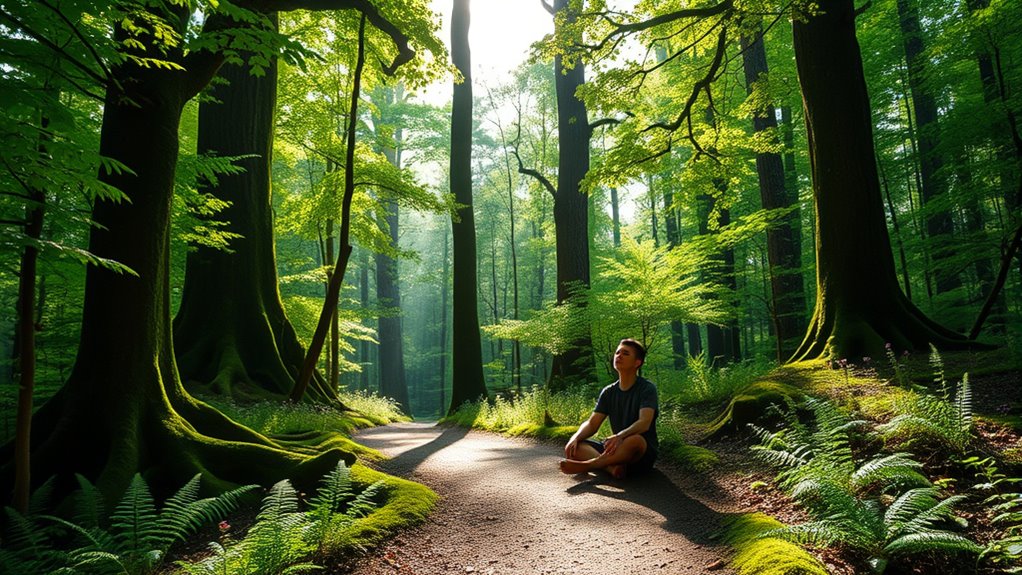
Have you ever wondered how simply being surrounded by trees can boost your well-being? When you step into a forest, you’re not just immersing yourself in a beautiful landscape—you’re engaging in a natural therapy that can reduce stress and rejuvenate your mind. One way to deepen this experience is by practicing wildlife observation. As you wander through the woods, keep an eye out for birds flitting between branches, squirrels scurrying along tree trunks, or even the subtle rustle of small mammals in the underbrush. Noticing these creatures helps you stay present and connected to the environment, which is a key aspect of forest bathing. Observing wildlife doesn’t require expert skills; just slow your pace, open your senses, and delight in the small signs of life all around you. As you do, you might also find yourself curious about the trees themselves. Tree identification becomes a rewarding part of your walk—learning to recognize oak’s lobed leaves, the smooth bark of beech, or the distinctive needles of pine. Identifying trees adds an educational layer to your experience, encouraging mindfulness and patience. It’s a simple act that helps you focus on details often overlooked in daily life, fostering a sense of curiosity and appreciation. This process of learning about the flora around you reinforces your connection to nature, making your forest bath more meaningful. During your walk, take the time to touch the bark of different trees or listen to the varying sounds they make in the wind. These tactile and auditory experiences ground you further in the present moment. As you become more familiar with the trees, you may start to notice the subtle scents they emit—fresh pine, earthy oak, or sweet birch—which can enhance your sense of calm. Recognizing the trees and observing wildlife also helps shift your focus away from worries and mental clutter, replacing it with a sense of wonder and serenity. The act of identifying trees and watching animals encourages slow, deliberate movement, which can lower cortisol levels and ease tension. Engaging in high-pressure application techniques like these can also improve mental clarity and emotional resilience. Over time, these small acts of engagement can markedly improve your mental clarity and emotional resilience. So, next time you venture into the woods, embrace the opportunity to learn about the trees around you and observe the wildlife that shares this space. These simple practices deepen your connection with nature, turning a walk in the forest into a powerful form of stress relief and mental rejuvenation. The more you practice, the more accessible and restorative forest bathing becomes, making it an essential tool for your overall well-being.
outdoor binoculars for wildlife observation
As an affiliate, we earn on qualifying purchases.
As an affiliate, we earn on qualifying purchases.
Frequently Asked Questions
Can Forest Bathing Be Effective for Children and Seniors?
Yes, forest bathing can be effective for children and seniors. You’ll find child-friendly benefits like boosting mood and improving focus, while senior-specific adaptations, such as shorter, gentle walks and accessible trails, make it safe and enjoyable. You encourage kids to explore nature’s wonders and help seniors relax, reduce stress, and reconnect with nature. This gentle activity offers meaningful mental and physical health benefits for all ages.
How Often Should I Practice Forest Bathing for Optimal Benefits?
You should practice forest bathing at least once a week to enjoy its full benefits, but don’t forget seasonal considerations—spring blooms and autumn leaves make each experience unique. Stick to the frequency guidelines to prevent burnout or complacency. Think of it as a monthly spa treatment, but outdoors. The more consistently you immerse yourself, the more stress melts away, so prioritize regular visits to harness nature’s healing powers.
Are There Any Health Risks Associated With Forest Bathing?
You might face some health risks with forest bathing, like unexpected wildlife encounters or allergic reactions to certain plants. Stay aware of your surroundings and avoid areas with known allergens. To minimize risks, wear appropriate clothing, carry allergy medications if needed, and stick to designated paths. By taking these precautions, you can enjoy the benefits of forest bathing safely while reducing potential health hazards.
Do I Need Special Equipment or Clothing for Forest Bathing?
You don’t need special gear for forest bathing, but wearing comfortable, weather-appropriate clothing is essential. Dress in layers to adapt to changing temperatures, and choose breathable fabrics to stay comfortable. Wear sturdy walking shoes to navigate uneven terrain safely. Keep gear requirements simple—bring a hat, insect repellent, and a small backpack for essentials. Follow clothing tips to enjoy your experience fully, staying relaxed and connected with nature.
Can Forest Bathing Replace Traditional Medical Treatments?
Think of forest bathing as a soothing river, gently flowing alongside your health journey. While scientific evidence supports its benefits, it’s not a replacement for traditional medical treatments. Instead, it can complement medical integration, enhancing your overall well-being. You shouldn’t rely solely on nature therapy for serious conditions, but it can serve as a calming, restorative supplement to conventional care, helping reduce stress and promote mental clarity.
As an affiliate, we earn on qualifying purchases.
Conclusion
So, next time life feels overwhelming, step into the embrace of the forest. Let the trees whisper their ancient secrets, wrapping you in a calming cloak of green. As you breathe in the earthy scent, imagine your worries dissolving into the wind, carried away like leaves on a gentle stream. Forest bathing isn’t just a walk—it’s a soulful dance with nature’s healing rhythm, where your stress melts into the symphony of the forest’s timeless lullaby.
As an affiliate, we earn on qualifying purchases.
portable outdoor speaker for nature walks
As an affiliate, we earn on qualifying purchases.
As an affiliate, we earn on qualifying purchases.
Fall Picks
fall essentials
As an affiliate, we earn on qualifying purchases.