
TL;DR

Turn quiet afternoons into listening time
- Thousands of audiobooks, podcasts and originals
- Listen on your phone, tablet or Echo — also offline
- Cancel anytime
A randomized trial in Barcelona found that older adults who were offered nature-based activities reported lower loneliness scores over the following year. Both group activities and a menu of activities participants could do alone were associated with improvement; the study does not establish that the findings apply to everyone or that nature alone caused the change.
A randomized controlled trial in Barcelona found that lonely older adults offered nature-based activities reported lower loneliness scores at follow-up, with the average reduction reaching 17% at one year. The study, published in The Lancet Regional Health – Europe, found improvement both among participants attending organized group activities and those given a menu of activities to do independently.
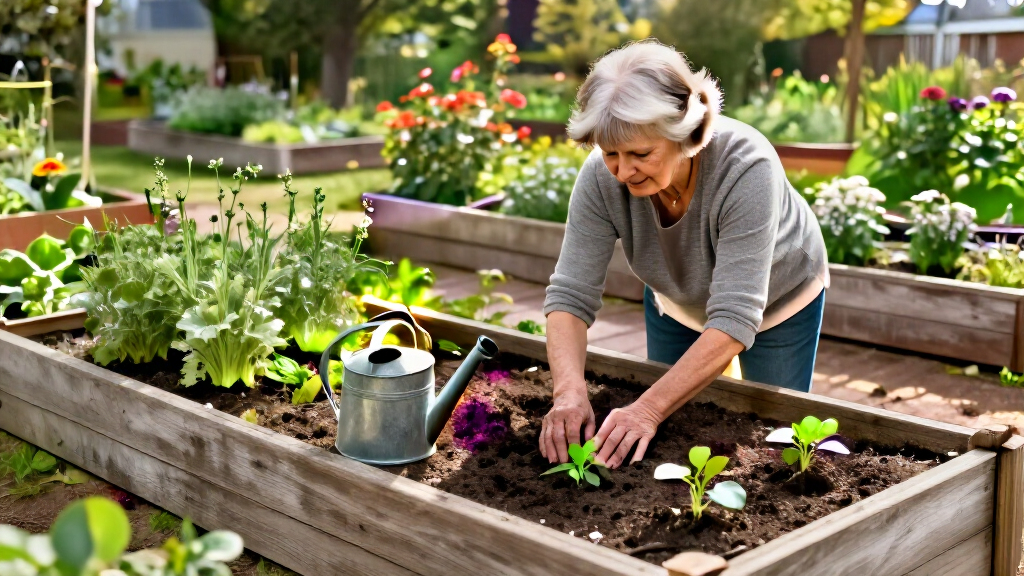
The Barcelona trial included 320 older adults experiencing loneliness who lived in 12 low-income neighborhoods. Researchers assigned half to weekly group sessions for nine weeks. Groups of eight to 10 participants, accompanied by two trained facilitators, took part in activities such as gardening, birdwatching and nature-based art. The other participants received the same menu of free, accessible activities, which they could pursue on their own.
On average, loneliness scores were 11% lower at three months, 12% lower at six months and 17% lower at one year, according to the report. Both approaches were associated with improvement. The group intervention appeared to work better for participants who began with lower emotional wellbeing, though the supplied report does not provide further detail on the size of that difference.
The study is part of RECETAS, a wider research project examining social prescribing—connecting people through health or community services with non-clinical activities. The Barcelona paper reports results from one site; the broader project has conducted trials and quasi-experimental studies in six cities across Europe, Latin America and Australia.
A Community Option for Loneliness
The findings point to a possible way for health and public services to respond to loneliness through community activities rather than clinical care alone. Gardening groups, birdwatching and other accessible nature activities may offer regular opportunities for social contact, while the study also suggests that participation need not always be organized in a group to coincide with lower loneliness scores.
That matters because loneliness is a person’s subjective sense that their relationships do not meet their expectations; it is not simply the same as living alone or having few social contacts. The source report notes that persistent loneliness has been linked in prior research to health concerns including depression, anxiety and cardiovascular disease. The Barcelona trial measured loneliness and health-related quality of life, but it does not show that these activities prevent or treat specific medical conditions.
Researchers and public agencies may be able to use the results when considering referral routes to local green spaces and community programs. Whether such services can be delivered at scale, and who would pay for them, remains unresolved.
As an affiliate, we earn on qualifying purchases.
How the RECETAS Trial Fits
The research project, formally called Re-imagining Environments for Connection and Engagement, began in 2021 with a €5.6 million grant from the European Union, according to the source report. It studies a social-prescribing model called Friends in Nature, which links people with nature-based activities. Its work includes randomized trials in Barcelona, Prague and Helsinki, alongside quasi-experimental studies in Marseille, Cuenca and Melbourne.
Corresponding author Jill Litt, a professor of environmental health at the University of Colorado Boulder and a researcher at the Barcelona Institute for Global Health, said earlier research on nature-based prescriptions had been short on evidence. The new report concerns the Barcelona participants and should not be read as a result for all sites or populations in the wider project.
The study was published in the October 2026 issue of The Lancet Regional Health – Europe. The article is titled “Effectiveness of a nature-based social prescribing intervention on loneliness and health-related quality of life among vulnerable urban adults (RECETAS-BCN): An observer-blinded randomised controlled trial.”
“There has been a lot of passion about nature-based prescriptions, but not a lot of evidence.”
— Jill Litt, corresponding author and professor of environmental health at the University of Colorado Boulder
birdwatching binoculars for adults
As an affiliate, we earn on qualifying purchases.
As an affiliate, we earn on qualifying purchases.
Limits of the Barcelona Findings
The report describes one trial involving older adults in 12 low-income Barcelona neighborhoods. It does not establish whether the same results would apply to younger people, other communities or people who do not identify as lonely. The supplied material also does not give the participants’ exact age range, detailed score distributions, or the confidence intervals needed to assess the precision of the reported percentage changes.
Both study groups received nature-activity options, so the results as summarized do not compare those options with a no-activity control group. The findings show that loneliness scores fell among participants offered the programs; they do not by themselves establish how much of the change was caused by the activities, or which specific activity was most effective. The source also reports that the project has studies in other cities, but does not provide their detailed results here.
It remains unclear how the program would be funded in other health systems, how widely it could be made available, and whether insurers would cover memberships or organized activities. The source says Litt is working to bring similar trials to the United States; it does not specify sites or dates.
As an affiliate, we earn on qualifying purchases.
Testing and Expanding the Model
RECETAS researchers are studying nature-based social prescribing across multiple cities, but the supplied report does not give a schedule for additional publications or describe the results of every site. Further findings could help clarify whether the Barcelona pattern is repeated across different populations and settings.
Litt is working to bring similar trials to the United States. Public health agencies in Spain have begun to recognize Friends in Nature as a best-practice approach, according to the report. Whether U.S. providers or insurers adopt the model remains open; Litt has described insurance coverage for community garden or birdwatching memberships as a future possibility, not an existing policy.
outdoor gardening kits for beginners
As an affiliate, we earn on qualifying purchases.
As an affiliate, we earn on qualifying purchases.
Key Questions
What did the Barcelona study find?
Among 320 lonely older adults, average loneliness scores were 11% lower at three months, 12% lower at six months and 17% lower at one year, according to the report. Both organized groups and independently pursued activities were associated with improvement.
What activities were included?
Examples included gardening, birdwatching and nature-based art. One study group attended weekly sessions with facilitators for nine weeks; the other received a menu of free activities to do on their own.
Does the study show that nature activities treat health conditions?
No. The trial reported changes in loneliness scores and examined health-related quality of life. It does not establish that the activities prevent or treat specific medical conditions.
Will the program be available in the United States?
Jill Litt is working to bring similar trials to the United States, but the report does not name locations or launch dates. Insurance coverage for activities such as garden or birdwatching memberships was described as a future possibility, not a current arrangement.
Source: rss
Cold & flu season Picks
humidifiers
As an affiliate, we earn on qualifying purchases.